
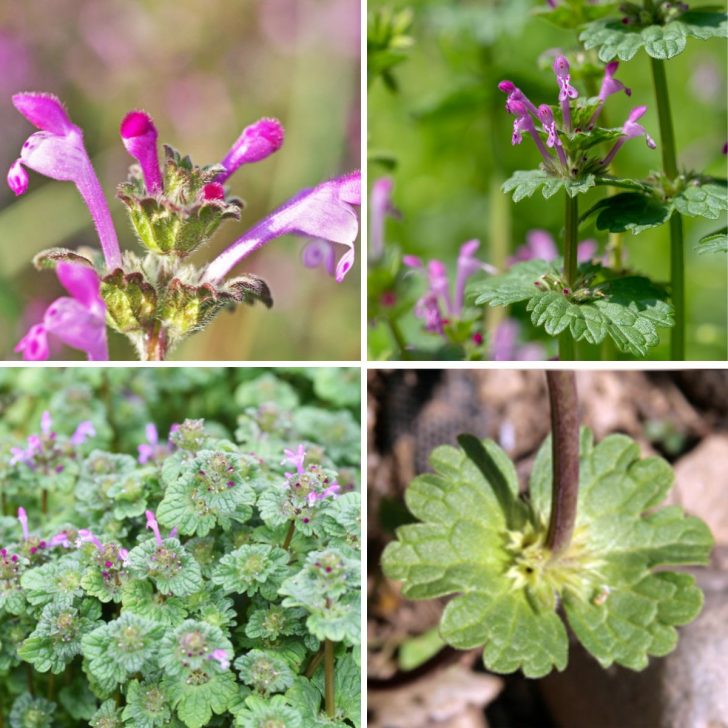
It’s worth taking a bit of time to get to know about the unpretentious little mint weed henbit with delicate purple flowers. There are folklore and proven benefits to henbit, for raw or cooked, the leaves, stems and flowers are all edible.
Tea is an easy favorite way to enjoy henbit benefits. This is a mild herb that can fit in with most other herbal concoctions.
Like some of the other edible weeds, this humble early spring weed with purple flowers is often considered to be a nuisance to a pristine lawn. In fact, while henbit has proven beneficial edible and medicinal properties, most people search online for the weed henbit in order to learn how to kill it!
If that’s you, before you do, you may want to give it a second glance and a chance to serve you by discovering the gifts it has in store for you.
About Henbit (Lamium amplexicaule)
If you like the details…
- Scientific Name: Lamium amplexicaule
- Common Names:
- Henbit
- Henbit Deadnettle
- Deadnettle (henbit is often confused for Purple Deadnettle (L. purpureum)
- Greater Henbit
- Family: mint (lamiaceae)
- Flowers: tiny pink, purple and lavender tubular flowers that bloom in spring and sometimes in fall in some zones
- Invasive: grows aggressively, but is not as invasive as the similar looking Creeping Charlie
- Parts Used: leaves, flowers and stems
- Edible: raw, cooked, or as tea; tastes mildly sweet, peppery and earthy and has been likened to celery.
- Habitat: shady or mostly shady yards, urban areas, open areas, lawns, cultivated fields, pastures, along roadsides
- Season: winter to early spring annual or biennial
- Nutrients vitamins, iron, antioxidants
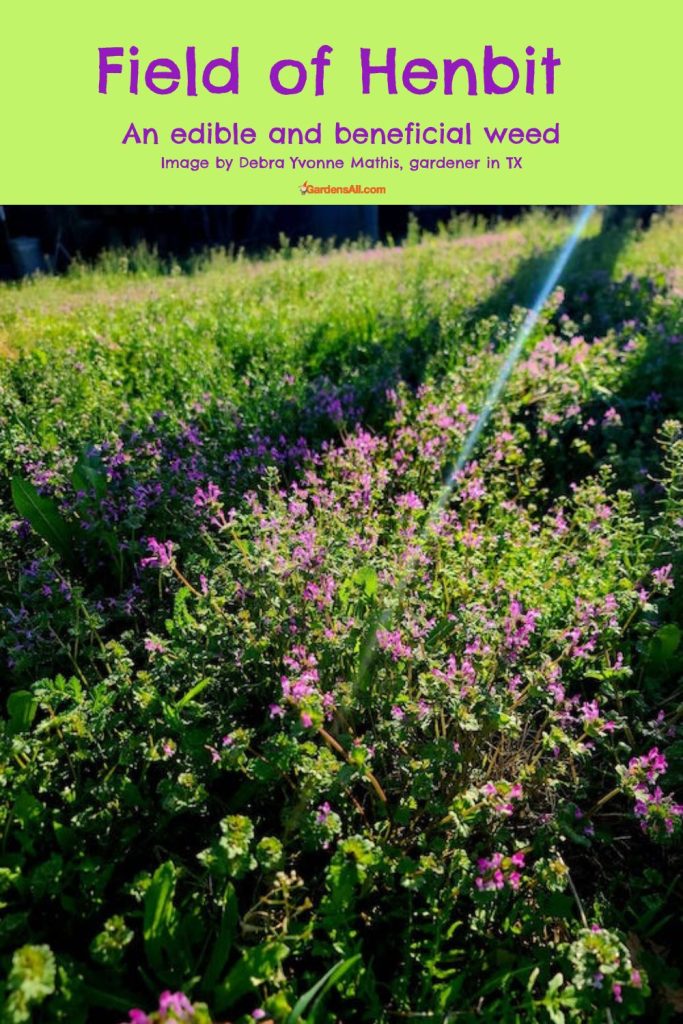
Henbit Benefits and Uses
Henbit (Lamium amplexicaule) is a flowering plant commonly found in fields, meadows, and disturbed areas. It has a long history of use in traditional medicine and is also an edible plant.
This late winter / early spring bloomer, is a healing tonic for people and provides an early source of pollinator flowers for bees and hummingbirds.
Henbit is a great first food source for bees. It has both pollen and nectar. The pollen is a bright red. Very interesting plant!
Shannon Schofield, beekeeper, homesteader, poet & writer
See Shannon’s articles on: Lessons from the Garden, and How to Make Honeysuckle Blossom Jelly.
Edible Benefits and Uses of Henbit
- Culinary Uses: The leaves and flowers of henbit are edible and can be used in salads or as a garnish, much as you would adding in other edible herbs and plants such as plantain or these other weeds with purple flowers. They have a mild, slightly minty flavor.
- raw
- cooked
- dried of fresh for tea, hot or cold
- Nutritional Value: Lamium amplexicaule is a good source of vitamins and minerals, including vitamins A and C, iron, and calcium.
- Herbal Tea: Dried henbit leaves can be used to make a tea that is said to have a soothing effect on the stomach and can help with coughs and colds.
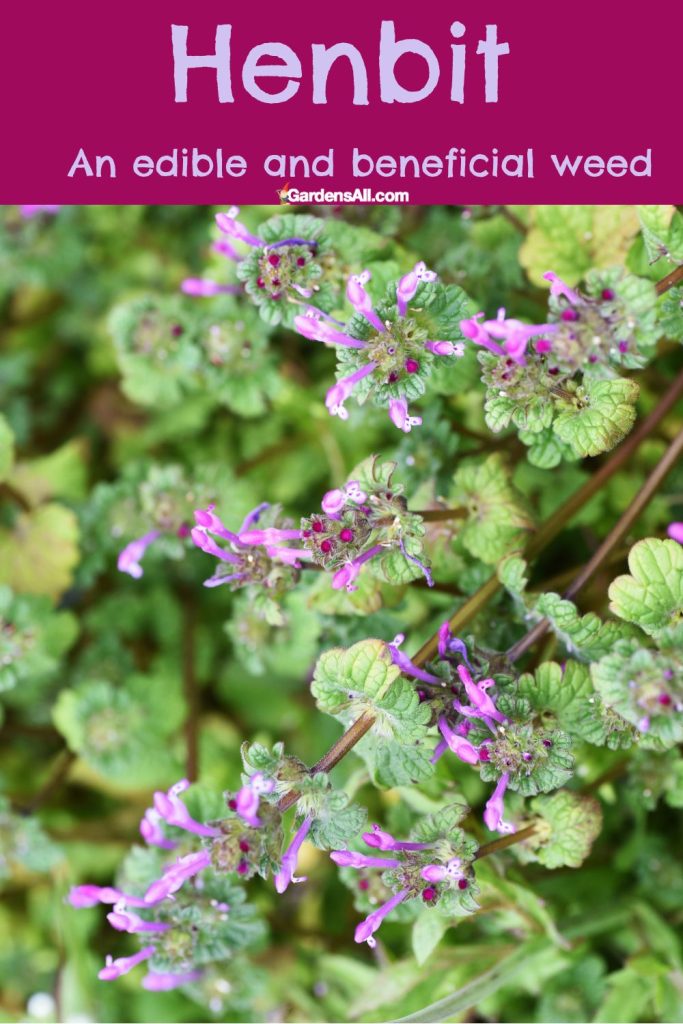
Medicinal Benefits and Uses of Henbit
Some of the many benefits claimed for Lamium amplexicaule include traditional remedies and folk medicine as well as scientifically validated results.
For example, anecdotally, Henbit is of the Lamium genus, which is in the mint family all of which have known benefits, though some are more potent than others.
Henbit is used in folk medicine for many ailments, some of which have also been validated through scientific studies.
For health benefits, plants of the Lamium genus have found widespread applications in folk medicine thanks to the large presence of chemical compounds that constitute effective active ingredients in many situations of therapeutic interest.
The Mint Family — Lamium Genus Traditional Health Benefits Include:
Many cultures have used the Lamium genus of mint plants in folk medicine as antispasmodic, astringent, anti-proliferative, anti-inflammatory, antimicrobial, antioxidant and antiviral.[1]https://www.ncbi.nlm.nih.gov/pmc/articles/PMC8270304/
Mint plants are also used to help regulate sebaceous secretions, and as well as for the treatment of hypertension, scrofula, paralysis, prostate, menorrhagia, uterine hemorrhage, leucorrhea, trauma, and fractures.[2]https://www.ncbi.nlm.nih.gov/pmc/articles/PMC6571824/#B52-molecules-24-01913
Trans-phytol is an abundant component of the essential oil of several Lamiaceae species and functions as mitochondrial antioxidants.
Some Scientific Studies and Lore on Lamium Amplexicaule Benefits
This is just a sampling toward helping you identify henbit benefits that might be worth pursuing.
- Antibacterial Properties: Studies have shown that henbit has antibacterial properties and can help fight infections.[3]https://www.researchgate.net/publication/262919857_Antimicrobial_and_Antioxidant_Properties_of_Lamium_galactophyllum_Boiss_Reuter_L-macrodon_Boiss_Huet_and_L-amplexicaule_from_Turkish_Flora[4]https://www.mdpi.com/2076-3417/10/19/6808
- Anti-Inflammatory Properties: Henbit has anti-inflammatory properties and has been used to treat a range of inflammatory conditions, including arthritis and gout.[5]https://www.ncbi.nlm.nih.gov/pmc/articles/PMC6571824/
- Antimicrobial: Three compounds shown to have antibacterial properties.[6] … Continue reading[7]https://www.researchgate.net/publication/262919857_Antimicrobial_and_Antioxidant_Properties_of_Lamium_galactophyllum_Boiss_Reuter_L-macrodon_Boiss_Huet_and_L-amplexicaule_from_Turkish_Flora
- Antispasmodic – may reduce muscle spasms and cramps.