
When it comes to how to grow blueberries, the good news is that blueberry plants are hardy, relatively easy to grow and tend to thrive. Give them a good start and a little care and you can enjoy fantastic blueberries for many years to come.
Few things are better than picking blueberries fresh from your own yard or garden and popping them straight into your mouth! Little blue “pills”, good for all kinds of ills, and delicious to boot.
Blueberries—the fruit and the blueberry leaves—both have an incredible array of culinary and health benefits. So it’s definitely worth considering growing blueberries for even the casual gardener or homeowner with a yard.
Blueberries, (vaccinium corymbosum), are native fruits of North America. A relatively small bush with a long life and deliciously nutritious fruits and leaves that are used for health in tea or powdered form.
Before we get more into all the details, let’s first consider some of the many reasons to grow blueberries.
Benefits in Growing Blueberries
Blueberries for Beauty
Blueberry bushes are beautiful edible landscape plants.
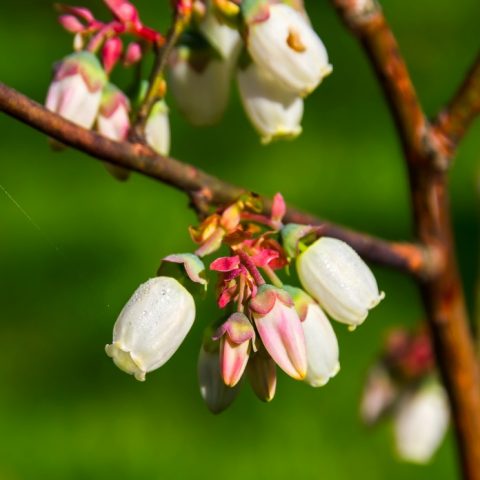
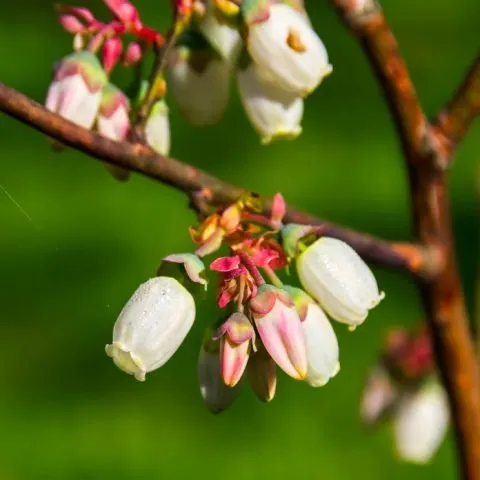
- Lovely pink and white spring blossoms
- Colorful fruit – green to red to purple and blue
- Beautiful orange-red leaves in fall
Growing blueberries is a wise decision for gardeners, farmers and also landscape design. Even if you don’t have a regular vegetable garden or fruit orchard, placing a few blueberry bushes in your yard adds beauty and utility to your landscape design.
The white-pink blueberry blossoms are beautiful in spring, followed by attractive berry clusters that go from pale green to red, to purplish red and eventually dark blue. Then in the fall, blueberry bushes turn a lovely fall orangish-red for more pleasing color in the landscape.
Blueberries are Delicious and Versatile
Blueberries are an amazing, delicious and nutritious superfood, but these days, they’re also quite expensive to buy. One of the reasons blueberries are more expensive is the cost of harvesting. Since this luscious little blue fruit ripens steadily over several months, there’s no one harvest time, nor any quick and easy way to harvest by machine.
Once you learn how to grow blueberries, and get your blueberry plants planted, you’ll enjoy discovering some of the many ways you can enjoy blueberries and even blueberry leaves.
Our Favorite Ways to Enjoy Homegrown Blueberries
- Fresh, by the handful, (especially when out picking them… warm from the sun)
- Mixed fresh with yogurt
- Blended fresh or fresh frozen in smoothies with vanilla protein powder and coconut water, and other favorites
- Frozen in yogurt (alone, or add a tad of 100% maple syrup a sweeter treat)
- Blueberry breakfast cake – good any time of day!
If you have excess blueberries, there are tons of things you can do to preserve them. Our favorite it to simply freeze them so that we have the nutritious fresh-frozen blueberries through the winter.
Blueberries and Blueberry Leaves are Both Highly Nutritious
Considered an incredibly nutritious “superfood”, it’s highly beneficial to consume blueberries as a regular part of your diet. However, these days, blueberries are also quite expensive to buy, especially those grown organically.
You’re likely well aware of the wonderful antioxidant benefits of the berries. But did you know that the leaves also have tremendous proven health benefits?
Blueberries Bear Fruit for Many Years
Yes! Not only do blueberries grow and bear fruit for many years, the leaves and the fruits are incredibly nutritious and beneficial with multiple uses
Your blueberry investment will more than pay for itself.
Most blueberries bear fruit for more than 50 years!

Growing Your Own Food is Rewarding
There’s nothing quite like the experience of growing your own food. Growing food on a small scale, may not save you time and money, considering the supplies you’ll need and the time it will take. However, the freshest food in the world—from garden to table—is the best for you.
To pluck a berry, fruit or vegetable from a plant you’ve planted and nurtured is extraordinarily gratifying. Growing blueberries is no exception.
Picking Blueberries and Gardening is Good Exercise!
Harvesting your own blueberries gets you outside moving and getting exercise in the fresh air and sunshine (vitamin D), while enjoying a deliciously refreshing time out in the garden.
Next, we’ll look at whether to grow blueberries where you are and given your growing zone climate, soil pH, sunlight, etc.
Growing Blueberries in Your Grow Zone
Blueberries grow in zones 3-10 with a wide range of options as to types. Your growing zone determines the varieties best to grow, so for best results, search the term ‘blueberries’ along with your zone. E.g., we’re in zone 7a, so we’d search: ‘blueberries zone 7a’
- Blueberry growing zones vary by variety of blueberries.
- Best to search blueberries by zone to find what grows best in your area
Also, when we search: ‘NC extension blueberries types’ the top search result is the best for our growing zone. E.g.:
HOW TO GROW BLUEBERRIES IN THE PIEDMONT FOOTHILLS:
Blueberries are relatively easy to grow with a bit of site and soil preparation. Three types of blueberries can be grown in North Carolina:
🍃Rabbiteye, (Vaccinium ashei)
🍃Highbush
🍃Southern Highbush
So search by your growing zone to access the best and most relevant info for your region. And remember to contact your Agricultural Extension Service for any specifics. They’re typically a storehouse of knowledge on plants and farming for your specific area.
We’re growing Rabbiteye blueberries and a few Southern Highbushes. For information on blueberries for your specific growing, Berries Unlimited has a cool search-by-zone feature. Just look on their menu on the left.
