
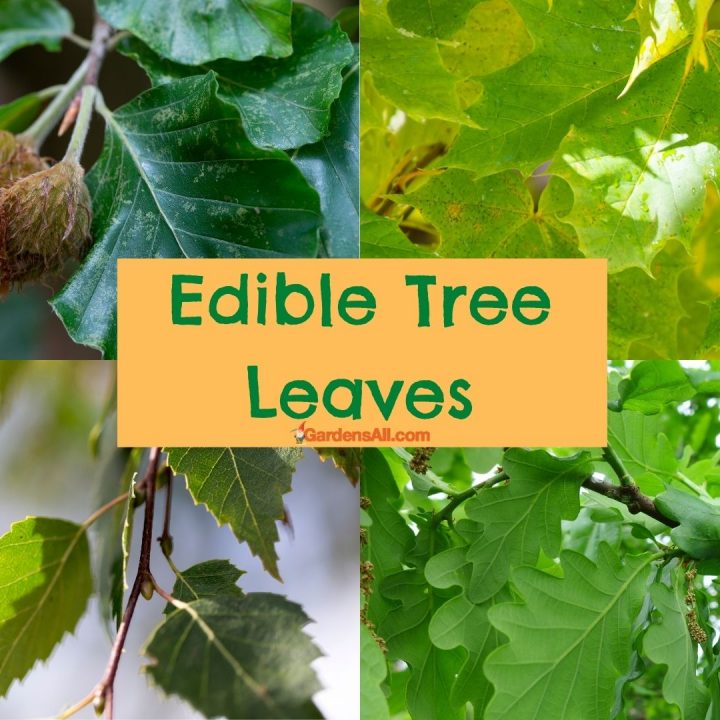
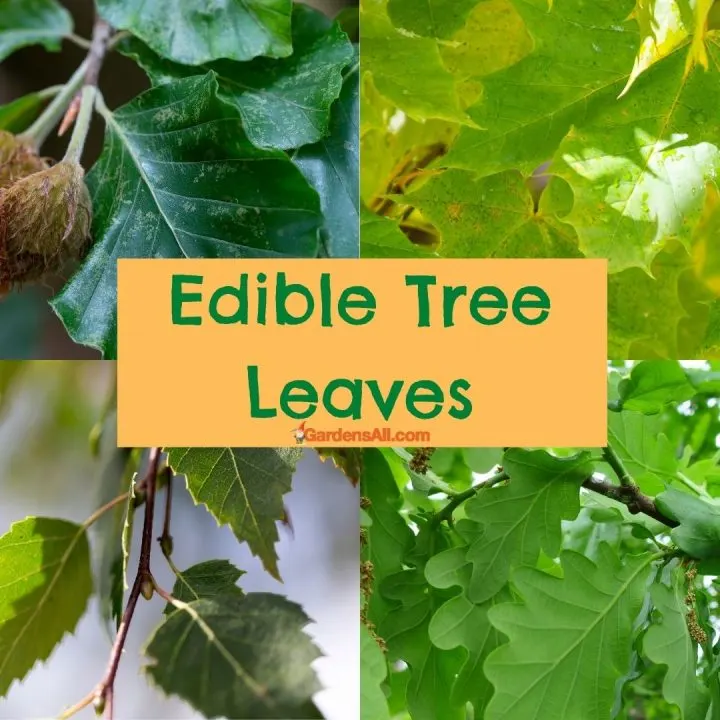
Have You Ever Wondered if There Are Tree Leaves You Can Eat?
If you’ve ever looked at the shrubs and trees around you and wondered if any of them have edible tree leaves, you’re on a fun and useful track of discovery. If you were lost in the woods… or in a food shortage, it’s important to know the edible plants and trees to turn to for sustenance that you wouldn’t normally think about using.
I was fortunate to grow up in Hawaii where everyone living in a house, has fruit trees in their yard, and anyone can often forage for food on public and uninhabited land. Tropical climates make for abundant year-round growing of papayas, bananas, mangos, guavas, lilikoi, pineapple, coconut, and so many other wonderful fruits and vegetables.
Beyond that, many also grow trees with edible leaves and regularly go outside and harvest edible tree leaves and other parts for food and medicine.
But edible tree leaves can be found beyond the tropics, and it’s possible you already have some in your yard.
When to Harvest Edible Tree Leaves
Spring is the best time to harvest edible tree leaves, because they’re freshest, more tasty and digestible as young fresh leaves. However, for tea and medicinal uses, we like to harvest and dry the tree leaves before leaf drop in fall.
That way the tree and creatures gets the benefit of its leaves throughout the growing season, and then we get the benefit of using some of those leaves before they’re lost and reclaimed to composting.
EDIBLE TREE LEAVES, PODS, BARK AND FLOWERS
Fruit Trees With Edible Leaves
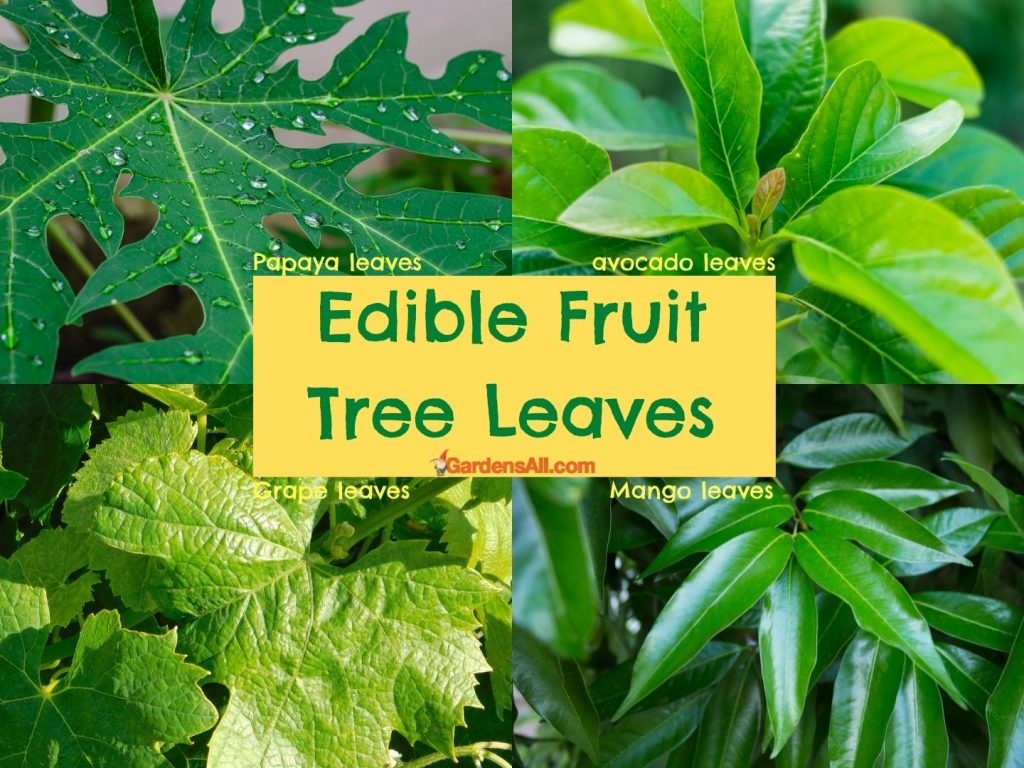
Most fruit trees leaves aren’t only used for culinary purposes, but also have edible and health benefits.
- Avocado tree leaves – young leaves in salads and soups; culinary uses similar to bay leaves
- Banana tree leaves – fresh as food platters, steamed as food wrappers and culinary herb, imparting a subtle sweetness; fresh or dried for tea[1]https://mommypotamus.com/banana-tea-for-sleep/. Banana leaves are used medicinally as bandages and to aid healing.[2]https://www.ncbi.nlm.nih.gov/pmc/articles/PMC8574063/
- Fig tree leaves – dried for tea, used as an herb in cooking, typically removed; tender leaves are eaten as leafy greens. Also, toasted, young leaves taste like coconut! Bake at 375°F until crunchy then crush or powder and use as you would coconut.[3]https://www.facebook.com/ForagingTexas/posts/5406721402680661
- Grape leaves – used as food wraps and for stuffing; can be eaten as greens, cooked or fresh when young; used as a culinary herb; dried for grape leaf tea[4]https://www.thinking-drinking.com/blog/grape-leaf-tea
- Mango leaves – young leaves are eaten cooked or fresh; mango leaves are dried for nutritious tea; medicinally beneficial as an extract[5]https://www.ncbi.nlm.nih.gov/pmc/articles/PMC7468873/
- Papaya Leaves – edible and medicinal purposes, used fresh, cooked, dried for tea and as tincture[6]https://specialtyproduce.com/produce/Papaya_Leaves_16679.php[7]file:///Users/leaura%20alderson%20laptop/Desktop/molecules-26-06922-v2.pdf
- Tamarind Leaves – All parts of the tamarind plant are edible, beneficial and have medicinal benefits.[8]https://www.sciencedirect.com/science/article/pii/S2221169115300885
While not a fruit tree, strawberry leaves deserve honorable mention because they have lots of benefits as food and tea.
Deciduous Trees and Hardwoods With Edible Tree Leaves
- BEECH, AMERICAN, Fagus grandifolia –
- inner bark is edible,
- leaves, are edible when young and soft
- marcescent beech leaves (golden brown winter leaves) are used for tea (avoid if pregnant)
- nuts:
- edible roasted with skin removed, (beech nut skin contains a poison called fagin)[9]http://www.jodrugs.com/toxicologies/3598-plants-fagus.aspx[10]https://practicalselfreliance.com/foraging-beech-nuts/
- pressed for oil
- seeds are sweet and edible and can be eaten or crushed into a butter.
- BIRCH, Betula pendula & Betula lenta:[11]https://www.americanforests.org/magazine/article/edible-trees-foraging-food-forests/
- Bark – inner bark is edible:
- raw
- boiled
- ground into flour
- Essential oils
- Leaves –
- spring leaves – cooked
- dried leaves – for tea; some say these have analgesic properties, however, we haven’t yet found research to validate that claim [12]https://pubmed.ncbi.nlm.nih.gov/2594828/
- Sap – mild but short-lived antibacterial and anti-inflammatory benefit;[13]https://pubmed.ncbi.nlm.nih.gov/2594828/ See more on birch tree syrup and water
- Bark – inner bark is edible:
- CHERRY – The blossoms, bark and leaves of SOME cherry trees are edible and used for flavoring, teas, cocktails and syrups, and in Japanese cuisine.
CAUTION: Some are poisonous, so be sure to identify the cherry tree and research the specific genus before consuming any part of it. - GOJI BERRY, Lycium barbarum –
- Berries – fresh and dried
- Leaves – food and tea
- HAWTHORN, Crataegus monogyna –
- Berries
- Flowers
- Leaves, fresh in salads and nibbles
- LINDEN, AMERICAN, Tilia americana – Northeastern US & Midwest US:
- flowers
- leaves, young
- sap
- shoots
- LINDEN, LITTLE LEAF, Tilia cordata – Northeast & Central North America:
- leaves, young
- buds
- shoots
- MAPLE, ACER, Acer palmatum[14]https://www.americanforests.org/magazine/article/edible-trees-foraging-food-forests/ –
- bark, inner:
- cooked
- raw
- leaves, young
- sap for water and maple syrup
- seeds
- bark, inner:
- MIMOSA, Mimosa pudica, leaves and flowers are edible; bark used medicinally[15]https://agnetwest.com/practical-uses-mimosa-tree/<