

Look for Those Perky Purple Flowers and Heart Shaped Leaves
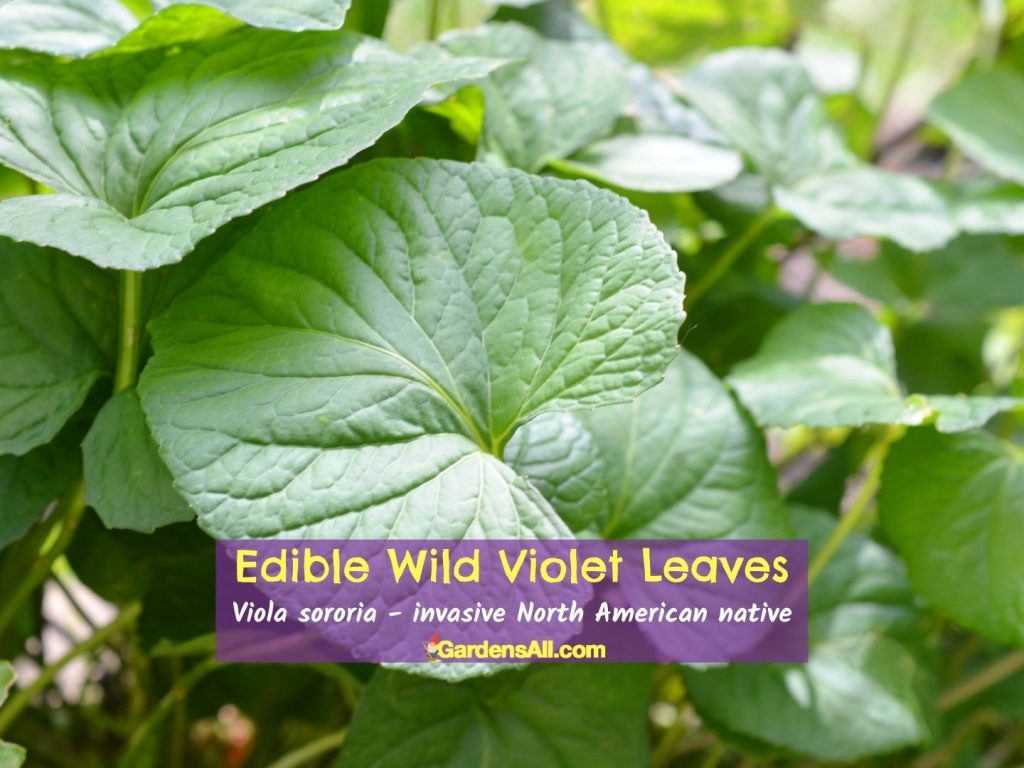
Many consider wild violets weeds, but we love them! These early spring plants with purple flowers and deep green heart-shaped leaves, deserve a second glance for the many wild violets benefits.
From food for pollinators and people, to a lush edible ground cover, you may decide to keep it instead of kill it if you spot some in your lawn.
You might at least want to get to know it a bit more for its uses as a source of food, nutrients and medicine.
Some of the wild violets benefits include medicinal and restorative tea, flowers that sweeten tea and desserts, and leaves that add fresh leafy greens that are rich in nutrients.
Wild Violets Names
The genus Viola (Violaceae) consists of approximately 500 species widely distributed throughout the world.[1]https://www.semanticscholar.org/paper/Ethnomedicinal-%2C-phytochemical-and-pharmacological-Muhammad-Saeed/c68b2fa7107866688fb3e54eeb9418ef842d7a3b
Scientific Names for Wild Violets
- Botanical Names:
- Viola odorata
- Viola papilionacea
- Viola sororia
- …and approximately 125 more species of Viola
- Family – Violaceae
- Genus – Viola
Some Wild Violet Common Names
- Bird’s-foot violet, (Viola pedata)
- Bog white violet, (Viola lanceolata)
- Canada violet, (Viola canadensis)
- Common blue violet, (Viola sororia)
- Common meadow violet, (Viola sororia)
- Downy yellow violet, (Viola pubescens)
- Hooded blue violet, (Viola sororia)
- Johnny jump-up, (Viola tricolor)
- Labrador violet, (Viola labradorica)
- Long-spurred violet, (Viola rostrata)
- Northern blue violet, (Viola sororia)
- Purple violet, (Viola sororia)
- Southern woodland violet, (Viola hirsutula)
- Stream violet, (Viola hirsutula)
- Sweet violet, (Viola odorata)
- Wild violet, (Viola sororia)
- Wood violet, (Viola odorata)
- Woolly blue violet, (Viola sororia)
According to the US Forestry Service, there are 125 recognized species of the genus Viola (Violaceae) native to the United States. Here are some of the most common wild violet species:
10 Most Common Wild Violets in the US
- Viola sororia (common blue violet, common meadow violet, hooded blue violet, and more)
- Viola odorata (sweet violet)
- Viola pubescens (downy yellow violet)
- Viola pedata (bird’s-foot violet)
- Viola tricolor (Johnny-jump-up or wild pansy)
- Viola canadensis (Canada violet)
- Viola labradorica (Labrador violet)
- Viola hirsutula (stream violet)
- Viola lanceolata (bog white violet)
- Viola rostrata (long-spurred violet)
REFERENCE: USDA Forestry Service[2]https://www.fs.usda.gov/wildflowers/plant-of-the-week/viola_nuttallii.shtml#:~:text=Violets%20are%20distinct%20enough%20to,genus%20Viola%20in%20North%20America.
What Do Wild Violets Look Like?
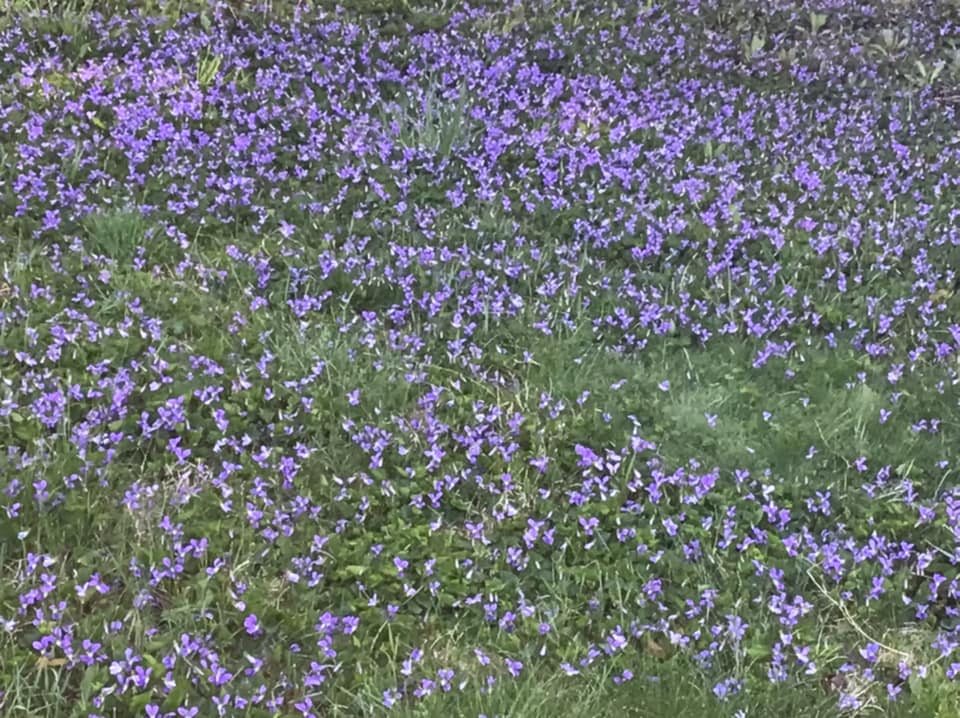
Wild Violets are earth-hugging edible ground cover plants with tiny orchid-like flowers with 5 petals. The wild violet flowers vary in color from deep purple to lavender to white, and in varying hues in that spectrum.
When Do Wild Violets Bloom
Wild violets are a low-growing perennial weed with purple flowers that blooms in spring and early summer, fast on the heels of dahlias and crocuses. Wild violets typically start blooming in March in the mid-range hardiness zone 7a. So adjust that to earlier or later for warmer or colder zones.
Whenever we harvest wild violets, (or any other wild plant), we’re careful to leave at least half for the wildlife and natural plant cycles.
Edible Wild Violets Benefits and Uses
- LEAVES – contain beneficial compounds for relaxation and skin
- Raw – Leaves great in salads
- Cooked – in soups, in recipes calling for greens like spinach or chard
- Dried or fresh for teas
- FLOWERS –
- candied
- raw in salads
- infused into vinegars and syrups
- dried of fresh for teas
- POLLINATORS –
- the fritillary butterflies are good pollinators,[3]https://www.fs.usda.gov/wildflowers/pollinators/pollinator-of-the-month/fritillary.shtml and must lay eggs on violets
- the mining bee Andrena violae, common to the Eastern U.S., only visits violets![4]https://www.discoverlife.org/20/q?search=Andrena+violae
“Like monarchs, whose caterpillars only feed on milkweed, the fourteen species of greater fritillary butterflies, (genus Speyeria) and sixteen lesser fritillaries (genus Bolloria) will only lay their eggs where there are violets for their larva to feed upon.”
SOURCE: Xerces.org[5]https://xerces.org/blog/plants-for-pollinators-violets
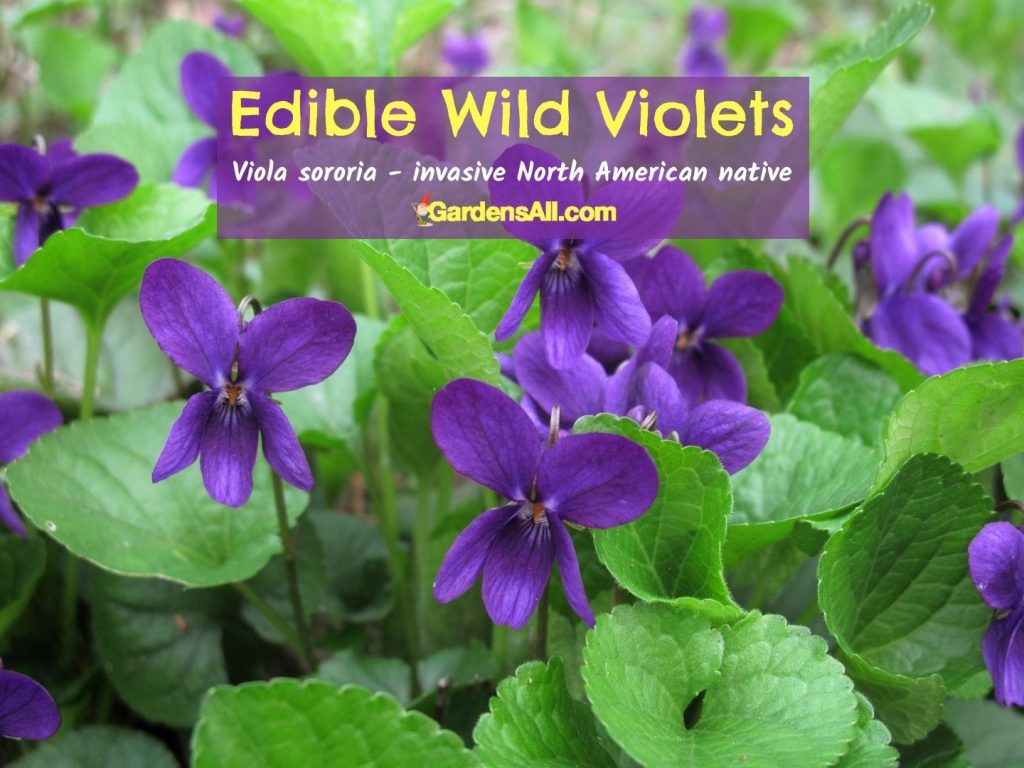
Violet blossoms are long favored for flavoring vinegars, oils and syrups, and especially candied for beautiful sweet treats that decorate cakes, cookies and confections.
The fresh leaves and edible flowers are good in salads, and the leaves can be used raw or cooked as you would spinach or chard.
Our favorite ways to enjoy wild violets is fresh in salads and dried for wild violet tea.
6 Proven Wild Violets Benefits
Wild violet (Viola odorata) is a plant with a long history of use in traditional medicine. Here are some traditional wild violet benefits supported by scientific research.
- Analgesic for Pain relief: Wild violet has analgesic properties, which means it can help relieve pain. It has been used to alleviate headaches, menstrual cramps, and other types of pain.
- Antibacterial properties: Wild violet contains compounds that have antibacterial properties. These compounds can help fight off infections and boost the immune system.[6]https://wjpr.s3.ap-south-1.amazonaws.com/article_issue/1598854840.pdf
- Anti-inflammatory properties: Some species of wild violets, such as early blue violet (Viola adunca), contains compounds such as salicylic acid and rutin that have anti-inflammatory properties. These compounds can help reduce inflammation and alleviate symptoms of conditions such as arthritis and eczema.
- Digestive health: Wild