
To Some it’s a Weed, for Others an Ornamental
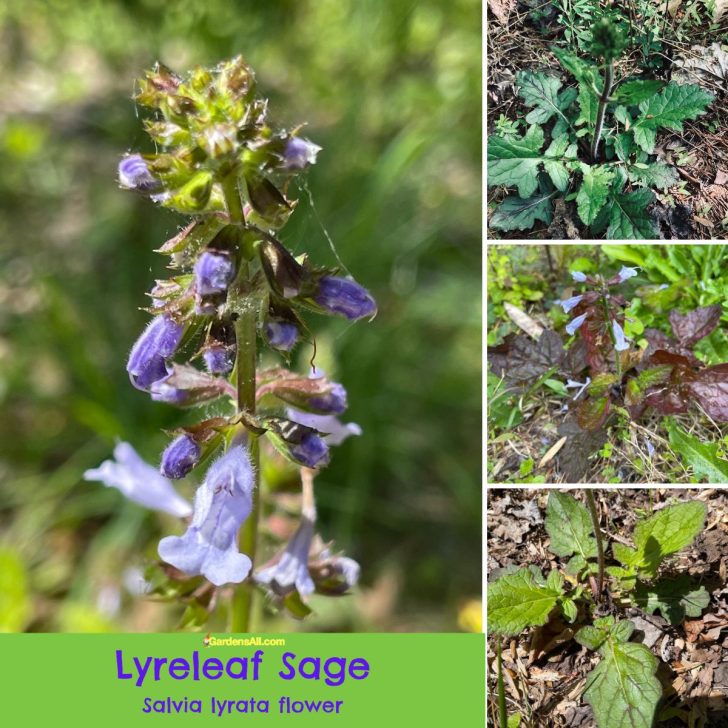
Lyreleaf Sage, also known as Salvia lyrata, is a perennial herb native to the southeastern United States. It makes its appearance in early spring and as that season swings into full gear, the pretty pale bluish purple flowers grow on tall stalks, inviting pollinators to visit.
It belongs to the Lamiaceae (or mint) family, which is well-known for its medicinal and ornamental values. Lyreleaf sage can grow up to 1 to 2 feet tall and is most commonly found in meadows, prairies, open woods, and along roadsides.
Where Does Lyreleaf Sage Grow?
Salvia lyrata is a native plant of the southeastern United States. As with many mint family plants, it is considered by some to be invasive, for it easily spreads by root and seeds.
Salvia lyrata Habitat
Lyreleaf Sage is highly adaptable and can grow in a variety of habitats. It prefers well-drained soils and can tolerate both full sun and partial shade. The plant is often found in open woods, prairies, meadows, and along roadsides. It is also frequently seen in disturbed areas, such as fields, pastures, and vacant lots.
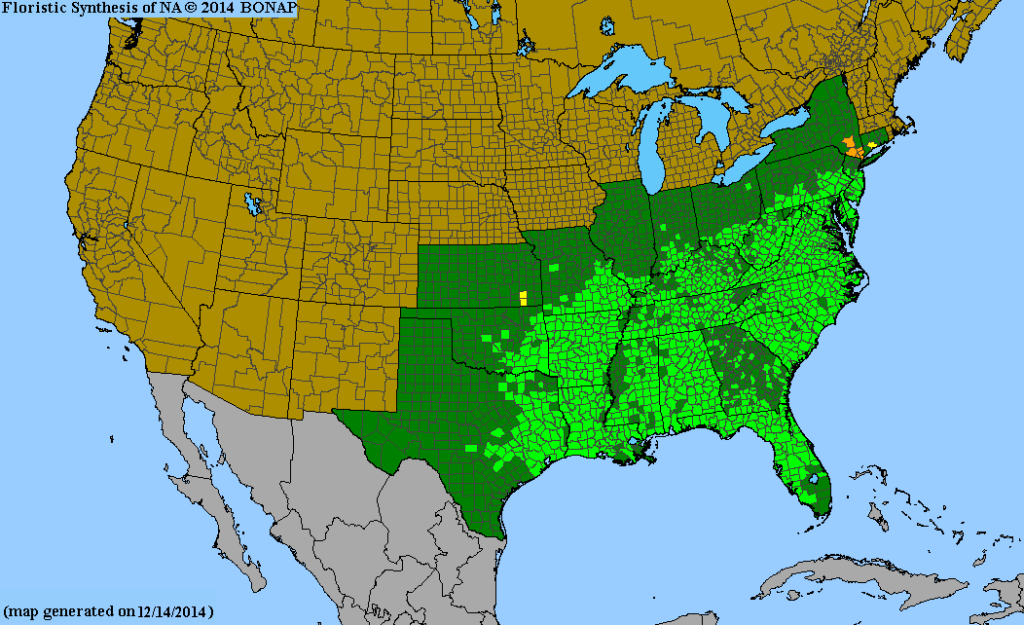
In terms of geographical distribution, Salvia lyrata is native to the southeastern United States, ranging from Texas to Florida and north to New York. However, it has been naturalized in other regions and can be found across much of the eastern and central United States. Salvia lyrata is hardy in USDA zones 5-9.
In addition to its natural habitats, Lyreleaf Sage is also commonly grown in gardens for its ornamental value and its attractiveness to pollinators. It is drought-tolerant, making it a good choice for xeriscaping and low-water gardens. Its striking foliage and flowers can add visual interest to borders, rock gardens, and wildflower meadows.
Plant Map Color Key
- brown – not present
- dark green – present & native
- spring green – present & not rare
- orange – extirpated (destroyed, eradicated, eliminated
- yellow – species present and rare
Why is it Called Lyreleaf Sage?
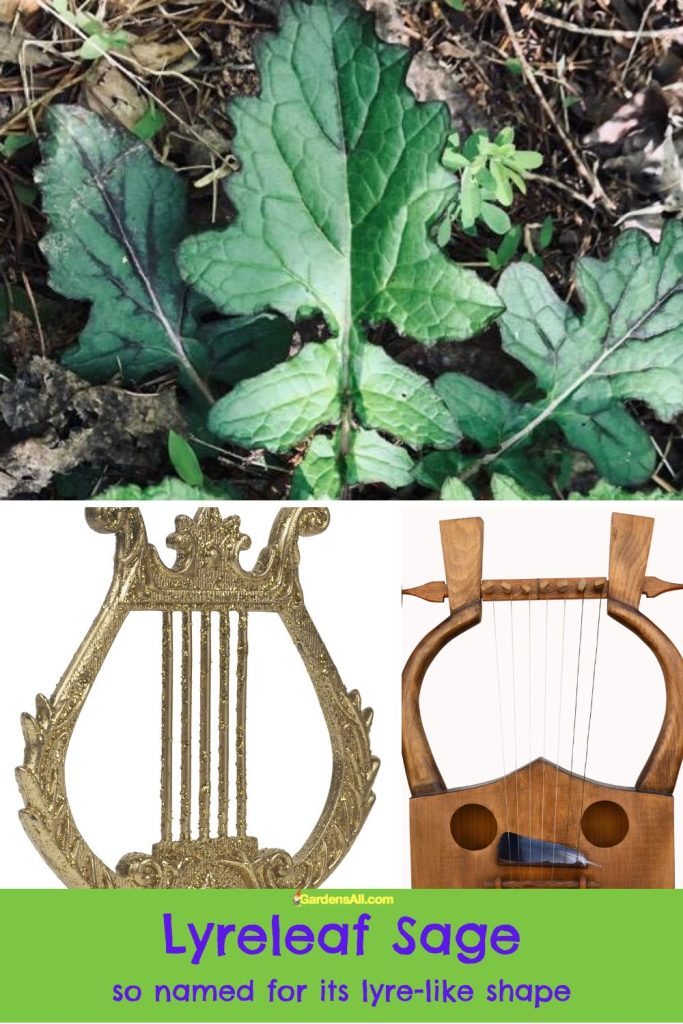
The plant gets its name from its lyre-shaped leaves, which form a rosette at the base.
Most Popular Common Names for Salvia lyrata:
- Lyreleaf Sage: The most widely recognized common name, this refers to the unique shape of the plant’s leaves, which resemble a lyre, an ancient stringed musical instrument.
- Cancerweed or Cancer Root: This name is derived from the plant’s historical use in traditional medicine for treating various ailments, including cancerous sores and tumors.
- Purple Sage: While this name can refer to several different species, it is sometimes used for Salvia lyrata because of its beautiful purple flowers.
- Meadow Sage: This name is used due to the plant’s natural habitat of meadows and open fields.
Remember that common names can vary widely from region to region, and the same common name might refer to different plant species in different areas. Therefore, the scientific name Salvia lyrata is the most reliable way to identify this plant.
Lyreleaf Sage (Salvia lyrata) Description
The name for Lyreleaf Sage gets its name from the lyre or fiddle-like shape of its leaves. The leaves are basal, growing directly from the root, forming a rosette at the ground level. They are typically 2 to 6 inches long and have a dark green color with purplish tint, especially during the colder months. The leaf margins are usually toothed or lobed, resembling the strings of a lyre.
The plant produces a square, erect flowering stem, typical of the mint family, with whorls of small, tubular flowers at the top. The flowers are usually blue to violet, although white and pink varieties can also be found. They typically bloom from late spring to early summer, attracting hummingbirds, bees, and butterflies.
The fruit of the Lyreleaf Sage is a small nutlet, which contains the seeds for reproduction. After blooming and seed formation, the plant dies back to the ground, but the root system remains alive and sprouts new growth the following spring.
See also, our article on pollinator flowers.
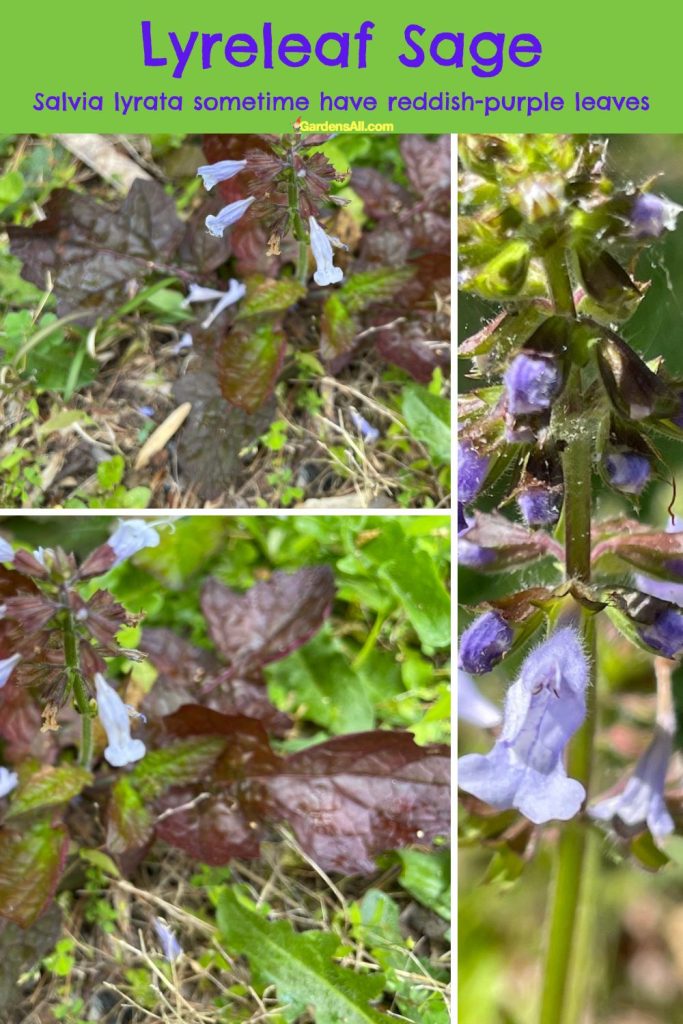
What Causes Some Lyreleaf Sage Leaves to be from Reddish to Purple in Color?
The reddish-purple color in Lyreleaf Sage (Salvia lyrata) leaves is often a response to environmental stress or changes, including cold weather, intense sunlight, or nutrient deficiencies.
- Cold Temperatures: Just as with many other plant species, cold temperatures can trigger a change in leaf color in Lyreleaf Sage. As temperatures drop, especially in late fall and winter, the leaves may turn a reddish-purple color. This is due to the fact that chlorophyll, the pigment responsible for the green color in leaves, breaks down more quickly than other pigments like anthocyanins, which give plants their red, purple, or blue hues. This can result in a change in leaf color until temperatures warm up and the plant can produce more chlorophyll.
- Intense Sunlight: Another common cause of reddish-purple coloration in Lyreleaf Sage leaves is exposure to intense sunlight. High light intensity can cause the plant to produce more anthocyanins as a protective mechanism against UV damage. This increase in anthocyanin production can result in a change in leaf color.
- Nutrient Deficiencies: Certain nutrient deficiencies, particularly phosphorus, can cause a purpling of leaves in many plant species. This is because phosphorus is crucial for the process of photosynthesis, and when it’s lacking, the plant may produce more anthocyanins, leading to a change in leaf color.
Overall, a reddish-purple coloration in Lyreleaf Sage leaves isn’t usually a cause for concern, as it’s often just a response to changes in the environment. However, if the color change is accompanied by other signs of distress, such as stunted growth or leaf drop, it may be worth investigating further to ensure the plant’s overall health.
Lyreleaf Sage Uses and Benefits
Salvia lyrata has not been as widely studied as many of its brethren in the mint family. However, studies on many of the members of this genus of Salvia and the family Lamiaceae prove beneficial properties for health and wellness amongst the Salvia genus.[3]https://pubmed.ncbi.nlm.nih.gov/24860730/ In fact, the plant genus name Salvia, is derived from the Latin salveo, which means ‘be well’ and refers to the genus medicinal properties.
Latin origins of the name plant genus, Salvia refers to that plant family’s healing abilities.
SOURCES: NC State Ext.[4]https://plants.ces.ncsu.edu/plants/salvia-lyrata/Wikipedia[5]https://en.wikipedia.org/wiki/Salvia#:~:text=7%20Bibliography-,Etymology,feel%20healthy%2C%20to%20heal).Dictionary.com[6]https://www.dictionary.com/browse/sage[7]https://www.dictionary.com/browse/salvia
🌱Salveo – ‘I save’, or ‘be well’
🌱Salvus – safe, secure, healthy
🌱Salūs – health, well-being, prosperity, salvation
🌱Salvēre – to feel healthy, to heal.
Ethnobotanical Uses of Lyreleaf Sage
Early settlers and native Americans used Salvia lyrata for many edible, medicinal and other benefits:
- Dye plant: Native Americans have traditionally used the roots of Salvia lyrata to