
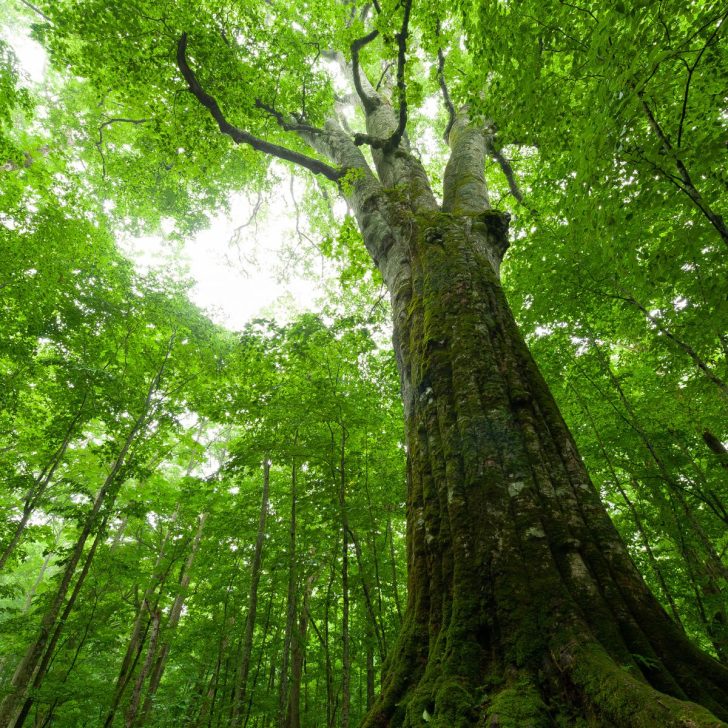
For every plant I research, I want to know what treasures it holds beyond common knowledge. Same for trees. So I began this article by asking these questions about one of our favorite trees around us: What are the beech tree uses and benefits, and is it edible and/or medicinal? We’ll cover that all in this article.
My inquiry started because we have many beautiful American beech trees all around us in our home in the woods. The biggest one we calculated to be approximately 260 years old!
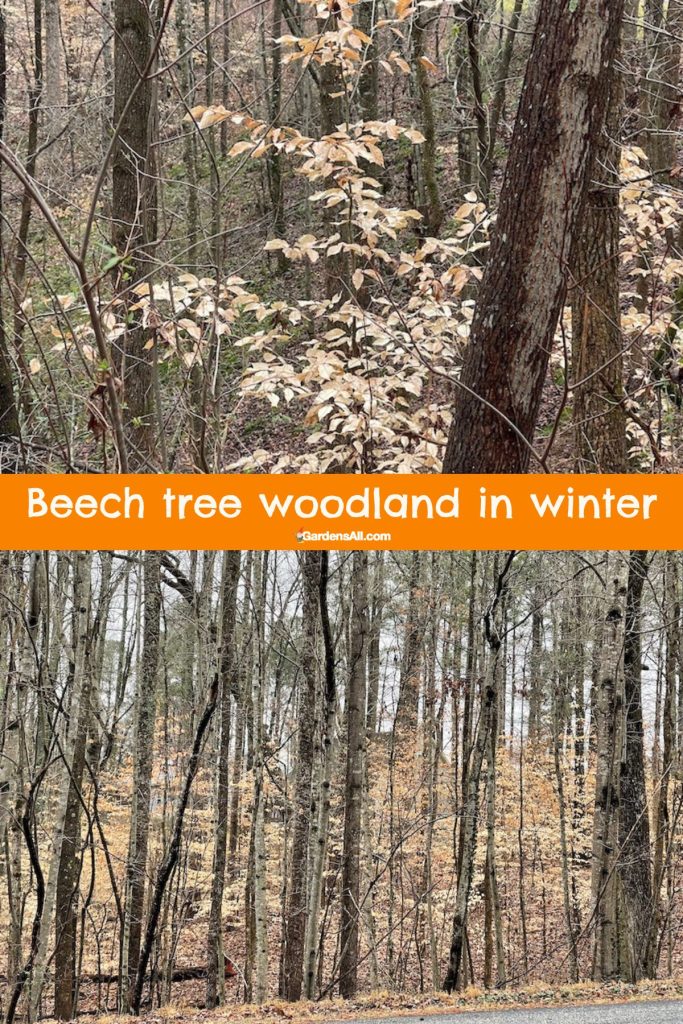
I love how beech trees retain their leaves throughout the winter, providing warm golden-tan colored highlights amidst a wintry backdrop of gray tree trunks and branches. Seeing them, I also wondered, “Why do beech trees keep their leaves all winter?
But first, a very brief skip through the beech tree origin story.

Beech Tree Origin
The Beech tree, a majestic and versatile species, belongs to the Fagus genus and is well-regarded for its beauty, durability, and wide array of uses. Found across Europe, Asia, and North America, Beech trees have adapted to various climates and conditions, making them a staple in both natural forests and cultivated landscapes.
In this article we explore the multifaceted uses and benefits of Beech trees, from ecology and economy to edible and medicinal benefits, we hope you’ll find something here of interest to you.
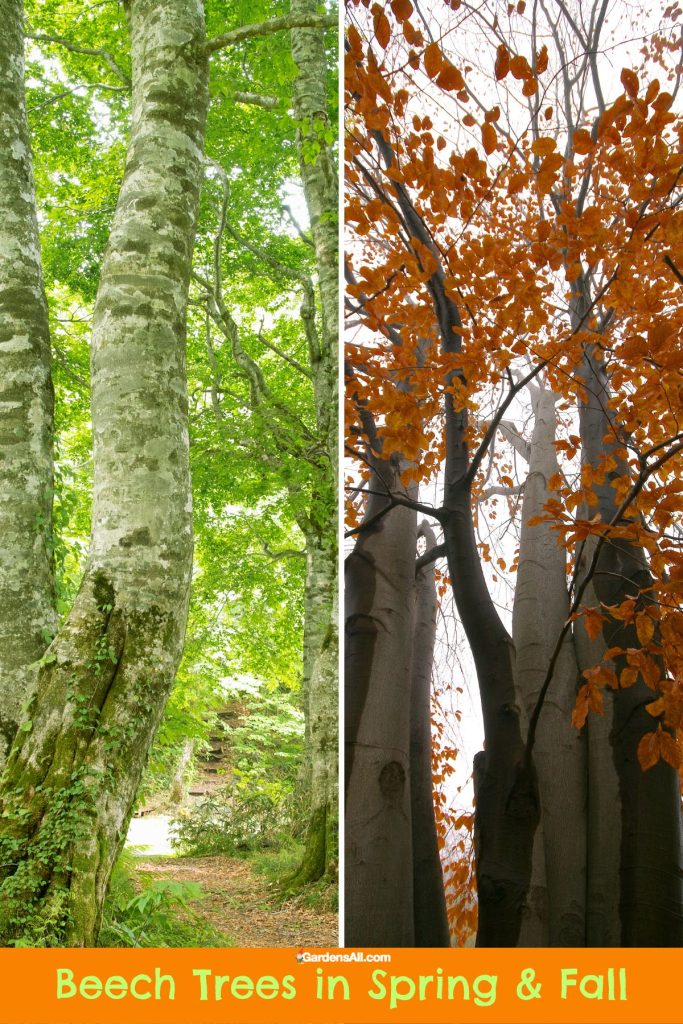
Winter Leaf Marcescence… What Is It?
An intriguing aspect of some Beech trees, particularly noticeable in the colder months, is a phenomenon known as “winter leaf marcescence.” This term refers to the tree’s tendency to retain its dead leaves throughout the winter, rather than shedding them in the fall like many other deciduous trees.
Scientists don’t really know what causes beech trees to retain their leaves in winter, however several hypotheses suggest it may provide certain advantages.
Why Do Beech Trees Retain Their Leaves in Winter?
One theory on why the beech tree retains its leaves is that it could offer physical protection for the tree’s buds against winter cold and help to deter foraging by deer and other herbivores.
Additionally, holding onto its leaves until spring could possibly allow the leaves to drop and decompose at the best timing for the beech tree growing cycle.
Painting the Woods With Blond Highlights
Marcescence also adds an aesthetic element to the winter landscape. Beech tree leaves decorate winter woodland scenes with golden tan colored leaves reminiscent of blonde highlights blowing in the wind against the barren winter backdrop.

BEECH TREE USES AND BENEFITS
Ecological Contributions
This term typically refers to the role an organism or species plays within its ecosystem. It focuses on the interactions and relationships between species and their environment. For the American Beech tree, ecological contributions might include:
- Providing habitat and food for wildlife.
- Contributing to the diversity and structure of forest ecosystems.
- Beech trees are a climax species, meaning their presence indicates a mature and stable ecosystem.
These contributions are about the specific functions and roles the species plays in maintaining the balance and health of ecosystems.
Environmental Benefits
These environmental benefits are mostly applicable to all trees, and include:
- Carbon sequestration and climate regulation.
- Soil stabilization and improvement.
- Water cycle regulation and purification through the process known as “transpiration“.
These benefits are more about the positive effects on environmental systems at large, including impacts on air quality, climate, and soil health, which can extend beyond the immediate ecosystem.
Edible Uses
- Beech Nuts: While not as commonly harvested for human consumption today, beech nuts are edible and nutritious, rich in fats, proteins, and carbohydrates. Historically, they were used by Indigenous peoples and early European settlers as a food source. They can be roasted and eaten or used as an ingredient in various dishes.
- Beech Leaves: Young Beech leaves are tender and edible, often described as having a mild, sweet taste. They can be used fresh in salads or as a garnish. The leaves are most palatable in the spring when they are young and soft.

Landscape and Aesthetic Value
American Beech trees are appreciated for their majestic appearance and smooth, silver-gray bark. They can be a striking addition to large landscapes, parks, and gardens, offering shade and visual interest throughout the seasons. The tree’s dense foliage turns a golden bronze in the fall, adding seasonal beauty.
Health and Medicinal Benefits of Beech Trees
Various species within the Fagus genus has an array of beneficial compounds found in its bark, leaves, and flowers/buds. These components contribute to the tree’s medicinal properties, supporting traditional and potential modern uses in herbal medicine and cosmetics.
The European beech, Fagus sylvatica, is the most studied and used of the Fagus genus, especially for the cosmetic industry uses. However, while there may be variables amongst varieties and growing environments, most beech trees of the Fagus spp. have similar properties.
BARK: Beech Tree Bark Uses and Benefits
- Anti-diabetic: Studies show potential for controlling blood sugar by through glucose absorption delay by inhibiting enzymes such as α-glucosidase.
- Anti-inflammatory: Some traditional practices have used beech bark in preparations aimed at reducing inflammation, although scientific studies supporting this use are limited.
- Antioxidant: The bark of the Fagus sylvatica (European beech) tree is rich in compounds that can act as natural antioxidants, help fight off microbes.
- Astringent Properties: The bark of the Beech tree has been traditionally used for its astringent qualities. Astringents help to tighten and dry tissue, making beech bark useful in folk remedies for treating minor wounds, cuts, and skin irritations.
The bark of the Beech tree is rich in tannins, compounds known for their astringent properties, which can help in tightening and drying out the tissue, making it beneficial for treating minor wounds and skin irritations. This astringency, coupled with potential anti-inflammatory compounds, may underlie the traditional uses of Beech