
In the Garden
I warned them. Told them straight up. If you guys don’t put on some pumpkins, you’re outta here! And after fighting off squash vine borers, squash bugs, and powdery mildew, they still refused to do anything but grow more vines. The little fruits would form but never mature. So, out they came, and the remains were incinerated.
Audio Article – Pumpkin Vines, Butterfly Garden & One Mysterious Visitor
The Before and After Shots
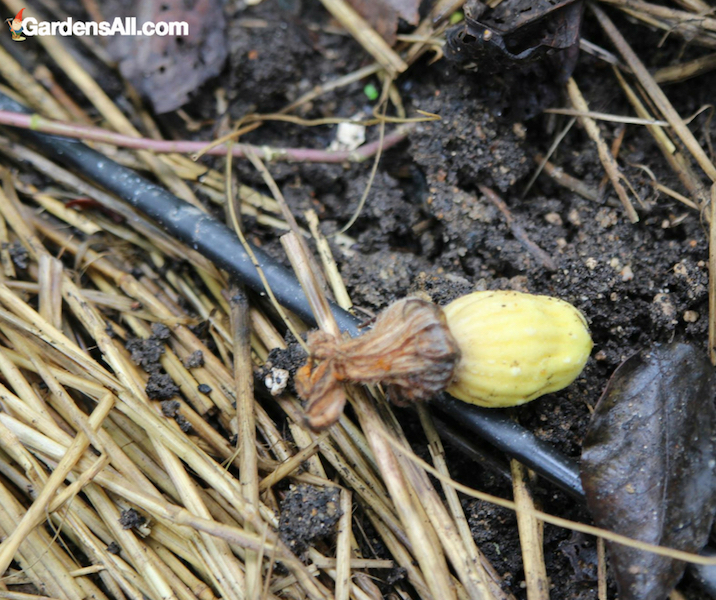
We don’t have good photos of our pumpkin fruits, but the same thing that happened to some of our squash happened to our pumpkins.
Squash Before
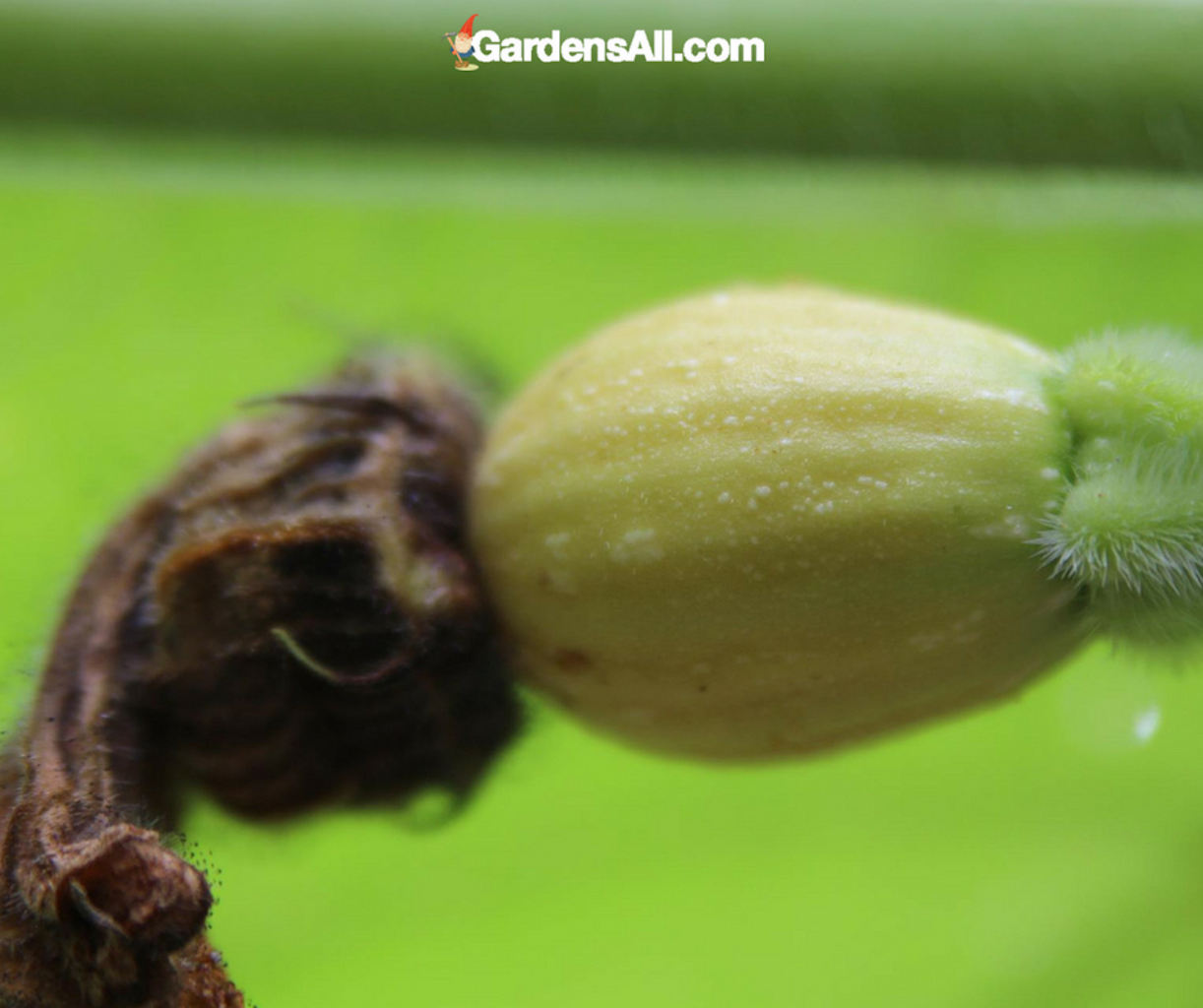
Squash After
The Humble Gardener
We put so much effort in growing from seed and to investing many hours of the day in cultivating the pumpkins and squash. There’s a backlog of articles we’ve done on the topic. It’s quite humbling. There’s not much that can be done at this point, but more research, especially on the topic of fruit fall-off.
Squashed. We’d get excited seeing the little female blossoms and the fruit beneath take form. Then, they’d turn yellow and die.
Not Enough Sun
My wife, LeAura, kept warning me, but I didn’t listen. I didn’t want it to be true. I love plants and gardening and you know how it is. We growers are perpetual optimists. My little garden kept expanding into sections that just didn’t get enough light. I told myself there was enough sunlight. There wasn’t.
Our garden receives minimal sun because we’re in the woods surrounded by tall trees. We have open sky above the garden, but then there are the long tree-cast shadows. We get about 6 hours worth a day. Many of our plants put more energy into leaf growth than setting fruit. This applies to the squash and pumpkins, as well as the tomatoes. [1]https://content.ces.ncsu.edu/home-vegetable-gardening-a-quick-reference-guide
We think this vertical growth is enhanced by needing to get to as much light as possible. We’re not seeing such growth at our sunnier tomato patch.
The indeterminate tomatoes easily reach 14 feet in height. Even the determinate can range over 8 feet.
We think this vertical growth is enhanced by needing to get to as much light as possible. We’re not seeing the same height growth at our sunnier tomato patch, but we are seeing more tomatoes. But of course. It was all right there in front of me, but I didn’t want it to be true.

Minimum of 8 Hours a Day
We are definitely short on sunlight for our tomatoes, eggplants, and, yes, squash and pumpkins. These need a minimum of 8 hours a day and 10 is even better. Lack of sunlight sets up stress and causes some plants to grow spindly and others like our pumpkins, squash, and tomatoes to put on a lot of leaves but not much fruit. Our plants here in the “lower garden” struggle and do their best, but they cannot thrive.
Garden Lesson: The better you know yourself, your capabilities, the garden conditions, and each crop’s requirements, the better your garden will be.
~Coleman Alderson, GardensAll.com

Pareto’s 80-20% Rule
Pareto’s Principle states that we get 80% of our results from 20% of our work. That has certainly been true in our gardening. [2]https://en.wikipedia.org/wiki/Pareto_principle
Contrast our lower garden with just 6 hours of sun versus our “upper garden”. It’s on property to the north, that we don’t live on, that receives anywhere from 8 to 9 hours full sun per day. We tend to the upper garden once or twice a week and see at least 4 times the crop production compared with the lower garden. True, we have some pest issues that can really do damage between our visits, but overall. the plants remain productive right through the season.
Garden Lesson: With enough sun, we see 4x the crop production with approximately 80% less work.
~GardensAll.com
4x More Production, 8x Less Work
With enough sun, we see 4x the crop production with approximately 80% less work. So if your garden is ailing, consider all the conditions, from light to soil and everything in between. When conditions are right your garden is more likely to flourish.

Lesson learned. For fall planting and all planting here on out, we’ll focus on what the plants need more than all that we want to plant. Rather than 20% of our plants producing 80% of the produce, we’re going to focus on those 20% of plants and garden and see how we can maximize that.
Garden Lessons: Focus on your most productive plants and why they’re thriving. Do more of that.
~GardensAll.com

Lessons from the Garden
We could delve into the finer details of soil composition, watering, and what varieties do best. But until the basic requirement for sunlight is met, we’re running uphill on a very slippery slope. I learned way back when in horticulture classes that plants under stress actually attract pests and diseases.
So if your garden is pest-ridden, the cause could actually lie in the health of your “earth and sky” (soil, sun, water).
Garden Lessons: Plants under stress actually attract pests. That’s how nature self-selects the survival of the fittest.
~Coleman Alderson, GardensAll.com
This is one way nature optimizes for the better, healthier generations. Consequently, in our lower garden, we will no longer grow plants that require more than 6 hours of sunlight.
Next year, these crops will be shifted to our upper garden. In part, the time and energy spent to obtain so little is better spent traveling a ways north to tend to them. There’s no sense fighting Mother Nature… and we found that even our passion for gardening, and daily diligence, couldn’t bend her rules!
Meanwhile, in the lower garden, we can grow beans (which are a bit more for