
Poison Ivy rash can be excruciating. If you have poison ivy in your yard, you’ll want effective homemade natural remedies for poison ivy rash first and foremost.
The itchy red bumpy raised areas that can eventually ooze icky liquid can show up from a few hours to a few days after exposure.or like to do hiking in the woods, you’ll want some natural remedies for poison ivy or poison oak in your medicine cabinet.
We’ll also cover natural poison ivy and poison oak remedies that you likely already have in your kitchen.
In our area of the southeast it’s poison ivy that tends to be everywhere in the woods around us. Our kids—especially our son, the wild woodsman, Nikolai—have grown up with frequent bouts of the painfully itchy poison ivy rash. But there is some good news when it comes to these poison, rash-inflicting plants.
Avoidance is the best remedy, so learn how to identify poison ivy.
“Leaves of 3, stay away from me.”
What Does Poison Ivy Look Like?
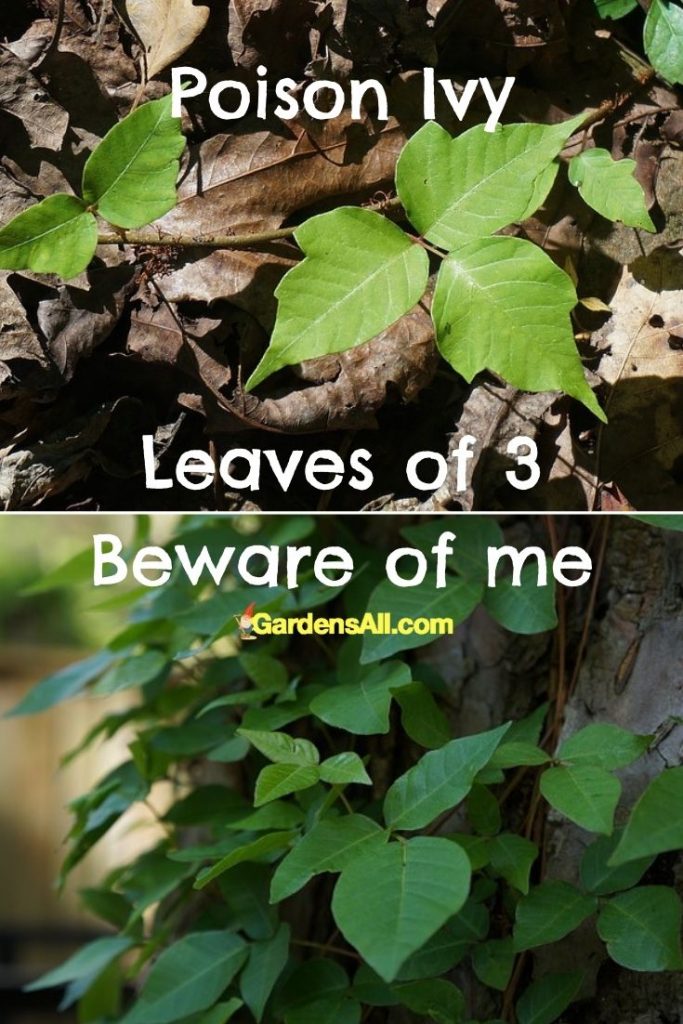
Before we get into the benefits (yes… you read that right) and natural remedies for poison ivy, it’s important to learn how to identify it. There are a couple of sayings that will help you to remember what to look for when your in the woods in possible harm’s way.
“Leaves of three, let it be.”
“Leaves of three, stay away from me.”
“Leaves of three, beware of me.”
Poison ivy grows on single stems on underground runners vines that also grow up and around trees. As those vines get increase in size they look ominous with a wickedly coarse “hairy” appearance.
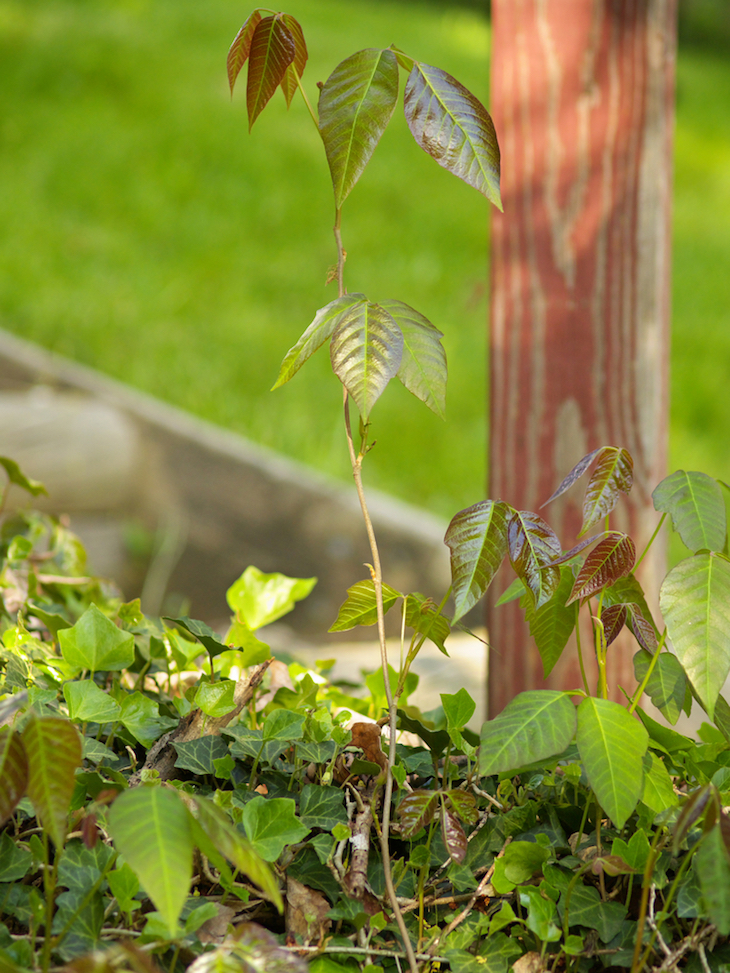
Look for a stem with a larger leaf at the end, and two smaller leaves shooting off the sides. The leaves can be notched or smooth on the edges, and they have pointed tips. ArtOfManliness.com
A close look alike in the early stages are red maple leaf saplings that appear to have three lobes and growing up on spindly stalks.
Some people outgrow their poison ivy sensitivities.
Immunity to Poison Ivy
Good News: You can build up an immunity to poison ivy.
Nikolai reported just the other day that he seems to have built up an immunity to it. He still gets an occasional poison ivy rash, but the bumps are not as many and they’re no longer itchy. Well, that’s a relief!
However, the opposite can also happen. There are people who began life not allergic to poison ivy but who developed reactions later in life.
Genetic Immunity: The other way you can be immune to poison plants is through a genetic immunity. My husband, Coleman, is not bothered by it, nor is our daughter, Devani. Now Devani was adopted from India, (should you wish to read about that), so her immunity was passed down from other genetics. Still, that’s a really good ratio in our family.
Estimates are that approximately 70-85% of the population are allergic to poison ivy, poison oak and poison sumac.[1]https://zidbits.com/2011/02/why-are-some-people-more-susceptible-to-poison-ivy-than-others/[2]https://www.samaritanhospital.org/departments-services/qcare/poison-ivy
Food for Animals
Speaking of immunity, some animals eat poison ivy without any issue. It’s astonishing that something so toxically allergenic to human mammals, can be consumed with impunity.
Animals such as white tailed deer, muskrats, and eastern cottontail rabbits eat the leaves and stems. Many birds, including crows, bluebirds, and turkeys eat the fruit and some insects munch on the leaves.[3]https://www.fcps.edu/islandcreekes/ecology/poison_ivy.htm
Well, it’s good there’s at least some beneficial use to wildlife in this plant that most humans dread.
Medicinal Benefit of Poison Ivy
Formerly officially in the United States Pharmacopeia, poison ivy is used extensive by homeopaths for rheumatism, ringworm and other skin disorders. It is considered to be one of the most useful remedies in a great majority of cases of nettlerash, and eruptions caused by food allergies.
I’ve often mused that there must be some good use to something so potent. So while I’m glad to discover there is medicinal benefit to this poisonous plant, I think I will seek out some of the other beneficial natural remedies first whenever possible.
Having been excruciatingly affected by skin contact with poison ivy, I shudder to imagine risking an internal dose, no matter how tiny. I’m not against homeopathy. I understand the homeopathic principles of micro doses to build up resistance.
However, if there’s any health risk, prudence says to seek out other methods first, especially if you’re obviously allergic to the plant. Also, to always apply such remedies under the supervision of the appropriate medical professional.

Can Poison Ivy Spread by Scratching?
No… and yes!
So scratching alone won’t cause the rash to spread from wherever it is on your skin. In other words, scratching won’t spread from blisters. Scratching is not likely to transfer the poison ivy oil from skin in one area to another, as it has likely already bonded with the proteins in your skin.
Remember, you have about 15 minutes to wash it off before that happens. But… if traces of the poison ivy oils are trapped under your fingernails, the oil can be spread in this way from scratching. So if you’ve heard conflicting information as to this, that’s probably why.
Similarly, poison ivy won’t spread to you or others when the rash blisters and oozes serum. That liquid does NOT have the urushiol resin[4]https://en.wikipedia.org/wiki/Urushiol in it, and will not cause further poison on you or anyone else.[5]https://www.samaritanhospital.org/departments-services/qcare/poison-ivy
The poison ivy, oak or sumac can also be spread by coming in contact with pets or inanimate objects that have come in contact with the plant oils. So, if you’re out with loppers or pruners, cutting out the poisonous plants, be sure to wash your tools after use.
The urushiol oil in poison ivy oil can stay active for 1 to 5 years on any surface, including dead plants.
SOURCE: Indiana Wesleyan University
You can get poison ivy/oak rash from pets, or objects, even years after initial contact, if the item was never washed of the oil from poison ivy leaves, stem, vine or roots.
