Autumn is a season of transformation, where the green foliage of summer gives way to rich warm hues of fall. Purple flowers that bloom in fall stand out as beautifully complementary to the golden, orange and red hues of autumn foliage.
Here, we explore some of these captivating blooms.
Purple Flowers that Bloom in Fall
Fall-Blooming Purple Flowers
Alphabetically by Common Name:
- Aster (Symphyotrichum)
- Beautyberry (Callicarpa)
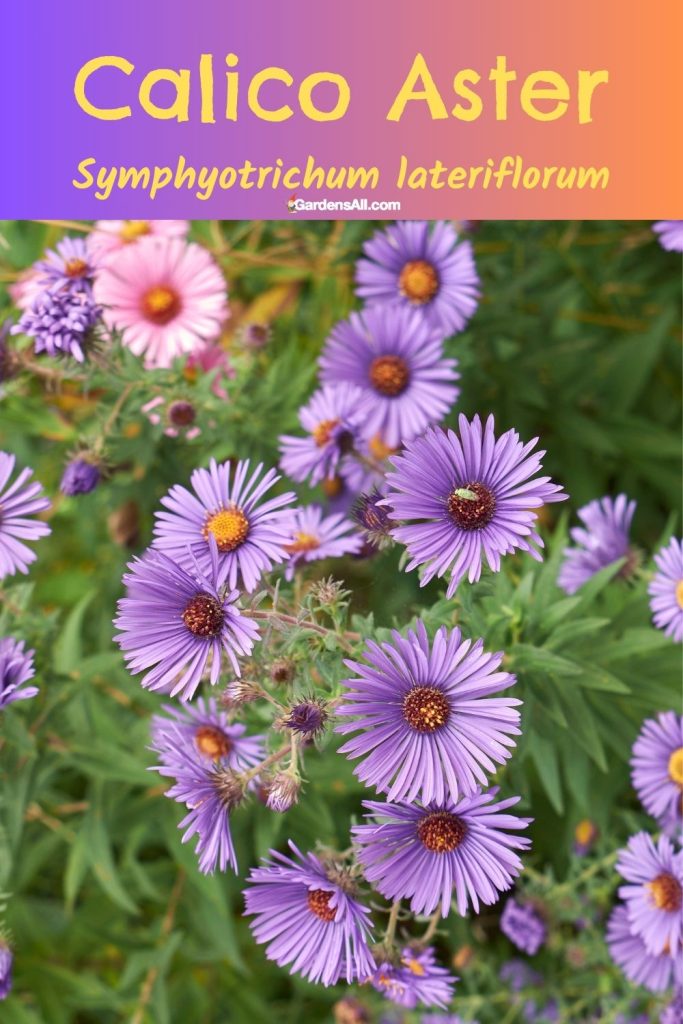
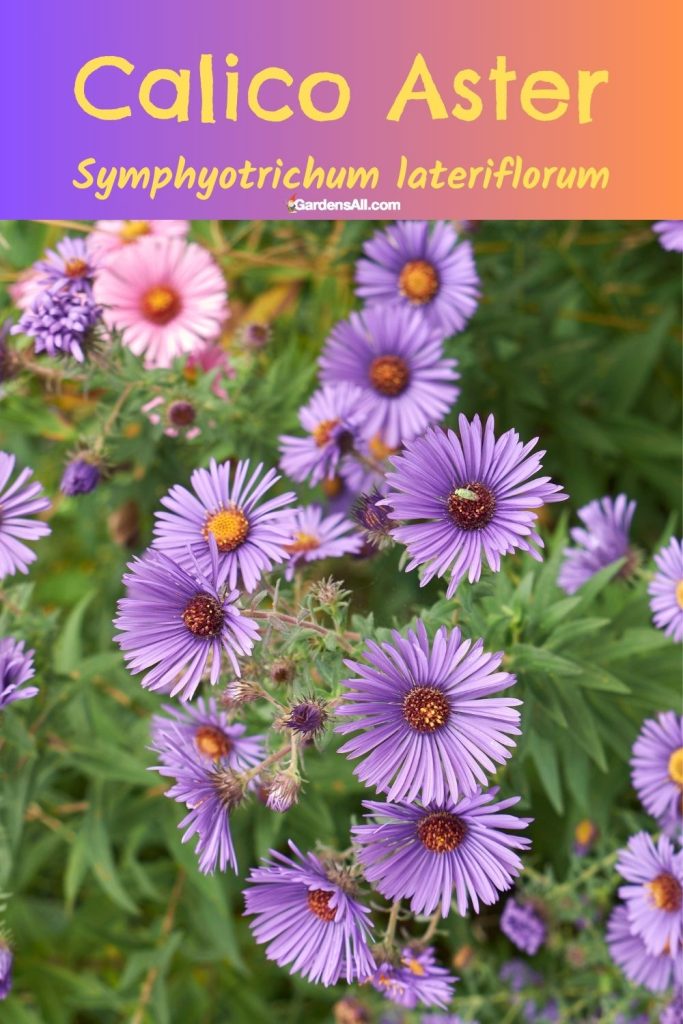
- Calico Aster (Symphyotrichum lateriflorum)
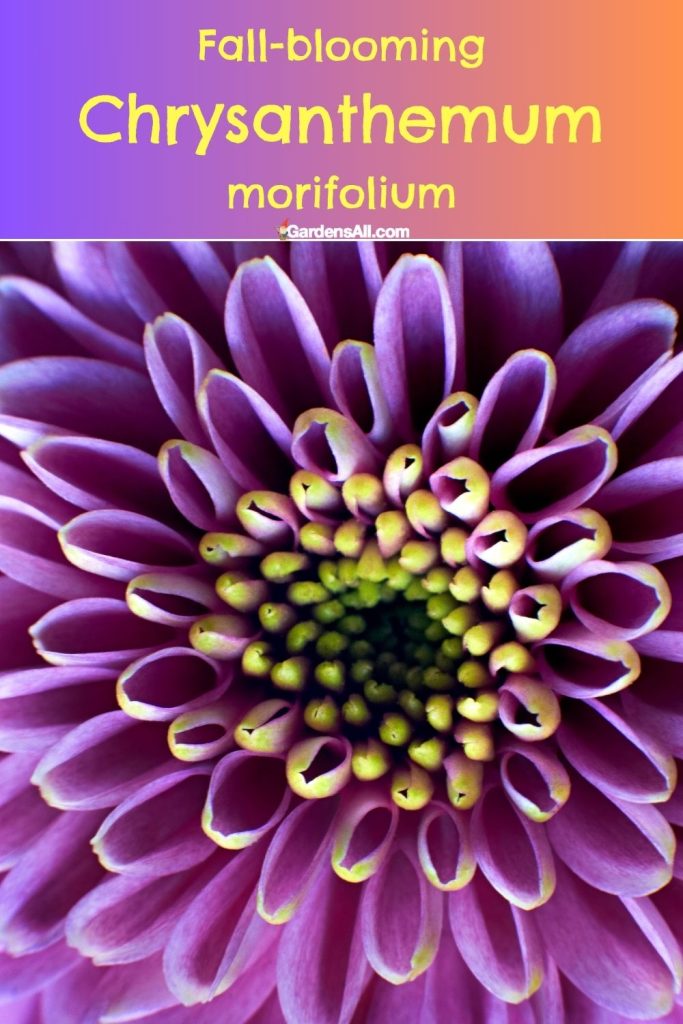
- Chrysanthemum (Chrysanthemum morifolium)
- Colchicum (Colchicum autumnale)
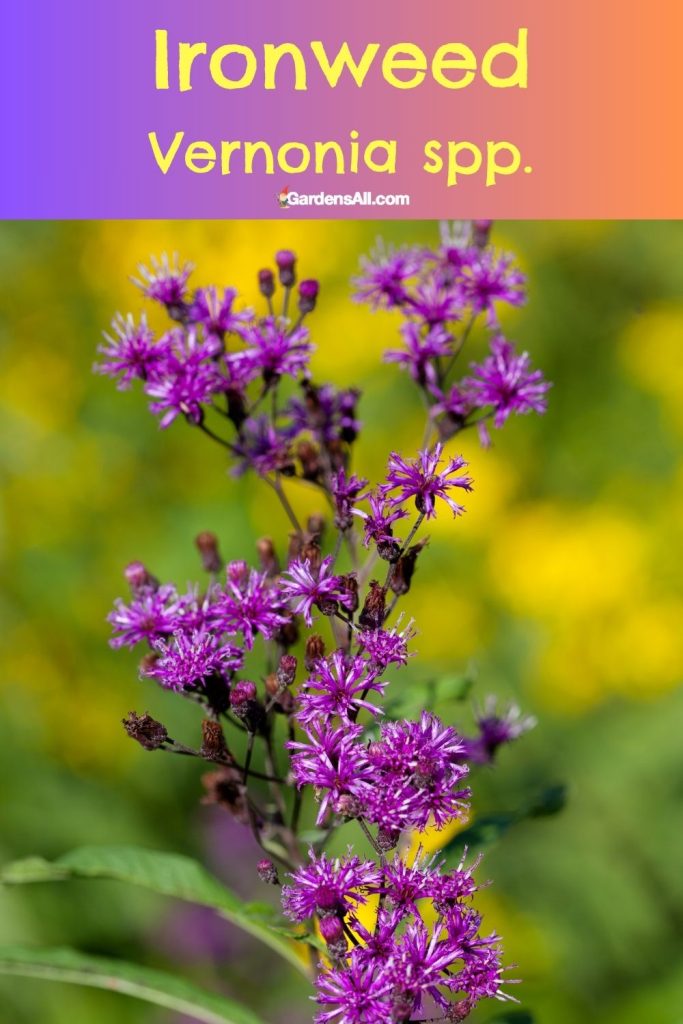
- Ironweed (Vernonia spp.)
- Joe-Pye Weed (Eutrochium purpureum)
- Monkshood (Aconitum)
- Purple Dome Aster (Symphyotrichum novae angliae)
- Russian Sage (Salvia yangii, formerly Perovskia atriplicifolia)
- Salvia (Salvia nemorosa)
- Toad Lily (Tricyrtis) (See also, Toad Lily ‘Autumn Glow‘)
Fall-Blooming Purple Flowers
Alphabetically by Scientific Name:
- Aconitum (Monkshood)
- Callicarpa (Beautyberry)
- Chrysanthemum morifolium (Chrysanthemum)
- Colchicum autumnale (Colchicum)
- Eutrochium purpureum (Joe-Pye Weed)
- Salvia yangii (Russian Sage) (formerly Perovskia atriplicifolia)
- Salvia nemorosa (Salvia)
- Symphyotrichum (Aster)
- Symphyotrichum lateriflorum (Calico Aster)
- Symphyotrichum novae angliae (Purple Dome Aster)
- Tricyrtis (Toad Lily)https://www.gardensall.com/autumn-glow-toad-lily/
- Vernonia spp. (Ironweed)
11 Purple Flowers that Bloom in Fall
Aster
- Scientific Name: Symphyotrichum
- Common Names: Aster
- Hardiness Zones: 4-8
- US States Grown in: Widely grown across the US
- Life Cycle: Perennial
- Bloom Time: Late summer to fall
- Fragrance? Mildly fragrant
- Edible Parts: Young leaves can be consumed raw or cooked.
- Medicinal Parts: Traditionally used for various ailments, including digestive issues, respiratory problems, and skin conditions.
Asters are daisy-like perennials with starry-shaped flower heads. They bring delightful color to the garden in late summer and autumn when many other flowers have faded.
Beautyberry
- Scientific Name: Callicarpa
- Common Names: Beautyberry
- Hardiness Zones: 5-8
- US States Grown in: Southeastern US
- Life Cycle: Perennial
- Bloom Time: Late summer to fall
- Fragrance? No
- Edible Parts: Berries are edible but not particularly tasty. They can be made into jellies or wines.
- Medicinal Parts: Some traditional uses include roots and leaves for medicinal teas.
Beautyberries are known for their vibrant purple berries that appear in the fall. The small flowers that precede the berries are often overlooked but are a delicate addition to any garden.

Calico Aster
- Scientific Name: Symphyotrichum lateriflorum
- Common Names: Calico Aster, Side-flowering Aster
- Hardiness Zones: 3-8
- US States Grown in: Eastern US
- Life Cycle: Perennial
- Bloom Time: Late summer to fall
- Fragrance? No
- Edible Parts: The young leaves and flowers are edible and can be consumed raw in salads or cooked.
- Medicinal Parts: Traditionally used for fever, respiratory issues, and as an astringent.
Calico Aster stands out with its tiny white flowers that have a pink to purple hue at the center. It’s a native wildflower that’s perfect for naturalizing in meadows or the edges of woodlands.
You may enjoy reading more about Calico Aster here.
Chrysanthemum
- Scientific Name: Chrysanthemum morifolium
- Common Names: Chrysanthemum, Mum
- Hardiness Zones: 5-9
- US States Grown in: Across the US
- Life Cycle: Perennial
- Bloom Time: Fall
- Fragrance? Varies by variety
- Edible Parts: The petals of certain varieties are edible and are often used in teas.
- Medicinal Parts: Used in traditional Chinese medicine for inflammation, high blood pressure, and respiratory issues.
Chrysanthemums, often simply called “mums”, are popular fall flowers known for their vibrant blooms. They come in a variety of colors, but the purple varieties are especially striking in the autumn landscape.
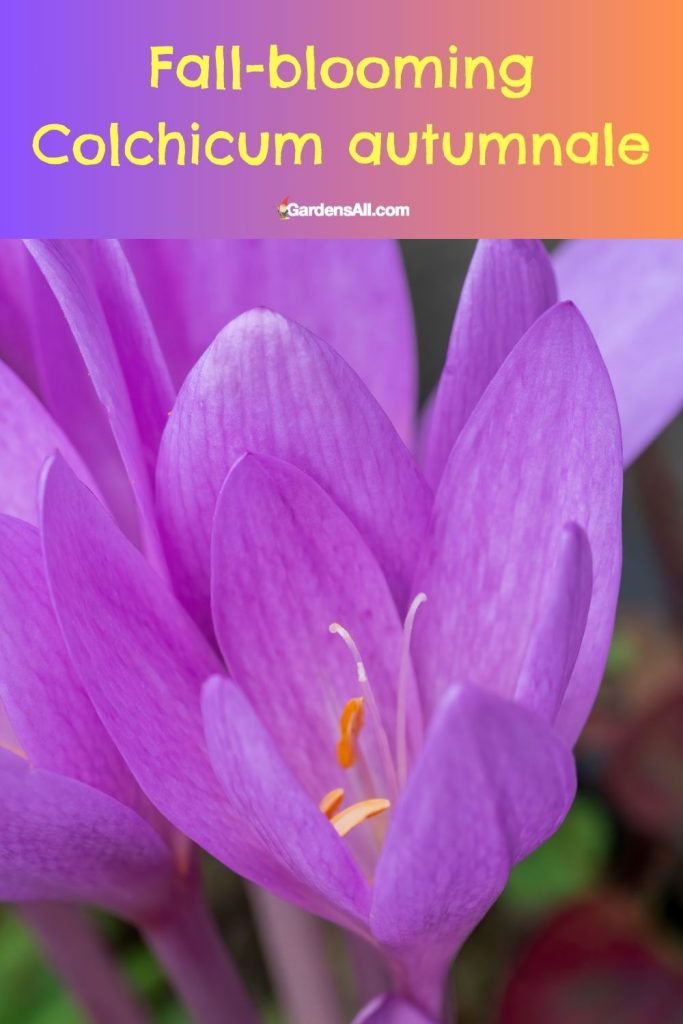
Colchicum
- Scientific Name: Colchicum autumnale
- Common Names: Autumn Crocus, Meadow Saffron
- Hardiness Zones: 4-9
- US States Grown in: Widely grown across the US
- Life Cycle: Perennial
- Bloom Time: Fall
- Fragrance? No
- Edible Parts: None. Colchicum is toxic and should not be ingested.
- Medicinal Parts: Historically used for gout treatment.
Colchicum, often mistaken for crocuses, bloom in the fall with vibrant purple petals. They are a delightful surprise in the garden as the weather turns cooler.
Ironweed
- Scientific Name: Vernonia spp.
- Common Names: Ironweed
- Hardiness Zones: 4-9
- US States Grown in: Widely grown across the US, especially in the East and Midwest
- Life Cycle: Perennial
- Bloom Time: Late summer to fall
- Fragrance? No
- Edible Parts: Young leaves can be cooked and consumed.
- Medicinal Parts: Traditionally used for pain relief and as an anti-inflammatory.
Ironweed gets its name from its tough, rigid stems. It produces vibrant purple flowers that stand out in meadows and gardens. The plant is drought-tolerant and can thrive in various soil types, making it a versatile choice for different landscapes.