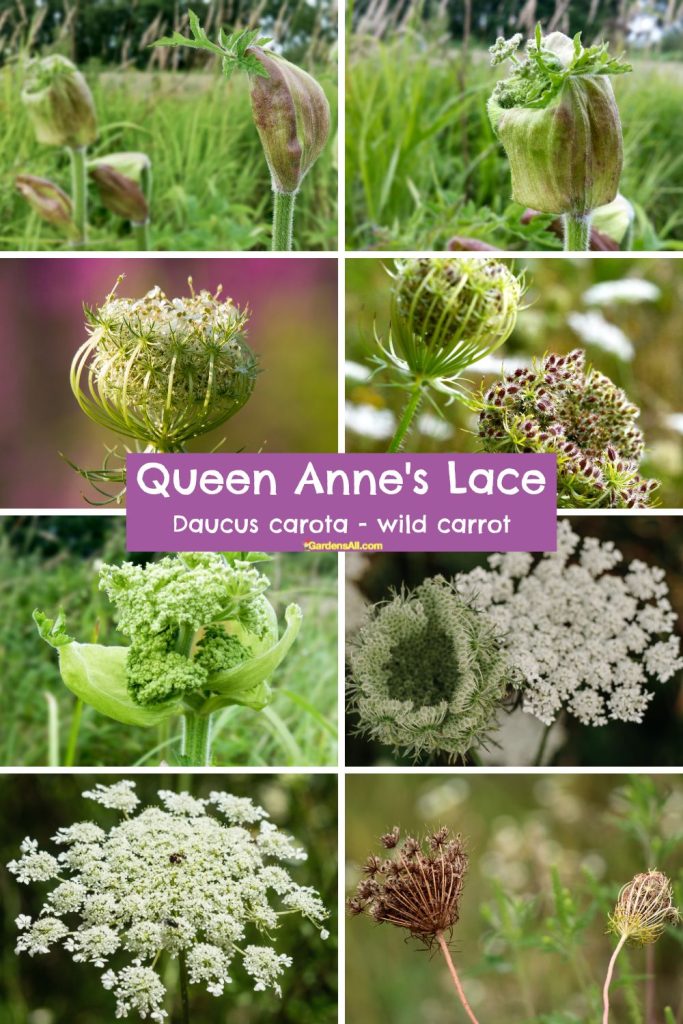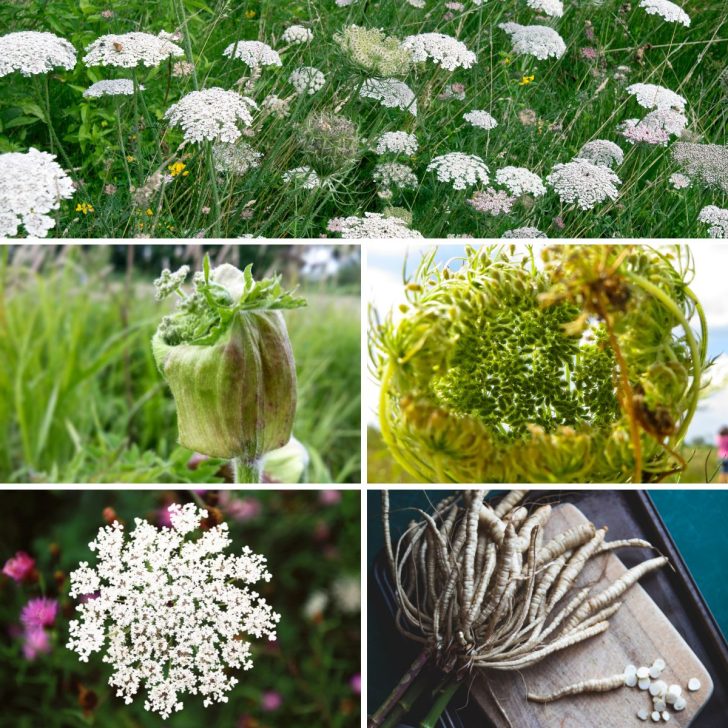
It’s blooming in the fields and roadsides all around us now, so it seemed a good time to look into some of the Queen Anne’s Lace uses and benefits. Also known as Wild Carrot, this is another weed worth knowing about.
Scientifically known as Daucus carota, Queen Anne’s Lace, is a versatile plant with a rich history of uses dating back thousands of years. This biennial flower, also known as wild carrot, is native to temperate regions of Europe and southwest Asia, but is now widespread across North America and Australia.
A harbinger of summer, Queen Anne’s Lace dazzles the eye with its delicate, lacy umbels of tiny white flowers, but it’s not just a pretty face – it offers a multitude of benefits that are sometimes overlooked.
Taxonomy of Queen Anne’s Lace
Before diving into the uses and benefits of Queen Anne’s Lace, let’s explore its place in the biological hierarchy:
- Domain: Eukarya
- Kingdom: Plantae
- Phylum: Tracheophyta
- Class: Magnoliopsida
- Order: Apiales
- Family: Apiaceae
- Genus: Daucus
- Species: D. carota
- Genus: Daucus
- Family: Apiaceae
Common Names of Queens
Daucus carota, or Queen Anne’s Lace, is known by a variety of common names around the world, which can vary significantly depending on the region. Here are some of its most frequently used common names, listed in alphabetical order:
- Bee’s Nest
- Bird’s Nest
- Bishop’s Lace
- Crow’s Nest
- Devil’s Plague
- Garden Carrot
- Lace Flower
- Queen Anne’s Lace
- Wild Carrot
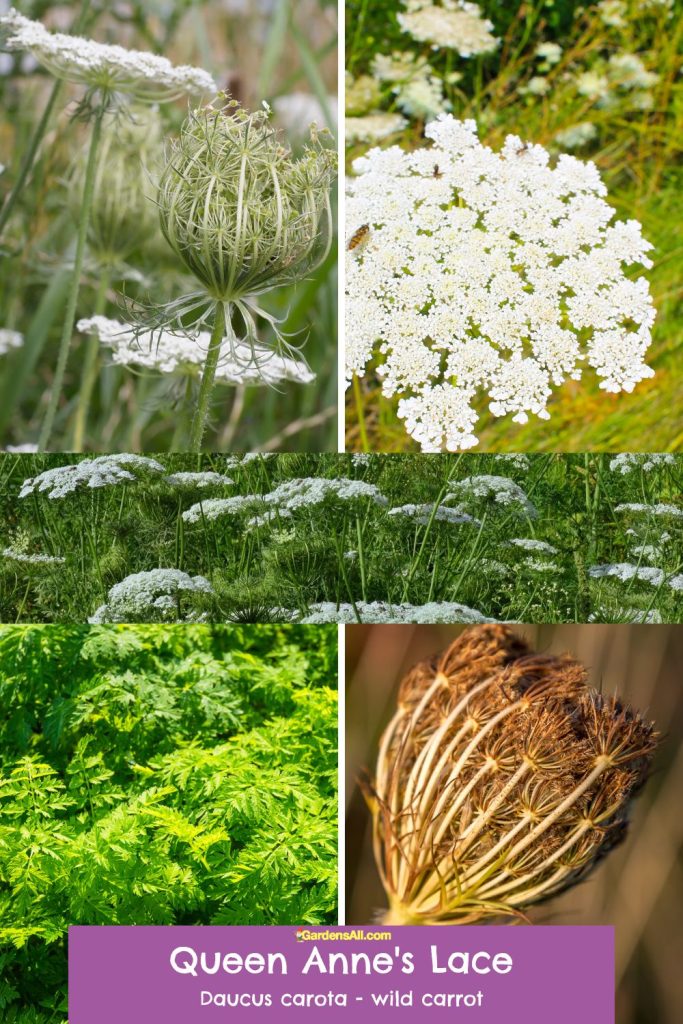
Common names often reflect the plant’s appearance or characteristics. For example, “Bird’s Nest” and “Crow’s Nest” refer to the shape of the dried flower umbels, which curl up to form a nest-like shape.
The scientific name for Queen Anne’s Lace, Daucus carota, comes from the ancient Greek word “Daucus”, δαῦκος (daûkos), meaning wild.
The word “carota” is derived from Latin and simply translates to “carrot”. Its origins are somewhat uncertain, but it’s believed to have roots in the Indo-European word “ker-“, meaning “horn”, due to the horn-like shape of the carrot.
Now that we’ve got her identified, let’s get to know the wild carrot a bit more.

Queen Anne’s Lace Uses and Benefits
Uses for Queen’s Anne’s Lace
Culinary Uses
Wild carrot, also known as Queen Anne’s Lace or Daucus carota, is the progenitor of the cultivated carrot we eat today. Different parts of the wild carrot can be used for culinary purposes, but caution must be exercised because it closely resembles several poisonous plants, such as water hemlock.
- Root: The root of the wild carrot can be used similarly to the domestic carrot. However, it’s smaller, woodier, and less sweet. It’s best harvested in the plant’s first year, before the root becomes too tough, and can be used in soups, stews, or eaten raw and in salads. If harvest later, it can be juiced or used to contribute flavor and nutrients to soup stock.
- Seeds: Wild carrot seeds are aromatic with a slightly bitter, earthy flavor. They’ve been used as a seasoning or spice, and sometimes as a replacement for caraway seeds.
- Flowers: The flower heads can be used to make jelly with a unique, sweet flavor. The flowers can also be used to garnish dishes. Some like to bread and fry them, although this is the least healthy way to consume them any food.
- Leaves: The young leaves of the wild carrot can be eaten raw in salads or cooked like spinach. However, they have a somewhat strong, carrot-like herbal flavor, so you may prefer to use them more as an herb than as a leafy vegetable.
Please be careful if you’re considering foraging for wild carrots and be 100% sure of identification before consumption, and harvest responsibly for sustainability.
Medicinal Uses
Queen Anne’s Lace (Daucus carota), has been used in traditional medicine for centuries. However, please note that while these traditional uses exist, not all have been rigorously scientifically tested or proven.
- Seeds: Ethnobotanical uses include:
- abortifacient / natural contraception
- antiseptic
- aphrodisiac
- cancer
- carminative
- cough
- diarrhea / dysentery
- diuretic – to help stimulate kidney function and relieve edema
- tumors
- stimulant / tonic
- stomachic, for appetite and digestion
- Seeds: Scientifically proven benefits include:[1]https://pubmed.ncbi.nlm.nih.gov/16093236/
- antibacterial
- bactericidal activity against a number of strains:[2]https://pubmed.ncbi.nlm.nih.gov/16093236/
- Root:
- bladder issues
- diuretic
- kidney stones
- poultice applied topically to help heal wounds and soothe skin irritation
- Leaves: The leaves of the Queen Anne’s Lace plant have been used traditionally to treat:
- poultice can be applied to wounds and insect bites.
- urinary tract infections
See also, lamb’s ear plant uses.
- Flowers: The flowers are typically made into a tea or infusion and used traditionally for:
- candida
- digestive issues
A 2016 study proved Queen Anne’s Lace flower essential oil to be effective against certain bacteria, including candida.[3]https://www.ncbi.nlm.nih.gov/pmc/articles/PMC3249369/
Low concentrations of Queen Anne’s Lace essential oil inhibited more than 50% of candida albicans filamentation in a 2016 study.
STUDY: New Claims for Wild Carrot (Daucus carota subsp. carota) Essential Oil[4]https://www.ncbi.nlm.nih.gov/pmc/articles/PMC3249369/

Craft and Decoration Uses
Queen Anne’s Lace, with its lovely lacy flowers and delicate structure, has been used in various craft projects. Here are a few examples:
- Dried Flower Arrangements: The flower heads of Queen Anne’s Lace dry well and retain much of their beauty, making them a popular choice for dried flower arrangements. They can be used in their natural color or spray-painted to fit a particular color scheme, or dyed with food coloring.
See How to Dye Flowers With Food Coloring. - Pressed Flowers: The delicate structure of Queen Anne’s Lace makes it a great candidate for pressing. Pressed flowers can be used to make greeting cards, bookmarks, or to embellish picture frames or other household items.
Examples of real pressed and dyed Queen Anne’s flowers on Amazon. - Natural Dye: The roots of the plant can be used to make a natural dye. The color obtained can vary from cream to beige depending on the chemical used to extract and set the dye.
- Potpourri: The dried flowers and seeds of Queen Anne’s Lace can be used in homemade potpourri for a subtle, sweet carrot scent.
- Jewelry: The delicate flowers can be encased in resin to create unique pieces of jewelry such as pendants or earrings.
- Wreaths: Dried Queen Anne’s Lace can be used to make beautiful, rustic wreaths for home decoration.
- Candle Decoration: Pressed Queen Anne’s Lace can be incorporated into the design of homemade candles, adding a botanical element.