
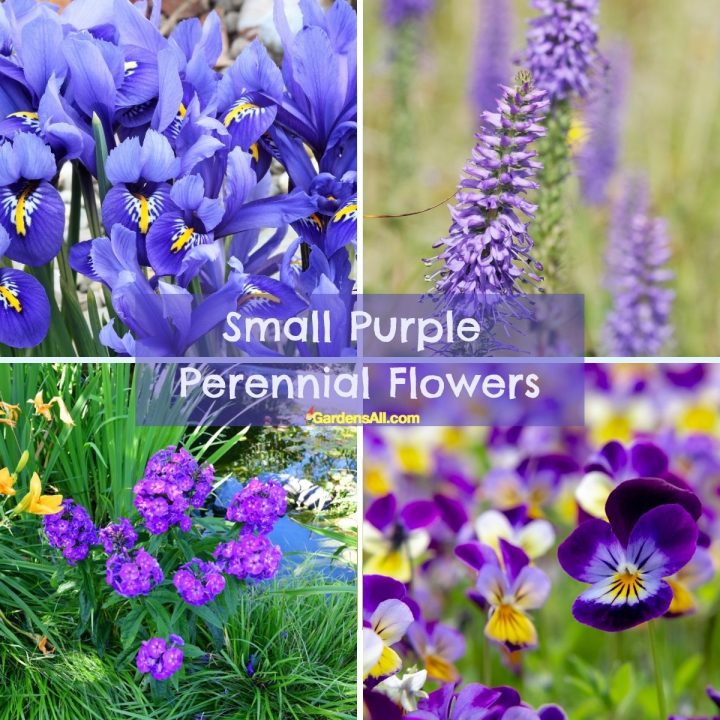
If you’re looking for a small, low-maintenance flower that will add vibrant pops of purple to your flower bed, cottage garden, or landscaping, here are a few ideas to choose from. All of these are tough, beautiful, and, of course, small perennial purple flowers.
10 Favorite Small Purple Perennial Flowers
- Dwarf Purple Iris
- Spike Speedwell
- Hyacinth
- Creeping Phlox
- Periwinkle
- Horned Violet
- Geranium
- Crocus
- Freesia
- Sweet Alyssum
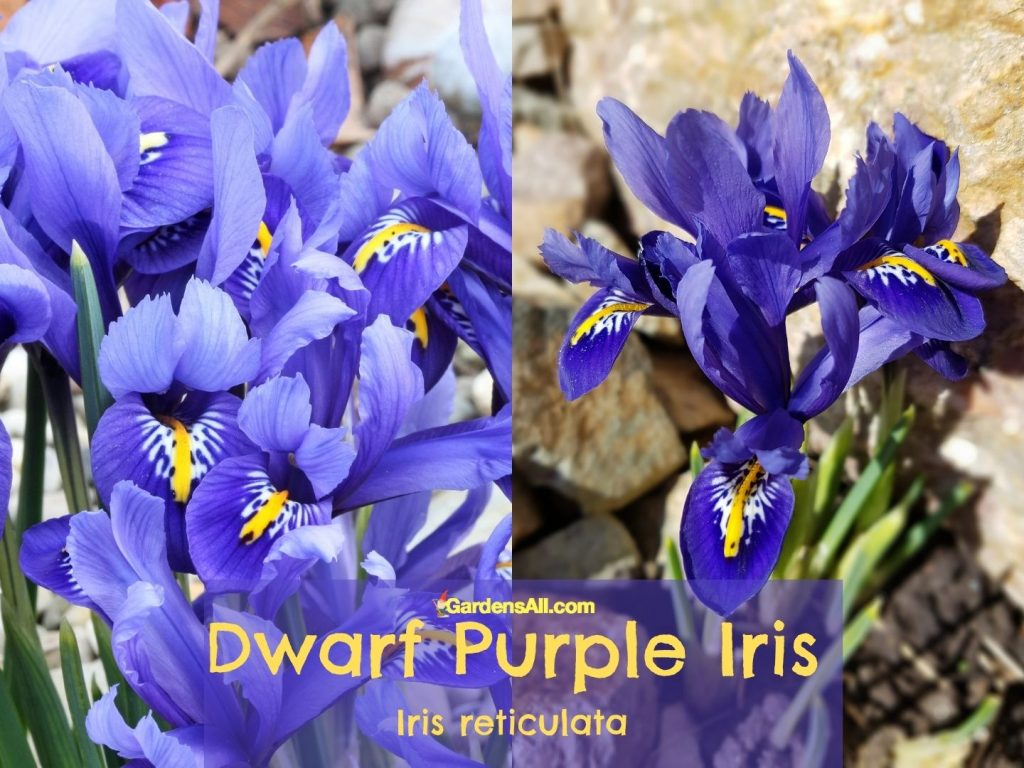
Dwarf Purple Iris, Iris reticulata, Zones 5-8
Blossoms
Iris reticulata is a sweet and dainty little four-inch tall bulb-perennial that blooms in late winter or early spring. Each bud only lasts for four to seven days, but they bloom in succession for a total of three to four weeks.
These tiny beauties do best in USDA hardiness zones five through eight. If you live in a zone outside of this range, your irises will likely be annuals.
Sun and Soil
Dwarf Irises do not need much water, they are drought resistant, and prefer alkaline to neutral soil. Full to partial sun is preferred.
Pests
Deer do not ingest purple iris. In fact it is rare for these short lived flowers to face any issues with pests, fungi, or diseases.
See also, perennial deer resistant flowers.
Traditional Uses
Most people simply use them as decorative flowers, though native Americans used their roots as emetics and laxatives. They can be toxic to people in large quantities, or to pets in smaller quantities.
Spike Speedwell, Veronica Spicata, Zones 3-8
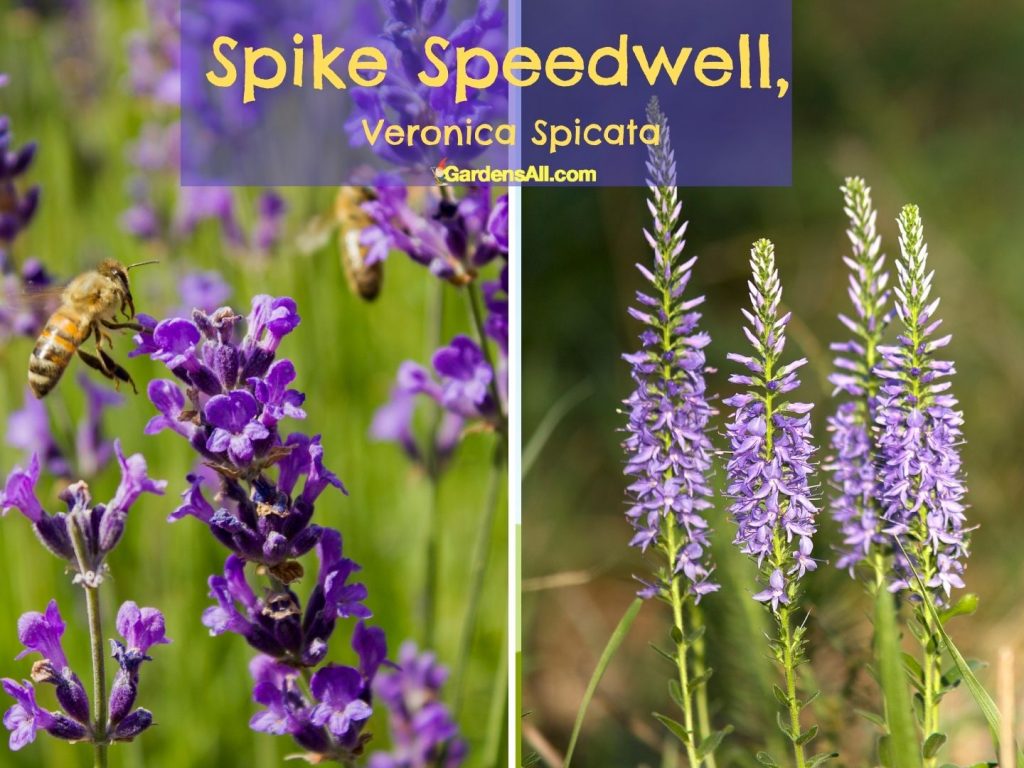
Spike Speedwell is commonly referred to as Royal Candles and is scientifically named Veronica Spicata.
Long Lasting Blossoms – Spring to Fall
These violet star-shaped, clustered spike flowers last from late spring well into the early fall, and stand six inches tall at maturity.
Grow them in USDA hardiness zones three to eight as perennials in full sunshine. They like well-drained neutral soil that is regularly watered. However, they can tolerate droughts.
Pests
While deer generally leave Veronica Spicata alone, aphids, slugs, and snails will not. These flowers are not known to be toxic to people or pets.
Pollinators
Spike speedwell are commonly used to attract pollinators such as butterflies, bees, and hummingbirds.
Traditional Uses
These Royal Candle flowers have also been used to naturally treat hemorrhages, ulcers, diseases, and various infections throughout history. They are ingested as tea most of the time. Some believe that it increases metabolism rates while also purifying blood.
Hyacinth, Hyacinthus Orientalis, Zones 4-8
These wonderfully sweet aromatic flowers bloom in the middle of spring. They are perennial bulbs that stand at six to eight inches tall, and produce lovely purple blooms that are made up of dozens of tiny delicate flowers.
Sun and Soil
Hyacinthus orientalis, does well in USDA hardiness zones four through eight, and like moist but well-drained soil in full sunshine or partially shady locations. They also like acidic to neutral soil pH and tolerate most types of nutritional soil qualities.
Pests & Disease
Hyacinth bulbs are toxic for people and pets, so use caution. Rodents love to eat the bulbs as they burrow. You can prevent this from being an issue by planting within containers, or by dropping gravel into the hole with the hyacinth bulb. They are prone to mosaic virus as well.
Traditional Uses
Hyacinth is used to adorn spring gardens and to heal as an herbal remedy.

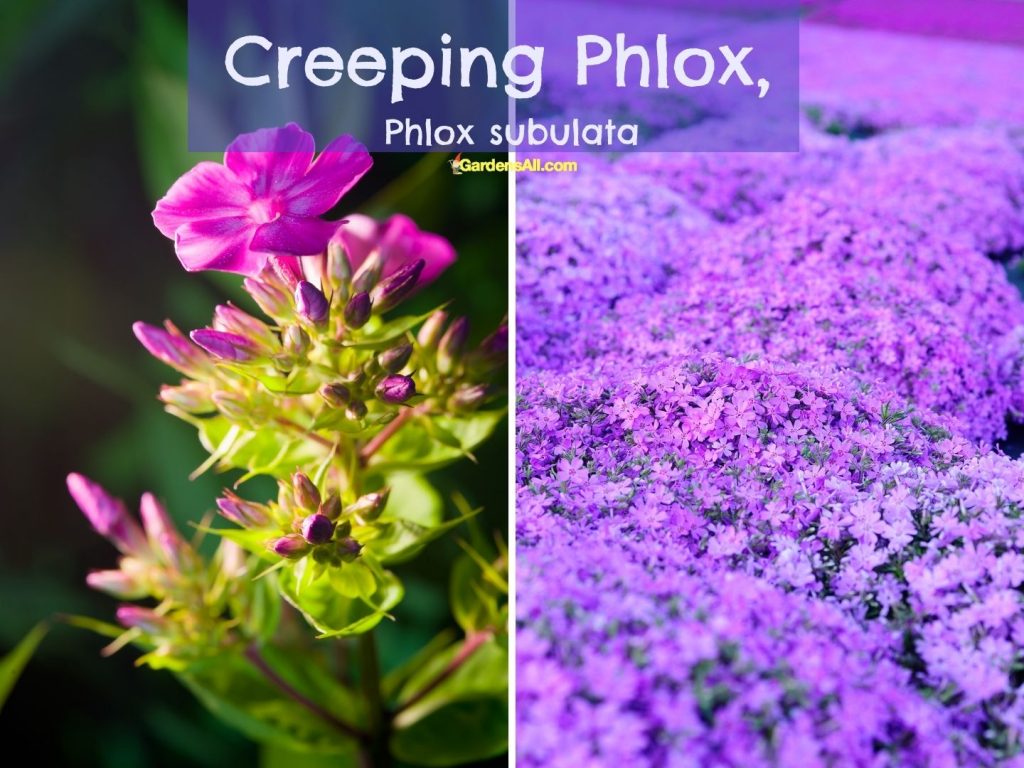
Creeping Phlox, Phlox subulata, Zones 3-9
Phlox subulata is a perennial and semi-evergreen that produce small, starry, five-petaled ground cover flowers. They are also used as cascading decorative plants in landscapes. Creeping phlox only grows to be four to six inches tall, but with a two-foot wide spread of generously abundant blossoms.
Sun and Soil
It is important that you plant it in well-draining soil, or even directly into small rocks, where it will receive full sunshine throughout the day. They do best in USDA zones three through nine.
Creeping phlox spreads quickly, but luckily has attractive blooms, and is an effective soil-erosion prevention.
Pests and Disease
Since these plants don’t give much space between booms, black rot can be an issue. Deer and other pests generally leave it alone.
Traditional Uses
It can be used ornamentally, or herbally as a tea. Many use it to treat intestinal and stomach disorders. Others steep the roots to create an eyewash.
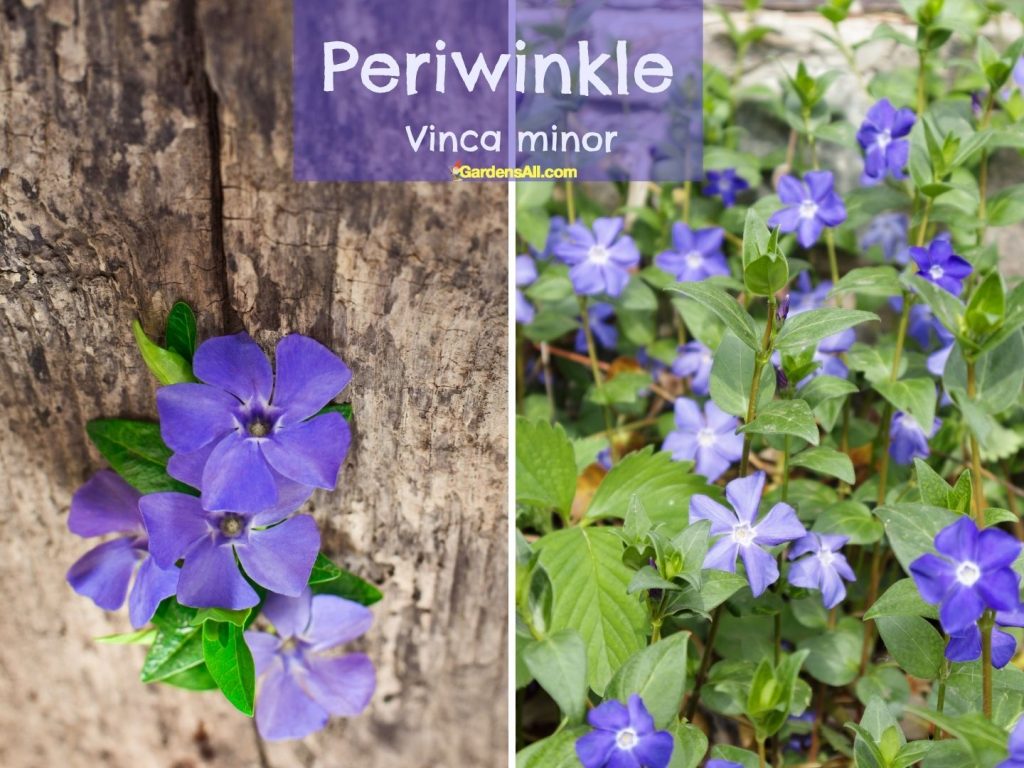
Periwinkle, Vinca Minor, Zones 4-9
Periwinkle, Vinca Minor, is another groundcover evergreen-perennial that is low-maintenance, pest-resistant, and perfectly purple in color. it grows to be three to six inches tall, and makes horizontally growing vines that can stretch to be a foot and a half long.
Sun and Soil
This plant does best in USDA zones four through nine. You can place this adaptable plant wherever you want, as it does great in full sun or full shade, in acidic to alkaline soil, and tolerates nearly any type of soil quality.
Pets & Disease
Vinca minor is toxic to dogs, but not cats. Unfortunately, it is susceptible to fungal leaf spots and canker lesions on the leaves, so experts advise to water the soil while doing your best not to water the foliage.
RELATED: See other plants poisonous to dogs.
However, we have tons of periwinkle in our yard for over 30 years now, and though we’re in a humid area that gets ample rain, we’ve never had issues with fungus or canker lesions on our finca leaves.
But if yours suffer from fungal leaf spots, you might try drip irrigation to minimize water on the leaves.
Pests and Wildlife
Deer, rodents, pests, and other wildlife usually don’t disturb periwinkle plants.
Traditional Uses
Periwinkle is used as a ground cover for gardens and landscapes, as well as a health item. People use it to treat high blood pressure, high water retention, excessive vaginal discharge, diarrhea, high blood pressure, and sore throats.
Horned Violet, Viola Cornuta, Zone 3-9 or 5-9
Horned Violet, Horned Pansy, or Viola cornuta, is a deeply rich purple flower with a vibrant yellow center. Some varieties of it have lighter purple tones, while others have splashes of light lavender or even white mixed in with the purple. They grow to be eight inches tall and ten to twelve inches wide.
Long Blooming, Spring to Fall
They bloom all through the summer, sometimes starting in the spring and ending in the fall, depending on the variety.
Sun and Soil
These plants do best in rich, moist, well-drained soils where it is partially shaded. Horned Violets in cold regions can tolerate full sunshine. They grow in zones three to nine or five to nine (depending on the cultivar) as perennials. However, most people and greenhouses treat them as annuals.
Pests and Disease
Violets are deer, rodent, and wildlife resistant; violet gall midges, snails, slugs, and spider mites can target them. Powdery mildew can also become an issue if the environment is too damp with not enough airflow.
People and Pets
Violet roots are toxic to people if ingested. They are not toxic to pets.
Traditional Uses
Some people drink violet tea for better sleep, while others crush the petals to create a salve