Nature’s Own Pest Control
Recently, a reader mentioned that she had spider mite problems afflicting her plants indoors and out. So that problem sent us into the research on spider mite predators.
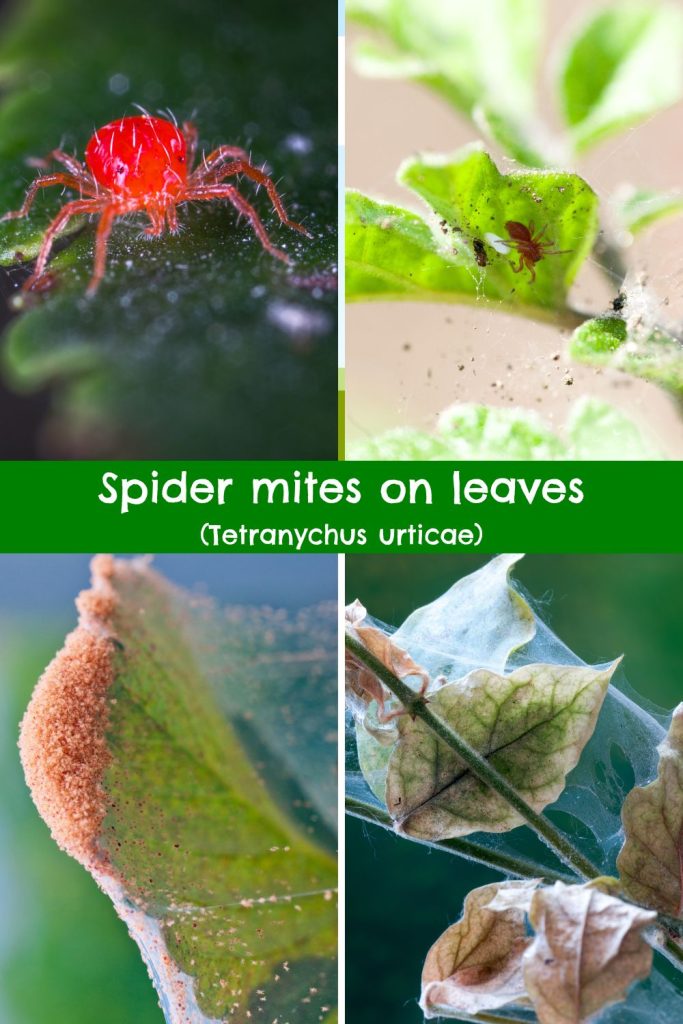
Spider mites (Tetranychus urticae), are a common pest problem for gardeners and farmers worldwide, as well as for plant lovers with houseplants. These tiny arachnids can severely damage or even kill plants by sucking the chlorophyll out of their leaves.
Although chemical pesticides can be effective against spider mites, they can also harm beneficial insects, disrupt ecosystems, and lead to pesticide-resistant mite populations. A more sustainable and environmentally friendly alternative is biological control, using natural predators to keep spider mite populations in check.
Below, we explore some of the most effective spider mite predators and how they can be used in pest management strategies.
Phytoseiulus persimilis, AKA Persimilis Mite
Phytoseiulus persimilis is a species of predatory mite that is highly specialized in hunting spider mites. Native to the tropics but bred worldwide for biological control, these mites feed exclusively on spider mites and can consume up to 20 spider mites (or 200 of their eggs) per day. They are most effective in warm, humid conditions and are widely available for purchase from biocontrol suppliers and from Amazon.
Other Pests Targeted by Phytoseiulus persimilis
Phytoseiulus persimilis is a specialist predator, meaning it primarily feeds on spider mites and their eggs. In the absence of spider mites, P. persimilis might consume other mite species, although they are not known to feed on or control other pests.
Recommended Release Rates for Phytoseiulus persimilis
The recommended release rate for Phytoseiulus persimilis varies depending on the severity of the spider mite infestation. For preventative control, apply 1-2 mites per square foot. For mild to moderate infestations, apply 2-4 mites per square foot. In severe cases, you may need to apply up to 10 mites per square foot. Regular releases are more effective than a single large release.

Neoseiulus californicus, AKA Californicus Mite or California Predatory Mite
Neoseiulus californicus, another species of predatory mite, is more tolerant of various environmental conditions than P. persimilis, making it a more flexible option for spider mite control. While it does consume spider mites, it can also subsist on pollen and other small arthropods, allowing it to survive when spider mite populations are low.
Other Pests Targeted by Neoseiulus californicus
In addition to spider mites, Neoseiulus californicus will also feed on other types of mites, and can even consume small insects and pollen, making it a more generalist predator.
Recommended Release Rates for Neoseiulus californicus
For preventative measures, release around 1-2 Neoseiulus californicus mites per square foot. For light to moderate infestations, release 2-5 mites per square foot. In cases of severe infestations, it may be necessary to release up to 10 mites per square foot. Remember, multiple releases over time can enhance effectiveness.

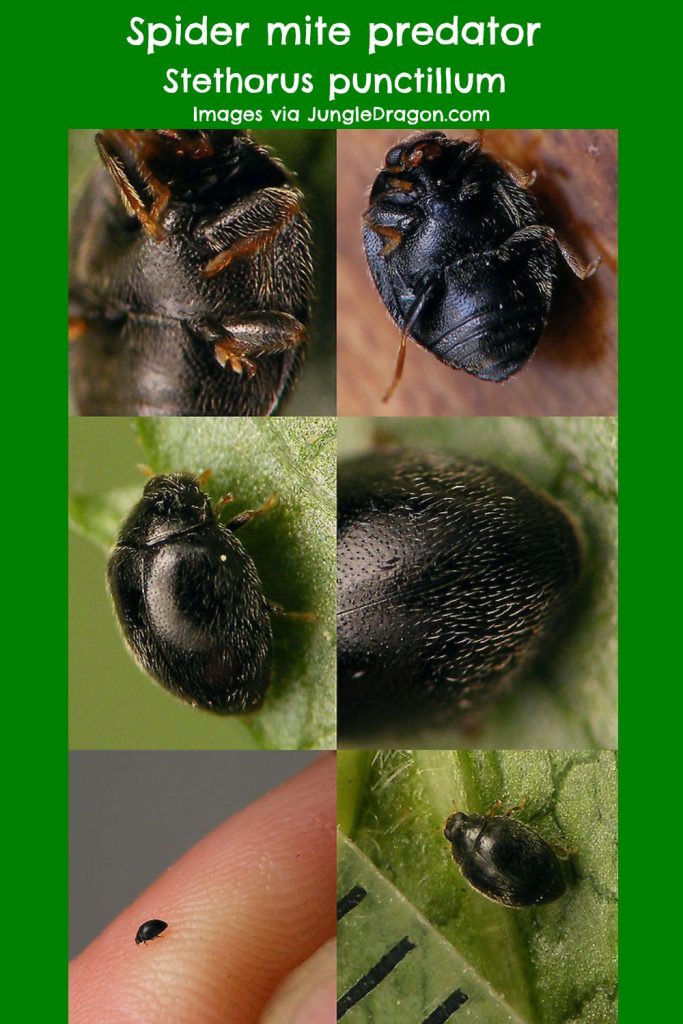
Stethorus punctillum, AKA Spider Mite Destroyer or Spider Mite Ladybeetle.
Stethorus punctillum, a type of lady beetle, is another valuable predator of spider mites. Both adults and larvae feed on spider mites, with larvae able to consume dozens of mites each day. These beetles are particularly useful in larger outdoor settings, such as orchards or large gardens, where they can fly from plant to plant in search of prey.
Other Pests of Stethorus punctillum
Although Stethorus punctillum primarily feeds on spider mites, they can also consume other types of mites if their primary food source is not available.
Recommended Release Rates for Stethorus punctillum
Release rates for Stethorus punctillum are typically around 100 beetles per tree, or 10-50 beetles per plant for smaller plants. The exact number depends on the size of the plant and the severity of the infestation.