Where Are They, What Are They and How to Grow Ramps
We’ve been researching and planting ramps here in North Carolina, and the more we learn, the more excited we are about future prospects for growing ramps vegetables for food, health and profit!
And while most people just call them ramps, rather than ramps vegetables, when writing an article about them, we have to include the additional words of “ramps plant” or “ramps vegetables” in order to distinguish them from something like access ramps!
If you’ve never heard of them, or have but want to know more, I think you’re in for a treat. We’re certainly enchanted!
What Are Ramps – the Food?
The wild ramp, botanical or scientific name — Allium tricoccom — is a deliciously edible vegetable with edible greens and bulbs.
Common Names for Ramp Vegetables – Allium Tricoccom
Ramp / Ramps
Ramson
Spring Onion
Wild leeks
Wild garlic
Wood leek
Ramp Plant Parts
Bulbs – white
Stems – red
Leaves – spring green
Flowers – white
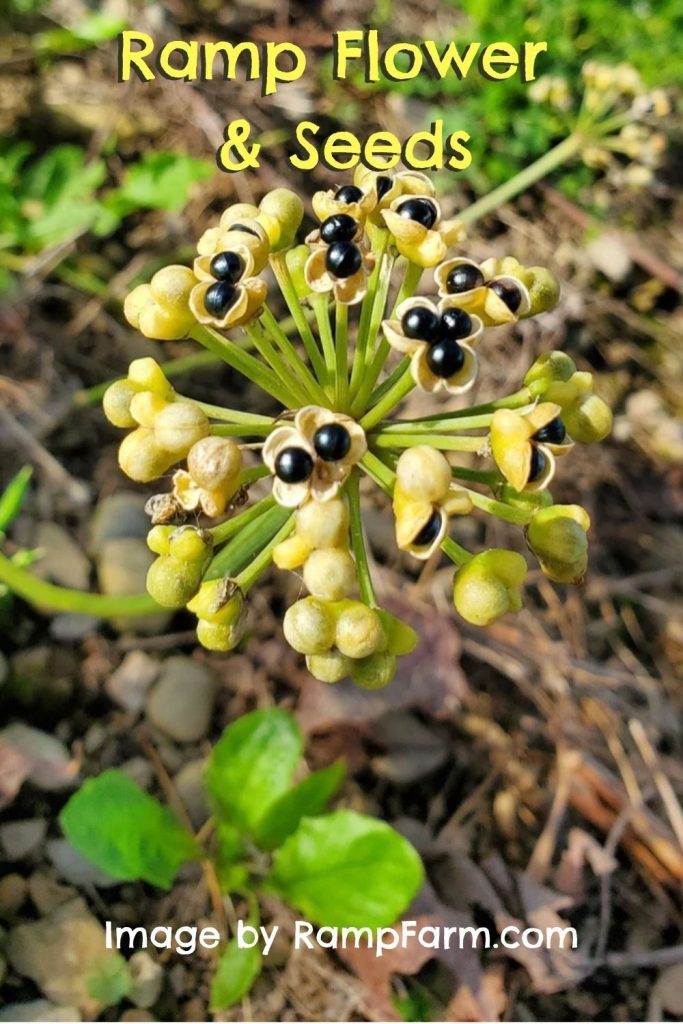
Seeds – black
What Do Ramps Taste Like?
Ramps taste like a cross between wild onions and wild garlic.
The edible ramp bulbs look like spring onion bulbs, with a strong pungent taste of the perfect blend of onion and garlic. It’s like nature prepared her own dish of perfectly blended onions and garlic in ramps.
The entire ramp plant — leaves, stems and bulbs — is edible and can be used in much the same way you’d use those favorite seasoning vegetables. But more than that, ramps also have flavorful, nutrient rich greens and health boosting bulbs that can be cooked up in all kinds of dishes.
As a food source, the Allium species are foraged, cultivated and prepared by people all over the world. Allium tricoccom belong to a very large family including onions, garlic, leeks, chives, spring onions, garlic chives, scallions, and wild garlic.
Where Do Ramps Grow?
Ramps are native to North America and widely used by native cultures. European settlers, familiar with consuming a similar type of wild leek — Allium ursinum — began harvesting ramps as the first wild leafy vegetable to emerge in spring. Loaded with minerals, vitamins and antioxidants, ramps were considered a health tonic.
Ramps are especially popular in the native woodland mountains of Appalachia where special ramp dinners and festivals are held to celebrate and partake of these “wild leeks”. Many community organizations have come to depend on ramp dinner revenues. And, during the impending spring of 2021 still under the effects of the Covid-19 pandemic, many eateries will be offering take out or drive thru ramp dinners.
Although ramps are native to the Eastern portion of the US/Canada (see map) they are worth trying to grow in the Pacific Northwest as well. You can read more about that in Perennial Vegetables by Eric Toensmeier.
When is Ramp Season?
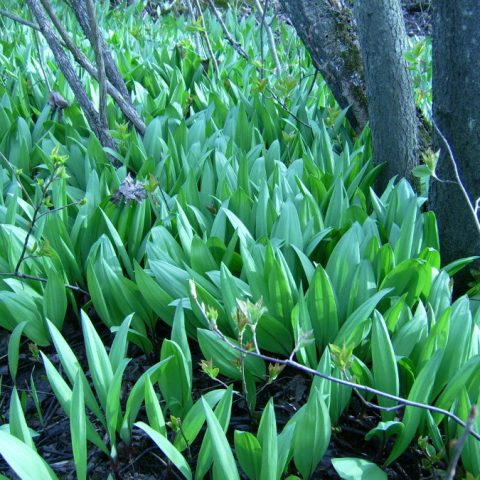
The perennial ramps are early spring edible plants that emerge with lily like leaves anchored by bulbs and roots in the decaying leaf fodder of deciduous forests. Bright kelly green ramp leaves are easy to spot as they grow usually two at a time to a mature size of 8-10 inches.
As the tree canopy above leafs out and throws more shade below, the leaves lack the ability to photosynthesize and soon die off. Eventually, flower stalks appear and once fertilized, produce round black seeds. Very few of these ramp seeds take hold enough to produce plants after overwintering. Some seeds take another warm period followed by a cold winter to propagate.
WARNING: Do NOT confuse lily of the valley for ramps, for Lily-of-the-Valley, C. majalis, is highly poisonous.
Foraging Ramps
Ramps have increasingly gained popularity as a gourmet delicacy in city restaurants and upscale produce markets. Unfortunately, this has the effect of encouraging profit seeking foragers to over harvest ramps. Much like those who hunt ginseng, these enterprising but short-sighted hunter-gatherers often clear out an entire patch of ramps at a time, heedless of the after effects. Either that, or there are several waves of people foraging, with the same result: more demand than supply.
The growing popularity of the “wild ramp” has had an unsustainable impact on its presence in the wild forest. Ramps are slow to propagate, slow to spread, and slow to recover from over-harvesting. Some states have begun issuing restrictions on foraging in their forest lands.
The good news for gardeners, farmers and growers is that this may be a good crop to grow for market gardeners.
Growing Ramps
Ramps can be grown by the home gardener, the forest farmer, or the commercial grower. Growing ramp crops is simply a matter of site selection, cultivation, and patience.
How to Grow Ramps in the Woods
Provide a deciduous hardwood forest canopy for shade, moist organic rich well-drained soil conditions with a pH preference of 6.8-7.2, a definite cold season during the winter months. Most sources indicate the best USDA grow Zones 3-8, a definite warm period, and several years before any major harvesting.
How to Grow Ramps in the Garden
It’s also possible to duplicate growing conditions of a forest floor, using hardwood leaf mulch, a rich organic well drained soil, and shade covering that mimics that of a hardwood tree canopy like shade fabric.
Thus, a solution is presented that will alleviate the pressure of over-harvesting while at the same time, offering commercial growers to fill the need of the increasing demand for ramps. For those, like us who are venturing into permaculture and forest farming, being able to grow our ramps beneath the canopy of our hillside woodland enhances our food forest.
Beyond that, we’re certainly casting an eye toward future for-profit farming crops we can grow on our wooded land.
How to Grow Ramps
There are two methods of growing ramps: Seeds and Bulbs
As mentioned earlier, ramp seeds are not naturally proficient in germinating into ramp plants. However, if properly handled, fresh ramp seeds can be a viable way to begin a growing operation.
Growing Ramps from Seeds – Advantages & Disadvantages
Less expensive
Easily available from reputable sellers
Plant during the late summer or early fall
Up to 18 months to germinate into a plant
Takes 5-7 years to harvest
How to Plant Ramp Seeds
Pick a proper location (as described above)
Prepare planting bed by raking leaves from forest floor; lightly cultivate and pull any other plants
If soil lacks organic matter incorporate amendments of organic soil mix, calcium (gypsum), and composted manure and leaves
Loosen and rake the soil into a luxurious seed bed
Place 10-12 seeds directly on the surface in an area about the size of your hand, then gently press each seed into the soil.
Mulch with 2-3 inches of deciduous leaf litter to control moisture, wildlife predation and weeds
Growing Ramps from Bulbs – Advantages and Disadvantages
Shorter time period before harvesting at 2-3 years
More expensive
Bulblets may be hard to obtain
More careful transplanting and cultivation of planting beds required
How to Plant Ramp Bulbs
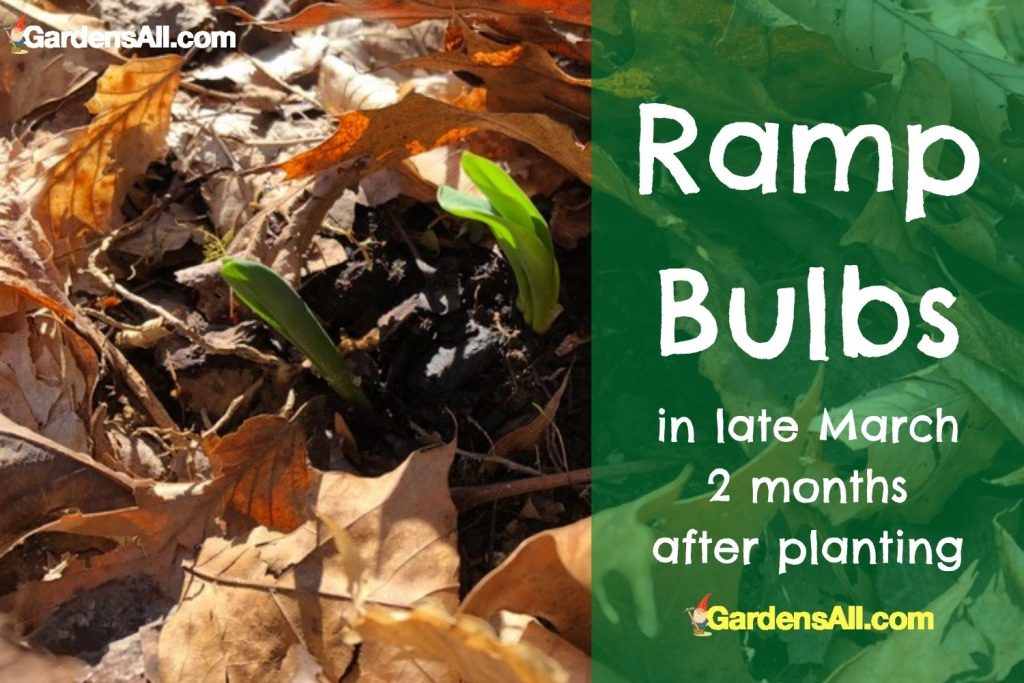
Ramp bulbs can be planted in late Feb thru March in our region (Zone 7A) Check with your local Ag Extension Office for specifics to your area
Can also be planted in the fall when dormant
Plant bulbs at the proper depth 3 inches deep and 3-4 inches apart
All roots must be buried with only the tip showing
Apply 2-3 inches of deciduous leaf litter to control moisture and weeds
After planting bulbs ramps can be ready for picking in 2-3 years.