What Weeds Tell You About Your Soil Health
Have you ever noticed how some weeds grow in one area and not another? It turns out you can learn what you need to know about your soil health for free, without paying to test your soil type! Your weeds can keep you informed as to what plants will grow well and which ones may need help to grow there.
To learn any language requires taking the time to learn to and study. However, once you learn it, it’s yours for life, without the need for a soil tester. You will just need to study the language of the soil by observing the weeds that want to grow there and learning what that means.
Now we’ve written a lot on how so many weeds are actually food—and medicine—such as dandelion, plantain, hollyhock and other edible weeds you can eat. Some of these plants that are now often considered weeds were actually brought over by our European ancestors as hardy food stock for enjoyment and for survival.
We’ll link to some more of those important plants at the end. For ut for this article, we’re focusing on what weeds and plants are telling us about our soil.
You can buy a soil test kit, or, you can heed your weeds and learn the language of the soil.
Heed the weeds to know the health of the soil.
What Weeds Tell Us About Soil Health
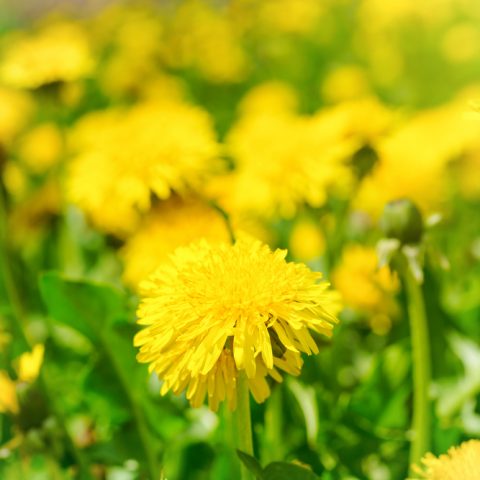
Dandelion and Mullein
Gardeners and growers constantly battle with the weeds, but weeds can have a useful purpose as a soil index. Simply by observing which weeds are growing in a specific area, you can know if the soil is acidic or alkaline, whether it’s healthy and balanced soil, or if it’s depleted.
Weeds can indeed indicate nutrient deficiencies and excesses. The kind of weeds growing in a given area can even inform the astute observer as to land that retains too much or too little soil moisture as well.
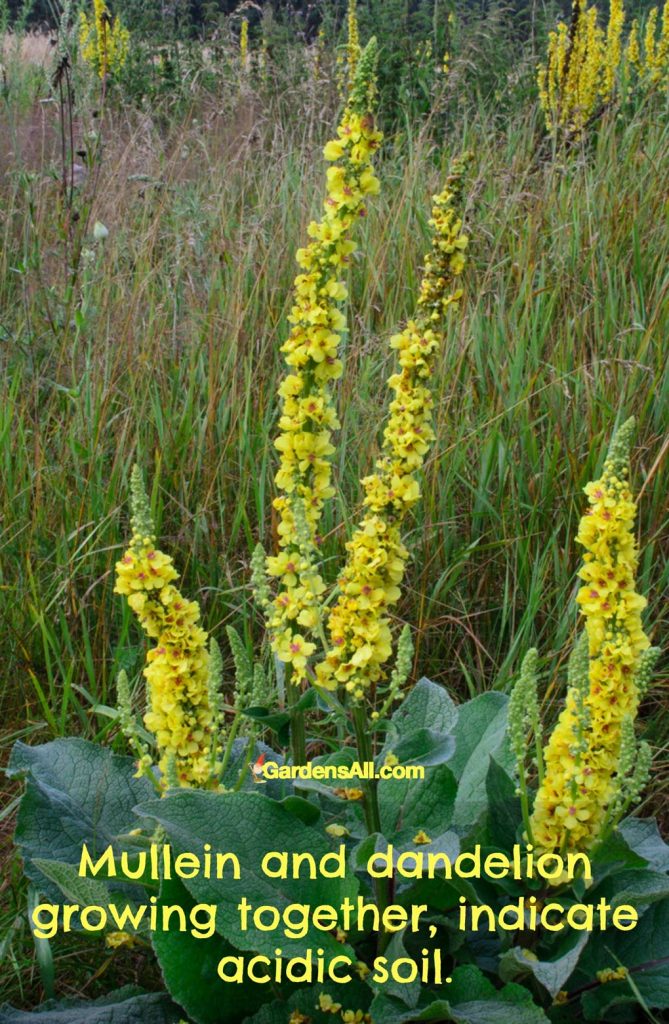
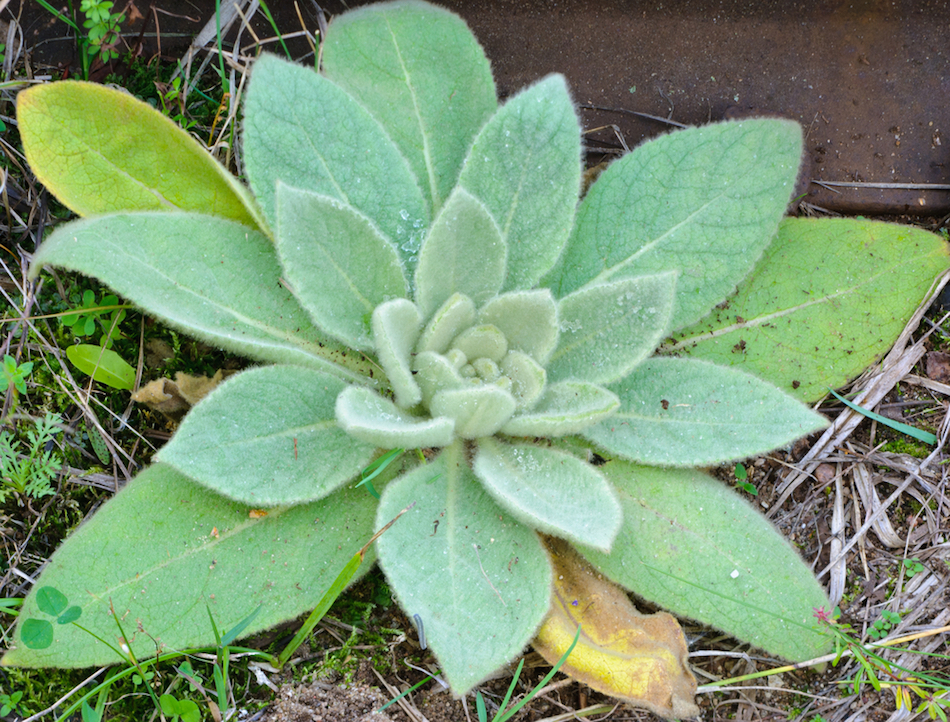
When using weeds as a soil index, observe several of the most current types of weeds to get an accurate soil assessment. For example, both dandelion and common mullein indicate acidic soil, whereas mullein alone points to low fertility soil.
Mullein and dandelion growing together, indicate acidic soil.
Mullein
Growing alone, common Mullein indicates low fertility soil.
Clover
Beyond which weeds are growing, also note their health. For example, clover can grow in high and low nitrogen soil, however, it thrives in high nitrogen. So if you clover looks wimpy, chances are that soil is low on nitrogen.
Clover that is thriving, indicates soil with good nitrogen levels.

Don’t Listen to Purple Nettle and Shepherd’s Purse
It should be noted that some weeds like purple dead nettle (Lamium purpureum) and Shepherd’s purse (Capsella bursa pastoris) will grow on most soil types and so are not reliable indicators. But DO make good use of the dead nettle… and wonderful edible weed with purple flowers and many benefits.
Cornflowers are Great Communicators
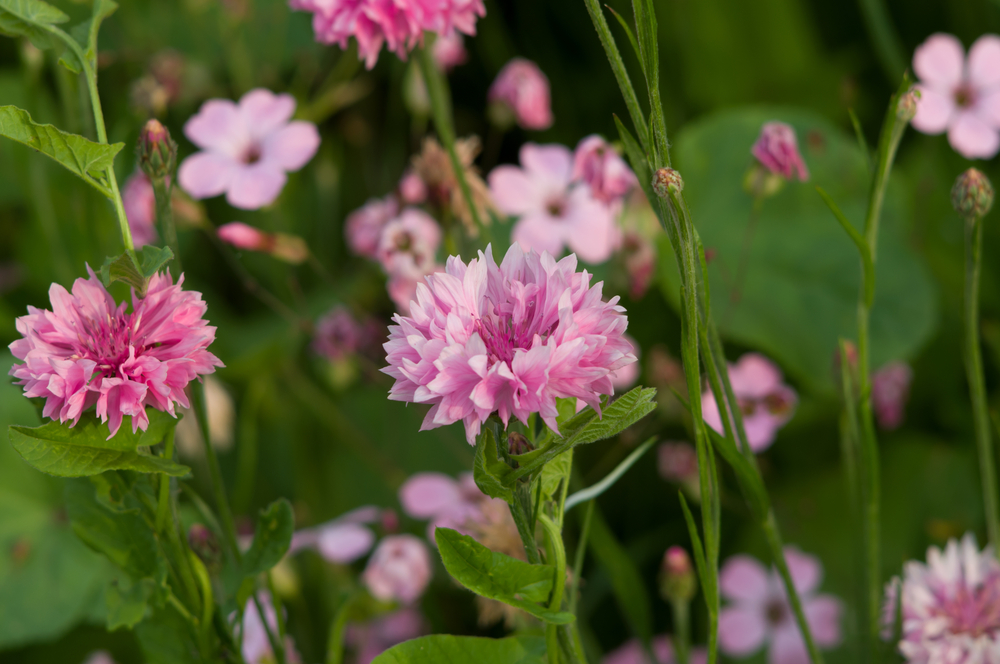
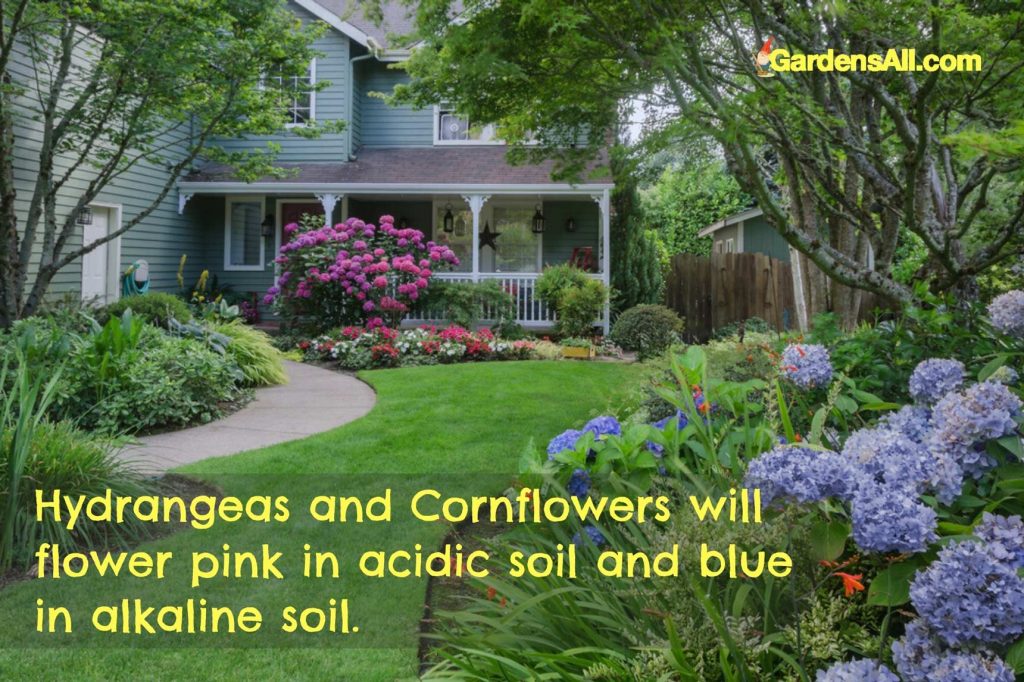
The Centaurea cyanus, or cornflower and Hydrangeas are both excellent indicators for a soil’s pH. The flowers of these plants will be pink in acidic soil and blue in alkaline soil.
Hydrangeas and Cornflowers will flower pink in acidic soil and blue in alkaline soil.
An acidic soil is a soil with a pH below 7.0
Soil Health and Quality
There’s no one perfect soil for every plant. This is good news because it means that you can still have a green thumb and learn to grow great plants if you have the right plant for your soil health.
AND… as we will discuss soon, there are many simple ways you can improve your soil health by simply adding organic matter.
But first, let’s identify what weeds love acidic soil.
Weeds That Grow in Acidic Soil
- Eastern Bracken (Pteridium aquifolium)
- Buggenum buttercup (Ranunculus spp.)
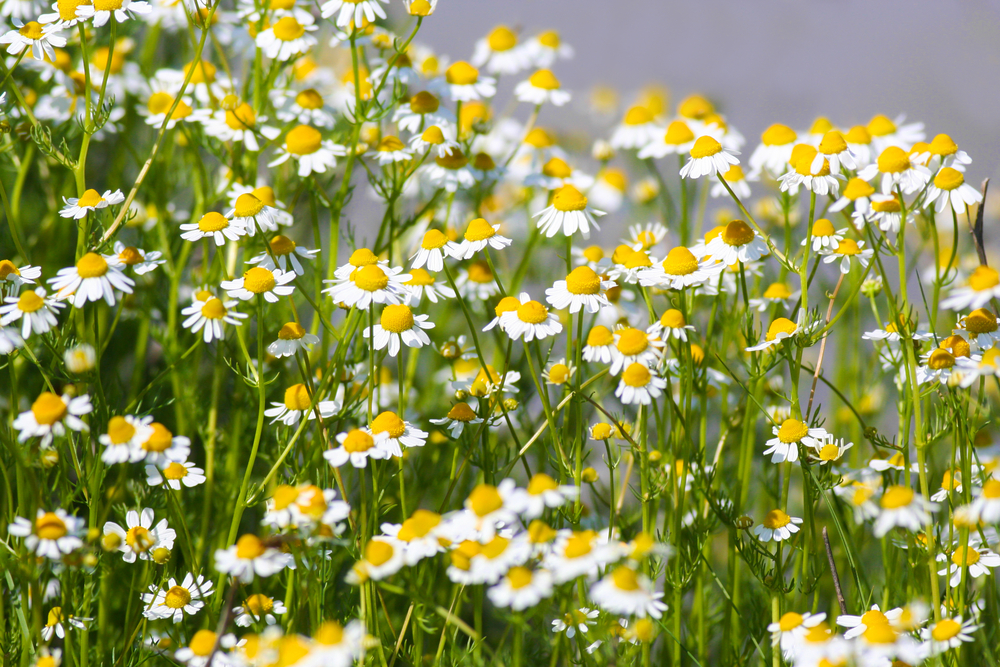
- Chamomile-German (Chamomilla pecutita)
- Curly Dock (Rumex crispus)
- English Daisy (Bellis perennis)
- Ox-Eye Daisy (Chrysanthemum leucanthemum)
- Dandelion (Taraxacum officinale)
- Hawkweeds (Hieracium aurantiacum and pratense)
- Knapweeds (Centaurea species)
- Lady’s-Thumb (Polygonum persicaria)
- Mayweed (Arthemis cotula)
- Mosses (Musci class)
- Mullein, Common (Verbascum thapsis)
- Nettles (Urtica dioica) – see also: weeds with purple flowers, which includes purple dead nettle
- Wild Pansy (Viola sp.)
- Pineapple Weed (Matricria matricariodes)
- Pinks (Dianthus sp.)
- Plantain (Plantago major)
- Prostrate Knotweed (Poly–aviculare)
- Wild Radish (Bapranus raphanistrum)
- Rough Cinquefoil (Potentilla monspeliensis)
- Sheep Sorrel (Rumex acetosella)
- Silvery Cinquefoil (Potentilla argentea)
- Sow Thistle (Sonchus species)
- Corn Spurry (Spergula arvensis)
- Wild Strawberries (Fragaria species) (an edible ground cover plant)