

A favorite, nutrient-packed edible weed.
Dandelion benefits are numerous and profound. Don’t trample, poison or pull them. Instead, harvest and enjoy them for salads, greens, tea, wine, and health!
None of us would pull out our garden crops and toss it—or worse—poison it. Same thing for supplements. We eat the foods we’ve nurtured and it in turn nurtures us. Same thing with vitamins and supplements. We put them to good use for better health and wellness.
So just how did we get to this place where each year Americans spend billions to do just that?
In the early days of America, there were Native American tribes who “hunted” buffalo by driving herds off cliffs. This was called Buffalo Jump or Pishkin in Blackfoot. The buffalo were not intelligent enough to question following the herd off the cliff to certain death.[1]https://en.wikipedia.org/wiki/Buffalo_jump
But we are.
Lawns are Lovely… but What if…?
However it is that we got to this place… this monetary and ecological “cliff” of spending billions of dollars on manicured lawns, which we can’t even eat, perhaps it’s time to rethink and adjust course.
What if ~50% of today’s lawns were replaced with growing food via edible landscapes?
We’re not talking regulating or mandating this. We’re not campaigning in favor of having people doing things they don’t want to do.
But if you’re here, chances are you’re already into gardening and growing things for beauty and as well as for food. So we’re just fantasizing over what’s possible and how it might change things if more people grew more plants for beauty and for food.
The Economics of Growing Food Instead of Grass
But really… isn’t It time to stop spending millions to destroy “weed” plants like plantain and dandelion. Time to stop paying money to poison “weeds” provided by nature to be our food and medicine, to save a lawn that we then have to serve.
It’s interesting to contemplate isn’t it…? How much work goes into a nice lawn and you can’t even eat it. 🤔
To mow a lawn takes less effort than tending a garden of the same size.
But you can’t eat it.

Grocery Stores have Decided for Us
“Part of the resistance to eating plants that we believe to be weeds… is that we are conditioned to only consider the items we find in the grocery store as foods.
~Derek Markham writes on TreeHugger.com
We first bought dandelion greens from Whole Foods some years ago. Nowadays, we can occasionally find them at another of our local grocery store chains. But it’s rarely organic and you can’t count on them to be a staple item.
It just makes sense that we are conditioned to eat what’s readily available for mass production and that is often determined by what holds up to shipping and shelf life. Produce that’s in most North American grocery stores is but a small fraction of the wonderful foods available to us from nature’s bounty.
We’re not Casting Blame
No one is at fault here. It’s just a natural consequence of growing populations and mass food production. Some foods just don’t hold up as well. This is where the locavore farm-to-table approach is beneficial and economical.
This is also where market gardeners selling through venues like farmer’s markets is beneficial. Smaller growers can grow a wider variety and bring them directly to the end consumer, for easy access to fresh and less common foods.
For example, we’re growing pawpaws, and they’re a delicious little fruit, but they have a short shelf life and don’t travel well. You might find some mid August to late October from local sellers, but rarely in grocery stores.
Produce in grocery stores is but a fraction of the wonderful foods available to us from nature’s bounty.

We Love Lawns too…
So again, we’re not against lovely lawns.
We love the feel of grass beneath our toes as much as anyone, and the sweet summer fragrance of fresh cut grass is wonderful. We’re just offering another perspective toward restoring some healthy and practical traditions toward a better balance of nature and nurture.
We can create new habits and habitats by growing more plants that nurture people and nature.
It may be different for you. If you want lots of lawn, then go for it! But… either way, don’t forget to pay heed to the food and health value inherent in the “lowly dandelion”… a lion of an herb!
The “lowly dandelion” is a lion of an herb, packed with powerful nutrients and healing.
Which, for this article, brings us to the stalwart and faithful and ever so persistent, dandelion! Often considered a nuisance or a weed, dandelion actually has numerous culinary and medicinal uses with health benefits.
Okay! Now that we’ve covered some philosophy and opinions, to plead the case for our favorite herb, let’s look into why dandelion can be considered a superfood.
Health, wellness and ecology doesn’t have to be expensive, complicated or radical. We can simply plant our values by planting more of the plants that sustain us.

Dandelion Benefits
My favorite salad is dandelion greens with roasted hazelnuts and a garlic balsamic dressing. For some, it may be too bitter, but keep trying it because plants vary in bitterness, and as with most plants, the younger leaves are less bitter.
But… if you still don’t care for it, blend in one cup dandelion greens with your favorite lettuce for a milder version with most of the nutritional benefit.
Dandelion greens are one of the most nutritious greens available.
Dandelion Nutrition
One cup of raw dandelion greens contains:
- 112% of the recommended daily allowance of vitamin A
- 535% RDA of vitamin K
- 32% RDA of vitamin C
- 103 mg of calcium
- 1.7 mg of iron
- 218 mg of potassium.
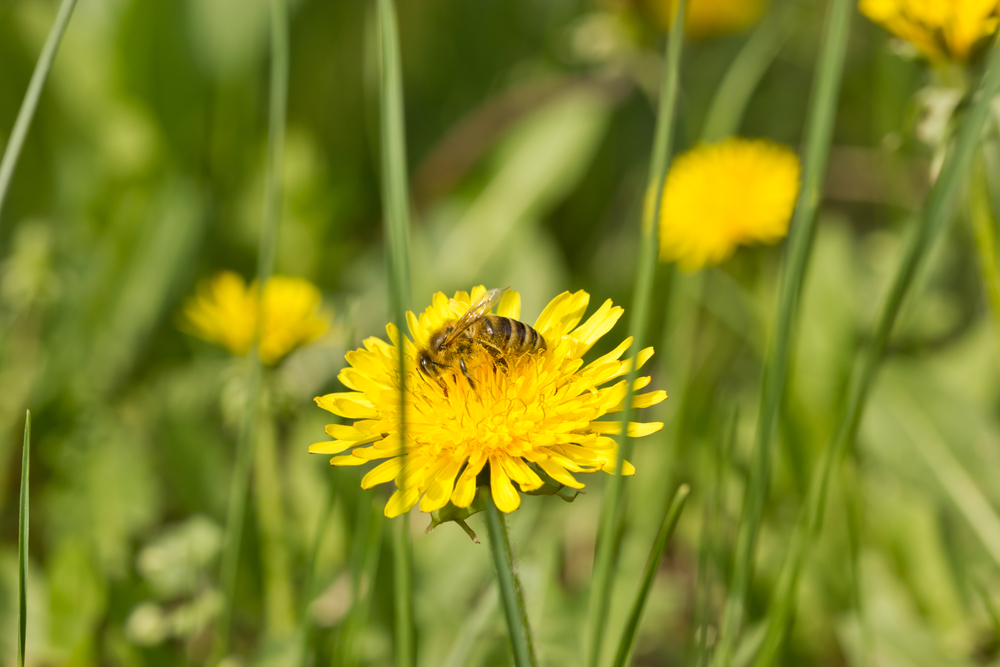
Dandelion Greens Benefits and Uses
Dandelion greens add color and texture to salads, stir-fry, and soups. Dandelion leaves contain over two dozen nutrients and are a good source of beta carotene, lutein, and vitamin H, which has been proven to help weight loss.
Identifying Dandelion Leaves in Early Spring
Dandelion is an early spring herb great for people and pollinators. In this video, herbalist Elizabeth Morgan, of DandelionSoap.com, shares briefly on wild lettuce and then on how to identify dandelion greens just from the leaves, should you encounter them when they’re not in flower.
Right there, you’ll see two weeds growing next to our raised garden bed, both of which are wonderful to pluck to add to a spring salad mix.
When to Harvest Dandelion Greens
Harvest fresh green dandelion leaves in early spring before they grow bigger and more bitter.
Dandelion Root Uses and Benefits
Dandelion root is also used for culinary purposes. It can be added to soups or ground up and roasted to make a drink similar to coffee without the caffeine, or dried for a powerful detox tea.
The root of the dandelion is full of vitamins, minerals, and micronutrients, including inulin, which is helpful in controlling diabetes.
RELATED: Learn How to make dandelion tea from roots, flowers and leaves.
Drinking dandelion “coffee” made from the root, helps stimulate the digestive system.