Bad Organic Compost From Herbicides
There’s genuine concern, if not alarm, among fellow gardeners. Composting problems can cause major crop damage and failure, even beyond the current season. Enough folks who have had severely compromised growing seasons from bad organic compost from imported manure, used lawn clippings and used hay and straw in their gardens.
Herbicide contamination has been responsible for a wide swath of damage and devastation to many gardens and farms.
Herbicide is toxic to plants and is used to destroy unwanted vegetation.[1]https://en.wikipedia.org/wiki/Herbicide
So… what does it do to the other plants and growing ecosystem? And… the foods that then gain their nutrients from the soil that has also been poisoned? How about the pollinators and helpful bugs and microbes? We’d rather have weeds than poison, pull them, leave them or eat them than to risk the damage to our yard and garden environment.
Herbicides
Even the commercial producers of compost have found their products tainted with one or more forms of these persistent herbicides sold as brand names such as Grazon, Tordon, Singer, Lontrel, and often incorporated with other herbicides to offer a broad range of weed control.
The active ingredients include these major players “Pictoram”, “Clopryalid”, and “Aminoparalid”. They are sold to farmers and over the counter in many stores.
One of the largest companies making these deadly, plant-stunting chemicals is Dow Chemicals.
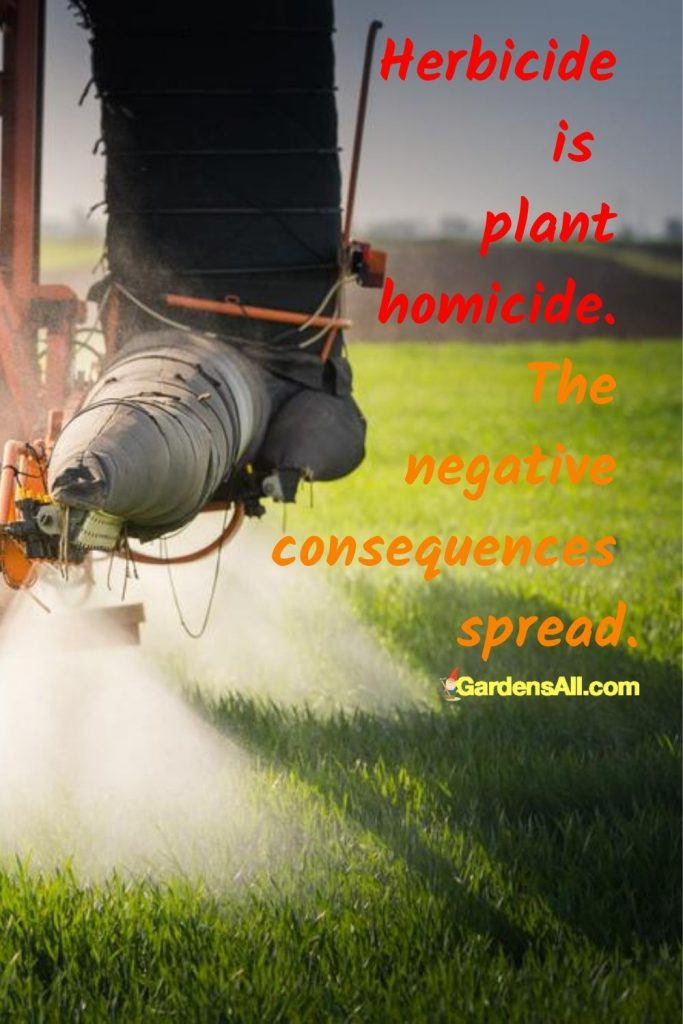
Herbicide sounds like it could be a good thing… Something made with herbs, right? NOT! Think of herbs and homicide. That’s what herbicide is about… killing herbs (plants).
Dow Chemicals
Dow… “Better living through chemistry.” Just kidding. Look, we do not have a conspiracy mindset. This isn’t a witch hunt.
Dow is working to solve problems for farmers by creating chemicals in the lab to stunt growth in weeds. But we wonder if they’re also running simultaneous tests to see how these are affecting the farm ecosystem?
The ramification are so far reaching of contaminated bad organic compost. The animals consume herbicide laced feed. Their manure grows crops that become tainted, if they grow at all. People consume the beef raised on these same chemically treated grains, as do chickens, goats, and sheep. Their meat becomes chemical laced. Humans also eat these crops.
We have to ask and wonder if the dramatic rise in disease and food allergies of all kinds isn’t in part due to the herbicides liberally sprayed on the foods we consume?
Herbicides Created by Dow Chemicals
- Picloram by Dow Chemicals –
- TRADE NAMES: Tordon, Grazon, Access, Pathway
- Clopyralid by DowAgro
- TRADE NAMES: Curtail, Redeem, R&P, Transline, Confront, Lontrel
- Aminoparalid by DowAgroSciences
- TRADE NAMES: Milestone, Forefront, Chaparrel
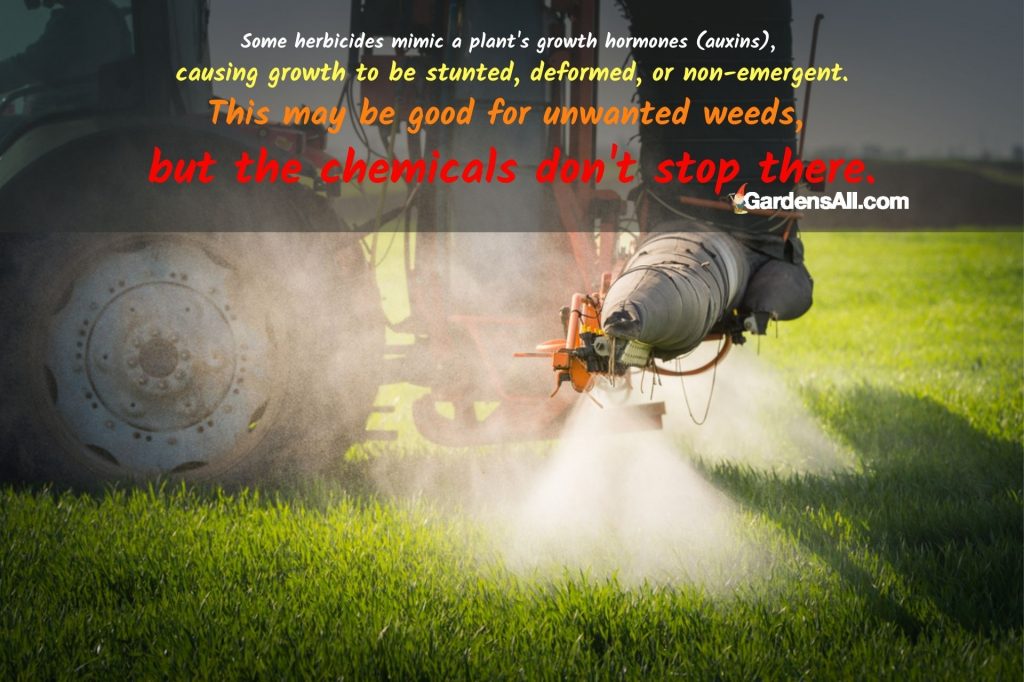
These herbicides mimic a plant’s growth hormones (auxins) and cause growth to be stunted, deformed, or non-emergent. This may be good for unwanted weeds, but the chemicals don’t stop there.
~GardensAll.com
Persistent Herbicidal Residue
These chemicals are primarily used to keep weeds out of grass crops, including fields, golf courses, and lawns. They’ve proven very effective at controlling broadleaf weeds.They have been approved as safe for animals to graze (as in Grazon).
However… chemicals herbicides are unique in that they do not break down quickly, and can persist on the crop, in the soil, and water for months, even longer before they break down.
Unfortunately, a number of “organic” farms have suffered the worst.
The herbicide passes through the animal’s body, and if the manure is collected, it will taint anything it touches, including our gardens and our compost.
~GardensAll.com
No Yard is in a Bubble
There’s lots of information and horror stories related to this topic. The bottom line is that we cannot rest assured our materials are herbicide free unless we know where the product originated. That includes that if it originated in our own yard.
We need to know if it ever received any applications of herbicide containing the formulations cited above. That includes what your animals eat, the compost you buy at the store, and the hay or straw you use for mulch or straw bale gardening.
AND… it may include what your neighbors are using.
You can see the challenge here. It’s extraordinarily time consuming and hard to track down all the possible sources of contamination along the way.
Even if grass clippings originated in your yard, are you certain there’s no contamination from neighbor’s herbicides, either airborne or from rain runoff?
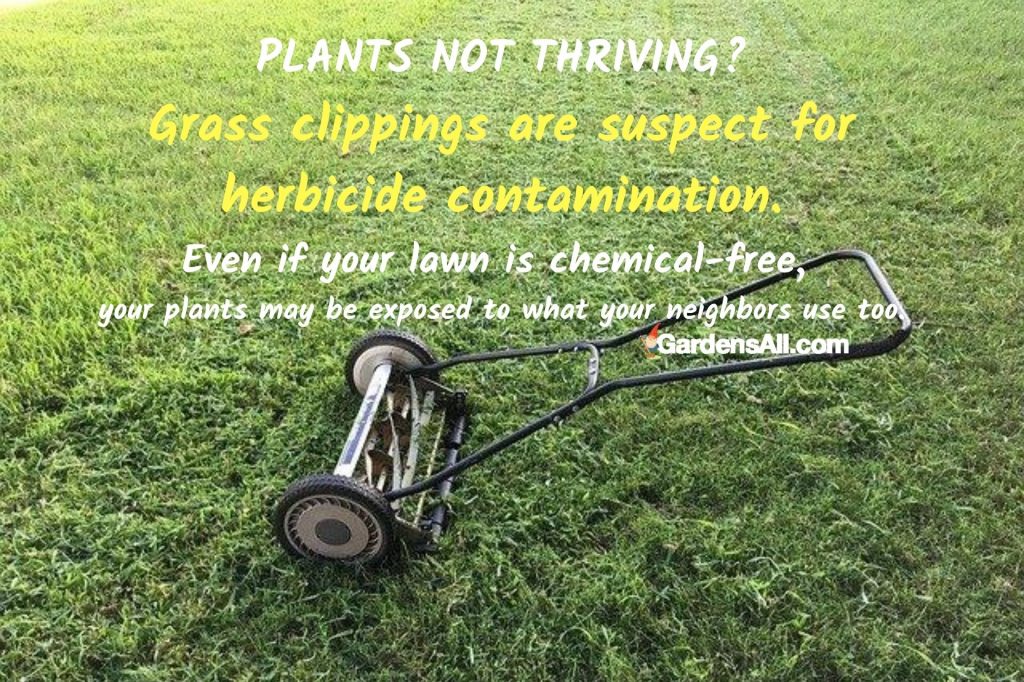
Grass clippings are suspect for herbicide contamination until proven innocent. Even if your lawn is chemical-free, your yard may be exposed to what your neighbors use too.
RESOURCE: University of Maryland Extension Service
~GardensAll.com
Celebrity Gardener’s Contorted Crop
Celebrity gardener, Joe Lamp’l, AKA, Joe Gardener, and host of Growing a Greener World, had a terrible experience with bad organic compost back in 2013. His plants came up slowly and looked contorted. What the heck? He traced the issue back to the horse manure they’d used to make the “organic” compost.
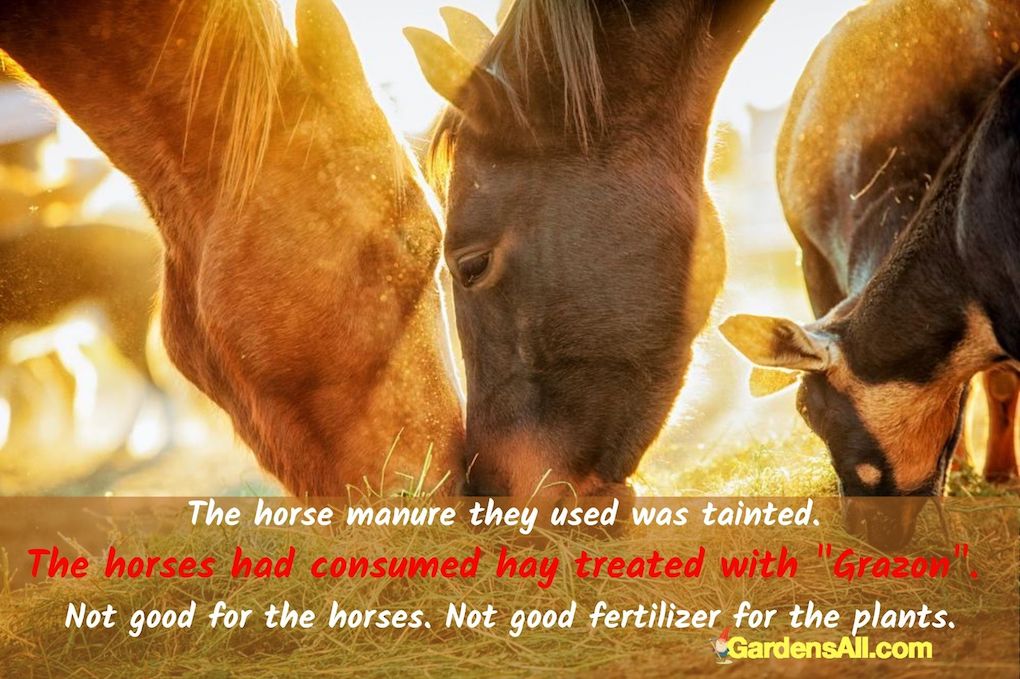
The horse manure they used was tainted. The horses had consumed hay treated with “Grazon”. Not good for the horses. Not good fertilizer for the plants.
Recovering From Herbicide Contamination
Joe’s tomatoes, beans, and eggplants got the worst of it. He let everything grow out rather than replace the entire soil. Then he planted cover crops over several seasons and eventually the bad elements disappeared. Moral of story, if this happened to a renowned gardening expert it could certainly happen to any of us! [2]https://www.growingagreenerworld.com/killer-compost-it-happened-to-us/
If you happen to have a closed loop, self-sufficient operation where you’re using only your own home-grown materials, then you’re likely contaminant-free. Unless you have nearby neighbors, in which case you’ll need to check on what they’re using to treat their lawn and crops.
Building compost bins and tumblers to make your own compost is always a great idea for the serious gardener. Add homemade compost tea and you’ll be well on your way to health soil for a healthy garden.
The other measure we can take is to do a quick test, which we discuss next.
How to Test Your Compost
Gardening and compost expert, Bob Webster, offers two simple ways to test your compost.
Compost Test in Just Three Steps
- Take the composted material you intend to use and place it in a bucket of water to steep for a few hours.
- Then find a broad-leaf weed like a dandelion and douse it with the compost water.
- Wait a couple of days to see if there are any ill-effects.
TEST PLANTING: Peas or Beans – 6 Pots – 3 Seeds in Each Pot
The other method that’s more scientific is to test using beans or peas in six little pots.
- CONTROL GROUP – Regular compost: One group of three, the control, gets filled with known quality good compost mix
- SECOND GROUP – Test Compost: The second three seed pots get the unknown mixture. Put three seeds in every pot, water them in and place them in the same location. Wait and observe…results should indicate what’s going on with the “suspect” compost. [3]https://content.ces.ncsu.edu/herbicide-carryover
Your soil, compost and fertilizer are the foundations of a healthy garden, so it’s a good idea to test your soil and compost.