
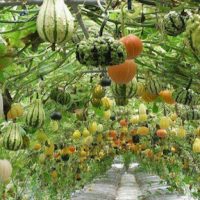
Over the years, we’ve experimented with a number of vertical vegetable garden ideas. While we live on 4.5 acres, most of that isn’t farmable, plus we’re in the woods, where adequate sunny areas are limited.
In order to get the most growing in the least amount of space we’re using several types of vertical vegetable garden ideas. Vertical gardening not only saves space, but it makes harvesting and tending plants easier throughout the season.
You can grow a surprising amount of food in much less space with careful planning and creative use of space and materials. Naturally some vegetables need more space than others, such as the spreading and vining plants like squash, cucumbers and tomatoes (which apart from the determinate type will need vertical training of some sort).
Benefits to Vertical Gardening
As with home construction, and how a two story house gives double the space on the same smaller footprint, we can maximize the growing areas by building up. Other advantages include more air circulation, easier access for inspection and treatment, easier to mulch, and easier to harvest.
- Grow more in less space
- A little set up time saves lots in harvesting time
- Helps protect plants from pests
- Easier to mulch
- Well constructed supports help plants aerate, pollinate and thrive
Here’s more about growing vertical with tomatoes.
Vertical Gardening Systems
Vertical gardening can be as simple as pounding a stake in the ground and tying off to it. Or it can be as elaborate as a commercial string and wire system.
It can certainly be a DIY as we discovered with the “Florida System” using a weave of string and staking. And there are cages, and other wire configurations which serve the purpose. Except for the commercial string and wire set-up, we’ve deployed many of these methods and they all have their good points and disadvantages.
Growing vertically can be as simple as pounding a stake in the ground and tying off to it.
Use Material on Hand First
Creative and frugal gardening is about using whatever you have on hand to do the job. For instance we have a patch of bamboo in our yard and it needs thinning each year. We love the practicality of growing our own support systems.
You can see more on bamboo for vertical growing in this article on how to make a bamboo bean teepee trellis.


Vertical Gardening Ideas Can Include
There are as many ways to grow up as there are materials to work with. Bamboo, pipe, wire, even pallets can be useful.
- Twine
- Bamboo
- Cattle Panels
- Palettes
- Plant cages
- Plant towers
- PVC Pipe for support
- Trellis’ out of wood, plastic, bamboo and metal

Vegetable Garden Ideas for Vegetable Gardening
Stacking Planters – Great for Decks, Patios and Balconies
Stacking planters are a popular choice for vertical gardening. They’re especially helpful for patios, especially when the planters are on castors or plant dollies. It’s good to be able to move them around if needed for cleaning, harvesting, sun exposure and cleaning under and around them.
We talk more about the pros and cons of growing vertically using plant towers and stacking garden planters in these articles.
Jute Twine for Garden Plant Supports for Growing Vertically
You can buy a bundle of stakes for relatively cheap. Use plastic ties or jute (tied loosely to allow for expansion). We use the slip plastic ties like the kind that come with trash bags these days as there’s always extra.
Alternately, you can get zip ties. We prefer those over the paper covered wire twist ties as those disintegrates more easily, plus can be a liability for flip flop feet if they fall onto the ground in the garden.
You can get plastic covered twist ties these days and some come on spools with a built-in cutter for quick and easy field adjustments for the perfect size. The biggest advantage of these is that there aren’t lots of little pieces to keep up with.

Staking Tomatoes with Jute Twine – Part 1
Staking Tomatoes with Jute Twine – Part 2
Vertical Garden Ideas – Cattle Panel Garden Tunnel
We will start with our latest structural venture —– a cattle panel garden tunnel. We’ve seen these first hand and really like their simplicity and (yes) the way they look. My wife says I’m making a man cave-not so! All pole bean and cuke pickers are invited. Some of our FB fans have sent us photos of their garden tunnels, so we’re pretty excited about seeing squash, cucumbers and pole beans forming an arbor.
Our farmer friend Harvey Moser has them all over his garden plots, and says he enjoys picking in the shade that the cattle panel arches provide.

Where to Buy Cattle Panels for Gardening
Our 3, 16 feet x 50 inch panels cost $34 each at Tractor Supply and are stout enough to hold a load of squash, cukes, or beans. Cattle panels will last numerous seasons, so this is an investment that, divided over the years, will cost very little.
You can also buy cattle panels on Amazon, and as of this writing, there’s at least one company offering free shipping with Prime, delivered to your door. Or, you can get them from Lowes or Home Depot, likely also delivered. However, these are not as sturdy a grade as you will get from a Tractor Supply type store.
Cattle panels that come in rolls will be too flimsy for vertical vegetable garden tunnels.
If the cattle panels come in rolls rather than flat, then it will be too flimsy for cattle panel tunnels in your garden. Those might be okay for tomato cages, but they’re not sturdy enough for a tunnel garden.
Best to buy from your local Tractor Supply store. You may be able to order ahead and pick it up from your local store.
