
If you’re here to learn more about how to grow okra plants, you’re in for a treat! Okra is a beautiful garden plant that’s versatile and immensely rewarding to grow.
Not only is the okra a beautiful plant with show-stopping flowers, but every part of the okra plant is edible, from seeds to flowers, leaves and the unique vegetable – okra pods. EXCEPT the stalk, which is actually used in olden days for making rope and paper.
Beyond garden beauty to delight gardeners and pollinators, there are more of the amazing attributes of this versatile plant to discover and enjoy.to
If You Hate Okra…
If you hate okra, we cover how to cook it without it becoming slimy near the end, with MANY great tips on how to enjoy it from readers.
Whenever we share an okra article on Facebook, there’s always a small percentage of people who chime in rather graphically, 🤔🤓 about how much they hate it.
We get it. Some people are turned off by the okra’s mucilaginous properties, also called “gooey” or “slimy” (as the nicer words we seen for it).
There are ways to prepare okra that do not activate the mucilage. Beyond that, consider that the the “goo” could actually be beneficial to you, as it has been said to contain collagen and other benefits to skin and body!
Minimum Soil Temperatures for Growing Okra Plant
Each spring we watch the soil temperature with our laser digital thermometer, waiting to plant warm weather okra here in North Carolina, zone 7a. The soil needs to be at more than 60℉. As we observe the degrees tick upward, it’s like a right of passage to get those okra seeds into the ground. It means gardening season is full on!
Planting okra signifies gardening season is now in full spring swing!
Plant okra when soil is consistently higher than 60℉.

Okra – Do You Love it or Hate it?
Mention okra to someone and you’ll likely get one of two reactions.
“I love okra!”
“Ewwww, okra is gross. I can’t stand slimy okra!”
If you love fried green tomatoes… things southerners understand, you’ll love fried okra. We’re not talking about healthy eating here… but good old fashioned comfort food, southern fried kind.
However, there are healthier ways to “fry okra”, such as cooking in an air fryer or roasting okra pods in the oven that taste just as good without all the oil.
The alternate reaction will likely be a slight wincing of the facial muscles and comments about the distasteful slime factor that accompanies cooked okra pods.
Mentioning there are ways to cook away the “slime”, also known as mucilaginous properties, has little effect on the “never eat okra” tribe. They’ve been badly initiated.
Edible Okra Flowers
We love the rare and beautiful color combination of the okra blossom. While these are edible, we rarely harvest them because for several reasons.
Why We Don’t Usually Eat the Okra Flowers
- We love seeing them on the plant and they add beauty to the garden

- The blossoms becomes the okra pod, so to harvest the flower sacrifices the fruit
- They’re beneficial to pollinators
But… if you have a large crop, the occasional blossom added to a salad or dish adds beauty and a gourmet touch!
See more edible flowers here.
OKRA FLOWER: Cousin to hibiscus, with its own beautiful flowers, okra is a multifaceted vegetable in the mallow family, (Malvaceae).

The Okra Flower Appearance
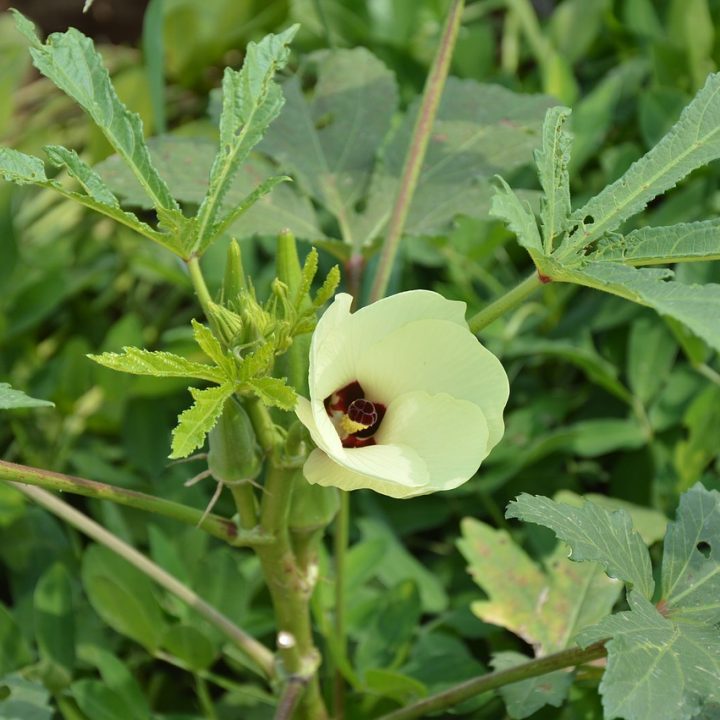
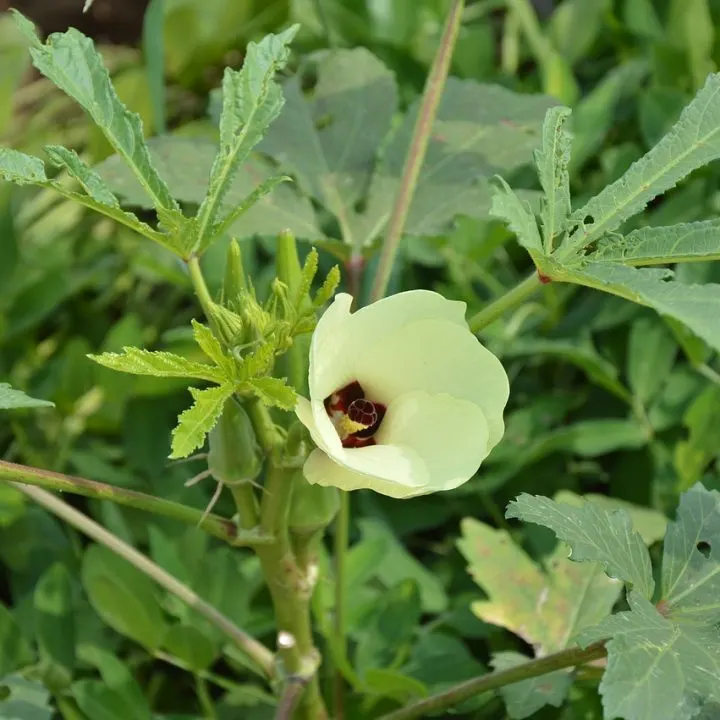
The beautiful okra flower has pale pink coloring on the outer part of the petals and a enchanting pale yellow on the inside petals. The center of the okra flower is a deep burgundy with tiny yellow florets on the stamen.
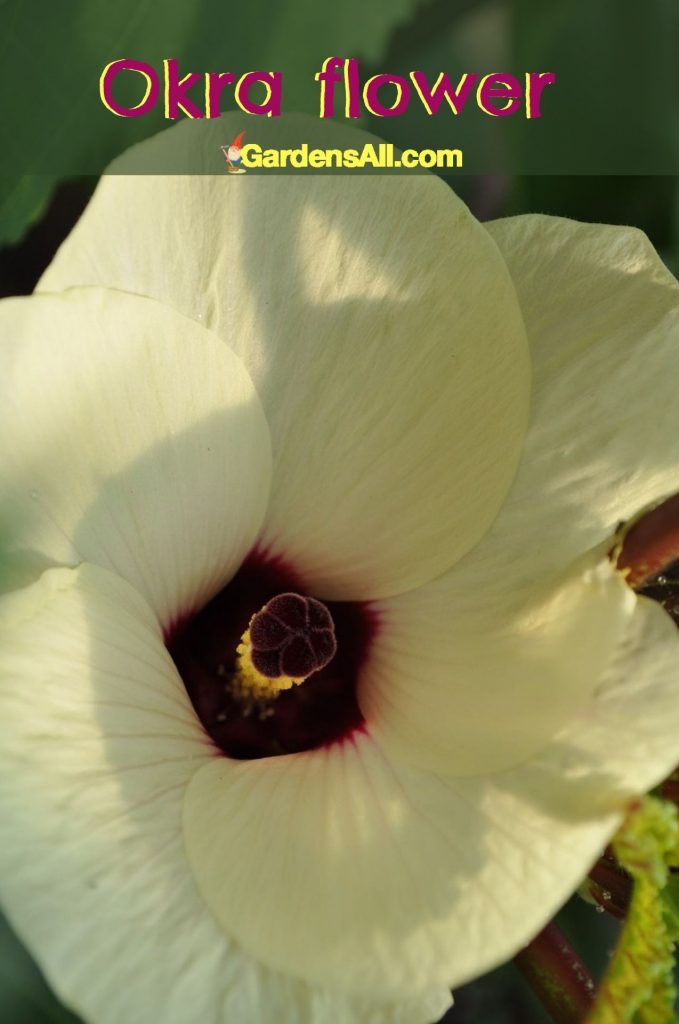
Okra flowers are beautiful and edible! Add fresh to salads or steam for a nutty flavor with a hint of asparagus.

The Mallow Family Okra
As a member of the mallow family, okra has the prettiest blossoms in the garden resembling its cousin, the flowering hibiscus.
Scientifically dubbed Abelmoschus esculentus, okra plants are a warm-season crop grown in home gardens throughout the Southern United States and other warm climates around the world. Okra is a tall, upright plant with a beautiful pink, yellow and burgundy flower.
The young seed pods are the most common edible part of this plant. However, all parts are edible, except the stalks, all of which we’ll discuss further.[1]https://hgic.clemson.edu/factsheet/okra/
Okra Origins
A perennial plant in hot climates, okra (or “okro”) is popular in Indian and African cuisine. Said to originate in Africa, there’s some dispute and vagueness around its exact origins. For the North American climate, okra is grown as a garden annual especially in the Deep South.
Given the global popularity of okra, it has accrued a long list of regional common names, some of which are in this list.
Okra Scientific Names
- SCIENTIFIC NAMES:
- Abelmoschus esculentus
- Hibiscus esculentus
- FAMILY: Malvaceae
Common Names for Okra from Around the World
- Bamia – Middle Eastern
- Bhindi – India
- Qiū kuí – China
- Gomboa – Swahili
- Gumbo – southern US, especially Louisiana Cajun areas
- Hibiscus esculentus – Malaysia
- Lady finger – US, and as the English common name around the world
- Okra – US, Philippines, and English global
- Okro – West Africa
- Okura – Japanese
- Quimbombó – Cuban
In the South, we have the luxury of just sticking seeds in the warm ground (note: an overnight soak in tepid water helps the germination process).
How to Grow Okra in Colder Climates
Start Seeds Indoors
- set out