
WARNING: unbalanced footnote start tag short code found.
If this warning is irrelevant, please disable the syntax validation feature in the dashboard under General settings > Footnote start and end short codes > Check for balanced shortcodes.
Unbalanced start tag short code found before:
“https://www.ncbi.nlm.nih.gov/pmc/articles/PMC4774500/))Pain”
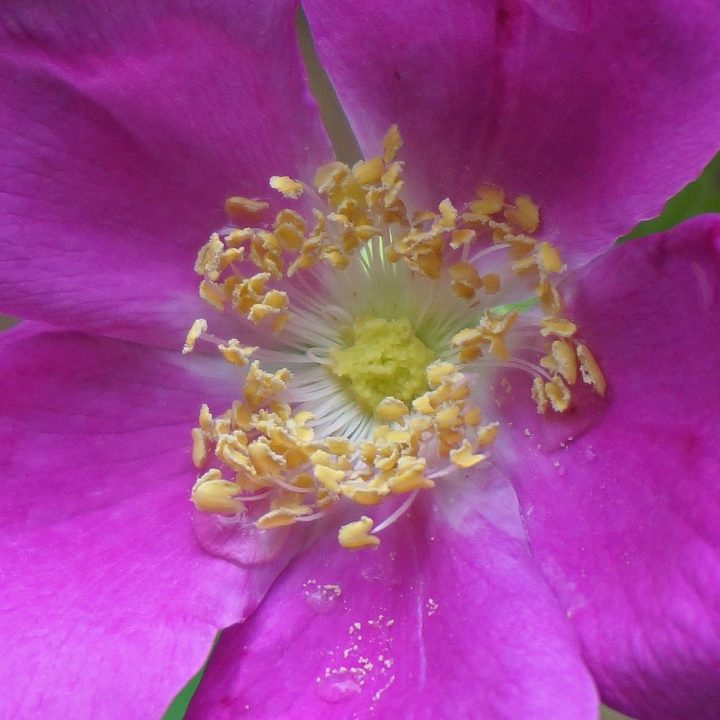
The rugosa rose bush is a stout and ferocious grower that can fend for herself. Sometimes written as rosa rugosa, rugoso and regosa, no matter how you spell it or say it, this bush is one prolific shrub with tremendous benefits.
Rosa Rugosa has her liabilities too, but far more on the plus side. So let’s start with her bad side to get that out of the way.
We started with just two rugosa rose bushes, and in just five years they’ve formed an entire hedge that’s approximately 12′ in length. The rugosa rose bush creates an underground root system of suckers that are determined to survive and thrive on original root stock.
Rosa rugosa is invasive and thorny, so plan accordingly so you can enjoy this beneficial bush.
Rugosa Rose Bush Negatives
- Invasive
- Extremely thorny (wear gloves when pruning and handing)
Rosa Rugosa has far more benefits than negatives!
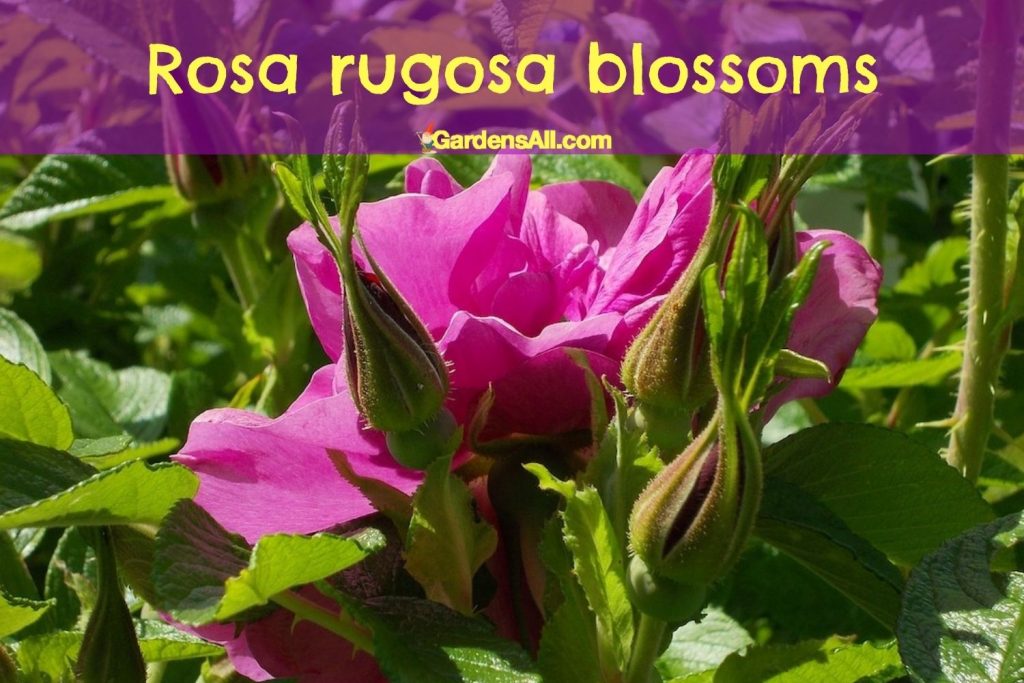
Rugosa Rose Bush Benefits
- Resilient, prolific and hardy from zones 3-9
- Disease and fungus resistant
- Insect, deer and rabbit resistant
- Wonderfully fragrant roses
- Flowers bloom all season until frost
- Prolific rosehips produce all season as well
- powerful vitamin C and other nutritients
- oil and beauty products
- Rose petals for multiple uses and benefits, including:
- rose tea for pleasure, health and medicine
- potpourri
- flavoring and beauty products
See other perennial deer resistant flowers.

The Rugosa Rose Bush Hedge
The rugosa rose can be used as an edible hedge barrier.
It may even deer proof your property over time, since it can grow to 6’x6′ tall and wide, and the deer won’t bother it because of the thorns. However, remember, it will grow by leaps and bounds each year through resilient underground root systems, and it may be virtually impossible to kill, so growers beware.
Minimize the Invasion
If you want an edible and beneficial Rugosa Rose barrier hedge, but don’t want it to take over, then consider planting it within a barrier, such a digging a trench that’s lined with a barrier to prevent runners.
Or, if you just want a few bushes then plant them in large pots, in or above ground.

Rugosa Rose – Parts Used
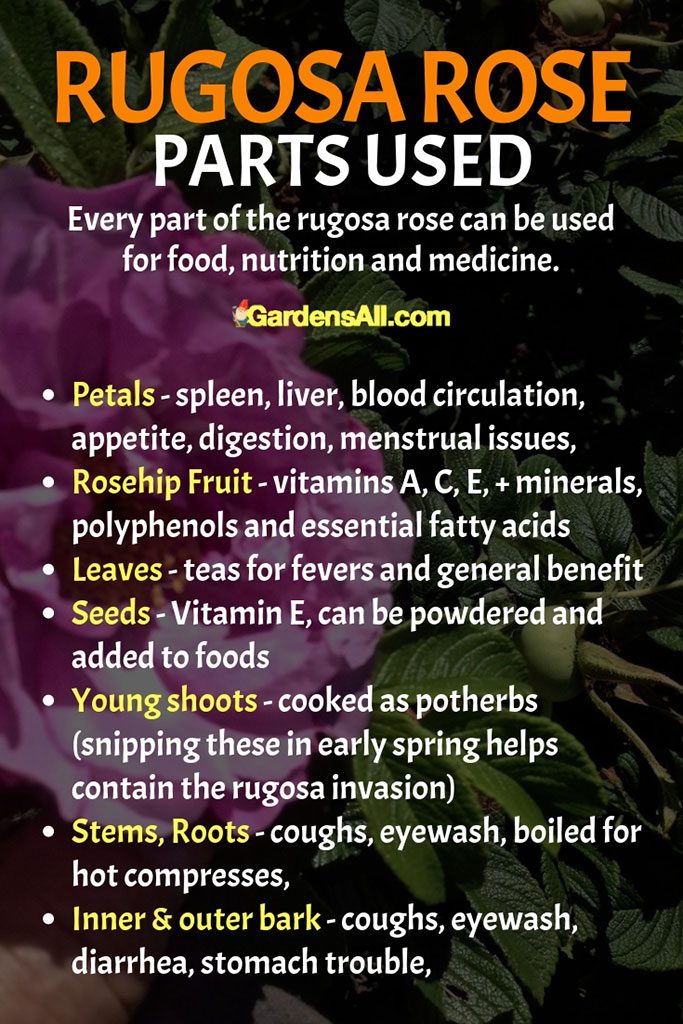
Every part of the rugosa rose can be used for food, nutrition and medicine.((https://www.naturalmedicinalherbs.net/herbs/r/rosa-rugosa=ramanas-rose.php))((https://www.ncbi.nlm.nih.gov/pmc/articles/PMC5485961/))
- Petals – spleen, liver, blood circulation, appetite, digestion, menstrual issues,
- Rosehip Fruit – vitamins A, C, E, + minerals, polyphenols and essential fatty acids((https://essentialoils.co.za/rosehip-analysis.htm))
- Leaves – teas for fevers and general benefit
- Seeds – Vitamin E, can be powdered and added to foods
- Young shoots – cooked as potherbs (snipping these in early spring helps contain the rugosa invasion)
- Stems, Roots – coughs, eyewash, boiled for hot compresses,
- Inner & outer bark – coughs, eyewash, diarrhea, stomach trouble,
The Rugosa Rose is being studied as a food that is capable of reducing the incidence of cancer and also as a means of halting or reversing the growth of cancers.
Rugosa Rose Uses
- Tea
- Jam
- Juice
- Wine
- Cosmetics
- Medicine
See Food as Medicine
TIP: Freeze rosehips overnight before use to soften for maximum juiciness.

Rugosa Rose Benefits
Rose family plants are astringent and good for the heart, circulation and digestion, with every part of the plant containing beneficial properties.
- Anti-cancerous – 100% effective in killing breast and cervical cancer cells((https://www.ncbi.nlm.nih.gov/pubmed/23818393))
- Antimicrobial – against 8 strains of bacteria
- Staphylococcus epidermidis
- Staphylococcus aureus
- Bacillus subtilis
- Micrococcus luteus
- Escherichia coli
- Klebsiella pneumoniae
- Pseudomonas aeruginosa
- Proteus mirabilis
- Anti-yeast / anti-candida – against candida albicans, candida parapsilosis
- Antioxidant – phenolic acids and flavonoid glycosides((https://www.ncbi.nlm.nih.gov/pmc/articles/PMC4783894/))
- anti-aging properties
- skin diseases
- wound healing
- anti-inflammatory((https://www.ncbi.nlm.nih.gov/pmc/articles/PMC4774500/))
- antimicrobial
- anti-carcinogenic
- Diarrhea((https://www.ncbi.nlm.nih.gov/pmc/articles/PMC4774500/))
- Inflammation((https://www.ncbi.nlm.nih.gov/pmc/articles/PMC4774500/))
- Pain((https://www.ncbi.nlm.nih.gov/pmc/articles/PMC4774500/))
- Stomach aches((https://www.ncbi.nlm.nih.gov/pmc/articles/PMC4774500/))
Short Video on Our Rugosa Rose Bushes, Roses and Rosehips

Video on Rosa Rugosa
Deb with Avena Botanicals elaborates on some of the many wonderful aspects of this useful plant, especially the rose petals.
Wishing you beautiful gardens and rose petal strewn paths.

I’m LeAura Alderson, a garden, herb and plant enthusiast with a passion for discovering the many edible and medicinal benefits of the plants all around us, including the weeds, while transforming the land through regenerative permaculture practice. I am also a writer, editor and media publisher (now mostly retired due to replacement by AI), but which now allows more time to build our regenerative permaculture homestead farm.