
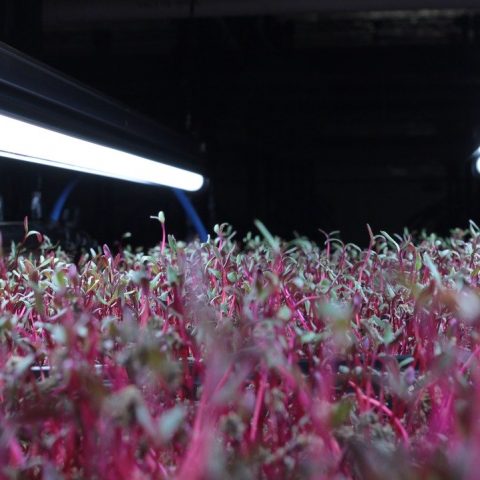
If you’re wondering how to grow microgreens, you’re in luck because it’s simple. You can grow microgreens indoors year round at home, as a way to fortify your winter crops and food supply.
I’m not sure why we didn’t think to do it sooner. Probably just an oversight of busy schedules, but as we snip the seedling starts to thin them and munch on the tasty sprouts it dawned on me to look into it.
Our microgreens venture began with a sample of tiny seedlings thinned from a flat of kale, bok choy, and mizuna. Each tiny plant packed a punch of flavor, like its full grown version only more intense.
Being well into winter, we had both the time and the shelf space indoors to plant a whole flat of these tasty little greens. So why not try growing more of them?
We dug into on-line and hardcopy resources and found a world of information about growing microgreens. Bottom line, it doesn’t take much to get a microgreen “farm” going, but there are countless ways to do so.
Basic Needs for Growing Microgreens
- Seeds
- Growing Medium
- Container to hold the medium and the seeds
- Keep wet but not soaked with room temperature water
- Provide light source after germination
Questions About Microgreens
Q. So, what exactly is a microgreen?
A. Microgreens are juvenile vegetable seedlings with primary leaves.
Q. Are microgreens easy to grow?
A. Yep! Quick and easy to grow, requiring just a couple minutes daily to check water levels.
If you’re wondering what’s the difference between microgreens vs sprouts, check out this article.
Microgreens – Good things in Small Packages
In a conversation on the Gardens All Facebook page some folks were commenting on how it seems that everything is a superfood these days, which essentially renders none a superfood.
Sure, there’s lots of labeling that goes on in the nutrition and supplement industry, however, don’t be jaded by over-use of this term. In many cases when it comes to fresh produce compared to denatured packaged foods… nature’s food are mostly super nutritious.
Superfoods are nature’s multivitamins.
The quote “Good things come in small packages” is certainly true when it comes to the healthiest greens on the planet. We know that the potential of the plant exists within the seed, so when we eat seeds, legumes and sprouts, it stands to reason that we’re often also getting concentrated nutrients.
You can grow sprouts and microgreens year round for a ready crop of nutrient dense fresh food.

How to Use Microgreens
You can use microgreens in the same way you’d use sprouts and fresh greens.
- Salads
- Sandwiches
- Soups
- Stir fry
- Eggs, omelettes, egg bakes
- Casseroles
- Scattered on roasted veggies after removing from oven
- Added to Green juice
- In smoothies
- As herbs
Wherever you put microgreens, you’re fortifying your food with extra nutrients and flavor. Depending on what it is though, for those who aren’t fond of vegetables, these can be added to many things in disguise, especially if chopped finely like herbs.
Triple Savings from Growing Microgreens
We devour fresh greens daily in my family. Our favorite breakfasts include fresh omelets with fresh greens, such as spinach, chard or kale, or other fresh vegetables, including broccoli or leeks.
Egg bakes are another staple food we usually have on hand. They’re like a omelette only easier to make in quantity to serve throughout the week. They’re easy to make up ahead of time and can feed a family of four for three meals each, so you make it once and you get 12 breakfast servings out of it.
We love to top the omelettes and egg bakes with avocado and fresh sprouts or microgreens. We know how to grow sprouts, now we’re studying and practicing how to grow microgreens.
With egg bake, we double or quadruple the recipe, using ~24 eggs to serve a family of 4, 3 breakfasts each. Make it once and get 8-12 servings out of it, depending on your appetites and whether eating solo or with other sides, such as steamed or roasted veggies or dandelion salad.
Microgreens and shoots are one of the quickest and easiest things you can grow for food.
Here’s one example of a favorite broccoli egg bake recipe.
Growing Microgreens is Like Growing Your Supplements
We also go through periods of consuming fresh green juice for lunch or snack and daily salads for one of the meals. Having ready access to homegrown organic micro-greens year round makes a difference in our budget and our health!
Not only do we save at the grocery store, we need to purchase fewer supplements and make fewer trips to the doctor. That’s triple savings!
Microgreens are easy to grow and add potent nutrients to your meals.
Why Grow and Eat Microgreens?
- Fewer doctor visits
- Save on your grocery bill
- Fewer store bought supplements needed
Microgreens are called superfoods because they’re amongst the most nutrient dense foods for the size that you can consume, and yet, they’re super low in calories!
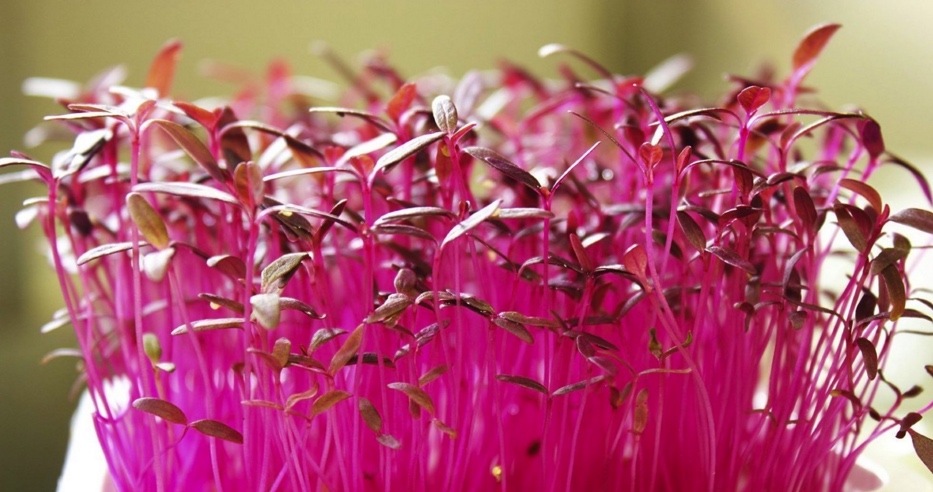
And yes… Micro “Greens” aren’t just green! We love the vibrant color of these Ruby Red Swiss Chard microgreens. These add delightful color as toppings to salads and other dishes.
Fresh greens, microgreens and herbs are straight from nature’s “farmacy”!
How to Grow Microgreens Indoors Year Round
If you can find room for a few seed trays by a bright window inside your home you can enjoy shoots and microgreens throughout the winter.
~Mark Ridsdill Smith, Gardener, Vertical Veg Man
Crops Good for Microgreens
- Rocket salad
- Bok choy
- Herbs like:
- basil – See our article on Basil Microgreens
- coriander
- Beans like:
- Fava
- Broad bean
- Peas
- Marigold – see also, marigold benefits and marigold tea
- Popcorn – can be eaten small as delicious shoots!
- Leaves of some root crops such as:
- Radish
- Carrots are tasty and tender when small, extending your choice even further.
Microgreen is the buzzword for leaves harvested small.
~Mark Ridsdill Smith, Gardener, author, Vertical Veg Guide
What you’ll need for growing microgreens
- Microgreens seed germinating tray
- Microgreen seeds
- Grow mat or medium
- Grow lights or window with good sunlight exposure
- Small watering can with slim spout
Sourcing Your Seeds
Sowing thickly means you’ll need lots of seeds. Buying these in conventional seed packs would be hugely expensive. Luckily there are other sources of much lower cost seeds, including:
- Microgreens seed packets. These come in mono and mixed packets.
OTHER OPTIONS THAT MAY BE MORE ECONOMICAL: - Dried seeds and legumes sold for cooking. These include dried peas, fava beans, coriander, fenugreek, dill and fennel. As long as they are reasonably fresh, most dried cooking seeds will germinate and grow successfully. You may want to test a few first, just to make sure – very occasionally you’ll find the odd batch that doesn’t.
- Seeds sold in bulk for sprouting are another economical source.
- Leftover seeds from unused seed packs that are approaching their use by dates.
Growing microgreens is an excellent way to use up any old seed packets you have may have aging in the back of a cupboard. Basil, dill, carrots, chard, spinach, rocket and cabbage all make excellent microgreens, to name just a few.
You can get a Complete Micro Green Growing Kit on Amazon, where you’ll find the kit to match your seed preference and budget.
Hydroponic Sectional Microgreens Growing Kit – Grow Micro Greens & Herbs Indoor Gardening: All Supplies – Seeds, Trays, Instructions – Handy Pantry
Contributions from the Community
Here’s a great idea for cheaper seeds for microgreens from a GardensAll reader:
You’re going to laugh but I buy food plot seeds for attracting deer. They have a lot of different mixers but the one I bought has daikon radish, kale, broccoli raab and seven top turnips. Plus the name’s hilarious.
~Debie Baugher
You can get these from Amazon, and likely at your local hunting and hardware shops.