
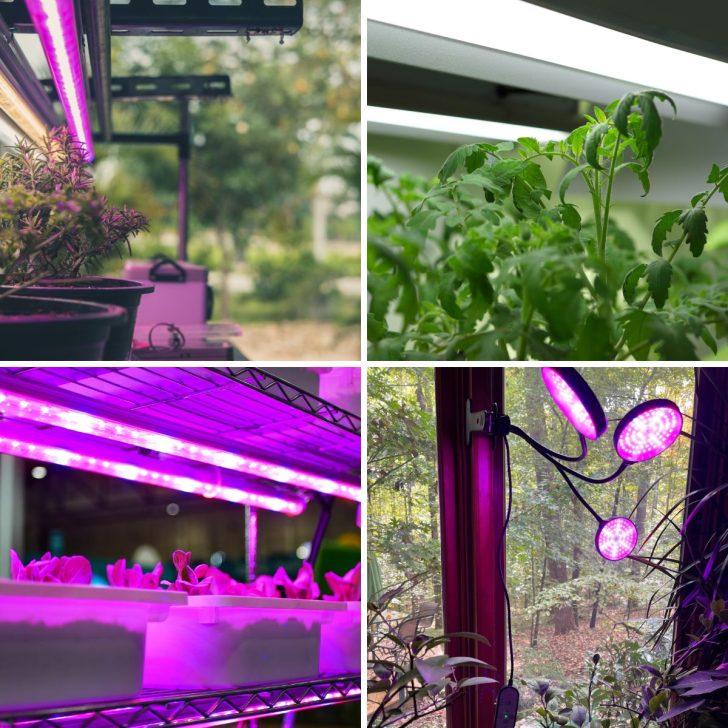
Indoor Gardening With Grow Lights
Because Growers Gotta Grow
Gardeners get addicted to having fresh food readily available. For people who love the idea of growing their own food year round, LED grow lights may be the best solution.
Indoor plant lighting systems can be pricey, so which are the best grow lights? We delve into this topic here, and include economical hacks from GardensAll community members to help you decide on the best grow light system for you.
From Basements to Outer Space
Grow lights are localized lights that deliver very specific light and heat to the plants in order to make them grow. This technology has been used by NASA, the government, and farmers all over the world.
While they can be a little pricey and require getting used to this style of gardening, it can be helpful and productive for people who want to keep on growing more of their own food. And, there are less expensive grow light hacks shared by some of our community members here as well.
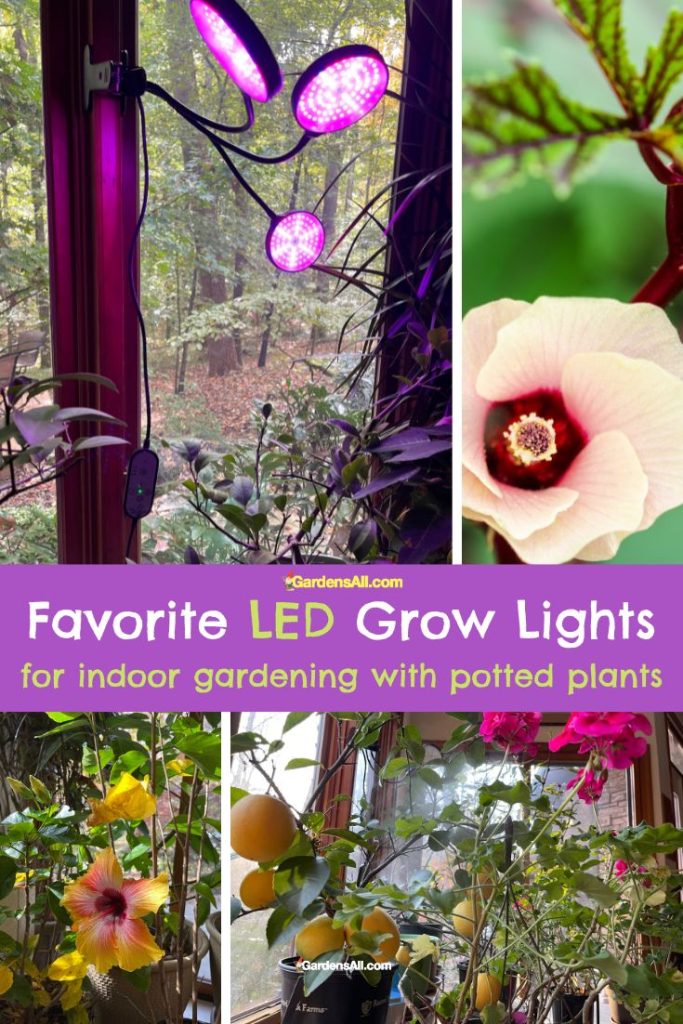
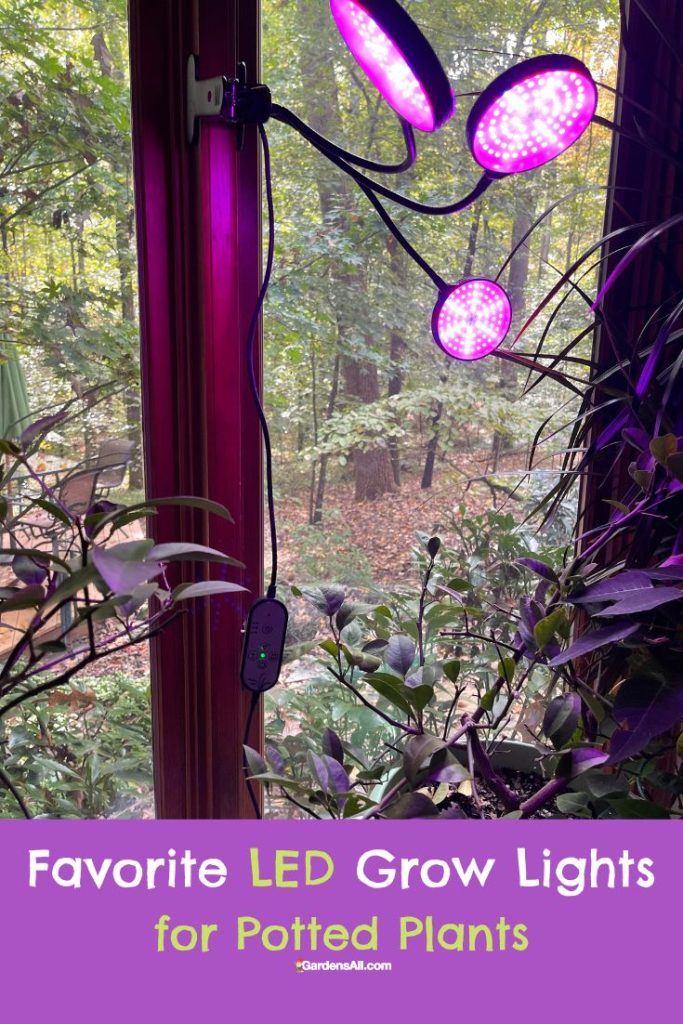
Adjustable Gooseneck Clip-on LED Grow Light 15-60W
This is our favorite LED grow light, which we use for our indoor plants in winter. There’s currently just one company selling these on Amazon with 4.5 star reviews overall.
These LED grow lights are reasonably priced and come with the option of a single light of 15 watts, or up to four adjustable gooseneck light disks on one system, for up to 45 watts. We have three lights, so 30 watts total.
This means that you can clip them to one location, and position as needed. Ours are clipped to the window trim, and positioned over Meyer lemon trees, roselle, and poinsettia bushes.
We love the portability and flexibility of this simple clip-on LED grow light.
Sun System HPS 150 Grow Light Fixture

With an incredibly 16,000 lumens and a color spectrum that is designed for growing indoor plants, Sun System HPS 150 Grow Light Fixture is an efficient light that won’t have a huge impact on your electricity bill. The lights are silent as well, so you won’t have to worry about the humming that you could hear with others.
Installation is another benefit for this one: it comes with a hanger on each end and a battery already in place. Even though there is ventilation and the aluminum structure dissipates heat, make sure that you hang it safely.
You can find this on Amazon.
TaoTronics TT-E27 24 Watt
If going green is one of your main reasons for growing food or plants, this one might be an option for you as well. Without using a lot of electricity, you are able to get a full spectrum, 3 band ratio that gives off plenty of light. Part of that is because the light has a built in fan that removes the heat. Better yet, you are able to use this particular light throughout all stages of growth.
You can find this on Amazon.
iPower Digital Dimmable Grow Light System for Plants

There is some personalization within the iPower, which is why it lands on this list. You can use one HPS (high pressure sodium) bulb or two that have either 400, 600, or 1,000 watts of power. But that isn’t the end of the personalization, as you can also dim them by 50%, 75%, or 100% for when you don’t need heat.
According to a description from the company, the “balanced spectrum set of lights will not only be well-absorbed by plant-feets chlorophylls, but also promotes healthy chlorophyll production, and regulates plant life cycle”.
You can find this on Amazon.
Advanced Platinum Series DS200 300 Watt

If getting the latest piece is something that you are looking for, the Advanced Platinum Series DS200 300 Watt grow light is the baby of the list.
Many like this product because it doesn’t produce a lot of heat, which means that it is very efficient and provides only usable light so that photosynthesis is strong and works well. There is personalization here as well, you can set the lights for vegetables and flowers, which means that you can have optimal growth for all of it. It is a little more technical, but the instruction manual is very easy to understand.
Hydrofarm FLT24 4-Tube T5 Commercial System

Hydrofarm is a very trusted name in the manufacturing of hydroponic or aquaponics gardening equipment. The reason their grow light is one of the best is because the 6400K T5 bulbs put out double the amount of light of a normal fluorescent system.
These lights are also versatile in that they can be hung in three different ways: horizontally, vertically, or overhead, which allows you to position them in a way that best suits your space and your plants.
You can find this on Amazon.
Something for Every Need
There are tons of other grow lights on the market today, making it easy to find the solution that fits your specific needs, but these are some of the best sellers on the market today. To decide which one is right for you, just look seriously at what you want to grow, how you want to grow, and what your budget will be.
The good news is that the money you will save on groceries bills will help to pay for the grow lights. And it’s hard to put a price on the benefit of the freshest food in the world!
Many who utilize indoor grow lights look for ways to expand their indoor growing space over time. We even have some longevity spinach growing under LEDs in our bathtub!
Which Grow Lights Save on Electricity?
We have quite a conversation going on in the GardensAll Facebook page regarding which grow lights are best and which use the most and least electricity. Here’s a chart that we found on ConnectXcelEnergy.com that’s really helpful and eye-opening!
From ConnectXcelEnergy.com
We’ll need to begin with the amount of light bulbs in a home. According to a recent survey[1]https://ezinearticles.com/?How-Many-Light-Bulbs-Are-In-The-Average-American-Household?&id=6486896, the average American household uses 47 light bulbs.
Electricity Usage in the Average American Household

Cost of Electricity Usage in the Average American Household
Monthly Cost of Using Incandescent Light Bulbs
2.820 X $0.1188 X 150 hours = $50.25
Monthly Cost of Using CFL Bulbs
0.658 X $0.1188 X 150 hours = $11.73
Monthly Cost of Using LED Bulbs
0.447 X $0.1188 X 150 hours = $7.97
If, in this scenario, if I switched 47 incandescent light bulbs to LEDs, I could save around $42.28 each month ($50.25 – $7.97 = $42.28).
That really adds up over the course of a year, and the savings continue to grow over many years. [2]https://connect.xcelenergy.com/minnesota/how-much-money-can-you-save-by-switching-to-energy-efficient-light-
LED Grow Lights for Basement Hydroponics
Frances in Murphy, NC shares her hydroponic setup in her basement.


We ordered these