Skip to Content
This post may contain affiliate links. Read our Affiliate Disclosure here.

How to Make Pickled Peppers from Fresh Garden Peppers
How to Make Pickled Peppers from Fresh Garden Peppers

Pickled peppers are a favorite of many pepper fans. From hot and spicy to mild and tangy, you can make pickled peppers for virtually every palate. If you’re looking to learn how to make pickled peppers from fresh garden peppers (or store bought), we’ve got options for you.

This pickled peppers recipe is sure to be a hit with those lucky enough to be served by you. We have included both the quick refrigerator peppers pickled,as well as the canned pickled peppers recipe.

Which Vinegar to Use For Pickled Peppers?

Vinegar adds that classic pickling taste that we all know and love. It also prolongs the shelf life, and prevents botulism. The more vinegar you add, the stronger you’ll be able to taste it, but it will also make your pickled peppers last longer. If the vinegar flavor in your pickled pepper recipe tastes too tart, add a bit of white cane sugar.

Apple Cider Vinegar

Apple cider vinegar leaves your pickled peppers with a sweet, fruity, mellow flavor that beautifully blends with the spices you add. However, it does not have that crisp and acidic taste that classic distilled white vinegar has. It will also darken up your peppers, and they will lose more of their vibrant colors, turning slightly brown. This is completely natural and healthy, though not as aesthetically pleasing.

White Wine Vinegar

Do not use white wine vinegar for canning unless you are absolutely certain of its acid content. You want a vinegar that has five percent acetic acid. Think of white wine vinegar as the stepping stone between apple cider vinegar and distilled white. The flavor is more pungent than apple cider vinegar, but it’s still milder than distilled white vinegar.

Distilled White Vinegar

This vinegar is clear, colorless, and has a neutral, sharp, crisp, and acidic flavor; it will create a more “classic” pickled taste and texture.

Which Kinds of Peppers Should You Pickle?

This recipe is exceptionally accommodating for whatever chillies you have on hand.

If you enjoy a sweet chili pepper, use bell peppers, pimientos, poblanos, sweet marconi peppers, or rocotillos. Like a sweetish tangy flavor? Try a banana pepper.

If you like a kick of heat, go for a traditional jalapeno pepper, serrano, cayenne, fish pepper or Thai pepper. And if you’re a glutton for punishment and heat, use habanero, red savina habanero, or Dragon’s Breath peppers.

Hot pickled peppers will have more spicy peppers, while sweet pickled peppers will use fewer (or no) hot peppers and few (or no) pepper seeds left. If you’d like to take the heat down a notch, remove the seeds; this is where most of the spice and intensity resides.

Image by Sarah Hamelman, homesteader, blogger

Should You Add Water to Pickled Peppers?

For these recipes, you can use a cup of vinegar and a cup of water, or skip the cup of water and instead use two cups of vinegar.

The more vinegar you add, the stronger the vinegar’s flavor will be. More vinegar also creates a longer, more stable shelf life.

It is completely up to you to decide what you like and if you should add water.

How Many Peppers in a Pound?

It takes twelve large (or twenty-five to thirty small) jalapenos to make a pound.

There are approximately three large (or six to eight small) bell peppers in a pound.

Three mini sweet peppers are the equivalent size of one medium bell pepper. So it takes fifteen mini sweet peppers to make one pound.

It takes five large (or six medium, or seven small) banana peppers to add up to a pound.

Do you remember Peter Piper and his peck of peppers…? 😊

Optional Add-Ins for Hot Picked Peppers Recipe

There are four additional ingredients that I have included for you to decide if you want to add them in or not. They are:

  • smashed garlic cloves
  • peppercorns
  • celery seeds
  • mustard seeds

You may enjoy checking out different types of garlic.

Herb and Spice Additions Enhance Pickled Peppers

Garlic Cloves and Pickled Peppers

Garlic cloves add a layer of interest and flavor to the recipe. It dilutes the spiciness but enhances the flavor.

Mustard Seeds and Pickled Peppers

Mustard seeds have a strong, distinct smell and flavor. They give a spicy yet earthy taste to the pickled peppers. Because of this, they are perfectly incorporated into the recipe.

Celery Seeds and Pickled Peppers

Celery seeds are crisp, bitter, and lightly warm. They work well with distilled white vinegar to create that classic pickle taste.

Peppercorns and Pickled Peppers

Lastly, the black peppercorns smell delicious and make a lovely spicy addition that isn’t too hot for most palates.

How to Make Refrigerator Pickled Peppers

Quick and Easy Fridge Pepper Pickles – Basic Recipe

Here’s the very short version on making fridge pickled peppers:

Heat one part water to one part distilled white vinegar, with a touch of salt and sugar. Once this is well blended, pour it over sliced chili peppers. These peppers will last up to three weeks in the refrigerator.

Or, you can go for more flavorful versions below.

Yield: 1 Qt

Refrigerator Pickled Peppers

orange, yellow, red pickled peppers

    Ingredients

    • 1 pound peppers (hot, sweet, assorted, your choice)
    • 1 cup vinegar (see notes above to choose the type)
    • 1 cup water
    • 2 Tablespoons honey (or sugar, agave nectar, or maple syrup)
    • 1 teaspoons kosher salt
    • 2 cloves garlic, peeled and crushed (optional)
    • 10 whole peppercorns (optional)
    • 1 teaspoon celery seeds (optional)
    • 1 teaspoon mustard seeds (optional)

    Instructions

    1. Stem the chilies and remove the seeds if you want to limit the heat.
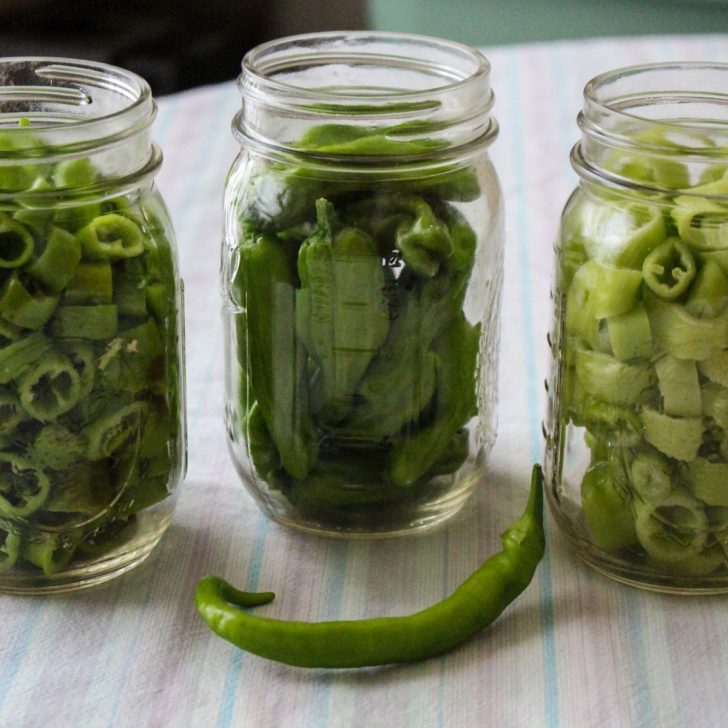
    2. Slice the peppers into quarter inch rounds, then pack into sterilized jars.
    3. In small or medium saucepan, add the vinegar, water, honey (or other sweetener), salt, garlic, peppercorns, mustard seeds, and celery seeds.
    4. Bring this brine to a boil, stirring carefully and occasionally.
    5. Remove from heat as soon as the salt and honey (or sugar) are incorporated. Squish the peppercorns with a spoon or fork to release air bubbles and flavor.
    6. Pour the brine over the jar of peppers. You can strain the brine, or add it all into the jar as is.
    7. Seal with lids, and refrigerate for at least a day before eating.
    8. This recipe will last for one month in the refrigerator and it should NOT be canned.

    Nutrition Information:

    Yield:

    16

    Serving Size:

    1

    Amount Per Serving: Calories: 24Total Fat: 0gSaturated Fat: 0gTrans Fat: 0gUnsaturated Fat: 0gCholesterol: 0mgSodium: 81mgCarbohydrates: 5gFiber: 1gSugar: 3gProtein: 1g

    Check out this article if you’re interested in making refrigerator pickles.

    How to Can Pickled Peppers

    For longer lasting food preservation, canning pickled peppers is the way to go.

    Yield: 1 Quart

    Canning Pickled Peppers

    Canning Pickled Peppers

    Canning pickled peppers is the most popular way to preserve pickled peppers for longevity.

    Prep Time 30 minutes
    Cook Time 30 minutes
    Total Time 30 minutes

    Ingredients

    • 1 pound peppers (hot, sweet, assorted, your choice)
    • 1 1/2 cup vinegar (see notes above to choose the type)
    • 1/2 cup water
    • 2 Tablespoon honey (or your favorite sweetener)
    • 2 teaspoon canning salt
    • 2 cloves garlic, peeled and crushed (optional)
    • 10 whole peppercorns (optional)
    • 1 teaspoons celery seeds (optional)
    • 1 teaspoon mustard seeds (optional)

    Instructions

    Part 1 Canning Pickled Peppers Instructions:

    1. PRE-HEAT water-bath canner.
    2. DE-STEM chilies
    3. DE-SEED chilies if you want to minimize the heat; leave in for more heat.
    4. SLICE peppers into quarter inch rounds, then pack into sterilized jars. Make sure you leave at least an inch of headspace for the canning process.
    5. BOIL - In a small or medium saucepan, create brine by bringing to boil: water, vinegar, celery seeds, garlic, mustard seeds, peppercorns, salt
    6. REMOVE from heat and stir in honey (or other sweetener).
    7. CRUSH the peppercorns with a spoon or fork to release air bubbles and flavor.
    8. POUR brine over the jar of peppers. You can strain the brine, or add it all into the jar as is. Leave a half inch of headspace.
    9. STIR slightly to remove air bubbles.
    10. CLEAN and dry the rims of the jars, then seal with pretreated lids.

    Part 2 Canning Instructions:

    1. Carefully place the jars of pickled peppers into the water bath canner, making sure that at least two inches of water covers the tops of the jars.
    2. Process the cans in boiling water -
    3. In half pints or pint jars, process for:
    4. 10 minutes at altitudes under 6,000 feet
    5. 15 minutes at over 6,000 feet elevation
    6. In quart jars process for:
    7. 15 minutes under 6,000 feet elevation.
    8. 20 minutes at over 6,000 feet
    9. Use a jar lifter to remove the cans, and place on a folded bath towel on your counter. Do not let any of the jars touch each other, leave an inch of space in between.
    10. Let cool in place for at least 12-14 hours.
    11. Push down on the jar lids to see if they are solid and sealed. If sealed, the button will not move or wiggle.
    12. Remove the rings, but not the lids from the jars that passed the sealed inspection.*
    13. The failed jars should be moved to the fridge and eaten within a month.
    14. The sealed jars should be put away in a cool dark place to be consumed within a year. For optimal flavor, wait six weeks before opening and eating the first jar.


    Nutrition Information:

    Yield:

    1

    Serving Size:

    1

    Amount Per Serving: Calories: 403Total Fat: 3gSaturated Fat: 1gTrans Fat: 0gUnsaturated Fat: 2gCholesterol: 0mgSodium: 4262mgCarbohydrates: 83gFiber: 12gSugar: 47gProtein: 8g

    *Why Remove Canning Lid Rings from Sealed Jars?

    Always remove your rings so they don’t rust there! Also, if your lid comes loose it will be very apparent (stinky). If the rings stay on, there is a chance they could reseal themselves on the shelf despite the food inside being “bad”.

    Pickled peppers make great gifts for all kinds of occasions, so for those you may consider more decorative canning jars, bottles and/or labels.

    Pickled chile peppers make beautiful gifts for all kinds of occasions. Image by Erik Gonzalez

    What To Do With Pickled Peppers

    Okay so these are delicious and it’s tempting to grab a bite of plain pickled peppers every now and then, but how are you supposed to formally use them? Here are some of the best methods:

    • Toss a spoonful into Mexican dishes such as enchiladas, tacos, burritos, quesadillas, nachos, or salsa.
    • Blend to make a delicious hot sauce.
    • Add to flatbread or pizza.
    • Scatter atop a fresh garden salad.
    • Mix with pimento cheese. Even better, eat it on a cracker with cheese.
    • Blend into soups or chilis.
    • Add to sandwiches, burgers, melts, or deli wraps.
    • Toss into chicken or tuna salad.
    • Use it as a garnish on any other meal that needs a kick of flavor.
    • Give as gifts

    You may also enjoy learning how you can freeze peppers as well as how to dry chili peppers.

    We love this image of jar-upon-jar of “happy” pickled peppers. While these appear to be displayed in a country store, we can envision them in a well-stocked pantry! 😊🌶🫑😎

    Pickled peppers in Great Market Hall, Budapest, image by Owen Shoals

    How Long Will Pickled Peppers Last?

    This is an important question, but the answer is not clear. We didn’t even find any info on the USDA website related to pickled peppers longevity, so instead, we’re sharing our experience and that of others here for you to make your own educated observations and assessments.

    There No One Right Answer

    From good blogs to extension service websites, answers on how long pickled peppers will last refrigerated after opening, vary from one month to one year

    For example, the psu.edu ext. site says one month. The Colorado state ext. site says: “Refrigerate six to eight weeks for the pickled flavor to fully develop. Keep refrigerated and use within six months.” And this survival freedom website with (reportedly) 50 years gardening experience, says six months! 😜

    In our experience, we’ve had pickled jalapeños in a jar in the fridge for up to a year that were perfectly fine with no discernible difference to a fresh opened jar.

    What we all know is that whatever food item that’s dated, it could deteriorate before the date, (such as tender salad greens), or well afterwards, and often depending on traveling and storage conditions. So use your best judgement and if it looks good and smells good, it probably is good.

    8Shares

    FDA Compliance

    The information on this website has not been evaluated by the Food & Drug Administration or any other medical body. We do not aim to diagnose, treat, cure or prevent any illness or disease. Information is shared for educational purposes only. You must consult your doctor before acting on any content on this website, especially if you are pregnant, nursing, taking medication, or have a medical condition.

    Affiliate Disclosure

    GardensAll.com is a participant in the Amazon Services LLC Associates Program, an affiliate advertising program designed to provide a means for sites to earn advertising fees by advertising and linking to Amazon.com. Pages on this site may include affiliate links to Amazon and its affiliate sites on which the owner of this website will make a referral commission.

    Want to submit your photos, videos and/or article content for publication? We love to share! growers@gardensall.com
    Skip to Recipe