
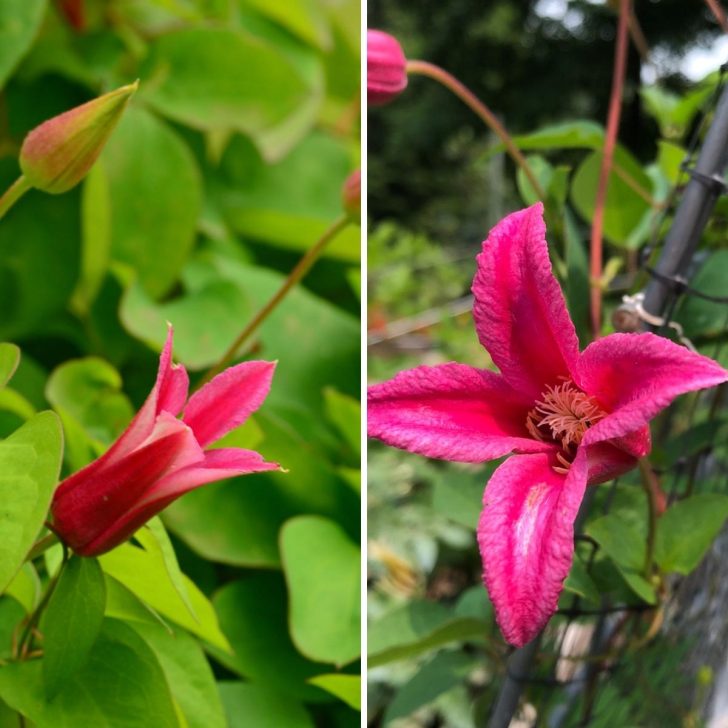
The Clematis genus encompasses a wide variety of beautiful climbing plants, and the Clematis ‘Princess Diana’ is no exception. Also known as the “Texas Clematis,” this vibrant pink flower is a favorite among gardeners for its beauty, hardiness, and unique tulip shape.
Scientific Name of Clematis ‘Princess Diana’
Clematis ‘Princess Diana’ is scientifically named as Clematis texensis ‘Princess Diana’. It belongs to the Ranunculaceae family and is a part of the texensis group, which includes small-flowered clematis native to North America, especially Texas.
Clematis ‘Princess Diana’ Taxonomy
Here’s the taxonomic hierarchy for Clematis ‘Princess Diana’.
- Domain: Eukaryota
- Kingdom: Plantae
- Subkingdom: Viridiplantae
- Infrakingdom: Streptophyta
- Superdivision: Embryophyta
- Division (or Phylum): Tracheophyta
- Subdivision (or Subphylum): Spermatophytina
- Class: Magnoliopsida
- Order: Ranunculales
- Family: Ranunculaceae
- Genus:Clematis
- Species:Clematis texensis
- Cultivar: Clematis texensis ‘Princess Diana’
- Species:Clematis texensis
- Genus:Clematis
- Family: Ranunculaceae
- Order: Ranunculales
- Class: Magnoliopsida
- Subdivision (or Subphylum): Spermatophytina
- Division (or Phylum): Tracheophyta
- Superdivision: Embryophyta
- Infrakingdom: Streptophyta
- Subkingdom: Viridiplantae
- Kingdom: Plantae
NOTE: The taxonomy levels provided are based on common taxonomic classifications and may be more detailed than what you’ll find in some references. Beyond that, variations may occur over time as taxonomy is a dynamic field that can undergo revisions as scientists learn more about organisms and their relationships.
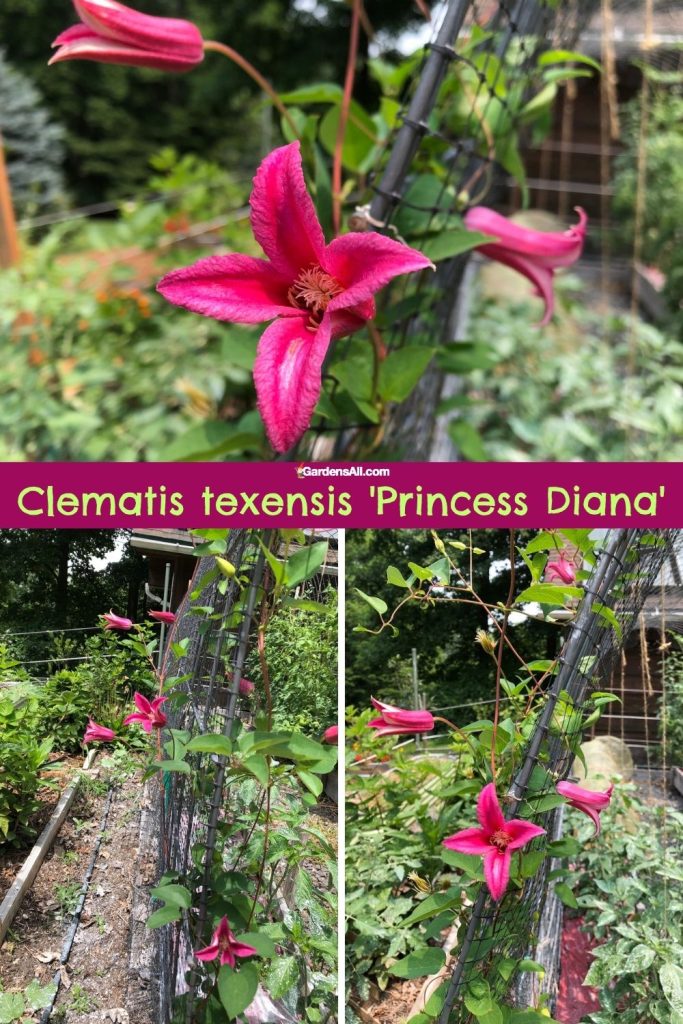
Common Names for Clematis texensis ‘Princess Diana’
While “Texas Clematis” and “Princess Diana” are the most widely recognized and used names for this cultivar, here are the known common names for this plant:
- Leatherflower – A name that’s used for other Clematis texensis varieties as well due to the texture of the petals.
- Princess Diana – A cultivated variety specifically named in honor of Diana, Princess of Wales, capturing both her elegance and the unique beauty of this particular bloom.
- Texas Clematis – A nod to its native region, as Clematis texensis varieties predominantly originate from Texas, emphasizing its regional adaptation and heritage.
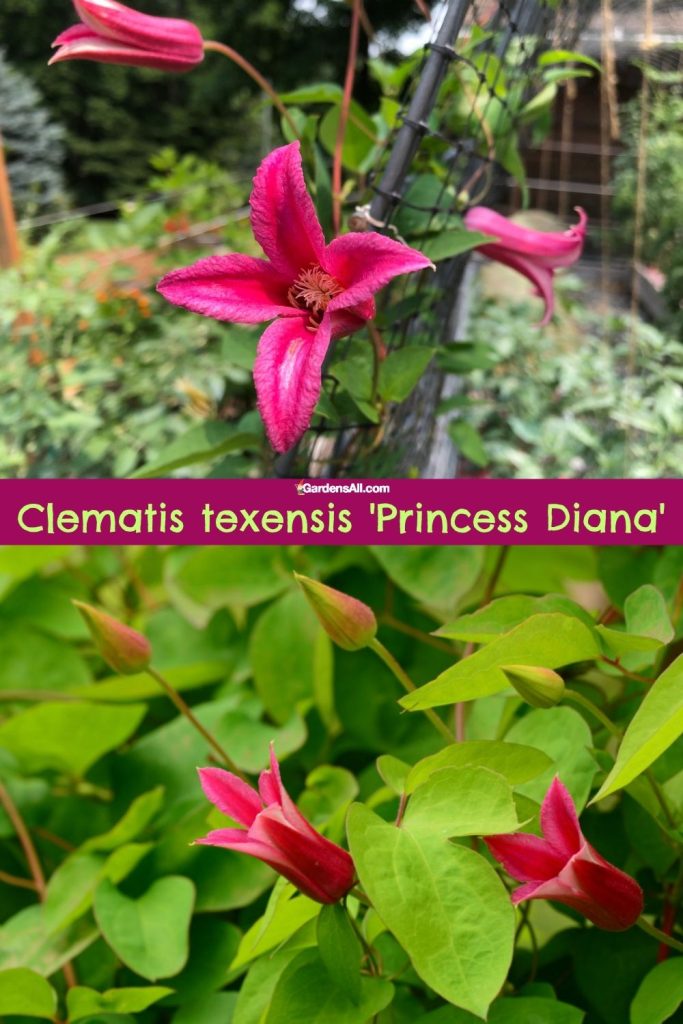
- Tulip Clematis (reflecting the unique tulip-like shape of the ‘Princess Diana’ bloom.
Growth
- Height & Spread: Typically, the plant reaches a height of 8-10 feet (2.4-3 meters) and has a spread of 2-4 feet (0.6-1.2 meters).
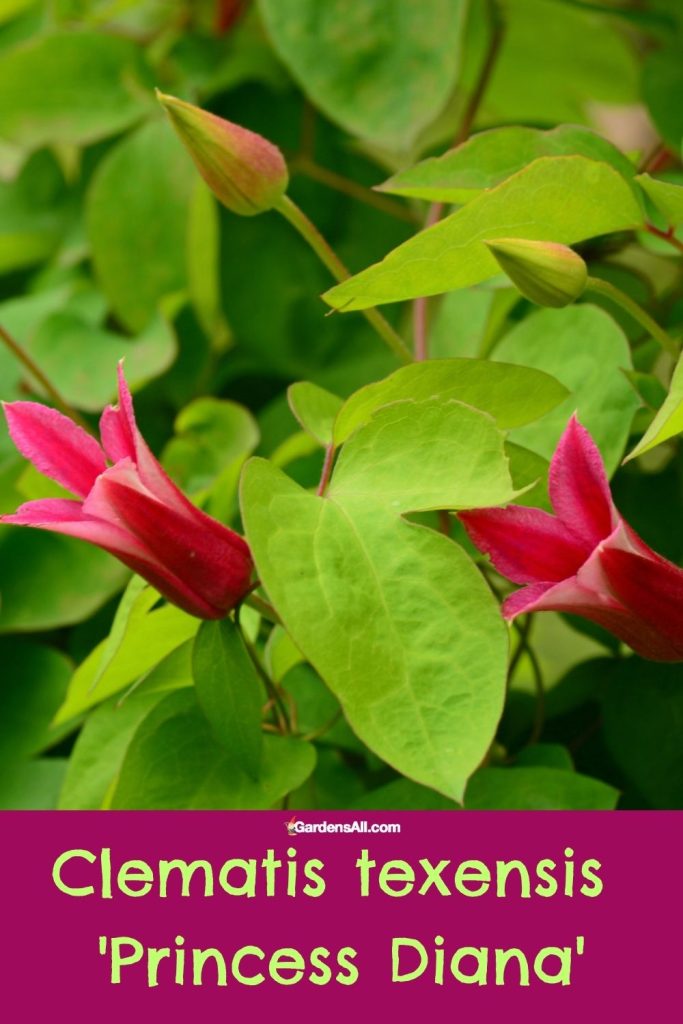
- Leaves: The leaves are bright green, and grow in pairs or sets of three, providing an excellent backdrop for the flowers.
- Flowers: This clematis produces an abundance of rich pink, tulip-shaped flowers that can be 2-3 inches in size. The blooming period is from mid-summer to early fall.
- Hardiness Zone: This clematis is best suited for USDA hardiness zones 4 through 9. This means it can withstand winter temperatures as low as -30°F (-34°C) and can be grown across a broad spectrum of climates, from cooler northern states to the warmer southern regions.
Care
- Soil: ‘Princess Diana’ prefers well-draining soil. A neutral pH level is ideal. If your soil is overly acidic or alkaline, consider amending it with organic material.
- Light: This plant thrives in full sun to partial shade. However, while its flowers and leaves enjoy the sun, it’s beneficial to keep the roots cool and shaded. This can be achieved by planting low-growing perennials or shrubs around its base and/or using mulch.
- Water: Regular watering is essential, especially during dry periods. Ensure the soil remains moist but not waterlogged.
- Feeding: Apply a balanced, slow-release fertilizer in the spring and again in mid-summer.
Pruning
When pruning this clematis, it’s essential to encourage vigorous growth and profuse flowering. This clematis belongs to Pruning Group 3, which means it blooms on the current year’s growth.
- When to Prune: The best time to prune is late winter or early spring, just as buds begin to show.
- How to Prune: Cut back all the old stems to a pair of strong buds about 12-18 inches (30-45 cm) above ground level. This might seem drastic, but it will stimulate strong growth and ensure an abundance of flowers for the coming season.
- Regular Maintenance: Throughout the growing season, remove any weak or dead stems to maintain the plant’s shape and vitality.
Common Issues
Watch out for pests like aphids and caterpillars. Diseases such as clematis wilt or powdery mildew can also pose problems. Regularly inspecting your plant and ensuring good air circulation can prevent most issues.
History and Naming of Clematis ‘Princess Diana’:
The Clematis ‘Princess Diana’ was named in honor of Diana, Princess of Wales, who was a beloved figure in the UK and internationally. The choice of name might not only be due to the striking beauty of the flower but also because Diana herself was known for her love of gardens and flowers.
Plants native to one region often offer unique characteristics not found in local varieties. A plant that is indigenous to Texas, for example, might have drought resistance or other features that make it attractive to breeders in other parts of the world.
Barry Fretwell, was the botanical breeder for the Princess Diana variety of clematis. Like many plant breeders, Barry was likely interested in developing unique clematis cultivars that combined beauty with hardiness, such as the Clematis texensis.
A Hardy Clematis Cultivar
Clematis ‘Princess Diana’ is a magnificent climber that, with proper care and pruning, can be a centerpiece in any garden. Its vibrant pink blooms, combined with its relatively easy maintenance, make it a favorite for both novice and seasoned gardeners. With the right conditions and a little TLC, you’ll be rewarded with a cascade of brilliant pink every summer and fall.

I’m LeAura Alderson, a garden, herb and plant enthusiast with a passion for discovering the many edible and medicinal benefits of the plants all around us, including the weeds, while transforming the land through regenerative permaculture practice. I am also a writer, editor and media publisher (now mostly retired due to replacement by AI), but which now allows more time to build our regenerative permaculture homestead farm.