
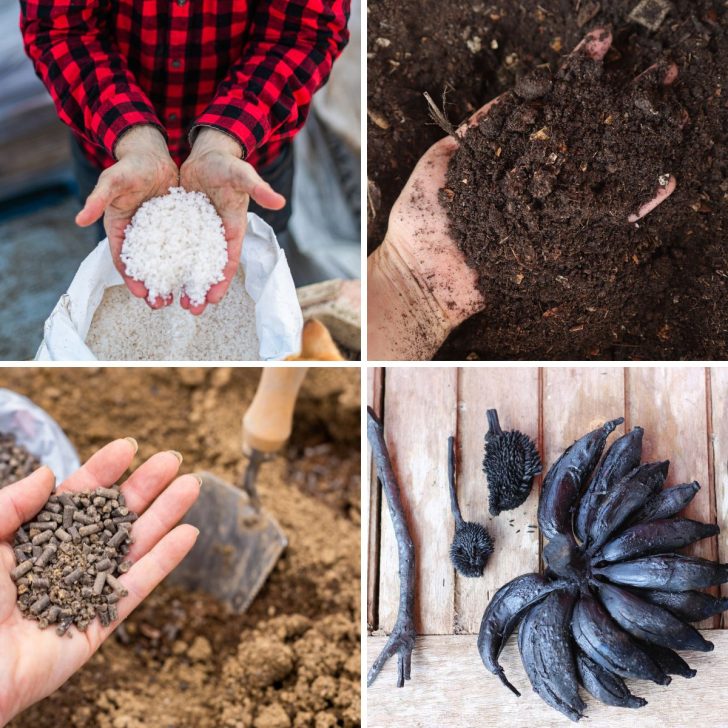
Vegetable garden soil amendments are essential for improving the structure, aeration, and nutrient content of the soil, which is foundational for healthy plants and harvests.
What Are the Best Vegetable Garden Soil Amendments
There is no one answer as to the best vegetable garden soil amendments, because it depends on multiple factors, from plant needs to soil type.
Whether you’re dealing with sandy soil that needs better water retention or heavy clay soil that requires improved drainage, the right amendments can make all the difference.
This article will cover the types of soil amendments, their benefits, and how to apply them effectively in your vegetable garden.
Reasons for Using Soil Amendments
Soil amendments are materials added to the soil to enhance its physical properties and nutrient availability. They can be organic, originating from plants or animals, or inorganic, derived from mineral sources. The choice of amendment depends on the specific needs of your soil and the vegetables you plan to grow.
Types of Soil Amendments
- Organic Matter: This includes compost, manure, leaf mold, green manures and biochar. Organic matter improves soil structure, nutrient content, and microbial activity, helping to create a fertile environment for vegetable growth.
- Inorganic Amendments:
- Sand, Vermiculite, Perlite, and Gypsum: These materials improve soil structure, with sand enhancing drainage in clay soils, and vermiculite and perlite increasing water retention in sandy soils. Gypsum can improve the structure of clay soils without altering pH.
- Lime and Sulfur: These are used to adjust soil pH, with lime increasing the pH of acidic soils and sulfur decreasing the pH of alkaline soils. As mineral-based substances, they fit the definition of inorganic amendments.
- Fertilizers: Both organic and inorganic fertilizers add essential nutrients to the soil, such as nitrogen, phosphorus, and potassium. However, it’s crucial to use them judiciously to avoid over-fertilization, which can harm plants and the environment.
NOTE: Organic matter is not the same as organic soil. Find more on organic soil amendments here.
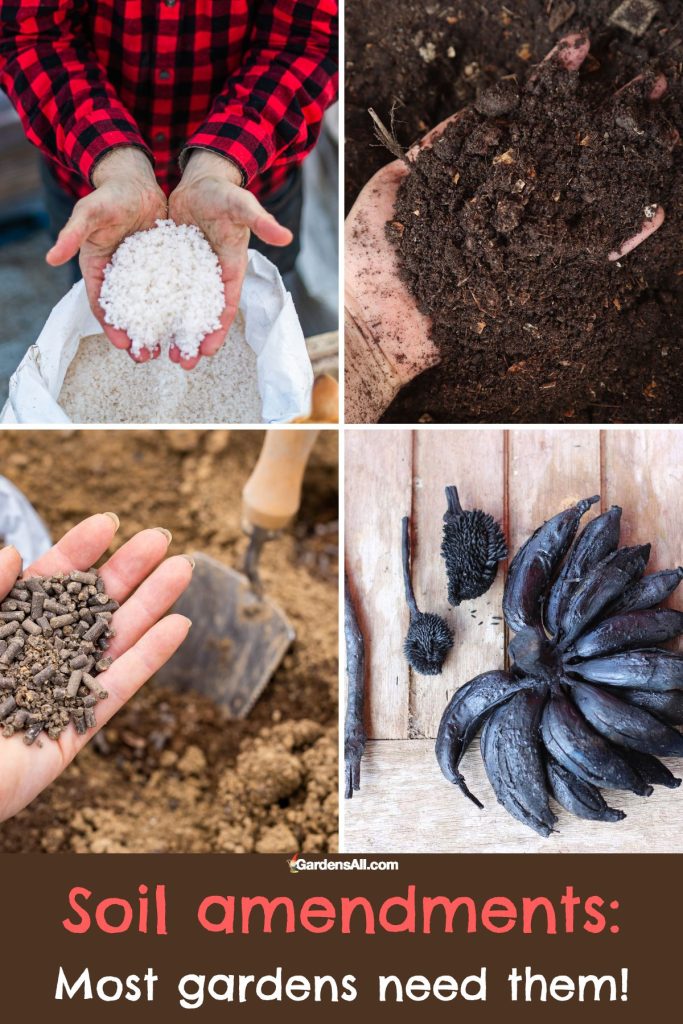
Benefits of Soil Amendments
- Enhanced Soil Structure: Improved aeration and water retention lead to healthier root development and more resilient plants.
- Increased Nutrient Availability: Amendments can provide essential nutrients or help unlock existing nutrients in the soil, promoting vigorous plant growth.
- pH Adjustment: Optimizing soil pH ensures that plants can effectively absorb nutrients, reducing the risk of nutrient deficiencies or toxicities.
- Disease Suppression: Some amendments, like compost, can help suppress soil-borne diseases, reducing the need for chemical interventions.
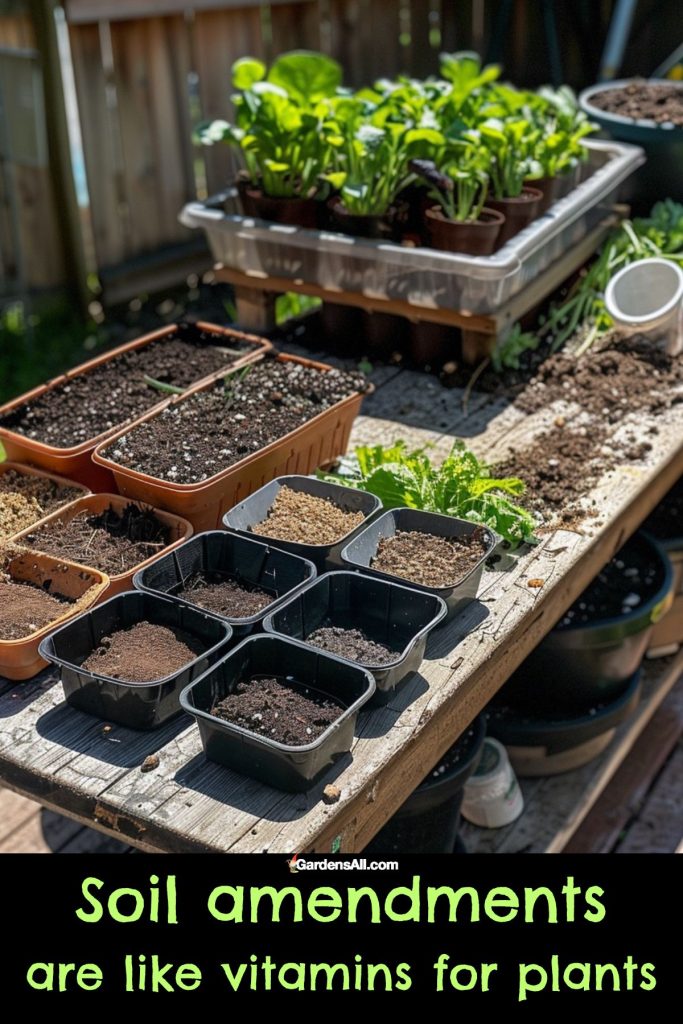
Applying Soil Amendments
- Testing Soil: Before amending your soil, it’s important to conduct a soil test to understand its current condition and specific needs. This will guide you in selecting the appropriate amendments.
- Incorporation: Most amendments should be thoroughly mixed with the soil. For example, compost can be spread over the garden bed and then incorporated to a depth of 6-8 inches using a shovel or tiller.
- Timing: Some amendments, like compost, can be added any time, while others, such as lime, may need time to react with the soil before planting.
- Application Rates: Follow recommended application rates for each amendment to avoid over-application, which can be as harmful as neglect.
Soil Amendment by Season
There are different soil amendment recommendations based on the season. The timing of applying certain amendments can significantly impact their effectiveness and the health of your garden. Here’s how you can approach soil amendment throughout the year:
Spring
Pre-planting Amendments:
- Compost and Well-Rotted Manure: Spring is a great time to incorporate organic matter like compost or well-rotted manure into your garden beds. These amendments improve soil structure, nutrient content, and microbial activity, providing a good start for your spring planting.
- Balanced Fertilizers: Apply a balanced, slow-release fertilizer to provide nutrients throughout the growing season. If a soil test indicates specific nutrient deficiencies, address them with the appropriate amendments.
pH Adjustments:
- If soil tests indicate pH imbalances, spring is a good time to adjust pH levels. Use lime to raise the pH of acidic soils or sulfur to lower the pH of alkaline soils, allowing time for the amendments to affect the soil before planting.
Summer
Mid-Season Boost:
- Side-Dressing: Apply additional organic matter or fertilizer alongside your growing plants (side-dressing) to provide them with a mid-season nutrient boost, especially for heavy feeders like tomatoes and corn.
Moisture Retention:
- Mulching: Applying organic mulches like straw, grass clippings, or wood chips in the summer can help retain soil moisture, suppress weeds, and gradually add organic matter to the soil as they decompose.
Fall
Post-Harvest Amendments:
- Cover Crops: Planting cover crops (green manures) in the fall can improve soil structure, prevent erosion, and add nutrients when tilled into the soil in the spring.
- Bulk Organic Matter: Incorporate larger quantities of organic matter, such as compost or leaf mold, after the harvest to enrich the soil and prepare it for the next growing season.
Soil Testing:
- Conduct a soil test in the fall to evaluate nutrient levels and pH, allowing ample time to address any issues before the next planting season.
Winter
Dormant Season Adjustments:
- In regions with mild winters, you can apply lime or sulfur based on fall soil test results to allow more time for pH adjustments.
- In areas where the ground freezes, focus on planning for spring amendments and possibly ordering materials so you’re prepared when the weather warms.
By tailoring your soil amendment practices to the season, you can maintain optimal soil conditions throughout the year, promoting healthy plant growth and maximizing your garden’s productivity.

I’m LeAura Alderson, a garden, herb and plant enthusiast with a passion for discovering the many edible and medicinal benefits of the plants all around us, including the weeds, while transforming the land through regenerative permaculture practice. I am also a writer, editor and media publisher (now mostly retired due to replacement by AI), but which now allows more time to build our regenerative permaculture homestead farm.