
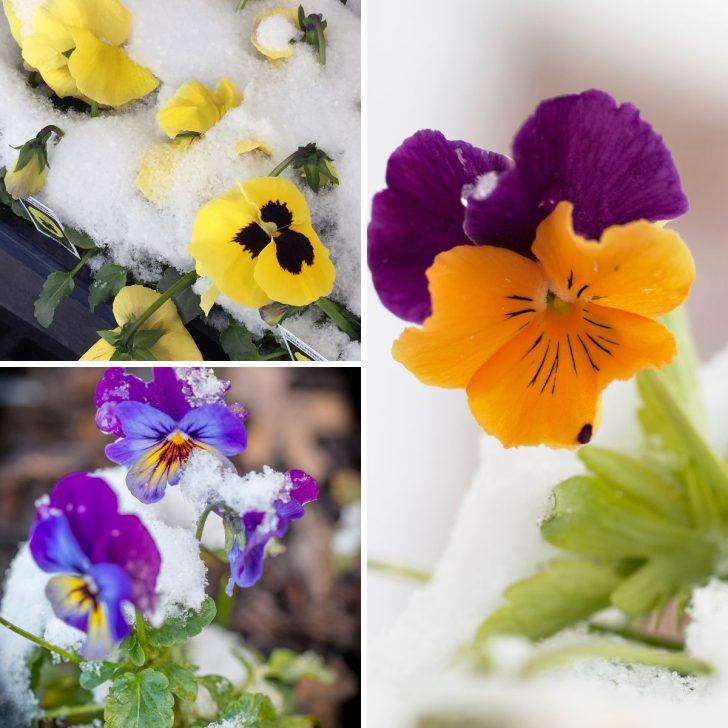
Are pansies perennials or annuals? There’s no one answer to this, so let’s dig into the scoop on this very popular cool weather flowering plant with its generous array of colorful blossoms.
Pansies, with their cheerful faces and array of colors, are one of the most beloved garden flowers. But gardeners often wonder if these delightful plants are annuals or perennials. The answer isn’t straightforward and largely depends on the region or USDA Hardiness Zone in which they are grown. Let’s dive into the details and discern the nature of pansies based on different USDA zones and states.
Understanding Annuals, Perennials and Biennials
Before discussing pansies, let’s differentiate between the terms ‘annual’ and ‘perennial’.
- Annuals are plants that complete their life cycle (from germination to producing seeds) in a single growing season. After they have produced seeds, the plants die. Gardeners need to plant them anew each year.
- Perennials are plants that live for more than two years. They might die back to the ground in winter in colder regions but return the following spring from their rootstock.
- Biennials are plants that have a two-year life cycle. During the first year, they grow leaves, stems, and sometimes roots. In their second year, they flower, produce seeds, and then die. Unlike annuals that complete their cycle in one year or perennials that continue for several years, biennials have this distinct two-year pattern.

So Are Pansies Perennials, Annuals or Biennials? It Depends!
- Pansies are technically biennials, but with proper timing and conditions, they can flower in their first year when grown from seed.
- Pansy transplants purchased from nurseries are designed to bloom almost immediately, making their biennial nature less evident in garden settings.
- Whether they’re grown from seed or transplants, pansies’ behavior as annuals or perennials largely depends on the growing conditions.
While pansies are technically biennials, most gardeners treat them as either annuals or perennials depending on the climate and growing conditions.
Pansies as Perennials, Annuals and Biennials
The USDA Plant Hardiness Zone Map is a useful tool for gardeners wanting to know which plants will thrive in their region. The map divides North America into zones based on average minimum winter temperatures.
- Annuals in Zones 1-3 (Coldest Climates): While challenging due to extreme cold, pansies can be grown in the short summer months but are unlikely to survive the severe winter, even with protection.
- Perennials in Zones 4-6 (Cool to Moderate Climates): Pansies planted in spring or early summer will bloom until the frost and can often overwinter, blooming again in the following spring. They behave more like perennials in these zones, especially with winter protection such as mulch.
- Perennials in Zones 7-8 (Mild Climates): Here, pansies can be planted in early spring or fall. They will often overwinter, behaving as perennials, and bloom again in the second year.
- Annuals in Zones 9-10 (Warm Climates): In these zones, pansies are grown as cool-season annuals. Planted in the fall, they provide blooms throughout the winter and early spring. However, they often wither once the hot summer temperatures set in.
- Not Recommended for Zone 11 (Hottest Climates): The conditions are typically too warm for pansies to thrive throughout the year.
States and Pansy Growth
To give you an idea, here’s how pansies typically behave in some select states:
- Alaska (Zones 1-4): Pansies can be grown in the warmer months but might not survive the harsh winter, even with protection.
- Texas (Zones 6-9): Northern Texas sees pansies as perennials, while the warmer southern parts treat them as winter annuals.
- Florida (Zones 8-11): Northern Florida can treat pansies as winter annuals, but it’s challenging to grow them in the hotter southern parts.
- New York (Zones 4-7b): Pansies can be grown as perennials, especially if they are given winter protection in the colder northern areas.
| USDA Hardiness Zone | Classification | Example States | Notes |
|---|---|---|---|
| Zones 1-4 | Likely Annual | Alaska | Might not survive harsh winter even with protection. |
| Zones 5-7 | Perennial | New York (parts), Texas (northern parts) | Can overwinter with some protection. |
| Zones 8-10 | Cool-season Annual | Texas (central and southern parts), Florida | Thrive in winter and early spring; might wither in hot summer. |
| Zone 11 | Challenging | Florida (southernmost parts) | Typically too warm for pansies. |
You can find more on pansies here in our articles on When to Plant Pansies and What Temperature Will Kill Pansies.
In Summary
While pansies have the heart of a biennial, they can be both annuals or perennials depending on where they are grown. Always consult the USDA Hardiness Zone map and local gardening resources to understand how pansies will perform in your specific region. Regardless of their classification, pansies are a delightful addition to any garden.

I’m LeAura Alderson, a garden, herb and plant enthusiast with a passion for discovering the many edible and medicinal benefits of the plants all around us, including the weeds, while transforming the land through regenerative permaculture practice. I am also a writer, editor and media publisher (now mostly retired due to replacement by AI), but which now allows more time to build our regenerative permaculture homestead farm.