
Put Your Backyard to Work for You
Have you ever thought of making some extra cash from your yard garden? For backyard growers, it’s good to know that you can actually earn money by doing what you love: planting, gardening and growing!
Sure… chances are slim that you will get wealthy from gardening and selling produce from an averaged sized backyard. And, we would never advise to leave your secure job until you’ve replaced your income through your new business. However, there are other wealth benefits to consider from starting your own backyard growers business.
Gardening saves money and money saved is like money in your pocket.
If you’re growing enough to feed your family, can and store food for winter, and you still have ample additional produce, you could consider putting your yard to work earning money for you.
Benefits of a Backyard Growers Business
- Save money while making money
- Family business – you can work together
- Tax deductions for business related expenses
- Freedom to be your own boss / make your own job
- Doing work you love
- Learning while earning – there’s always something new to learn about growing and business
- Healthier: Fresh food, physical exercise and learning keeps you healthier
- Make new friends – you’ll meet and become friends with a community of growers and customers
1. Save Money
With gardening, you’re also feeding your family. So even if you’re not selling at market, every dollar saved by growing your own food is almost like a dollar earned.
The only thing more amazing that eating food you’ve grown with your own hands is holding the cash from selling the extra food!
2. Family Business
Many families enjoy working together as a family, and especially when the parents are able to help the children contribute in ways that help them feel like an integral part of the whole. Children gain significance and self esteem by seeing the results of their efforts and how it makes a difference for the family.
Of course not all families or couples do well working together. However, relationships are the number one opportunity for learning and
Families that work together stay together!
3. Tax Deductions
If you sell enough to create a business structure, such as an LLC, you’ll also qualify for tax deductions. You’ll need to research what you can and cannot deduct, but typically all your gardening expenses will qualify. Now the garden is feeding your family and the gardening business from your backyard growing is paying for your supplies and tools which are deductible business expenses where you will save on taxes.
Business expenses are tax deductible to encourage business growth which support the economy.
4. Freedom
As entrepreneurs keen on the freedom the entrepreneurial life provides, and interested in business and business building, we’re fascinated with this topic. Apparently we’re in good company because whenever we write about earning from gardening or small scale farming in some form, those are amongst our most popular articles. Those are also the kinds of books many in the GardensAll audience are most interested in buying and learning from.
Building your own business is like building a home. It takes awhile before you can live in it (or off of it), but in the end it’s yours and it provides many good things for you and your family.
Your Backyard Business provides you cash flow, freedom and the opportunity to grow that into something that can replace your dependence on a job that you may not love. Most entrepreneurs would never choose to go back to work for “the man”.
Owning your own business is hard work, but you’re working hard for your family, yourself and the freedom to be your own boss.
5. Doing Work You Love
If you love gardening and working outdoors with plants, then this is definitely an idea to pursue. If you’re considering it just for the money, then maybe not because there will be many extremely hot summer days where you won’t enjoy your time outdoors. Similarly, there may be many frosts and freezes where you’ll have to be diligent in covering your crops to keep from losing them.
To get paid to do what you love is amazing!
6. Learning While Earning
The best growers… in fact, the best at anything, are those who love to learn as much as they can about their industry. Most plant lovers enjoy perusing gardening sites, (you’re here, right ?) and learning and then sharing that information with others, such as customers and clients. The more you learn, the more you can grow, all while getting paid to research things you’d be doing anyway.
Our kids were homeschooled for most of their school years and our daughter especially, has been earning while learning since she was 15. That’s when she started her own social media marketing services business, which she still runs today at age 23, amongst other projects.
Earning while learning is like getting paid to go to school.
7. Health is Wealth!
If you currently work in a stationary or desk job, then you’ll know that eight hours a day spent sedentary, is not a good thing. Gardening means ready access to the freshest, healthiest foods on earth. Growing, means you’re active and using your body as it was intended to be used. Lots of time out in the fresh air and low stress of the garden are all life-extending features to being a backyard grower.
8. Make New Friends
Friend and socializing also contributes to your health, and gardeners and growers tend to be a naturally amicable bunch. You’ll expand your circle of friends to include fellow gardeners and growers. Look at the as friends rather than competition. If you’re selling at market, you’ll be seeing each other week after week over the season, so might as well get neighborly and share tips, resources and help where you can.
When it comes to your customers, the more you engage and help them, the more they’ll come back to you. If they want something you don’t have, send them off to the vendor who has it. If they’re regulars, they’ll probably remember your kindness and come back by your booth, and your fellow vendors will appreciate it as well.
You may enjoy this article on ideas for growing your Farmer’s Market sales and following.
What are the Best Crops to Grow?
There are lots of options of crops to grow and ways to determine what’s best for you and your market. So this is general information that you can tailor to suit you.

Best Plants to Grow for Your Backyard Growers Business
- Ornamentals
- Cut Flowers
- Foods you love
- Foods that are popular at your local market
- Crops that give you a good return on investment (ROI) of costs and time versus revenue
- Crops that can be multi-purposed, (excess can be made into other, value added products)
- Companion plant and crop rotation will help you stagger you crops so you have something to sell all season
- Herbs and medicinals
- Seedlings (you could become a backyard plant nursery or sell seedlings at the markets)
No Waste with Value Added and Repurposing
An example of a popular crops in late spring is tomato seedlings. Tomato plants are a hot market item and the benefit is that you can gain some cash early on in the growing season by selling seedlings.
Let’s say you decide just to sell tomatoes in your first year. Sure, everybody grows and sells tomatoes, but it’s because it’s one of the most popular profitable crops to sell. Tomatoes have a shelf life, so what happens if you don’t sell them all in a given week? Well, you can make salsa, “jar it”, and sell that salsa, (check if home-canned products are allowed in your market; each area has different restrictions and rules).
Growing for profit can turn your yard into an ATM cash machine!
You can make other things too, such as homemade spaghetti or marinara sauce, and diced tomatoes, tomato soup, sundried dehydrated tomatoes, etc. Now, each week you have additional items people can buy from you from your one tomato crop, plus more goods for your home pantry.
Many local growers earn a living by selling at Farmer’s Markets. Those who do the best are constantly adding to their offerings. It’s called “value added” products, and it’s a natural expansion from what you’re already doing.
That’s just one idea that—like the garden—sprouts into many, which produces many more. That’s thinking like nature.
Nature is abundant. Think like nature.
Backyard Growers can Sell Plants to Nurseries
Most nurseries don’t actually produce all of their own plants because they sell more than they can grow of all the varieties their customers may want. So they buy from growers, and most are glad to buy from local growers. So if you don’t want to mess with manning a booth at the local Farmer’s Markets, you might consider growing plants in your yard.
Contact your local nurseries and find out what plants they need most and whether they’d be willing to buy from locally. If so, find out how much they pay for them, but also check prices with other buyers and sellers of those plants to make sure the prices your hearing are in line with the going rate.
“The secret to making good money with a backyard plant nursery is to specialize in plants that are in demand and can be container-grown to save space.”
~Craig Wallin, author of Profitable Plants
Examples of Specialty Plants to Grow
- Ornamental grasses
- Ground covers
- Herbs
- Berries – especially elderberries, blackberries, raspberries, and blueberries
- Fruit trees
You can propagate cuttings and root divisions from your parent plants into perpetuity, so that each plant will continue giving a positive ROI indefinitely, for a net zero cost of inventory.
Business Idea for Baby Boomers, Millennials and Gen Y
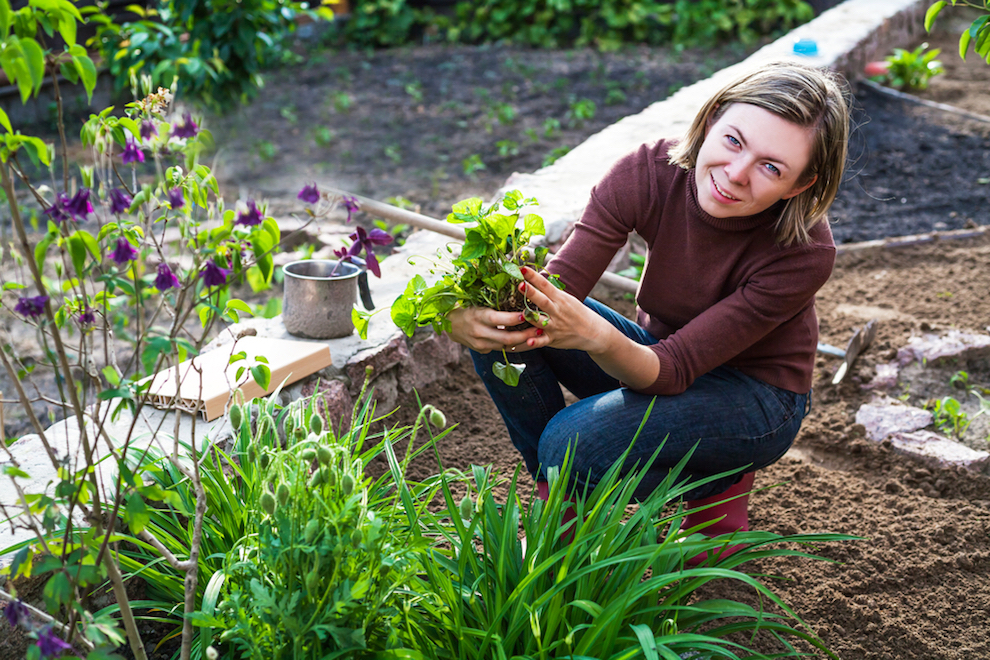
This idea of backyard growing is a very viable business possibility for anyone, with a little land. From millennials with families wanting to have at least one stay-at-home parent to baby boomers and seniors… this is something anyone with a patch of land and a love of plants can do!

This idea is especially beneficial for baby boomers in good health but looking toward a restrictive retirement income and inflation. Many boomers already own real estate, so they have lawn they can give up to a crop, or extra acreage to convert that can actually earn revenue for them.
Before you tear out from your seat to start making plans and potting plants, research is important. We start with some of the most profitable plants to grow, next.