
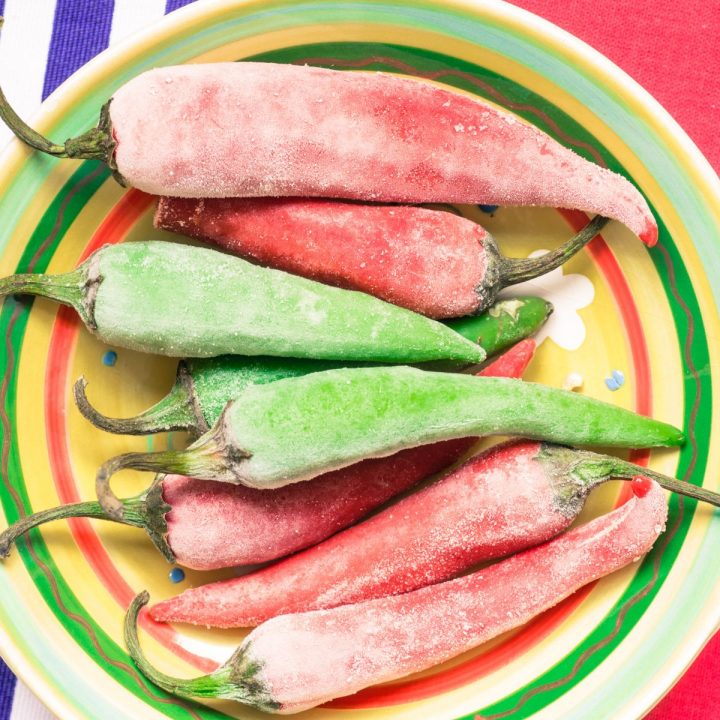
If you’re wondering can you freeze chilies, the answer is yes! In this article we cover how to freeze chili peppers, whole, diced, in oil and in water and more, so that you can enjoy garden fresh chilies year round.
But First, is it Chilies, Chillis, or Chiles?
The good news is that if you’re struggling to remember which way to spell this word for peppers, they’re all correct. It’s just that some are more correct than others, depending on where you are.
The Correct Spelling for Chili Depends on Your Location
The bottom line is whichever of the three ways you choose to use, they’re all correct. If you want to spell it more according to your locale, this should help.
Common Spelling of Chili by Location
- chili / chilies – American English
- chilli / chillies or chillis – British English
- chile / chiles – Spanish speaking countries and US regions
Chilis add ornamental color and beauty to the garden during the summer, and so much flavor and dimension to dishes all year long. Beyond that, chili peppers are great companion plants because they’re one of the plants that repel pests.
But when that abundant harvest rolls in you may be wondering if you can you freeze chilies, and if so, options for freezing chilies whole or diced and in various mediums.
The good news is that freezing chilies is not as difficult as you may imagine, and there are several methods you can use.
Green, unripe chili peppers will not ripen once they are frozen, so if you’d like for your peppers to remain green, you can freeze them immediately.
To allow peppers to continue ripening after being picked, set them in a warm location, such as a sunny window, where they will get some exposure to the sunshine. This will help them ripen more, at which time you can freeze your peppers.
Now let’s get into the several different ways you can freeze chilies.
How to Freeze Chiles for Best Results
Here’s what we cover in this article, should you wish to skip to any particular section of interest.
- Pros and Cons on Freezing Chili Peppers
- Freezing Fresh Whole Chili Peppers
- How to Freeze Diced Chilies
- Freezing Chillies in Oil
- How to Freeze Chilies in Water
- Instructions on How to Freeze Chilies
- Best Tips on Freezing Chilies
- Alternatives to Freezing Chilies
Peppers can be sliced or diced, placed on a cookie sheet for freezing, then placed in moisture proof bags or containers.
First, let’s do a quick summary on the pros and cons of freezing chilies.
Pros and Cons to Freezing Chilies
4 Pros to Freezing Chilis
- EASIER – Blanching is not required before freezing peppers
- PRESERVES – Fresh frozen chilies is a good way to preserve your garden harvest for later use in cooked foods.
- USES – Many uses in cooking. Frozen peppers are good for soups, casseroles, salsas and any dish where flavor is more important than the pepper texture
- FRESH FROZEN – Some say these have more flavor than canned peppers
4 Cons to Freezing Chilis
- NOT CRISPY – Peppers lose crispness when frozen and thawed
- FREEZER SPACE – Takes up freezer space that might be used for things that do best frozen over pickled and canned
- USES MORE ENERGY – Freezers also hog energy, whereas canning peppers uses energy once, then you have the pickles on your shelf, ready to use for up to a couple years
- BLACKOUTS – If the power goes out for an extended period, especially in summer or warmer climates, you risk losing your freezer food.
How to Freeze Fresh Chili Peppers Whole
Knowing how to freeze whole chillies is a matter of knowing the best freezer zone, and using the appropriate supplies.
Store chili peppers in clean, freezer-safe containers.
Storage Containers for Whole Frozen Chili Peppers
- resealable bags
- airtight bowls
- reused plastic takeout containers
- mason jars with lids
While you may not want to use glass jars for other foods with liquids, peppers are solid and will not expand and risk breaking the jar.
Wrap the chili peppers in paper towels before placing them into a hard-sided container. Paper towels help prevent freezer burn in the freezer, and decay in refrigerated whole peppers by absorbing excess moisture that can cause spoilage.
If you are using soft containers like plastic bags or silicon bags, try wrapping the bags with the peppers in freezer paper (also sometimes called butcher paper).
If possible, place the container near the back of the freezer. This zone of your freezer will ensure that your frozen chilis stay as cold as possible, and won’t run the risk of freezing and thawing repeatedly. Avoid storing them on the doors of upright freezers if possible.

Freezing Diced Chilies
Diced chillies are often the better option because they store smaller and it’s easy to freeze in small portions. With a whole pepper, you need to use it whole or wait for it to thaw enough to dice it, and then you wouldn’t want to refreeze any portion as it wouldn’t be as good.
Freezing Chilies in Oil or Water
Another option is to finely dice and then pack chillies into ice cube trays (or freezer bags) and then cover with water or oil. Olive oil, especially extra virgin olive oil, is my favorite, but you can use other oils too. If you don’t want the olive oil taste, go for something neutrally flavored, like canola oil.
Alternately, you could make specially flavored cubes using herb infused oils such as rosemary oil.
Chillies in oil will only last for around 3 months refrigerated. Freezing chillies in oil will make them last for at least a year.
Some people choose to roast or grill the peppers first to bubble and blacken the skins plus for the added flavor that roasting provides. Lightly steaming them first is also an option and a matter of personal preference.
How To Freeze Chillies in Oil
Are you wondering how to freeze chillies and peppers in oil? Simply dice the peppers up, lay them in an ice cube tray, and fill the tray with oil. Olive oil is best, but you can use other low-flavor oils that will enhance the taste of chilies in your cooking.
How to Freeze Chilies in Water
Freezing chilies in water is the same process as with oil, the only difference is that the chilies will be the only flavor you taste. You can also freeze chilies in water with a resealable bag since that will give you more space for storage. The perk of freezing chilies this way is that you are much less likely to encounter freezer burn because the ice acts as a protective barrier.
Instructions on How to Freeze Chili Peppers
- SELECTION – Choose healthy and fresh peppers that are free of rot.
- WASH the peppers:
- You may use cool running water, mild soap with cool water, or soak the peppers in a solution containing three parts water and one part distilled vinegar. Washing with vinegar is the cleanest and most effective method.
- Make sure you fully rinse the peppers in cool water afterward to remove the vinegar.
- Dry the peppers after washing.
- PREPPING PEPPERS:
- Slice the peppers open, lengthwise, (see video at the end on how to cut peppers without gloves), and cut the stem off. If you like a spicy hot pepper, leave the seeds and white membrane. For a milder pepper, remove these two parts.
- Chop the peppers if you want to freeze them sliced or diced. Cutting up the chili peppers is completely optional.
- Whole – Wondering how to freeze chili peppers whole? It’s easy. Whole peppers take up more space than diced or sliced, but they can later be used for stuffing whole or halved like bowls. These peppers just need to be bagged up and put in the freezer as they are.
- ARRANGE peppers in single layer on a tray lined with reusable silicone mat or parchment paper to keep chili peppers from stick together. You can double layer them if you place another parchment or wax paper between the first and second layer,
- FREEZE chili pepper trays for approximately two hours.
- Transfer peppers into a freezer bag, jar, or any hard-shelled container. f you are using bags, remove as much air as possible to before zipping.
- Refreeze immediately.
- REFREEZE peppers in container immediately.
Freezing Chilies in Oil or Water
Another option is to finely dice and then pack chillies into ice cube trays (or freezer bags) and then cover with water or oil. Olive oil, especially extra virgin olive oil, is my favorite, but you can use other oils too. If you don’t want the olive oil taste, go for something neutrally flavored, like canola oil.
Chillies in oil will only last for a week if refrigerated. If you freeze chillies in oil, they can last for at least a year. Some people choose to roast or grill the peppers first to bubble and blacken the skins. Steaming them first is also an option and a matter of personal preference.
Best Tips for Freezing Chili Peppers
After bagging up your peppers to put in the freezer, roll the bag up in butcher paper (some people call it freezer paper). This is the same material used to wrap up meats for freezer storage, and it does a fantastic job of preventing freezer burn.
Make sure you label and date your package after wrapping it up, especially if you use a lot of freezer paper. It’s easy to forget what you have, especially if you can’t see what’s inside.
How to Preserve Chili Peppers
If you don’t want to rely on a freezer, or don’t want peppers to take up precious freezer space, here are a few popular ways to preserve chili peppers.
- Canned
- Dehydration
- Freeze dried
- Frozen
- Jellied
- Pickled – most pickle recipes also work for peppers
You may find this 4:29 minute video on how to cut a jalepeño pepper helpful.
How to Make Frozen Chili Peppers Last Longer
After bagging up your peppers to put in the freezer, roll the bag up in butcher paper (some people call it freezer paper). This is the same material used to wrap meats up for freezer storage, and it does a fantastic job of preventing freezer burn.
Make sure you label your package after wrapping it up, especially if you use a lot of freezer paper. It’s easy to forget what you have, especially if you can’t see what’s inside.
Contributions from the Community
Fire Roasted Chilies
I fire roast mine first, then let them cool, remove the skins and put in a food processor. Then I vacuum seal and freeze in individual packs. I take them out and use them throughout the year in any recipe I want.
~Kathie Folsom, homesteader, realtor
See Kathie’s article on her homesteading living here.
Personally I’d roast, deseed, peel, chop, and freeze. Using an ice cube tray you can make easy to use portions.
~Jetsun Livininacave Kane
Freezing Whole Chilies
Freeze whole and use them in my Mexican rice. Cut up and use in small batches of salsa.
~Rebecca Maurer-Milota
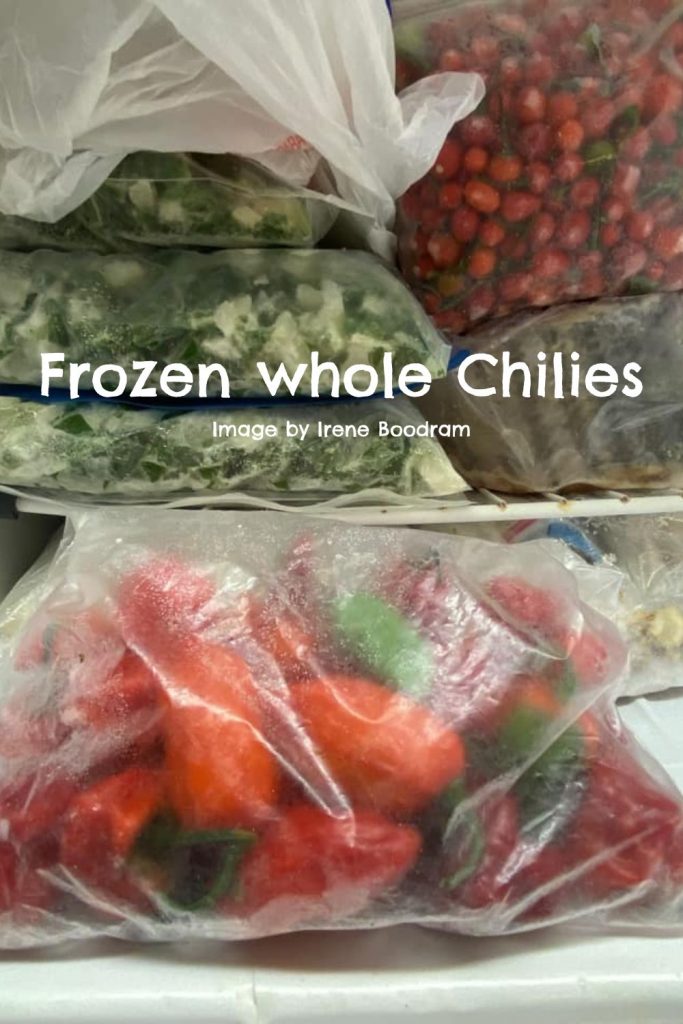
I freeze them in freezer bags and store in freezer, I use the hot  ones to make my hot pepper sauce and I cut a couple when I am cooking my regular food, seeds and all.
~Irene Boodram
What Are the Alternatives to Freezing Chili Peppers?
If you don’t want to rely on a freezer, or don’t want peppers to take up precious freezer space, here are a few alternatives that work well too.
- Dried Peppers
- Pickled Peppers
- Canned Chili Peppers
- Chili Jelly
Shannon Prefers Dried Chili Peppers
Now I dehydrate them first. They don’t turn mushy and hold up in soups and stews. Drying them reduces the size greatly so they don’t take too much freezer space. You might want to wrap them in parchment if you store them in vacuum bags. The dried chili peppers have sharp edges that could break the seal of the bag.
~Shannon Schofield, homesteader, beekeeper Shannon’s Sweet Tooth Farm, author, b.1977
See Shannon’s article on Pollinator Flowers for Bees here and Lessons from the Garden here.

We are an online gardening publication sharing all things garden related! Including urban farming, family gardening, homesteading, gardening for profits, and more. We’re all about growth!