
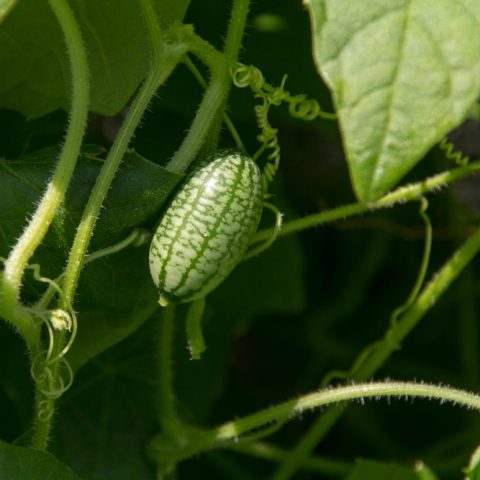
Cucamelon, melothria scabra, Common Names:
- Mexican Sour Gherkin
- Mouse Melon
- Mexican Cucumber
- Sandita (Central American name, meaning little watermelon)
Well, here it is summer and it’s a joy to see our gardening efforts paying off with loads of produce, particularly in the squash, cucumber and tomato departments. Last year, we published an article on a rather unusual and diminutive member of the cucurbitaceae tribe, the cucamelon. Also known as the Mexican Sour Gherkin, these little gems are prolific and delicious.
As perennials grown in Central and South America, cucamelons flourish in Zone 9 and higher.
But, given care, they can thrive as an annual in more temperate climes. We’re in zone 7a and our cucamelon plant self seeded and voluntarily came up again in the second year before dwindling down and needing replanting in subsequent seasons.
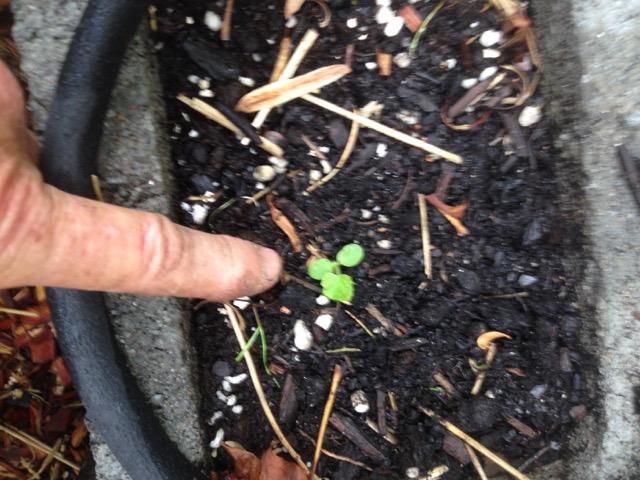
We direct seeded ours in May and it took over a week before we spotted tiny little leaves. It seemed a heavy rain could obliterate them. We planted a few more seeds just in case….maybe a bit too hastily.
The little seedlings are right next to our leaf compost and get a little wash of nutrients with every rain. So, in two months, the vines are climbing over 8 feet and if it wasn’t for our guidance up a trellis, they’d be spreading in all directions.

And now we have confirmation, that these little “fruits” are as cute as their picture. So cute, we almost hesitate to pick them…almost.

Ever Grown a Cucamelon?
Planting and growing unusual fruits and veggies is exciting! That first harvest is like awaiting an eagerly anticipated event, and watching the new plants grow is part of the fun. There are so many more fruits and vegetables than most of us grew up with. And gardeners tend to be the testers and tweakers of sometimes exotic foods.
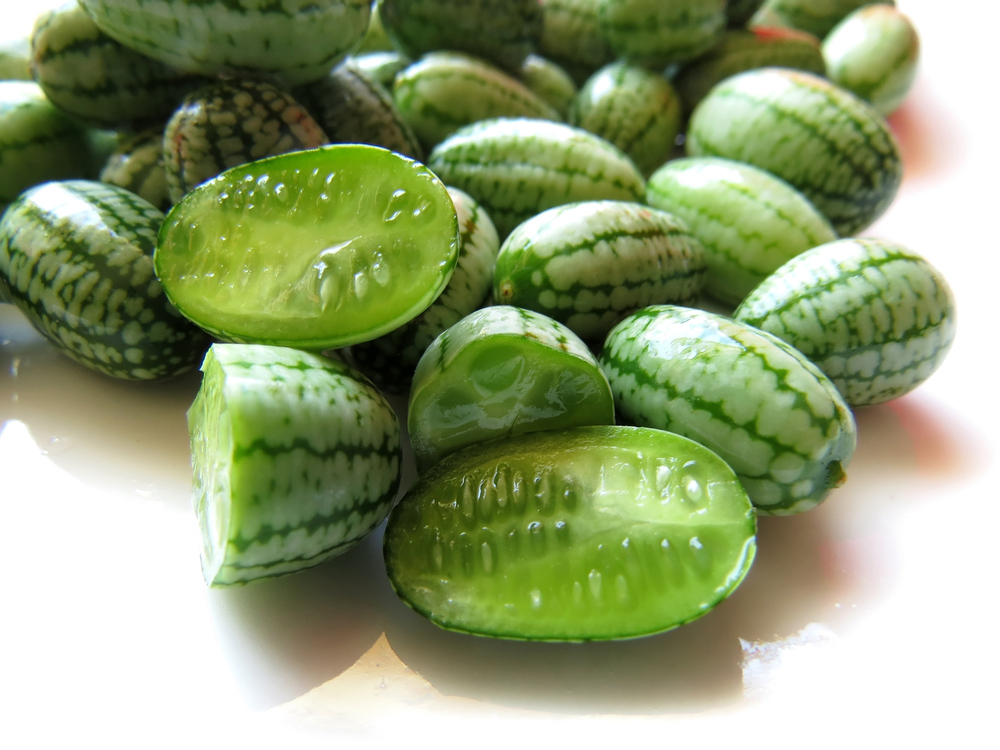
The Cucamelon, which is new to me, looks like a mini-watermelon and the inside looks like a mix of a green grape and cucumber.
According to several articles and videos I saw online, it tastes like a cucumber but the skin which is also edible gives it a citrus flavor as well.
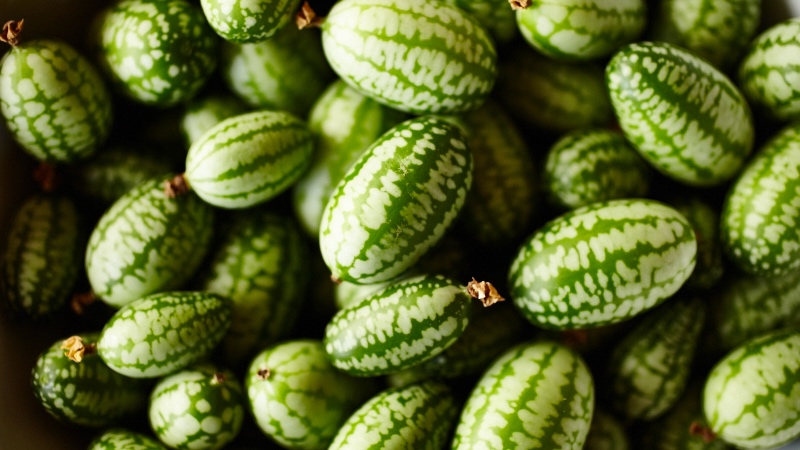
Cucamelons are a native Latin American vegetable. They do best in warmer zones (US zones 9 and up).
Cucamelon seeds can be planted and grown like their kindred cousin, cucumbers. Cucumbers are of the cucurbitaceae family and gherkins are a variety of cucumber.[1]
Cucamelon Seeds
If you’ve ever grown cucumbers, then growing gherkins is much the same. In warmer climates, direct sow cucamelon seeds in your garden in spring.
- Planting in groups of 4 to 6 about 1 inch apart
- Groups about 12 to 15 inches apart
- Thin cucamelon plants as needed
In cooler climates, sow seeds indoors with other summer crops in late February to April. Start them individually in paper pots and manage soil temperatures, keeping them warm to optimize germination. Plant out after the last frost.
Cucamelons are Tender Perennials
Cucamelons are tender perennials which means, if you live in a warm climate they may continue to grow year after year from the same root stock. You can test this by insulating the area with mulch after the growing season. Some gardeners in colder climates, remove the tubers and store in a controlled environment for planting them in spring.
And, here’s another feature we’ve discovered. If a few little gherkins are left on the vine into the frosts and winter, they re-seed and return the next year. We originally planted cucamelons in a back corner of the garden and they’ve come up as volunteers every year for three years so far. The vines grow rampantly and take over our trellised tomatoes, just when the tomatoes are done producing. SO! It’s true! Cucamelons can be perennials, and we’re in zone 7a.

Cucamelons can be perennials.
Have you ever grown cucamelons? If so, we love to hear your thoughts on growing them in the comments or on the GardensAll Facebook Page!
Here’s a contribution from Rick Harvey, member of the Planting for our Retirement Facebook group.


Rick said, “This is my third year growing them and the first growing so many. Seems I could have used a higher fence, as of now they are well over my 4 footer. An arch would likely be best. I use dollar store clips to guide them back to the fence and it seems I’ll be buying more.”
Cucamelons Taste
Cucamelons taste like a zesty crunch followed by a citrusy cucumber flavor. Cucamelons make great snacks for kids and adults alike. Gherkins travel well too, for road trips, school or day camp lunches as well as air travel. Pull out a zip lock back of cucamelons at the airport or on the airplane if you don’t mind people staring at you and fielding questions from strangers.
Our favorite way to eat cucamelons is fresh and raw, straight off the vine. About 20% of each harvest gets eaten before we get them to the kitchen!
We also love gherkins in salads. They’re better for marinated pasta salads than regular cucumbers because they hold up better. If you want more flavor to marinate into the gherkins, you can slice them in half and they still hold up well and are the perfect size.
You can also pickle these Mexican gherkins just like cucumbers.
