
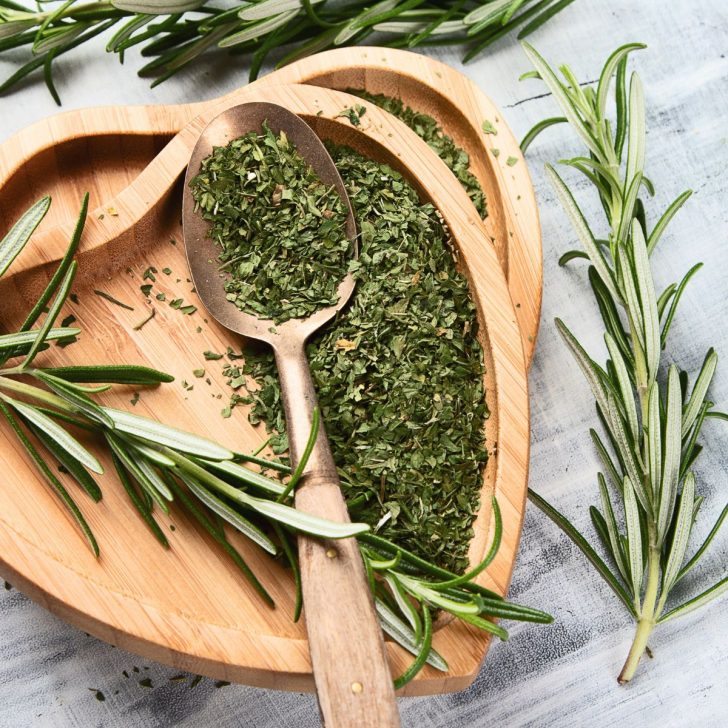
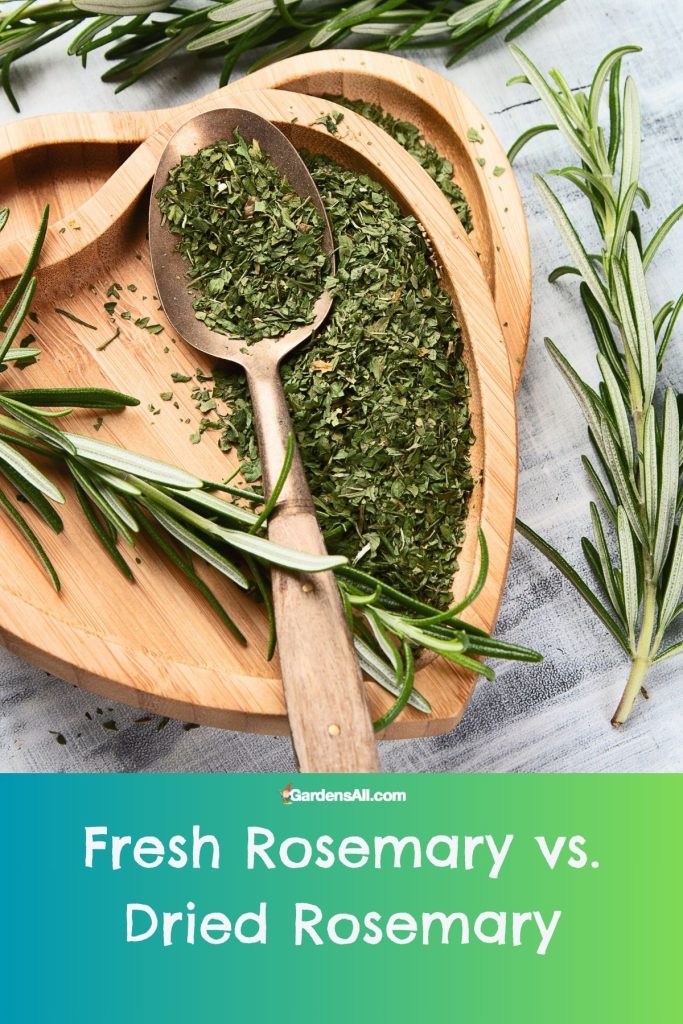
We often wonder which preservation and cooking methods yields the highest nutrients in foods and herbs. So while harvesting and preparing our rosemary, I dug into the research on dried rosemary vs. fresh rosemary, and found the results interesting!
This perennial herb, characterized by its needle-like leaves, is favored by chefs, home cooks and herbalists for its many health benefits. Whether you’re wondering about dried rosemary vs. fresh rosemary for cooking or for nutrients, we’ll cover both in this brief but informative article.
Culinary Rosemary
Some people prefer the smaller, more dispersed version of dried rosemary in dishes rather than the texture of the larger pieces of fresh rosemary leaves. Each has its benefits, depending on the dish and any personal preferences.
Fresh Rosemary
Fresh rosemary is known for its vibrant, slightly pungent citrusy pine-like flavor. It has a softer and more subtle taste compared to its dried counterpart. Fresh rosemary is often used in recipes where a hint of rosemary is desired without overpowering other flavors. It’s perfect for infusing oils, making herb butter, or adding to marinades.
Our favorite ways to enjoy fresh rosemary is also delightful added sparsely to salads (including cole slaw), and for roasted potatoes. I also enjoy a daily nibble of a rosemary spring.
You’ll probably enjoy this article on the many health benefits of rosemary, including longevity!
Dried Rosemary
Drying concentrates the flavors of rosemary, making it more potent and pungent. The drying process intensifies the earthy and woody notes, which can be quite powerful if not used sparingly. Dried rosemary is best suited for dishes that are cooked for longer periods, such as stews, roasts, and soups, where it has time to rehydrate and infuse its flavors into the dish.
Rosemary Texture and Cooking Application
Fresh Rosemary
The texture of fresh rosemary is soft and pliable, making it ideal for recipes where the herb’s physical presence is desired. It works well in fresh salads, as a garnish, or in dishes with shorter cooking times. It’s also excellent for grilling, as the whole sprigs can be placed on the grill for a smoky, herb-infused flavor.
Dried Rosemary
Dried rosemary has a tougher and more brittle texture. It’s not ideal for dishes where a softer texture is required. However, its robust nature makes it perfect for slow-cooked dishes. One thing to note is that dried rosemary should be crushed or finely chopped before adding to a dish to avoid hard, needle-like pieces in the food.
Shelf Life and Availability
Fresh Rosemary
Fresh rosemary has a shorter shelf life and needs to be stored properly in the refrigerator. It’s generally available in grocery stores, especially in the produce section, but can be seasonal depending on the region.
Dried Rosemary
Dried rosemary has a much longer shelf life and can be stored in a cool, dark place in your pantry. It’s widely available throughout the year and is a staple in most spice racks.
Nutritional Value in Dried Rosemary vs. Fresh Rosemary
Both fresh and dried rosemary are low in calories and contain various vitamins and minerals. However, fresh rosemary has a higher water content, which dilutes its nutritional density compared to dried rosemary. That said, the differences are minimal when considering the small quantities typically used in cooking.
One of the more surprising discoveries is how the longer drying times actually increased the antioxidant benefits of the herb.
Rosemary Antioxidant Capacity Increases With Drying Time
This chart reveals that the antioxidant properties of rosemary oil are highest in dried rosemary vs. fresh rosemary. Further, that the rosemary dried for three weeks proved to contain the higher antioxidant compounds than those dried for one and two weeks.
| Drying Duration (weeks) | Major Constituents Concentration (%) | Antioxidant Properties (Observation) | Bornyl Acetate Concentration (%) | Camphor Concentration (%) |
|---|---|---|---|---|
| Fresh Herbs | 55.9 | Moderate activity, 32% inhibition at 5 mg/mL, lower activity compared to 2- and 3-weeks | 1.42 | 20.96 |
| 1 Week | 50.9 | Comparable to fresh at 0.0312 mg/mL, 41% inhibition at 5 mg/mL | 2.24 | 19.64 |
| 2 Weeks | 41.4 | Better values, comparable to 3-weeks at 0.625 and 2.5 mg/mL, 46% inhibition at 5 mg/mL | 12.25 | 12.09 |
| 3 Weeks | 44.8 | Better values, comparable to 2-weeks at 0.625 and 2.5 mg/mL, 51% inhibition at 5 mg/mL | 12.46 | 13.84 |
- Drying Duration (weeks): Indicates the time duration for drying the rosemary herbs.
- Major Constituents Concentration (%): Shows the concentration of key components like 1,8-cineole, camphor, and camphene.
- Antioxidant Properties (Observation): Provides detailed observations about the antioxidant activity at various concentrations.
- Bornyl Acetate Concentration (%): Indicates the concentration of bornyl acetate in the oils, which increased significantly in two- and three-weeks dried herbs.
- Camphor Concentration (%): Shows the concentration of camphor, which decreased in the oils from two- and three-weeks dried herbs.
The table highlights that the antioxidant activity of rosemary oil increases with longer drying periods, with the highest activity observed in the three-week dried herb oil.
Further, that the oil from herbs dried for one week closely resembles fresh herbs in terms of the concentration of major constituents.

I’m LeAura Alderson, a garden, herb and plant enthusiast with a passion for discovering the many edible and medicinal benefits of the plants all around us, including the weeds, while transforming the land through regenerative permaculture practice. I am also a writer, editor and media publisher (now mostly retired due to replacement by AI), but which now allows more time to build our regenerative permaculture homestead farm.
References