


When it comes to drying rosemary and other herbs, you have options. There are faster and slower ways, natural drying such as air drying in shade, or electrical in dehydrator, oven or freeze dryer. But not all are equal in preserving the most active compounds that provide the greatest culinary, medicinal and cosmetic benefits.
When it comes down to drying rosemary and other herbs, it’s best to preserve them in whatever way is most available to you. Rather than to let them go to waste, use what you have.
But we wanted to know the best way to dry rosemary and other herbs for the greatest flavor and nutrient retention, so we dug deep into the research on that. If you do have more than one way available to you, you might want to go for the drying method that preserves the greatest goodness from this amazing herb.
Whenever we’ve had lots of herbs to dry, sun drying was the quickest and easiest way for us to do it in bulk. We love to use natural resources like solar whenever possible.
However, we were doing it all wrong.
What is the Best Way to Dry Fresh Rosemary?
The best natural drying technique for the greatest preservation of flavor and healthy rosemary compounds is to air dry herbs in a well ventilated room or outdoors under cover or shade.
When it comes to preserving the highest potency of the culinary and healthy benefits of rosemary, air dried rosemary yields the best results for most herbs.
However, there are times when air drying is not the best method.
Air drying is the best way to dry herbs naturally for the greatest flavor and health benefits, if conditions are not too humid.
Beneficial Parts of the Rosemary Plant
Roots, stems, leaves, flowers, fruits, seeds, and bark all contain the beneficial rosemary oils. In some studies, dried samples contained the same or higher levels of beneficial flavonoids as compared to fresh.[1]https://www.ncbi.nlm.nih.gov/pmc/articles/PMC6325740/
All parts of the rosemary plant contain beneficial compounds for use, dried or fresh.
~GardensAll.com

Herbs and Rosemary Drying Techniques
These methods and results apply to most herbs. We’ve numbered these and have listed them from best to worst ways to dry rosemary.
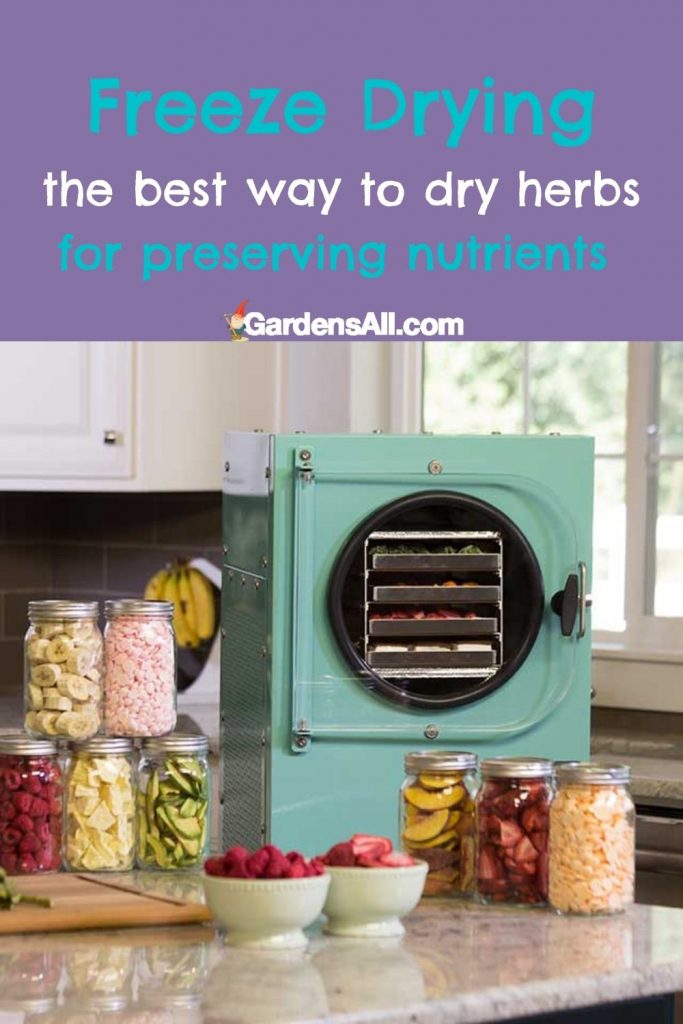
1. Freeze Drying Rosemary and Other Herbs
Best Method
Foods and herbs are lyophilized (rapidly frozen) at -80°C/-112°F for 12 hours. The result is the greatest retention of flavor and phytocompounds active properties.
However, freeze dryers are very expensive and take up a lot of space. So if that’s not a fit for you, you’re in luck with the next methods.
Pros
- EFFICIENT: Relatively fast (around 12 hours for herbs)
- HEALTHIER: Greatest retention of nutrients and oils
- LONGEVITY: Greatest shelf life longevity at up to 25 years
Cons
- COST: Expensive machines (medium, 7-tray freeze dryer is around $3,200)
- WEIGHT: Large and heavy (110 lbs)
- SPACE: Takes up a lot of space (22″d x 18″w x 29″h)
- NOISE: Freeze dryers are slightly less noisy than a vacuum cleaner at
Find a lot more in this article on freeze dryers.
2. Air Drying Rosemary for One Week – Best Natural Method for Drying Rosemary
Second Best Method for Drying Rosemary
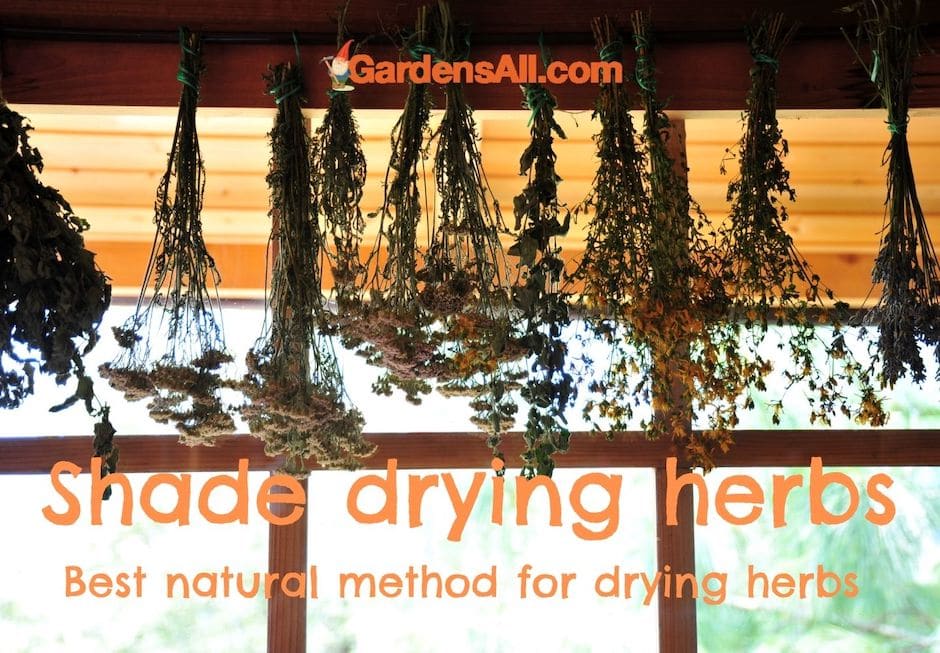
This is the slowest method, however, it helps preserve and protect the highest percentage of volatile oils of rosemary that are easily damaged by heat.
For best results, tie bundles of rosemary and hang in well aerated area indoors or in the shade.
EXCEPTION: When NOT TO Air Dry Herbs in the Shade
Air drying rosemary and other herbs outdoors in the shade for up to a week may NOT be the best method for drying rosemary if you’re in an area of constant high humidity without good airflow. Too much humidity can cause the herbs to mold before drying.
However, you can somewhat mitigate the negative effects of air drying in the shade if you have a nearby fan set on low or medium.
Our growing zone 7a in the woods of North Carolina, can be highly humid, especially during an extended rainy spell. However, our screened in porch on the back of our house is open to fresh air on two sides and also has a ceiling fan.
When it’s not raining, we can hang herbs on a line to dry while running the fan on low or medium, which is effective for decreasing drying time and reducing the negative effects of humidity.

3. Drying Rosemary in a Dehydrator
Third Best Way to Dry Rosemary
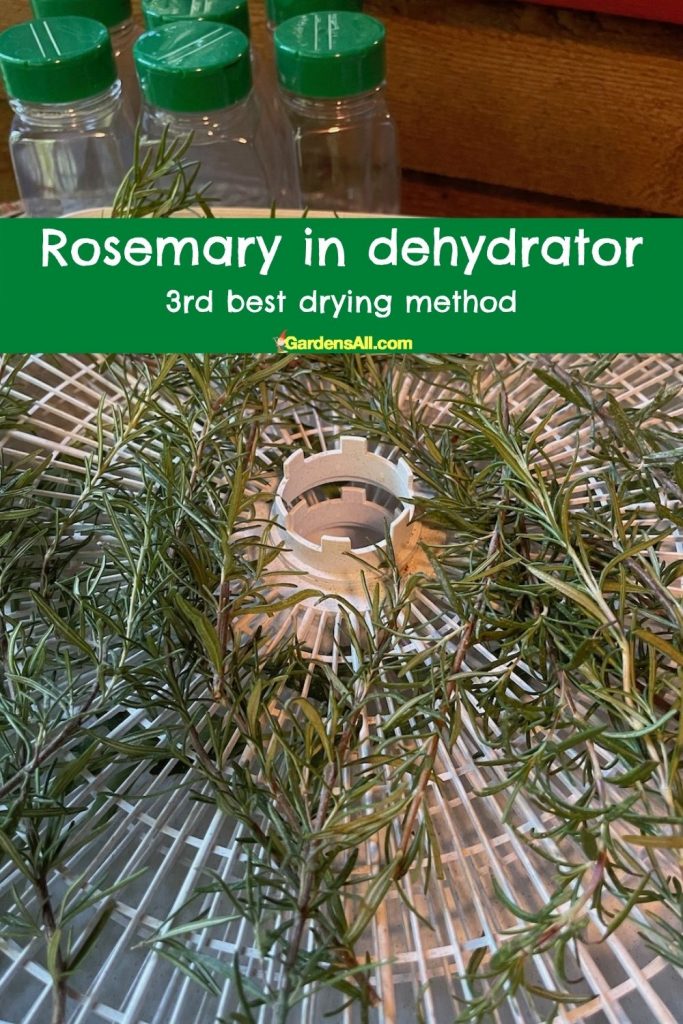
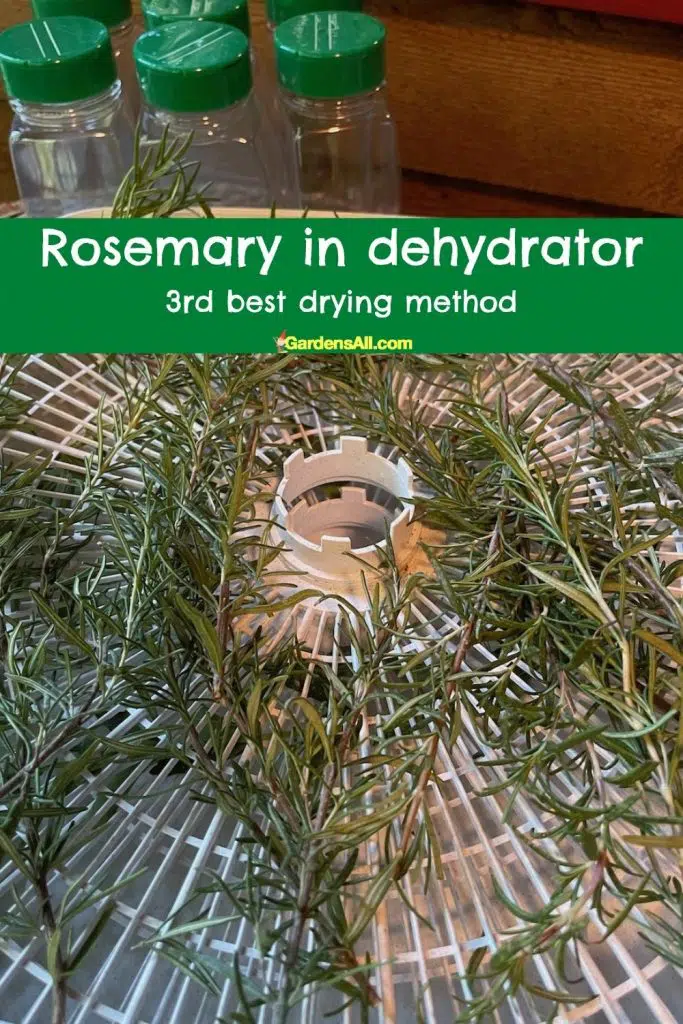
Dehydrators are good little work horses that come with multiple tray stacks for maximizing your herb drying space. Set temperature to the lowest settings or according to the manufacturer’s guide. Our dehydrator specifies what temps for what type of items.
We dry lighter herbs like oregano, time and basil at 95°F/35°C. For heavier herbs like the passion flower leaves in this photo, blueberry leaves or dense herbs like rosemary, lavender, lemon balm and parsley we’ve found it works best on 105°F/41°C.
4. Oven Drying Rosemary
The Second Fastest Way to Dry Rosemary
The over is an efficient method for drying rosemary, and not as detrimental to the beneficial phytochemicals as the microwave, (the fastest way to dry rosemary. But doesn’t preserve as many beneficial compounds as much as air drying and freeze drying. UNLESS…
If you have an oven with a warming setting or warming drawer of temps around 95-105°F/35-41°C, then the temps may be low enough.
5. Microwave Drying Rosemary
Fastest Method for Drying Herbs
Drying rosemary in the microwave is the fastest herb drying method. However, this method of drying rosemary can cause many of the phytocompounds to become denatured and to lose their beneficial properties.
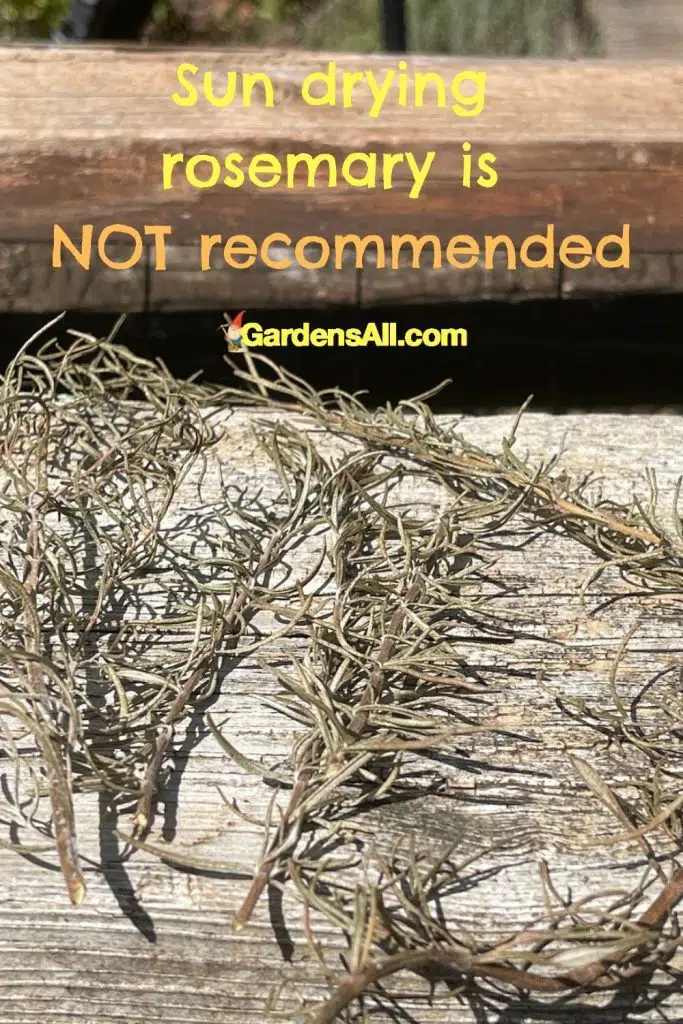
6. Sun Drying Rosemary and Other Herbs
Easy and Fast but Can be Worst Method for Drying Rosemary and Other Herbs
This used to be our favorite method, because it’s free energy from the sun. We also felt that something about the sun might add some additional vital energy, and after all, it works well for sundried tomatoes, raisins, other fruits and meats.
However, just as too much sun damages our skin and robs it of vital collagen and emollients, so too does the sun burn out some of the best of the vital compounds in herbs.
See also best herbs for stress reduction.

REFERENCES:
Drying Induced Impact on Composition and Oil Quality
Drying Techniques
Sun Drying Herbs
Sun drying herbs causes loss of flavor, color and beneficial properties.

I’m LeAura Alderson, a garden, herb and plant enthusiast with a passion for discovering the many edible and medicinal benefits of the plants all around us, including the weeds, while transforming the land through regenerative permaculture practice. I am also a writer, editor and media publisher (now mostly retired due to replacement by AI), but which now allows more time to build our regenerative permaculture homestead farm.
References