
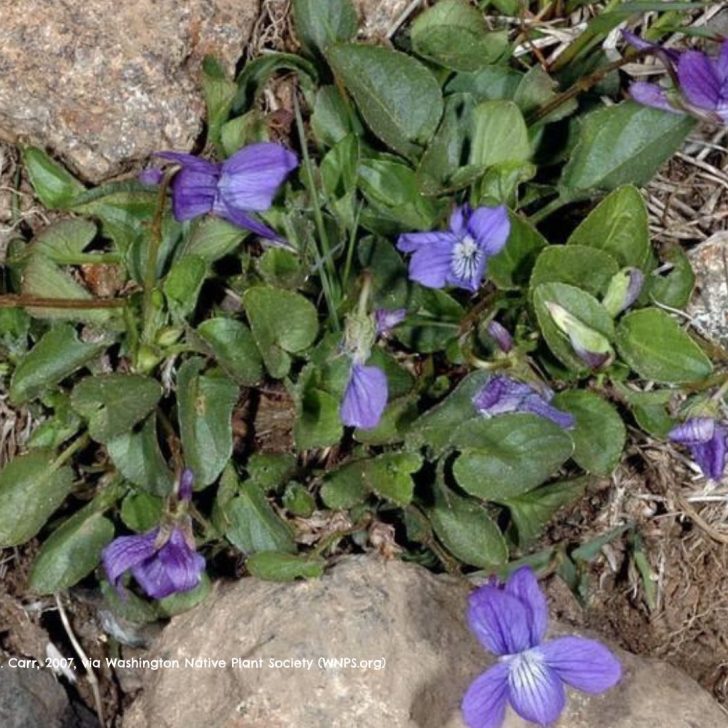
In the last weeks of winter, as bouts of warmer days refresh our gardening souls and beckon outside for eager walks, the early blue violets capture our rapt attention.
Which Wild Violets Are Called Early Blue Violets?
The early blue violets, botanically named Viola adunca, are a species of flowering plant in the violet family (Violaceae). While there may be several varieties of wild violets that are commonly dubbed “blue violets”, it’s
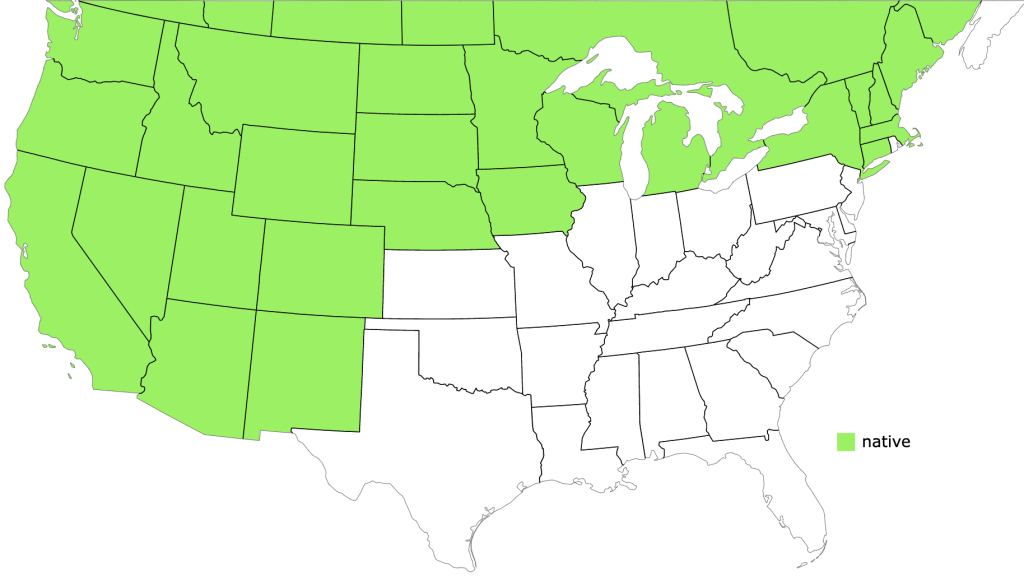
Early blue violets are Native to North America, and are typically found growing in the western, northern and northeastern regions of the US, in various habitats such as meadows, prairies, forests, and alpine regions. The March to April blossoms are an important early season nectar source for many pollinators, including bees and butterflies.
Early Wild Violets (Viola Adunca) Distribution
Names of Early Blue Violets
The genus name Viola is Latin for the color violet. The species name adunca comes from the Latin word “aduncus”, which means hooked. This refers to the spur at the base of the flower, which has a hooked shape.
Scientific Names for Early Blue Violets
- FAMILY: Violaceae
- GENUS: Viola
- SPECIES: adunca
Common Names for Viola Adunca
- Early Blue Violet
- Hooked-spur Violet
- Sand Violet
- Western Blue Violet
Early Blue Violets Description
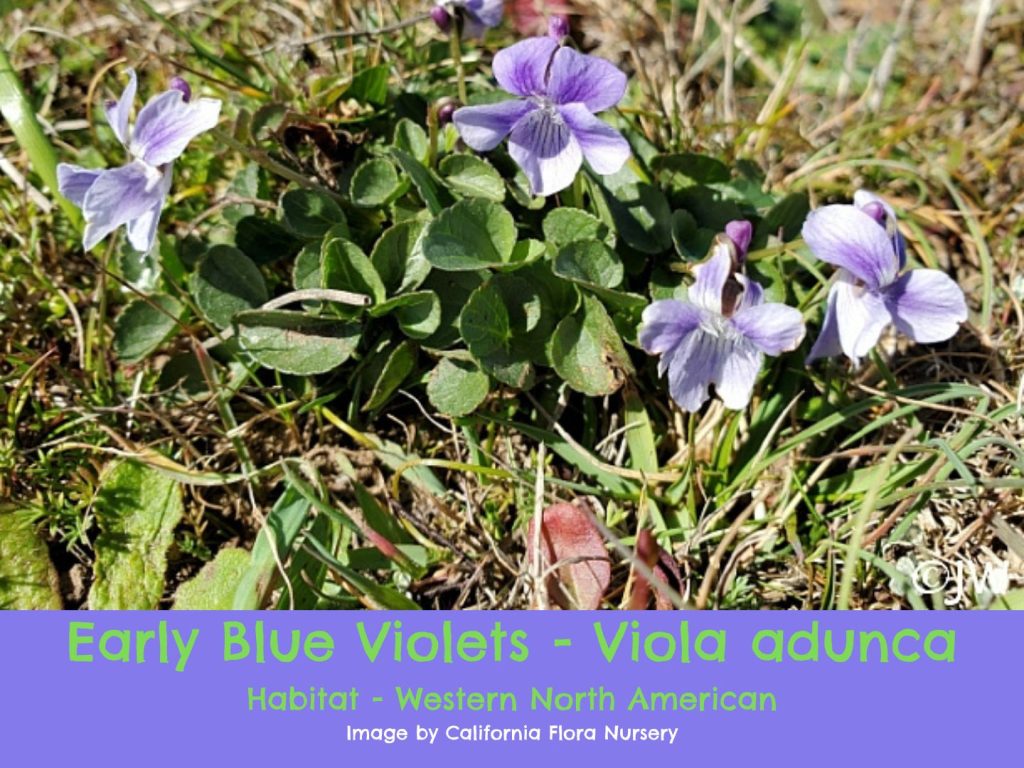
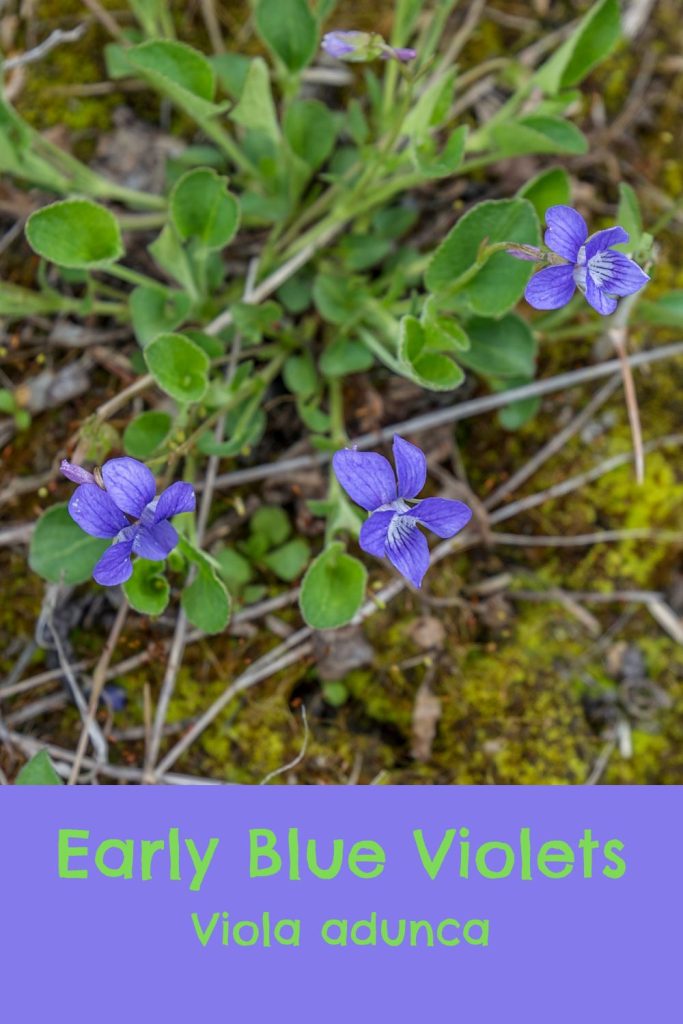
The violet plant produces solitary blue-violet flowers with five petals, that are about an inch in diameter. The plant itself, grows to an average 4.5 inches and sports the Viola genera’s familiar heart shaped leaves.
Early blue violets are beneficial wild violets with benefits worth learning about.
The Early Blue Violet Medicinal Uses
Early blue violets (Viola adunca), have a long history of medicinal use by the indigenous people of North America. Here are some potential medicinal uses and benefits of early blue violets:
- Anti-inflammatory – The leaves and flowers contain salicylic acid (the active ingredient in aspirin) and other compounds known to have medicinal benefits.
- Digestive Health – Early blue violets have been traditionally used to treat digestive issues such as constipation and indigestion. The mucilaginous properties in the leaves are a nature demulcent serving to soothe and protect the digestive tract.
- Respiratory Health – Viola adunca contain compounds that help relieve respiratory ailments such as coughs and bronchitis. The leaves and flowers can be made into a tea or syrup and that can help soothe respiratory irritations such as sore throat and coughs.
- Skin Health – Early blue violets contain antioxidants known to protect the skin from damage caused by free radicals. The Viola adunca anti-inflammatory properties may also help to reduce skin irritation and redness.
We cover more on wild violets benefits here, including scientific studies whenever they’re available.
It is important to note that while early blue violets have a long history of traditional use for medicinal purposes, however as with any medicinal plant, it is important to consult with the appropriate healthcare professional before using new medicinal remedies.

I’m LeAura Alderson, a garden, herb and plant enthusiast with a passion for discovering the many edible and medicinal benefits of the plants all around us, including the weeds, while transforming the land through regenerative permaculture practice. I am also a writer, editor and media publisher (now mostly retired due to replacement by AI), but which now allows more time to build our regenerative permaculture homestead farm.
References
| ↑1 | https://gobotany.nativeplanttrust.org/ |
|---|