
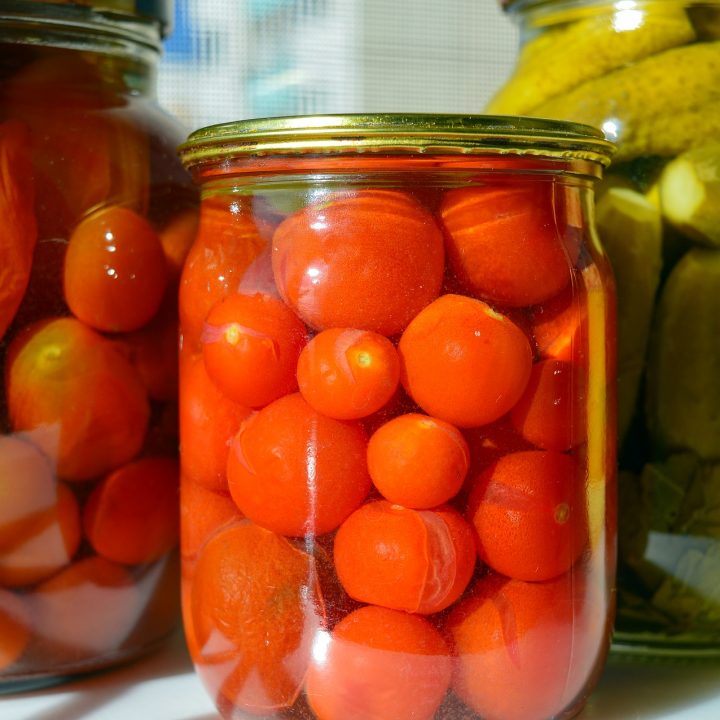
If you’re into consuming gut-healthy probiotic-rich foods, consider fermented tomatoes using your garden fresh tomatoes.
You can use red, multi-colored tomatoes or even green tomatoes. In fact, fermenting green tomatoes at season’s end is a great way to make good use of the last tomatoes that won’t have time to ripen.
The other thing we enjoy making is fried green tomatoes. Okay, so not as healthy, but a treat to enjoy now and then at season’s end.
We love making fermented cabbage for sauerkraut, but you don’t have to limited your fermented repertoire to cabbage. There are so many other wonderful options, so have fun experimenting with some of your other favorite veggies.
And if you haven’t yet made your own, once you do you’ll want to keep a regular supply of probiotic-rich foods in your fridge and pantry.
A member of the Planting for Retirement Facebook group contributed her fermented tomatoes recipe and photos. Making fermented foods is super simple and so healthy!
A well-stocked pantry of fresh and fermented foods is a first line of defense for better health.
Fermented Basil & Garlic Tomatoes
Recipe and Image contributed by Karlene Tai-Anderson
Prep time: 10 mins; Total time: 10 mins
Ingredients
- Tomatoes (enough to fill your jar of choice, leaving 2 inches or more at the top). You can use:
- Ripe Tomatoes
- Green tomatoes
- Cherry or Grape tomatoes
- Tomatoes of all colors make for an attractive fermented jar to gift or display in your kitchen
- Fresh Basil, left whole (1 sprig with several leaves per cup of tomatoes)
- Garlic cloves, roughly chopped or sliced (1 garlic clove per cup of tomatoes – more or less to taste)
Brine Ingredients
- 1 1/2 Tbsp salt (we like to use sea salt or Celtic Salt)
- 2 cups Water
How to Prepare the Brine
Whisk the salt and water together to dissolve the salt. OR bring a small amount of the water and all of the salt to a simmer and then turn off. It will dissolve faster this way. Transfer to a cooler container and cool it down further with the rest of the water. Make sure it is closer to room temp before you pour it over the tomatoes.
Instructions for the Tomatoes
- WASH the tomatoes.
- PIERCE each tomato with a skewer (1-2 for cherry tomatoes, 2-4 for bigger ones).
- LAYER the tomatoes with the garlic and basil in a jar, ending on tomatoes (to avoid garlic or basil floaters).
- ANCHOR something on top to weigh them down (non-metal).*
- ADD the brine over the top so that it covers the tomatoes by 1-2 inches.
- COVER with a lid – preferably a non-metal fermenting lid, or a clean tea towel secured by a rubber band
- WAIT 5-7 DAYS – leave in a somewhat dark place out of direct sunlight for 5-7 days.
- CHECK DAILY to make sure nothing has floated above the surface. If it has, poke it back down and secure it.
- TASTE ON DAY 5. If sweet and a little acidic and slightly fizzy they’re ready.
- STORE in fridge in the brine.
*I have mason jar-sized weights but you can also use a smaller clean glass jar filled with water, a clean rock, a cabbage leaf folded over at the top, or maybe if you’re using bigger tomatoes you can wedge them in well enough so that they stay in place.

How to Eat Fermented Tomatoes
Purée the fermented vegetables into hummus (use the brine too, in place of water), top off your toast with them, add them to salad, put them out as appetizers mixed with some olives, put them out on a cheese platter, roughly chop them up to make salsa, eat them right out of the fridge.
You can use the fermented tomatoes, basil and garlic in raw recipes such as salads, sandwiches, pita pockets and hors d’oeuvres like hummus, and with fresh mozzarella cheese and basil.
Avoid cooking your fermented foods as that will destroy their beneficial bacteria, however, you can top cooked foods with your fermented foods at serving time after the dish is cooked as a side or on top. We top off cooked foods like egg bake and focaccia as well.
YUM! Mouth’s watering… heading to the kitchen!
For more on the health benefits of making your own fermented foods.
Thanks to Karlene Tai-Anderson for sharing her recipe and photo with GardensAll!
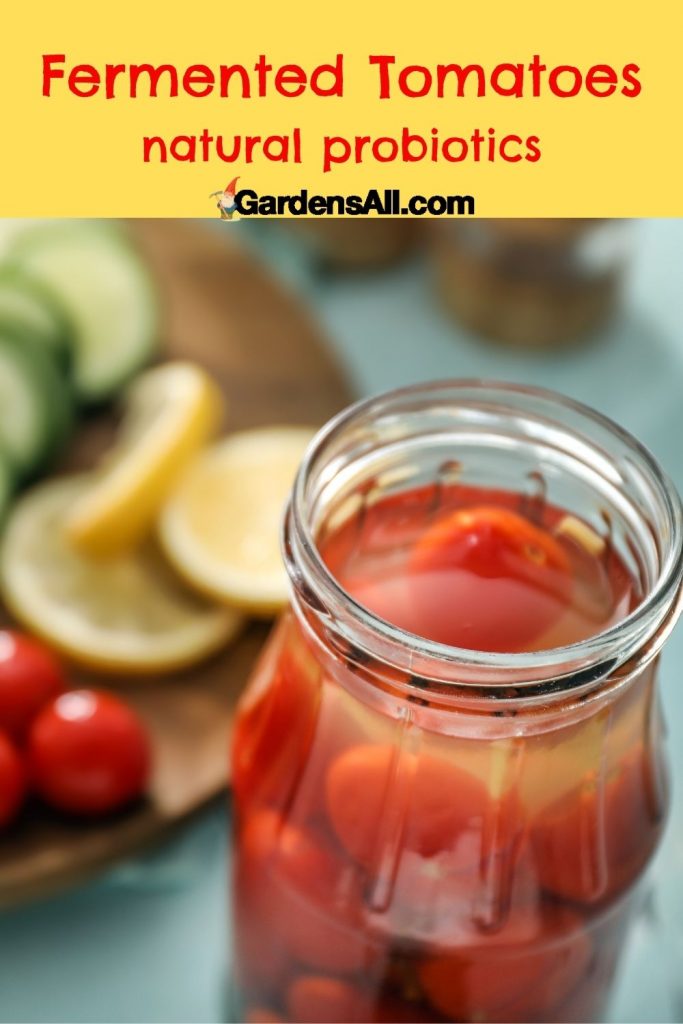
Happy Pickling!
Benefits of Fermented Foods That You Can Make Yourself
Fermentation is a centuries old method for preserving food. Most gardeners preserve their vegetables by drying, freezing, canning and fermenting foods. Long before refrigeration was ever even a seed of an idea, fermentation was the method for preserving food.
Fermentation for preservation is not just for harvest time. We’re fermenting organic cabbage year round for the probiotic benefit for just pennies compared to the price of probiotics typically recommended for gut health.
A great way to save money and preserve food off season, is to buy produce when it’s on sale, then preserve it through drying, pickling and fermenting.
The fermentation method of preserving food actually increases the nutritional value of the vegetables unlike other methods where the nutritional values are often diminished.
Fermentation increases the nutritional value of vegetables.
We began making homemade sauerkraut a couple years ago. Apparently you can’t find better natural probiotics for your gut health than with homemade sauerkraut, and sauerkraut from home grown cabbages just can’t be beat.
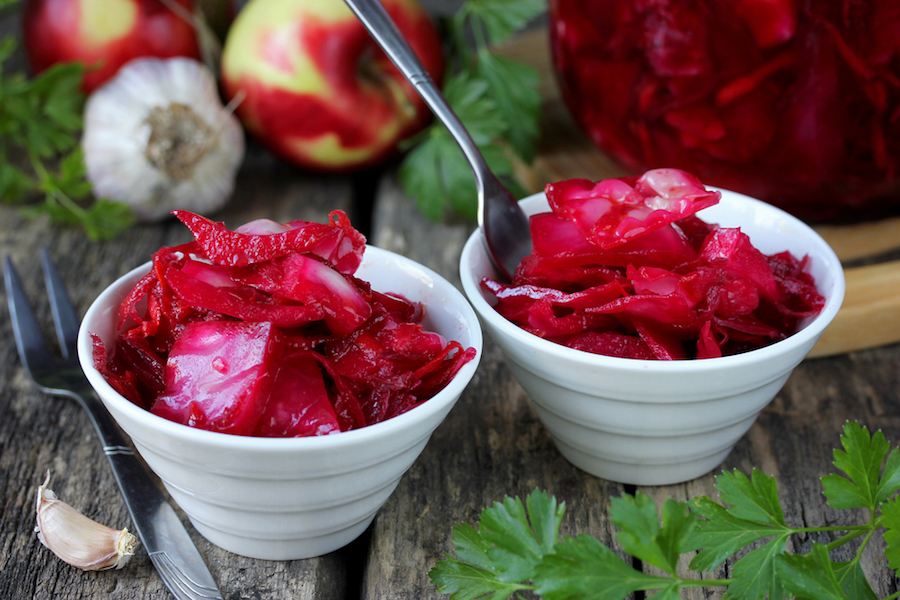
Purple cabbage provides the most nutritional rich benefits.

Fermented Foods Can Include Most any of Your Favorite Vegetables
After such great benefit and success in making homemade organic sauerkraut we expanded to other vegetables such as cauliflower and okra, and plan to try more. We started by adding some of these in with our cabbage sauerkraut.
My mouth waters just thinking of it! Homemade fermented foods like sauerkraut taste awesome, and cost pennies on the dollar compared to store bought. Not only are you saving significant money in food costs but also in supplements like probiotics and medicines you might need if you’re not consuming enough healthy foods.
Sally Fallon’s book – Nourishing Traditions: The Cookbook that Challenges Politically Correct Nutrition and the Diet Dictocrats, will direct you in more nutritional ways of preparing and preserving your food, including fermentation.
Meanwhile, here’s an article for specific instructions on how to make your own sauerkraut, should you be interested.
SAVES MONEY & IMPROVES HEALTH: Making your own fermented foods is easy and inexpensive and saves money on probiotics supplements.
Fermentation: The Easy, Healthy, and Tasty Way to Preserve Vegetables
Excerpted from an article by Brenda Lynn of BeeHappyGarden.com, (which website is no longer published).
In the course of my master gardener training, I had the privilege of attending a seminar on food preservation. At the time, I was basking in the glow of my new canning skills. Shimmering batches of kiwi-strawberry preserves, jalapeño pepper jam, and other weird combinations lined my pantry shelves. Packed with sugar and boiled to death, canned treats were fun to have around, but much of the foods’ nutritional value was lost.
The seminar on fermentation as a method of preserving fresh foods, led by Monica Corrado, of Simply Being Well, introduced me to an entirely different ball game. I’d eaten plenty of Kimchi and sauerkraut but never gave a thought to how they were made. I just assumed they were “pickled.” Monica explained that fermentation is an ancient and widely overlooked method of “pickling” that involves the breakdown of carbohydrates into lactic acid, or sugar into alcohol. While hot water baths required for canning essentially destroy nutrients, fermentation awakens healthy bacteria that enhance food’s nutritional value.
Fermentation is far easier than canning, since it requires neither the intense sterilization process, nor the dance with danger that ensues when working with enormous cauldrons of boiling water and glass jars. Fermentation simply requires finely chopped vegetables, clean glass containers, and a little countertop space.
Fermentation simply requires finely chopped vegetables, clean glass containers, and a little countertop space.
What Are the Benefits of Fermented Foods?
Today science is providing the answers on the age old tradition of fermenting food.
Fermented foods are proven to help maintain a healthy digestive microbiome, which is the collection of microorganisms such as the good bacteria key to regulating digestive health, immune function and inflammation in the human body.
Fermented foods contain friendly bacteria (probiotics) that increase the human microbial diversity and contribute to overall health and wellness.
- Boost immune function
- Help prevent gastrointestinal infections
- Improve health of the digestive tract
- Reduce the risk of several cancers
- Reduce inflammatory proteins linked to:[1]https://med.stanford.edu/news/all-news/2021/07/fermented-food-diet-increases-microbiome-diversity-lowers-inflammation
- rheumatoid arthritis
- type 2 diabetes
- chronic stress
- May contain digestive enzymes (or certain bacteria that help to break down certain molecules, such as lactose)
- May contain novel antioxidants and phytochemicals not found elsewhere
- Could increase content of certain nutrients including the B vitamins
- May contribute to more positive mental health through multiple mechanisms
A diet rich in fermented foods enhances the diversity of gut microbes and decreases molecular signs of inflammation, with stronger effects from larger servings.
SOURCE: Stanford School of Medicine research, July 12, 2021 Fermented Food Diet Study, Sonnenburg, et al.
While exact mechanisms are still under study it is thought that fermented foods may modify gut pH, out-co