
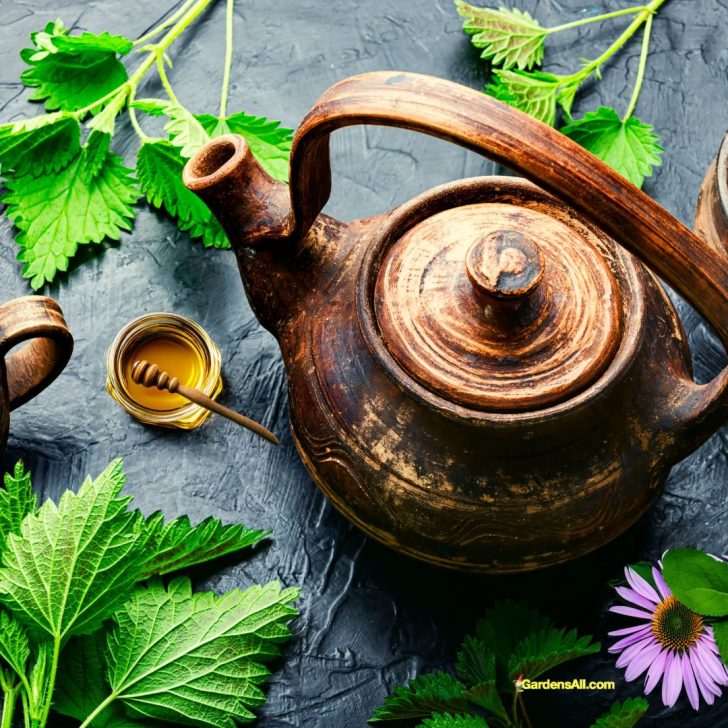
Hay Fever Season Keeping You Indoors?
If your love of gardening and being out in nature is hampered by allergies, this article on herbs that help with seasonal allergies and sinusitis may benefit you. There are more, so this is just a short list of some of them.
There are so many wonderful herbs for allergies, inflammation and more, that you might decide to grow your own medicinal herb garden!
If you’re using herbs that help with seasonal allergies we’d love to hear which ones of these or others are working for you and how your’re using them.
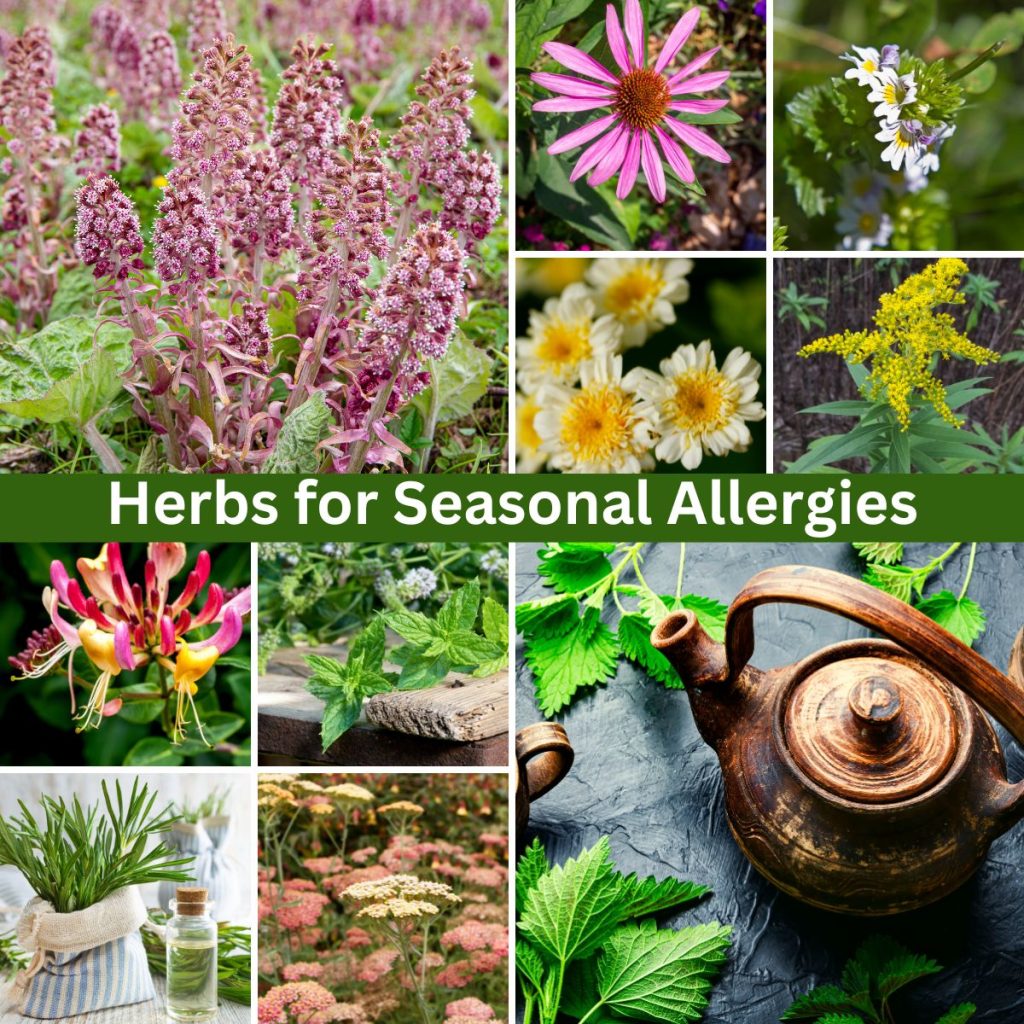
Herbs for Seasonal Allergies
One of the ways some herbs and foods serve medicinally is through their ability to reduce inflammation, and allergies are a form of inflammation. Others, like echinacea, may support allergies by way of strengthening immunity. And others through antihistamine, antiviral, or antibacterial properties.
So here’s a short list or some popular go-to herbs for mitigating seasonal allergies.
CAUTION: Some of these include plants in the Asteraceae family, which can cause reactions in those with sensitivity to the Asterales, which include asters, daisies, and sunflowers.
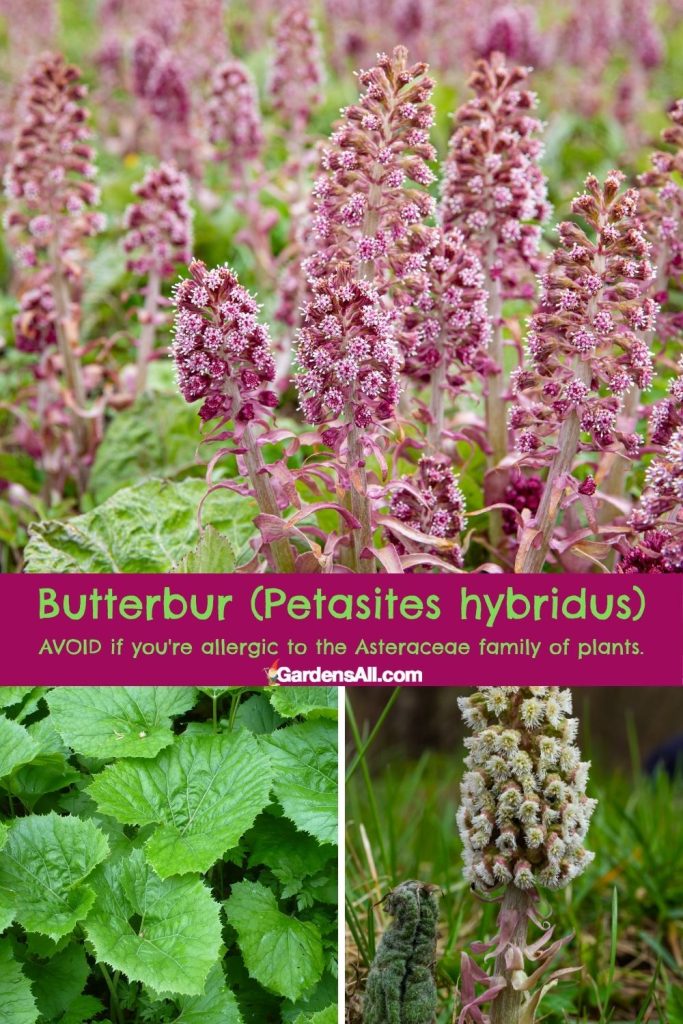
1. Butterbur (Petasites hybridus)
- Family: Asteraceae
- Zones: 3-7
- Sunlight: Partial shade to full sun
- Benefits –
- proven: Reduces inflammation and allergic reactions, effective for hay fever relief[1]https://www.jstor.org/stable/25227207[2]https://www.nccih.nih.gov/health/seasonal-allergies-at-a-glance
- ethnobotanical: Historically used for treating coughs, asthma, and migraine headaches
You can find lots of forms of butterbur on Amazon, including seeds to plant!
CAUTION: alkaloids can be harmful; look for an alkaloid free version, or consult with your wellness practitioner. [3]https://www.nccih.nih.gov/health/seasonal-allergies-at-a-glance
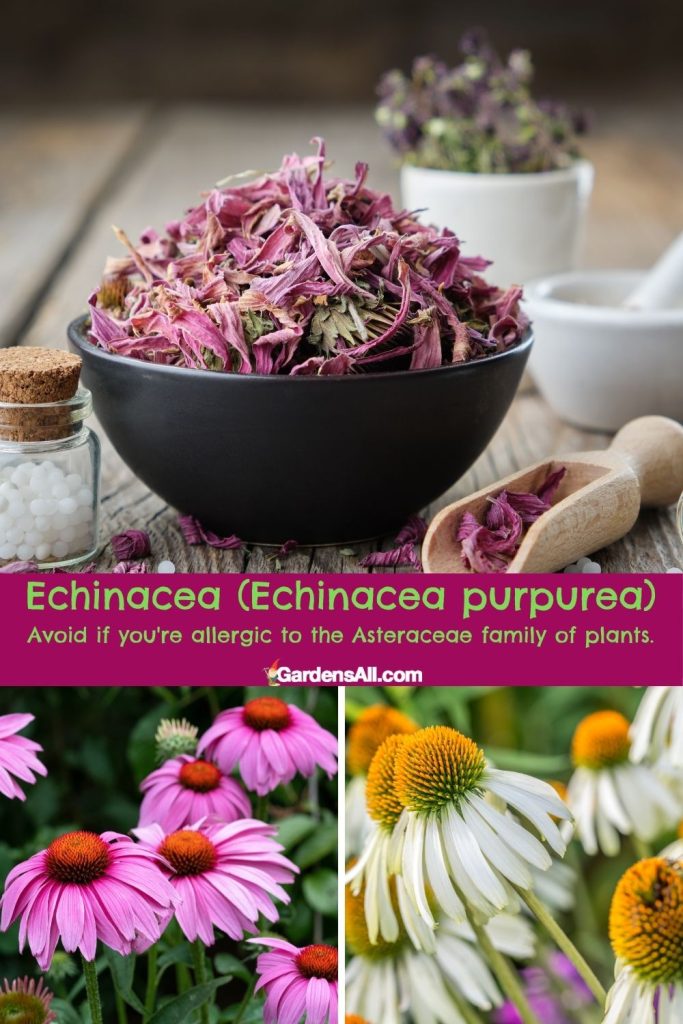
2. Echinacea (Echinacea purpurea)
- Family: Asteraceae
- Zone: 3-9
- Sunlight: Full sun
- Benefits –
- Proven: Boosts immune system, reduces inflammation, and may help with respiratory tract infections.[4]https://www.ncbi.nlm.nih.gov/pmc/articles/PMC2362099/
- Ethnobotanical: Used by Native Americans for various ailments, including respiratory issues and wound healing
CAUTION: If you’re allergic to plants in the asteraceae family, this may not be the remedy for you.
See also, our article on Homegrown Remedies.
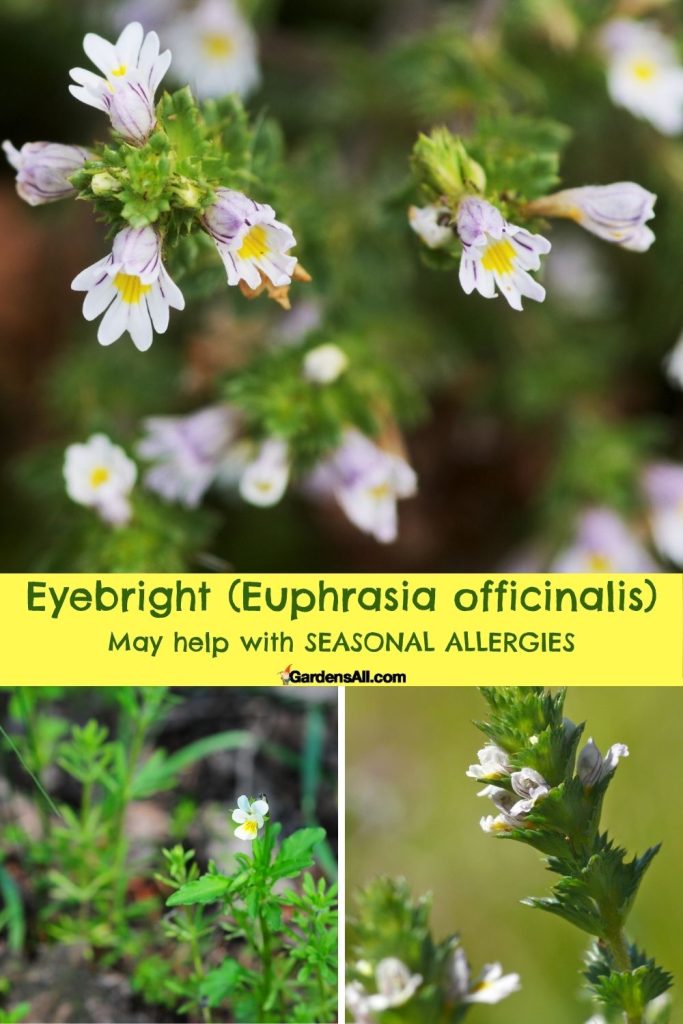
3. Eyebright (Euphrasia officinalis)
- Family: Orobanchaceae
- Zones: 4-8
- Sunlight: Full sun to partial shade
- Benefits –
- proven: Anti-inflammatory properties, effective for treating eye irritation related to allergies.[5]https://www.ncbi.nlm.nih.gov/pmc/articles/PMC4115993/
- ethnobotanical: Traditional European remedy for eye conditions, including conjunctivitis and blepharitis.
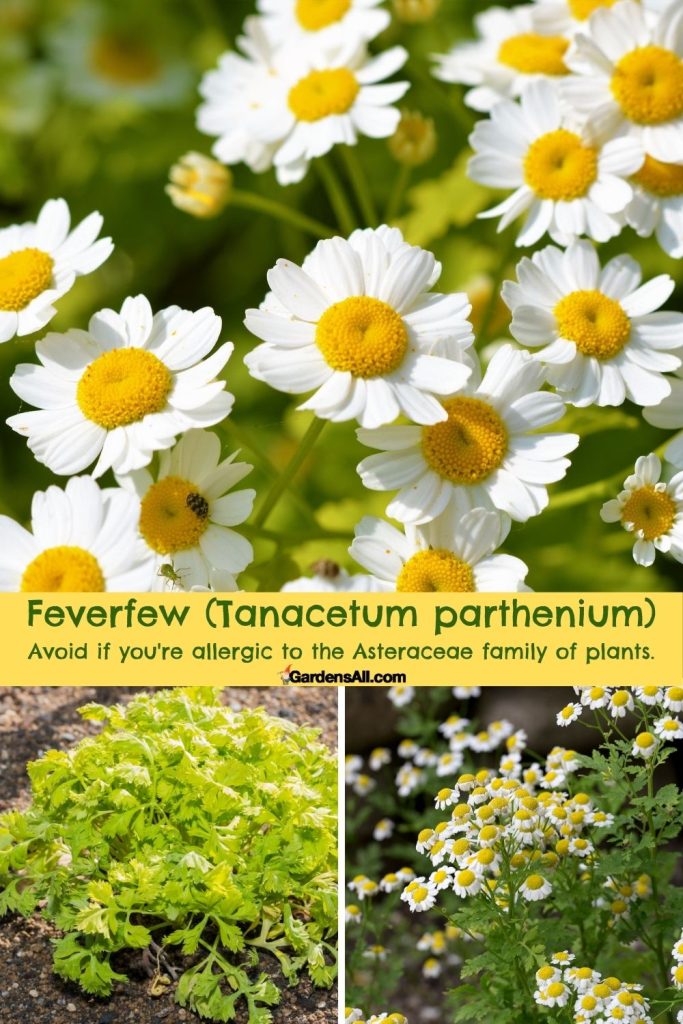
4. Feverfew (Tanacetum parthenium)
- Family: Asteraceae
- Zones: 4-9
- Sunlight: Full sun
- Benefits –
- Proven: Anti-inflammatory and antihistamine properties, helpful for reducing allergy symptoms[6]https://pubmed.ncbi.nlm.nih.gov/2441022/[7]https://pubmed.ncbi.nlm.nih.gov/2441022/
- Ethnobotanical: Used historically psoriasis, allergies, asthma, tinnitus, dizziness, nausea, and vomiting.[8]https://www.ncbi.nlm.nih.gov/pmc/articles/PMC3210009/
CAUTION: It is NOT advisable to you feverfew during pregnancy. Those with Asteraceae allergies should avoid unless under the guidance of a wellness practitioner.
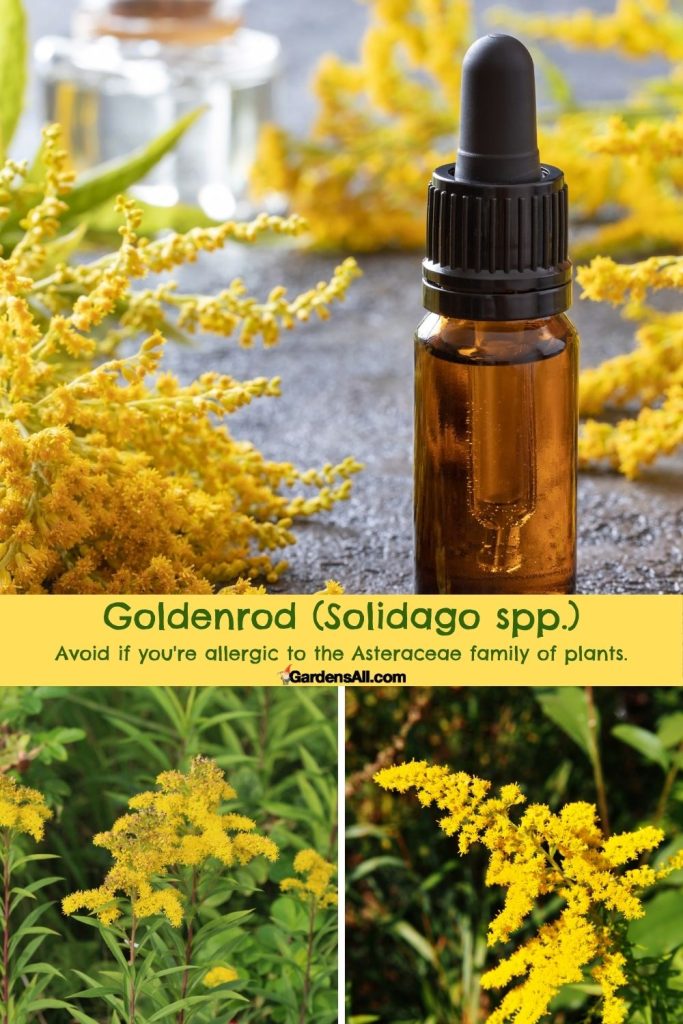
5. Goldenrod (Solidago spp.)
- Family: Asteraceae
- Zones: 3-9
- Sunlight: Full sun
- Benefits –
- Proven: Anti-inflammatory and antihistamine effects, can help alleviate seasonal allergy symptoms.[9] … Continue reading[10]https://ndnr.com/autoimmuneallergy-medicine/solidago-an-inflammation-modulator/
- Ethnobotanical: Used by Native American tribes, as well as in Europe, as documented in writings in 1240-1311 by physician alchemist Arnold von Villanova. Traditional medicinal uses, included treating colds and sore throats, kidney stones via goldenrod in tea, urinary tract infections (UTI’s), overactive bladder syndrome, and prostatic diseases [30,31,32]. The aerial parts of the plant have been used for healing and antiseptic properties, as well as for the treatment of diabetes, allergies, and gastrointestinal disorders.[11]https://www.ncbi.nlm.nih.gov/pmc/articles/PMC7761148/
CAUTION: Goldenrod can trigger allergic reactions in people allergic to flowers in the Asteraceae family, (such as daisies, marigold and ragweed). In addition, it can cause contact dermatitis for those with latex allergies.[12]https://www.healthline.com/nutrition/goldenrod#precautions
NOTE: While numerous scientific studies have been done on goldenrod, those specific to allergies are harder to locate because most search results yield information that speaks to the confusion between goldenrod and ragweed. While often blamed, goldenrod (solidago spp.) is not the cause of respiratory allergies (UNLESS one is already allergic to plants in the Asteraceae family, in which case it may). Rather that prize goes to ragweed.[13]https://www.healthline.com/nutrition/goldenrod#precautions
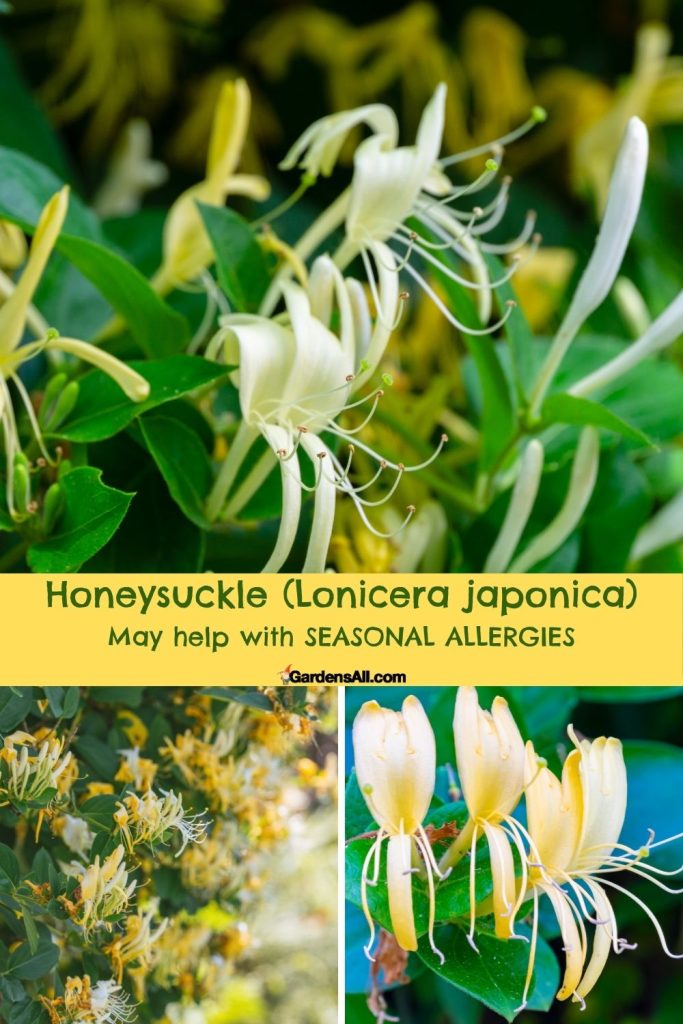
6. Honeysuckle (Lonicera japonica)
- Family: Caprifoliaceae
- Zones: 4-9
- Sunlight: Full sun to partial shade
- Benefits –
- proven: allergies, analgesic, antibacterial, inflammation and more![14]https://www.ncbi.nlm.nih.gov/pmc/articles/PMC6663992/
- ethnobotanical: traditional medicine uses include for treating respiratory conditions, digestive issues, and other health concerns.
See also: honeysuckle benefits
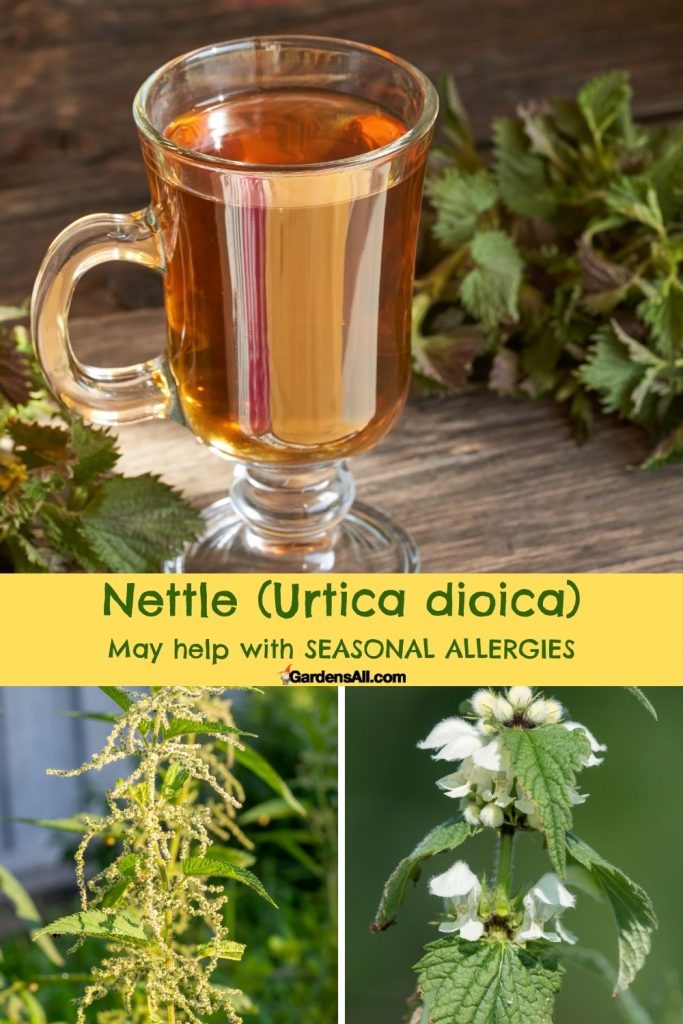
7. Nettle (Urtica dioica)
- Family: Urticaceae
- Zones: 3-10
- Sunlight: Full sun to partial shade
- Benefits –
- Proven: Antihistamine and anti-inflammatory properties, helpful for managing hay fever symptoms.[15]https://www.sciencedirect.com/science/article/abs/pii/S2210803312000978
- ethnobotanical: Used in traditional medicine for allergies, arthritis, and urinary disorders
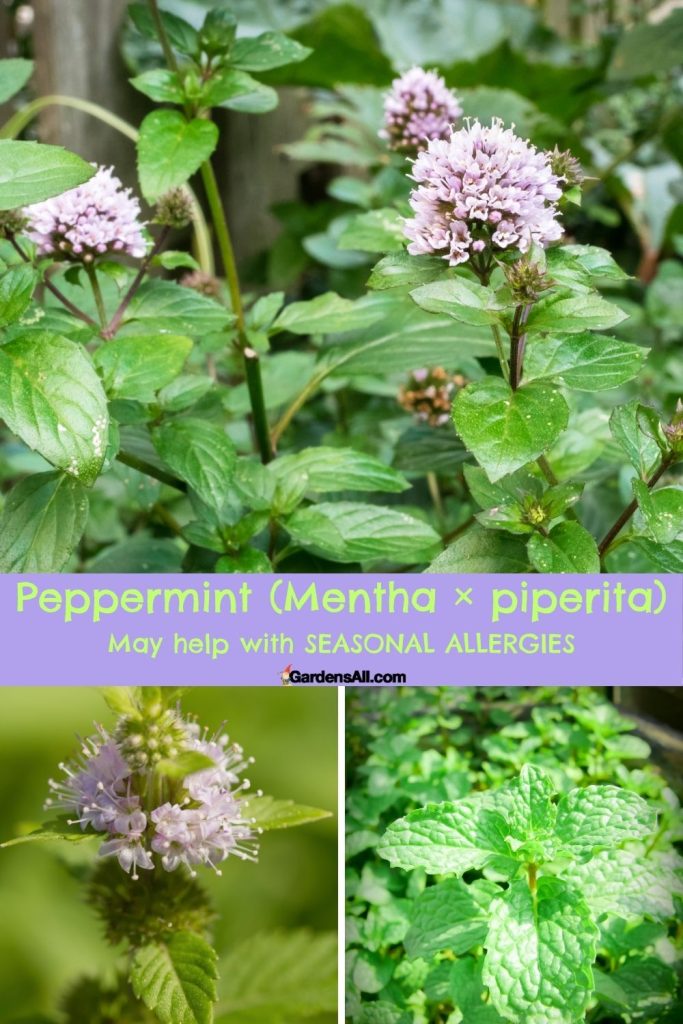
8. Peppermint (Mentha × piperita)
- Family: Lamiaceae
- Zone: 3-9
- Sunlight: Full sun to partial shade
- Benefits –
- Proven: Contains menthol, which can help clear nasal congestion and improve breathing.[16]https://pubmed.ncbi.nlm.nih.gov/11201253/[17]https://pubmed.ncbi.nlm.nih.gov/36578435/
- Ethnobotanical: Historically used for treating digestive issues, headaches, and respiratory problems
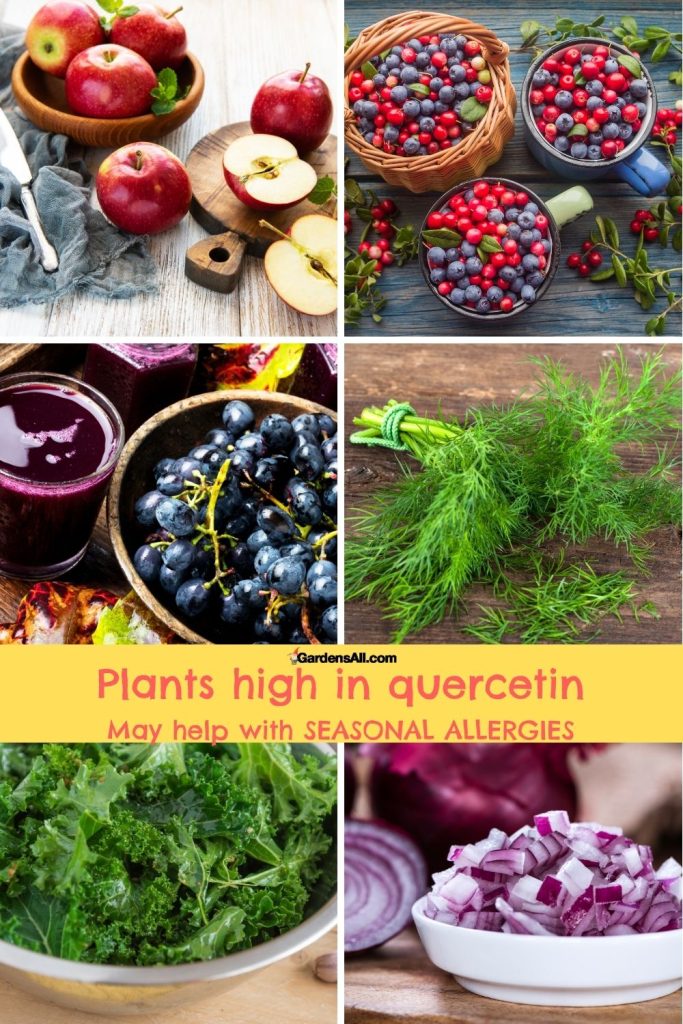
9. Quercetin
Plants that contain quercetin include apples, berries, dark grapes, dill, kale, red onions and more.[18]https://www.lifeextension.com/wellness/antioxidants/quercetin-foods
- Family: Varies depending on the plant
- Zone: Varies depending on the plant
- Sunlight: Varies depending on the plant
- Benefits –
- Proven: Quercetin is a natural antihistamine, may help reduce allergy symptoms.[19]https://www.ncbi.nlm.nih.gov/pmc/articles/PMC6273625/
- Ethnobotanical: Various traditional uses depending on the specific plant
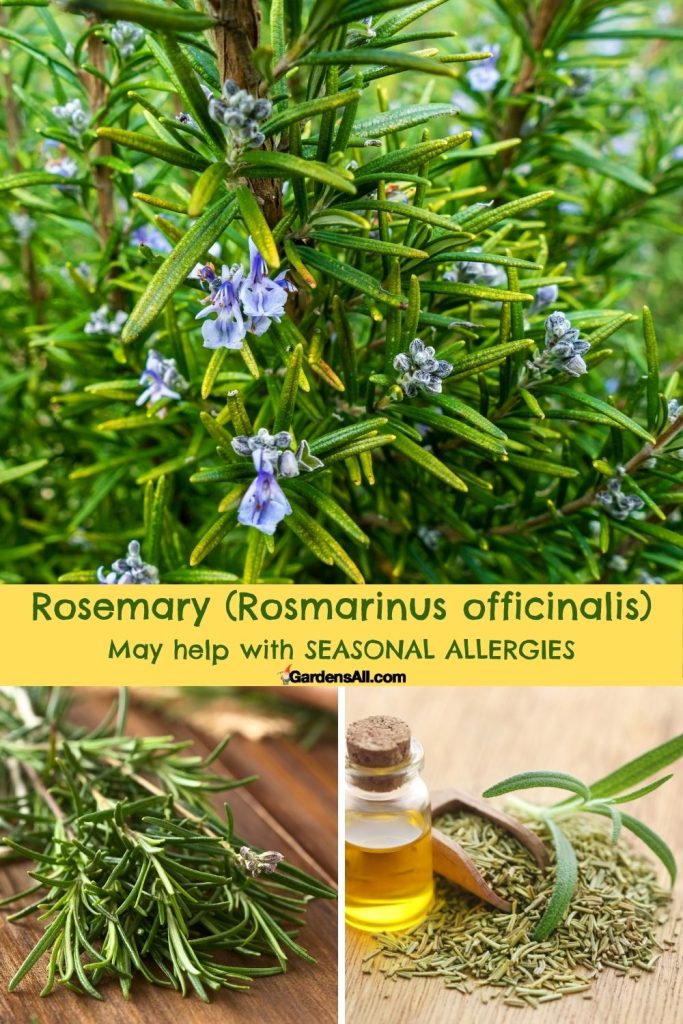
10. Rosemary (Rosmarinus officinalis)
- Family: Lamiaceae
- Zone: 7-10
- Sunlight: Full sun
- Benefits –
- Proven: Contains rosmarinic acid, which has anti-inflammatory and antioxidant properties that may help alleviate allergy symptoms.[20]https://www.ncbi.nlm.nih.gov/pmc/articles/PMC8308967/[21]https://www.ncbi.nlm.nih.gov/pmc/articles/PMC8989115/
- Ethnobotanical: Historically used for improving memory, relieving muscle pain, and treating digestive issues
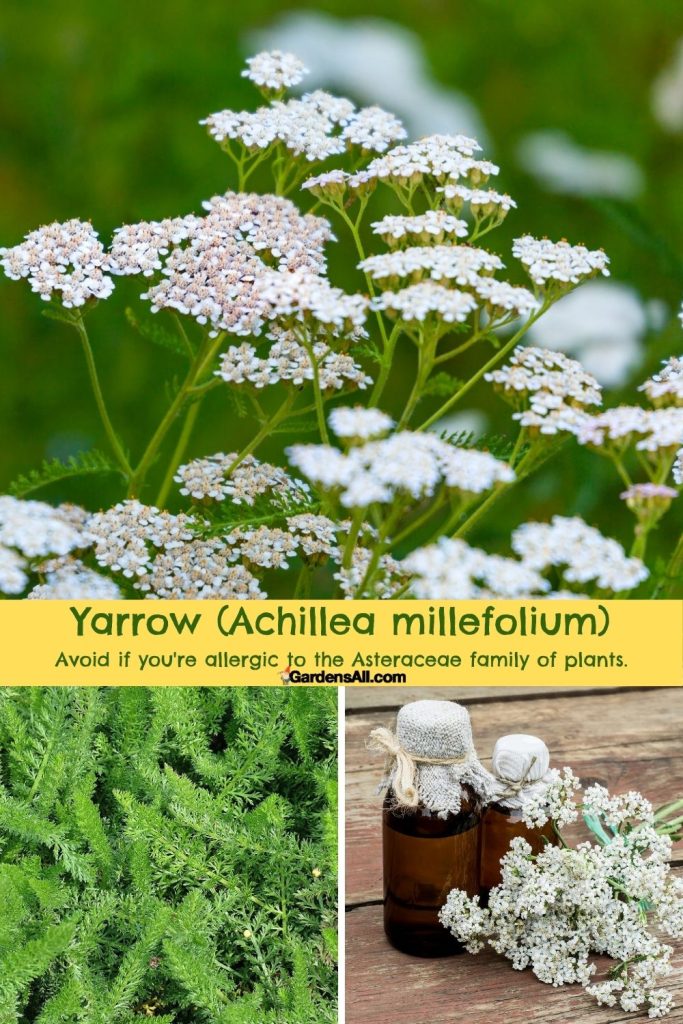
11. Yarrow (Achillea millefolium)
- Family: Asteraceae
- Zone: 3-9
- Sunlight: Full sun
- Benefits –
- Proven: Anti-inflammatory and astringent properties, may help with allergy-related skin irritation and respiratory issues.[22]https://www.ncbi.nlm.nih.gov/pmc/articles/PMC3232110/
- Ethnobotanical: Used in traditional medicine for wound healing, fever reduction, and as a digestive aid.
NOTE: This plant may contribute to skin or rhinitis allergies in those sensitive to plants in the Asteraceae family, thereby contributing rather than mitigating seasonal allergies. So if you’re allergic to daisies, sunflowers and other asteraceae plants, you’ll want to avoid this one. [23]https://journals.sagepub.com/doi/full/10.1177/1091581816677717[24]https://www.ncbi.nlm.nih.gov/pmc/articles/PMC6428906/
How to Use Herbs for Seasonal Allergies
There are a number of common ways to make use of these herbs specifically to alleviate seasonal allergy symptoms related to rhinitis (sinus and respiratory issues). Below are some methods, but remember to always follow your wellness practitioner’s advice and product directions above any general applications.
We typically make teas and tinctures as the easiest ways to enjoy herbal benefits. So here’s that and more!
Using Herbs for Seasonal Allergies
- Herbal teas: Herbs like peppermint, nettle, and butterbur can be used to make soothing teas that help with sinus and respiratory issues. Steep the dried or fresh leaves in hot water for 5-10 minutes, strain, and enjoy.
See more herbs for colds and flu, and best homemade decongestant here. - Tinctures: Tinctures are concentrated herbal extracts made by steeping the herbs in alcohol or glycerin. Echinacea, goldenrod, and eyebright are often used as tinctures to help alleviate allergy-related sinus and respiratory issues. You can take tinctures by adding a few drops to water or placing them directly under your tongue.
This allergy tincture contains 3 of the ingredient from our list above. - Capsules and tablets: Herbs like butterbur, feverfew, and quercetin-containing plants are commonly available in capsule or tablet form. These supplements can be taken as directed on the package to help manage allergy symptoms related to rhinitis.
- Aromatherapy: Essential oils derived from herbs like peppermint and rosemary can be used in aromatherapy to help clear nasal congestion and improve breathing. You can use an essential oil diffuser to aerate the oils in your living space or add a few drops to a steaming bowl of water and inhale the vapors.
- Steam inhalation: Some herbs, such as eucalyptus, can be added to a bowl of hot water to create a soothing steam. Inhaling the steam can help alleviate congestion and other respiratory symptoms related to allergies.
- Herbal baths: Adding herbs like rosemary to a warm bath can provide relief from sinus congestion and help you relax.
- Nasal rinses: You can create a saline solution using warm water and non-iodized salt, and add a few drops of herbal extracts like goldenrod, eyebright, or rosemary. Use this solution in a neti pot or nasal rinse bottle to help clear nasal congestion.
Please remember to do your own research and consult with your healthcare professional before using any herbal remedies. This is especially important if you have a medical condition, are pregnant or nursing, or are taking medications, as some herbs can interact with medications or have side effects.
One More Seasonal Allergy Remedy: Honey!
This isn’t an herb, but rather an alchemy of collections of numerous herbaceous plants by bees and the gift of their honey. Both, local honey[25]https://www.ncbi.nlm.nih.gov/pmc/articles/PMC6074882/ and Manuka honey[26]https://www.ncbi.nlm.nih.gov/pmc/articles/PMC7870997/ are known (and proven) to be beneficial to those suffering from seasonal allergies.
You’ll find a lot more information in our article on the benefits of honey.
Contributions From the Community
Honey and Goldenrod
Here’s what our friend, Shannon had to say about her bout with seasonal allergies:
“I had some irony with the goldenrod. I had always blamed it for my fall allergies. My fall allergies were debilitating for years. I used to call the goldenrod ragweed because I didn’t know. An allergy test showed ragweed was the offender. I would see the golden crowns on those few gorgeous days of fall we get here in the south as I was laying in the bed suffering.
Once I started keeping bees I was educated quickly on the power of goldenrod! Not only is it a powerful immunity booster, it’s also the last full nectar flow for our honeybees in the year. That friend showed me the difference in the plants and took time to educate me.
These days I no longer take allergy meds. I keep goldenrod in my green powder (that’s put in pretty much every dish I cook) and I start eating fall honey in July. I do still have some allergy symptoms but no longer require medicine to get through it. Another thing that greatly helped my allergies was being sure to wash my face and run a damp rag over my hair before bed during allergy season.”
~Shannon Schofield of Shannon’s Sweet Tooth Farm
Mint and Lemongrass
Here’s what our friend, Debie Baugher had to say about Mints and Lemongrass
“Mint helps with my sinuses in general, lemongrass helps with swelling in my sinuses.“
Wishing you the very best health and healing❣️🙏🏼😇

I’m LeAura Alderson, a garden, herb and plant enthusiast with a passion for discovering the many edible and medicinal benefits of the plants all around us, including the weeds, while transforming the land through regenerative permaculture practice. I am also a writer, editor and media publisher (now mostly retired due to replacement by AI), but which now allows more time to build our regenerative permaculture homestead farm.
References