
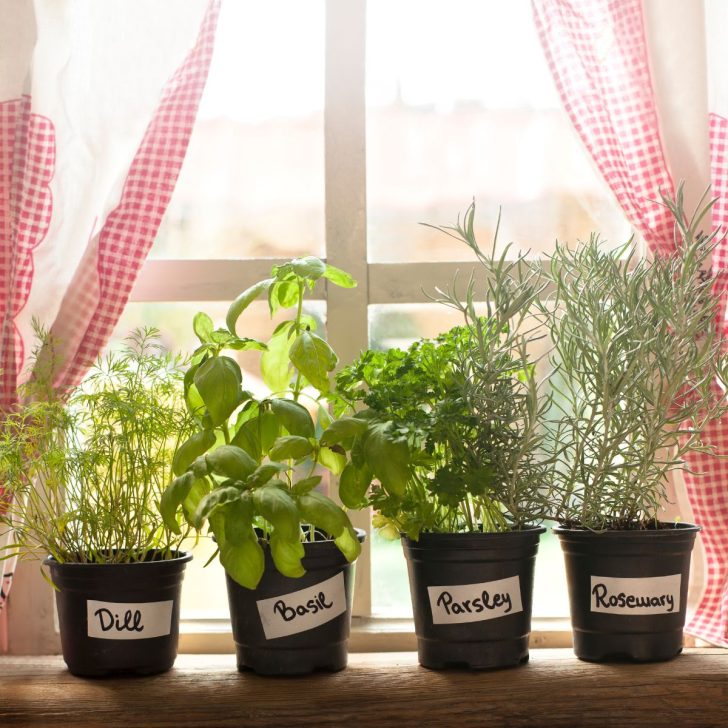
With the onset of cold weather, if you get the winter doldrums and miss growing things in the garden, it may be time to start thinking about the best herbs to grow indoors in winter.
Or perhaps you don’t have a garden, but want to grow herbs in pots year round…?
Growing herbs indoors is one way to keep your kitchen stocked with fresh herbs all year long. More than fresh flavors for food and tea, with herbs you have medicinally potent seasonings that pack a nutritional punch.
You can also grow and use healing herbs for cold and flu as well as immunity, herbs for stress, and antifungal herbs.
But with so many options out there, it can be tough to know where to start. Which are the best herbs to grow indoors in pots year round?
In this article, we cover our top picks for the best herbs to grow indoors in winter and year round, and why we chose them, and how to keep them happy indoors.
Equipment Needed for Growing Herbs Indoors
- Good organic potting soil that drains well
- 9-12″ pots or planters with good drainage holes
- Herb seeds or seedlings
- Grow Lights (such as these best LED grow lights)
- Fertilizer – once/year
With the right equipment, you can grow any herb indoors in winter or year-round. Below, we’ll get into some of the very best herbs to grow with and without artificial lighting. Add one nine to twelve inch pot for each herb plant and you’re off to a good start. Next, we add herbs – seeds or seedlings!
HERB FERTILIZER: A 5-10-5 fertilizer applied once in late spring should be enough for most herbs.
SOURCE: The University of Michigan[1]https://extension.umn.edu/vegetables/growing-dill-home-gardens

11 BEST HERBS TO GROW INDOORS
Here are our picks for the best herbs to grow indoors year round, or just in the winter. We’d love to hear about yours! Feel free to send plant pictures too!
When it comes to pruning, clippings of herbs to put to use in cooking, salads and tea is the best way to keep the plants pruned and producing new growth. Other than that, some will need the occasional pruning away of scraggly branches and leaves.
These herbs can be grown without a grow light so long as they get at least a half day of direct sunlight from a sunny window. However, most herbs will perform best in a southern facing window and/or supplemented with grow lights.
Indoor plants need approximately twice the amount of grow light time as sunlight requirement.
Most indoor herbs do best in a sunny window.
Herbs to Grow Indoors
NOTE: In the outlines of plants below, whenever there’s just one number rather than a range relative to the plant needs, it’s the average of the ideal range, so you can adjust upward and downward accordingly. E.g., instead of 50°-70°, for instance, our average would post as ~60°F.
Basil (Ocimum basilicum)
An attractive and aromatic indoor plant, basil is one of the most popular herbs to grow indoors and out, and for good reason. Basil isn’t fussy, and its fragrant leaves add a fresh sweet scent to your home and imbue your food with its uniquely pungent sweetness favored in salads, soups, pizza, pastas, pesto and Italian herb butter.
This annual herb enjoys an average 7 hours of sun each day and prefers a loamy soil that drains quickly. Whether you’re growing indoors or outside, harvest the leaves regularly to stimulate regrowth.
- USDA Hardiness Zone (if kept outside): 3-9
- Light Needs: ~7 hours sunlight or 14 hours grow light; can tolerate some shade
- Soil Type: Well-drained sandy, loamy soil
- Type: Annual in zones 9 and below; perennial in tropical zones
- Humidity Average : ~50%.
- Temperature Average: ~60°F / 15°C
- Pruning: prune unhealthy stems; snip for use regularly
Sweet basil thrives as an annual in zones 3-9; zones 10 and up enjoy it as a perennial.

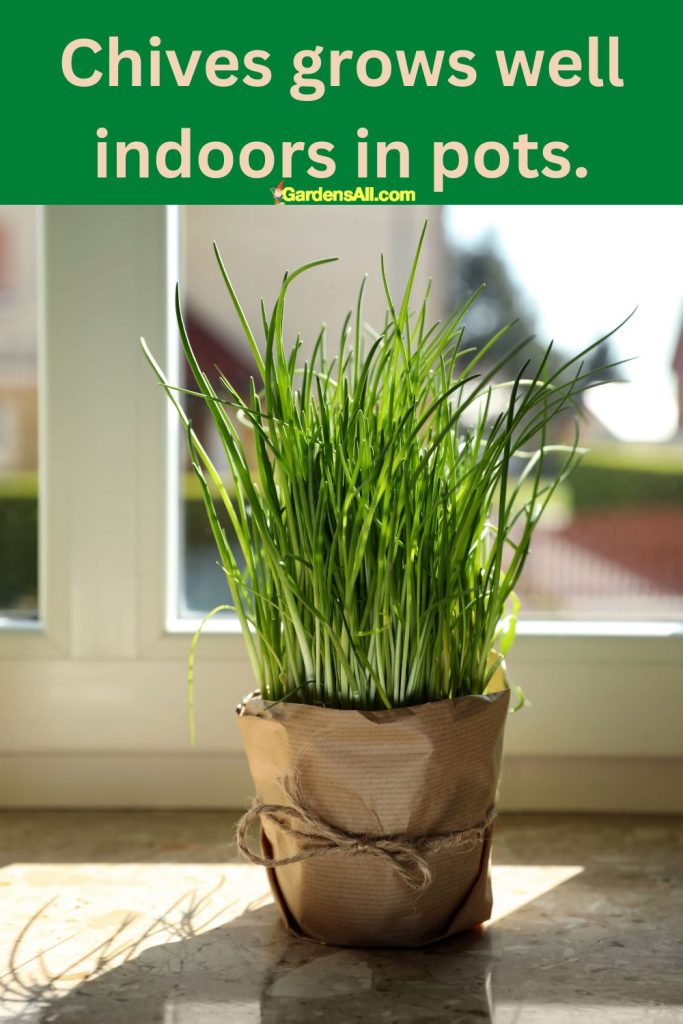
Chives (Allium schoenoprasum)
Chives are a pleasant addition to your garden, providing delicate mild onion-flavored flowers and leaves with a hint of garlic.
The hardy perennial does best with ample amounts of full sun and damp soil. When established, chives are quite low maintenance and will often last for several years without needing more than basic care. Though the plants tolerate drought, it’s best only to let them dry out slightly between waterings.
When flowers begin to form, cutting the entire plant back by two to three inches can help promote new growth and keep leaves from becoming too tough or stringy. Finally, dividing the clumps every few years will ensure lush foliage and prevent overcrowding in the garden bed or indoor pot.
- USDA Hardiness Zone (if kept outside): 3-9
- Light Needs: ~7 hours sunlight or 14 hours grow light; can tolerate some shade
- Soil Type: Well-drained sandy, loamy soil that is acidic to neutral in pH
- Type: Perennial
- Humidity Needs: 40%
- Pruning: Clip for use and to encourage growth; prune unhealthy sections
See more on how to grow chives.
Dill – (Anethum graveolens)
A tender annual, dill is related to carrots, cilantro and parsley, with similar lacy foliage to it’s relatives in the Apiaceae family.
A native of Asia Minor and the Mediterranean region, the seeds and leaves of the tall leggy plant is popular for pickling. Dill foliage and seeds are also used in soups, salads, breads, party dips and fish dishes.