

Echinacea, commonly known as purple coneflower, is a perennial plant native to North America. Revered for its stunning pink-purple flowers and medicinal properties, it has become a staple in many gardens. To put it to practical use, we cover here, information on when and how to harvest echinacea.
If you’re not already familiar, you may first wish to read about some of the many benefits of echinacea.
HOW TO HARVEST ECHINACEA
When to Harvest Echinacea — Knowing the Right Time
Consider the weather when planning to harvest. For example, it’s best not to harvest within 24 hours of rain. Similarly, it’s best to harvest after the morning dew has dried but before the hottest part of the day.
The plant’s oils are most concentrated in the morning, but best to harvest after the dew has evaporated. Moisture can delay drying which can lead to potential mold growth. So mid mornings are a good in between time that’s after dew and before full sun.
Beyond that, the ideal time to harvest echinacea is highly dependent on the part of the plant you wish to use.
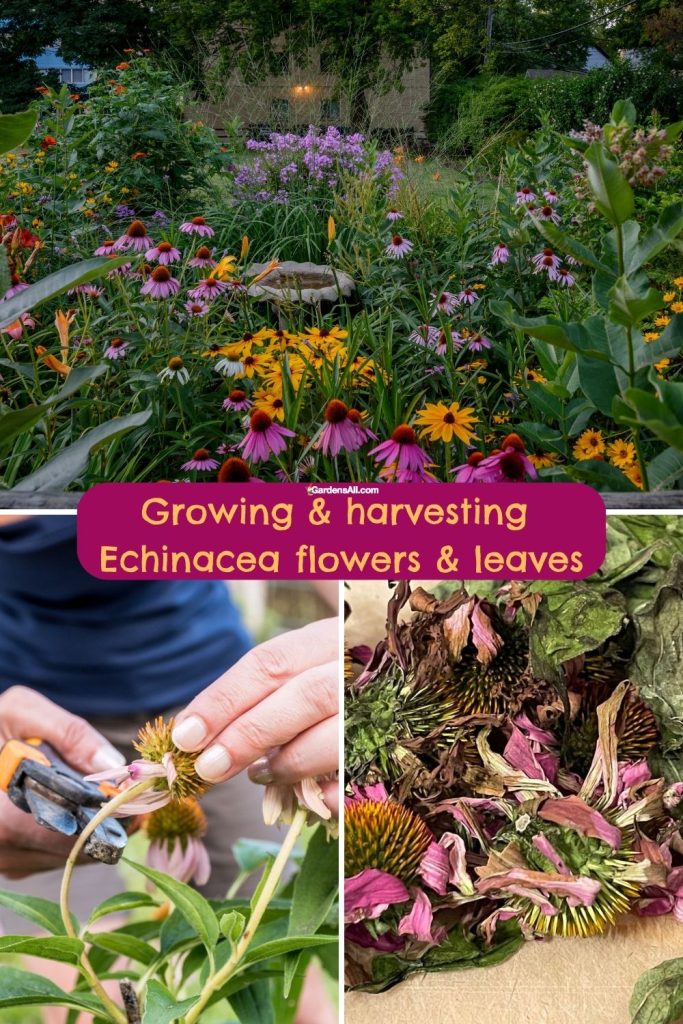
Steps for Harvesting Echinacea Roots – Choose 3+ Year Old plants for Roots
- Tools: A sharp knife or pruners and a garden fork.
- Choose: Look for plants that are 3-4 years old, which will typically be larger and more established.
- Dig: Use the garden fork to loosen the soil around the base and roots of the echinacea plant, taking care not to damage the roots.
- Lift the plant: Gently lift the plant out of the ground.
- Cut off the roots: Using the knife, cut off the roots from the plant.
- Clean the roots: Rinse them under cool water, making sure to remove all soil. Let them dry for a bit before processing.
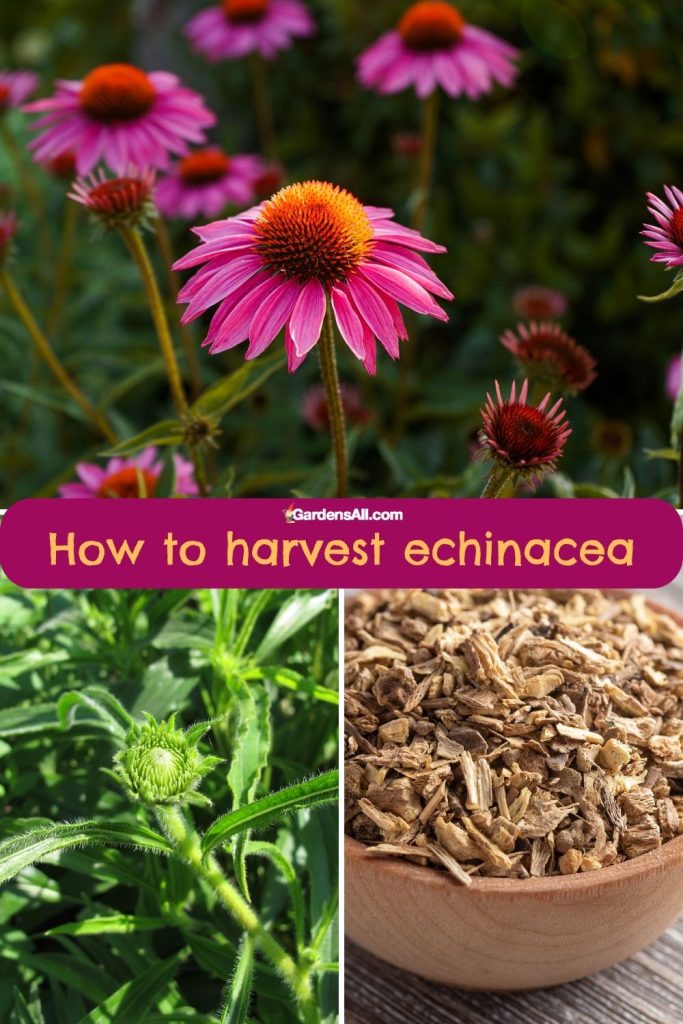
Steps for Harvesting Echinacea Leaves and Flowers
- Tools: A sharp pair of gardening scissors or pruners.
- Choose: Look for healthy, disease-free stems with vibrant flowers and/or fresh leaves.
- Cut : Cut the stems at a 45-degree angle, preferably in the morning after the dew has evaporated.
- Gather: Collect them in a basket or bag. Be careful not to crush them.
How to Harvest Echinacea Leaves
When harvesting echinacea for its leaves, cut the stem at a 45-degree angle just below the lowest set of leaves. Pruning helps to encourage further growth and prevent disease.
The 45-degree angle cut helps to ensure that water will not sit on the cut, which could cause the stem to rot. It’s also important not to cut too close to a node (the point where a leaf or branch is or was attached), as this can also potentially lead to disease.
Be sure to leave some stems on the plant to allow it to continue to grow and produce more flowers. The remaining stems and leaves will continue to photosynthesize, providing energy for new growth. Echinacea will typically produce new stems from the base of the plant.
How to Harvest Echinacea Flowers
Look for flowers that are fully open with vibrant colors. The petals should be lively and upright, indicating that the flower is at its peak.
When cutting echinacea flowers, cut the stem just beneath the flower head at a 45-degree angle as a general rule. If harvesting the flowers for cut flowers, you’ll naturally cut them lower on the stem, to provide a longer stem for a vase.
As with leaf harvesting, aim to clip the echinacea flowers in the morning after the dew has evaporated to prevent excess moisture, and before high sun to help retain more of the beneficial oils.
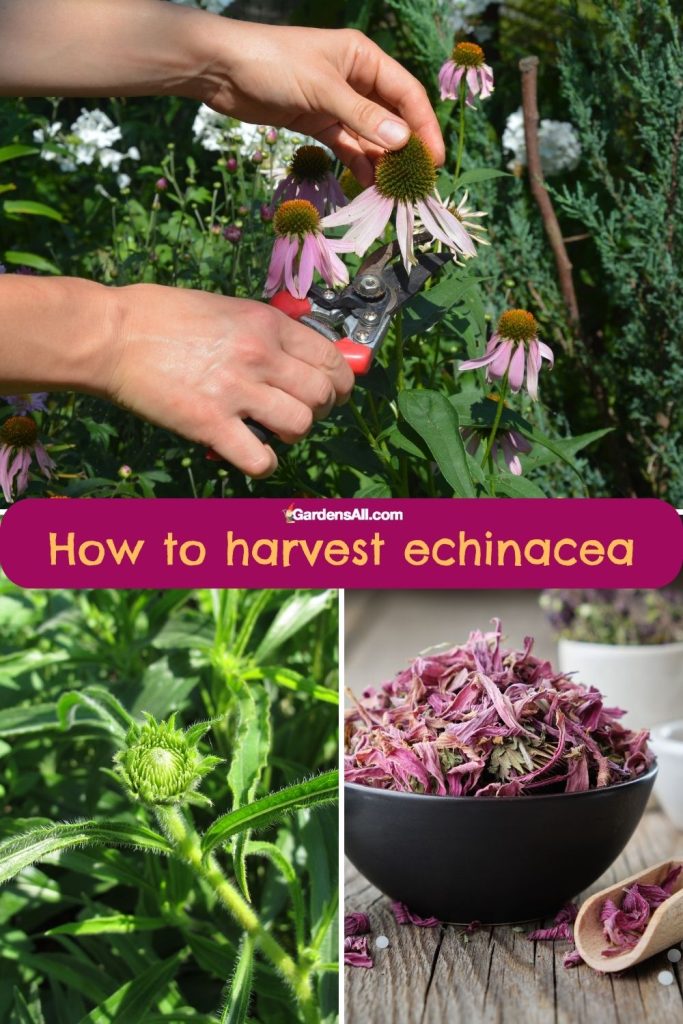
Drying and Storing Echinacea
Once you have harvested your echinacea, it needs to be processed correctly to maximize the echinacea medicinal benefits. This often involves drying.
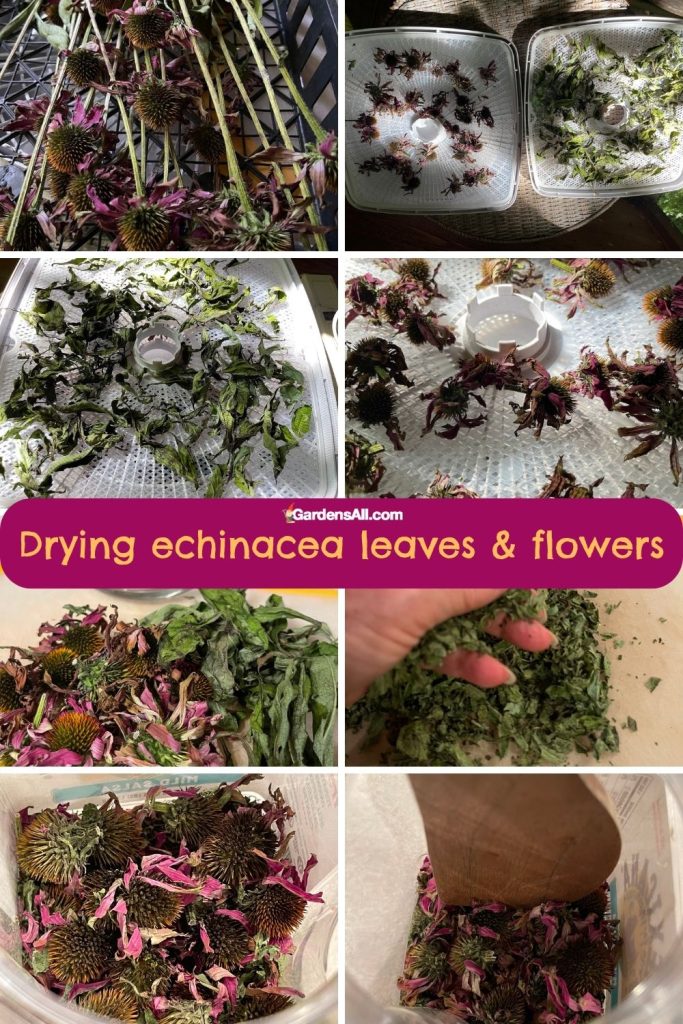
Do You Dry Echinacea Whole or Cut?
You can dry echinacea leaves and flowers whole, or you can cut them before drying. Then for storing, you can store flowers and leaves whole, or cut the blossoms and cut or crush the leaves.
We prefer to cut and crush them before storing as it saves space. At least for the leaves. The flowers look lovely steeping in the tea whole, but they take up more space in the cup and in storage. Either way works, so choose the method that’s the best fit for you.
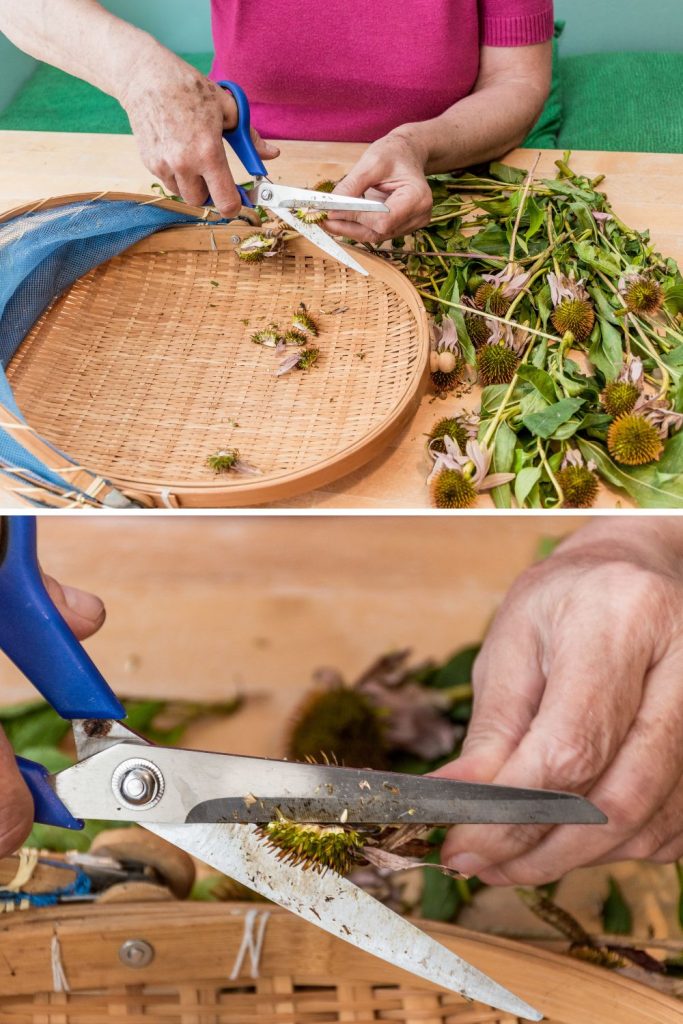
The spines on the cone (disk) portion dried flowers are actually quite pokey, so harder to handle than fresh blossoms. For this reason and to reduce drying time, some prefer to cut the flowers before drying.
However I prefer to dry them whole so that loose petals and bits won’t fall through the cracks of the drying trays, (if that’s what you’re using). We use the dehydrator method because of the NC humidity it takes everything too long to dry and I want to preserve the medicinal value without any mold involved.
If you’re hanging the stems to dry, than naturally, you will leave the blossoms and leaves to dry whole.
Careful When Cutting Dried Echinacea Flowers
Handle the sharp pokey echinacea flowers carefully by the stem or base. Alternatively, you can use a simple protective glove for the hand that will hold the flowers. Many of the petals may have already fallen off, but you can cut the cone portion with sturdy garden scissors.
The leaves are easy to crush once dried, so we prefer to leave them whole for drying so they lay better on the drying rack without slipping through the cracks.
Drying Echinacea
- Drying Methods for the roots, leaves, and/or flowers:
- spread on a drying screen
- hang the stems upside down in a well-ventilated area away from direct sunlight
- place in a dehydrator; (see best food dehydrators)
- leave whole and cut/crush when dry, or cut flowers before drying.
- Wait: This could take a 1-2 days or as much as a week for open air drying and depending on the humidity in your area.
- Ready: The plant parts are ready when they feel dry to the touch and crumble easily.
Storing Echinacea
- Cut & Crush: Cut flowers with scissor (of leave whole); crush leaves by hand.
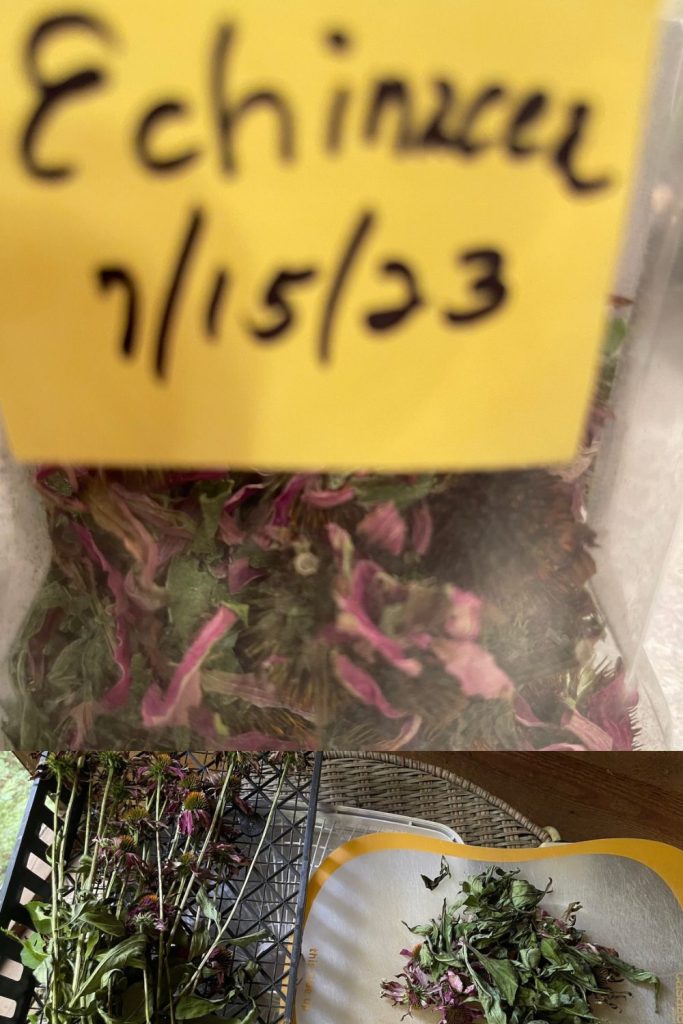
- Place the dried echinacea in airtight containers.
- Label: Write the date and contents on the container.
- Store: Keep the containers in a cool, dark place. Properly stored echinacea can last for up to a year.
How to Process Dried Echinacea for Various Uses
Echinacea has been used for centuries as a medicinal herb due to its immune-boosting properties. Once you’ve harvested and dried your echinacea plants, there are several ways to process them for use.
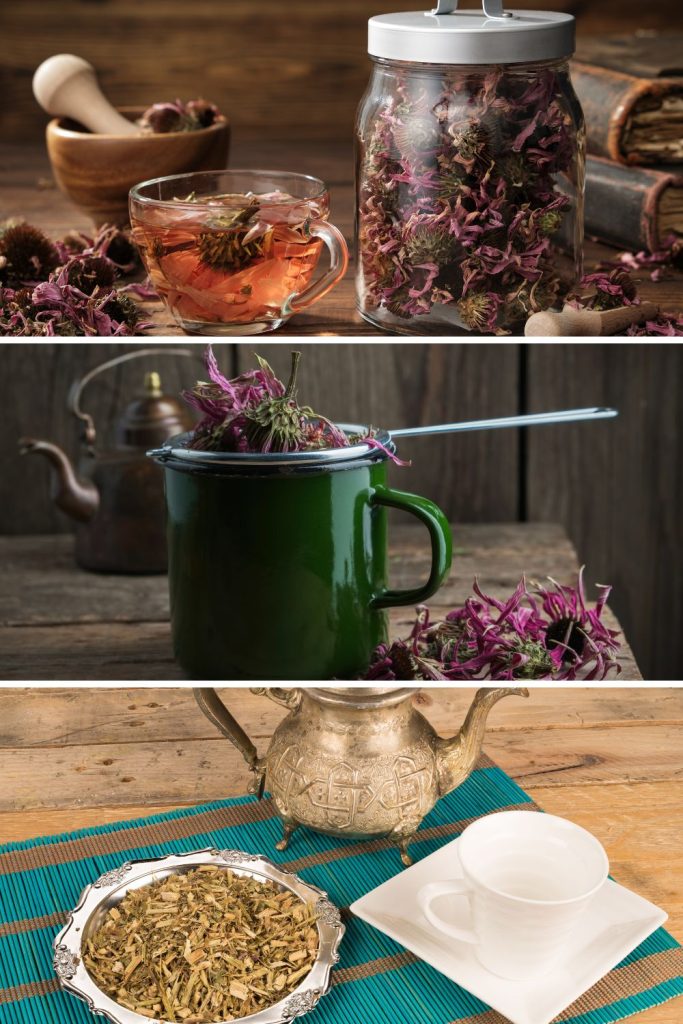
Making Echinacea Tea
One common way to use echinacea is by making tea from its dried flowers, leaves, and roots. Here’s a simple way to do it.
Ingredients for 1-2 Cups of Tea
- You can chop the roots and crush the leaves and flowers to maximize storage space, or you can steep them whole but use approximately 4x the quantity as crushed.
- 1-2 tablespoons of crushed dried echinacea flowers, leaves, and/or roots
- 1-2 cups of water
If you prefer to not crush the herbs, tea cups with infusers are handy.
Instructions:
- Boil the water.
- Pour over dried echinacea in tea infuser or loose in a pyrex measuring cup.
- Let it steep for about 5-15 minutes, (for milder or stronger)
- Strain the tea into a cup (or remove infuser basket) and enjoy.
You can also add honey or lemon to enhance the taste and benefits if desired. See benefits of honey.
For more on how to make echinacea tea here.
Creating Echinacea Tincture
Tincture is a concentrated liquid form of the herb that can be taken orally for various echinacea health benefits.
Ingredients:
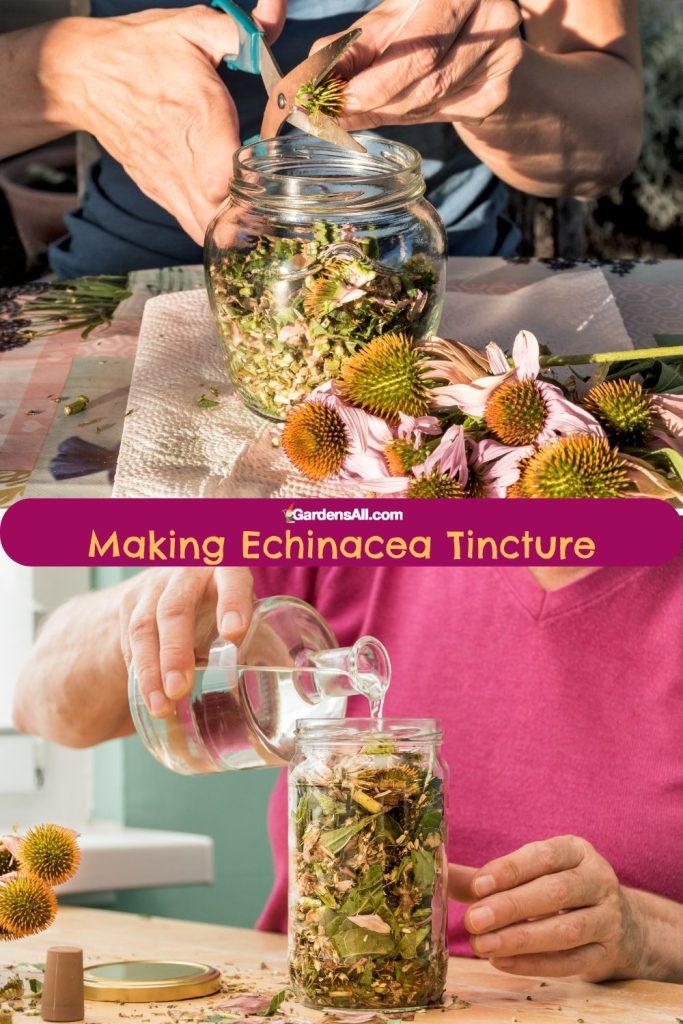
- Dried echinacea plant parts (flowers, leaves, or roots)
- High-proof alcohol, like vodka or brandy
- Airtight jar
Instructions:
- Fill the jar about 1/3 to 1/2 full with dried echinacea.
- Pour the alcohol into the jar until it completely covers the herbs.
- Seal the jar tightly and shake it.
- Store the jar in a cool, dark place for about 4 to 6 weeks, shaking it occasionally.
- After the designated time, strain the mixture through a cheesecloth or fine mesh sieve into a clean jar or bottle.
- Store the tincture in a dark bottle away from light.
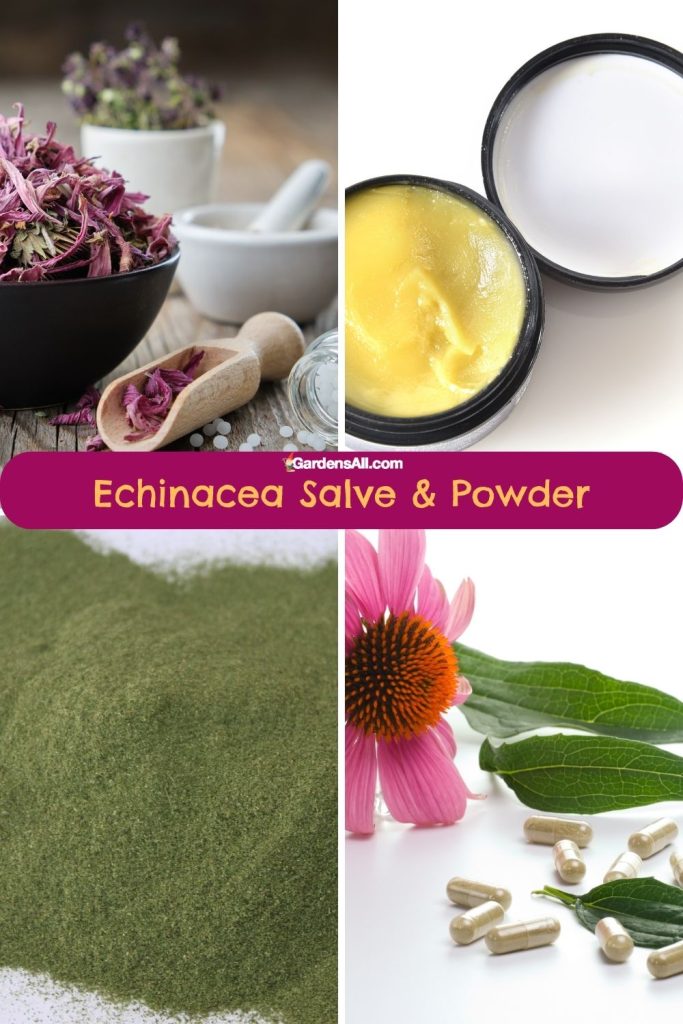
Echinacea Powder
Dried echinacea can also be ground into a powder and used in various ways.
Method
- Once the echinacea parts are fully dried, you can use a coffee grinder or a mortar and pestle to grind them into a fine powder.
- Store the powder in an airtight container in a cool, dark place.
The echinacea powder can be used in smoothies, green juice, capsules, or as a spice in cooking. It can also be added to salves or creams for topical use.
Topical Echinacea Applications
Echinacea can also be used topically to help with skin issues. For this purpose, you can make an echinacea-infused oil.
Ingredients:
- Dried echinacea plant parts
- A carrier oil (like olive oil or sweet almond oil)
- Airtight jar
Instructions:
- Fill the jar about halfway with dried echinacea.
- Pour the carrier oil into the jar until it completely covers the herbs.
- Seal the jar and shake it.
- Store it in a cool, dark place for about 5 weeks, more or less.
- After the designated time, strain the oil through a cheesecloth or fine mesh sieve.
- Store the oil in a clean jar or bottle.
The echinacea-infused oil can be used on its own or as a base for balms, salves, or lotions. Remember, before using any herbal product topically, it’s advisable to do a patch test to ensure you’re not allergic to it.
Please note that while echinacea has been used traditionally for medicinal purposes, its effectiveness varies from person to person. Consult with appropriate health professional as needed for guidance and advice.

I’m LeAura Alderson, a garden, herb and plant enthusiast with a passion for discovering the many edible and medicinal benefits of the plants all around us, including the weeds, while transforming the land through regenerative permaculture practice. I am also a writer, editor and media publisher (now mostly retired due to replacement by AI), but which now allows more time to build our regenerative permaculture homestead farm.