

The preparation and consumption of echinacea as a tea is the most popular method of obtaining micro-doses of echinacea benefits. If you’re new to how to make echinacea tea, you’ll be pleased to learn that — as with all herbal infusions – it’s super easy.
Or perhaps — like us — you’ve been enjoying echinacea in its myriad forms, but are new to growing, harvesting and making your own echinacea tea from scratch?
While we’ve been enjoying and using echinacea tea for its benefits in wellness for several decades, we’ve only recently begun harvesting and drying our own echinacea flowers and leaves for the echinacea tea benefits.
I was like… DUH! Why haven’t we done this sooner?!? Welllll that’s okay. We’re doing it now❣️⚡️😇
This should help If you need information on how to harvest echinacea before you make your tea.

A Brief History on Echinacea Tea Use
In the late 19th and early 20th centuries, echinacea became popular in the U.S. and Europe as a herbal remedy, including in the form of tea.
Native to North America, Echinacea, has a long history of use in traditional herbal medicine by the Native American tribes who lived in areas where echinacea grows. Different parts of the plant, including roots, leaves, and flowers, have been used for a variety of purposes, especially the Echinacea purpurea, Echinacea angustifolia, and Echinacea pallida.
Today, echinacea grows worldwide and echinacea tea continues to be consumed for many of these same purposes, particularly for immune system support and the prevention of relief from colds and flu.
Benefits of Echinacea Tea
Most of the published scientific evidence on echinacea tea benefits isn’t definitive. One of the reasons for this is that while echinacea has been studied extensively worldwide, studies of echinacea tea specifically, versus the extracts, are hard to come by.
However, since many echinacea benefits are well know to be associated with immune support and the prevention or lessening of the impacts of viral infections, it stands to reason that the tea is also gently imbued with these benefits.
Short List of Traditional Common Echinacea Tea Health Benefits and Uses
- Anti-inflammatory
- Antioxidant
- Blood sugar
- Digestive
- Immunity
- Respiratory
- Skin
- Snakebite
- Wounds
However there are more echinacea treasures to discover and you can read more about all of that in our article on the benefits of echinacea.
How to Make Echinacea Tea
Making echinacea tea at home is a simple process that utilizes one or all parts of the echinacea plant from root to leaves to flowers. Here is a basic recipe:
Ingredients Per Serving
- Fresh or dried Echinacea root, leaves, and flowers. If using fresh Echinacea, use about a handful. If using dried, 1-2 tablespoons should be enough.
- 1 cup of water
- Honey or lemon to taste (optional)
Instructions:
- ECHINACEA – Can be made using the fresh or dried roots, stems, leaves and/or flowers of the echinacea plant.
- CLEAN: If using fresh parts, rinse and chop it into small pieces. If you’re using dried Echinacea, you can skip this step.
- BOIL the water in a small pot.
- POUR boiling water over the echinacea.
- STEEP for 5-20 minutes. The longer you let it steep, the stronger the tea will be.
- STRAIN the tea into a cup.
- SWEETEN If desired, by adding honey. For health, choose raw local honey or manuka honey.
- ENHANCE by adding lemon juice and/or lemon peel to taste if desired for flavor and/or nutrients.
- ENJOY! Your Echinacea tea is now ready to drink!
See lemon peel benefits.
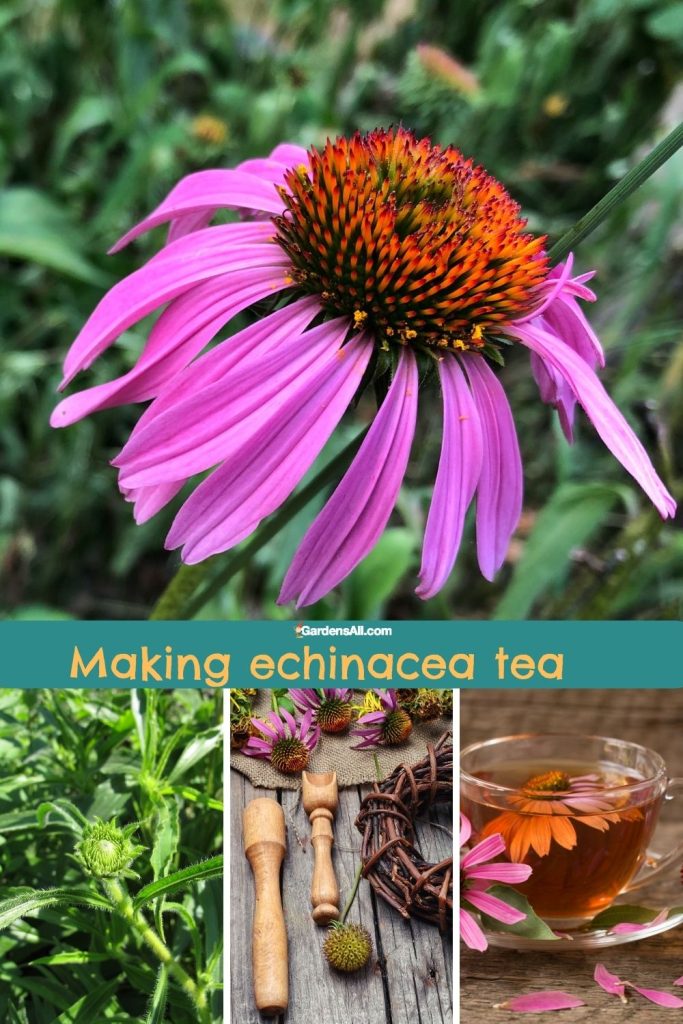
You may also enjoy learning about Medicinal Echinacea Plants and this article on when and how to harvest echinacea.
PRECAUTION: Some people may experience allergic reactions to Echinacea. If you have never consumed Echinacea before, try a small amount first to see if you have any adverse reactions. As with all medicinal herbs, it’s a good idea to consult with a healthcare provider before starting any new herbal regimen.

I’m LeAura Alderson, a garden, herb and plant enthusiast with a passion for discovering the many edible and medicinal benefits of the plants all around us, including the weeds, while transforming the land through regenerative permaculture practice. I am also a writer, editor and media publisher (now mostly retired due to replacement by AI), but which now allows more time to build our regenerative permaculture homestead farm.