
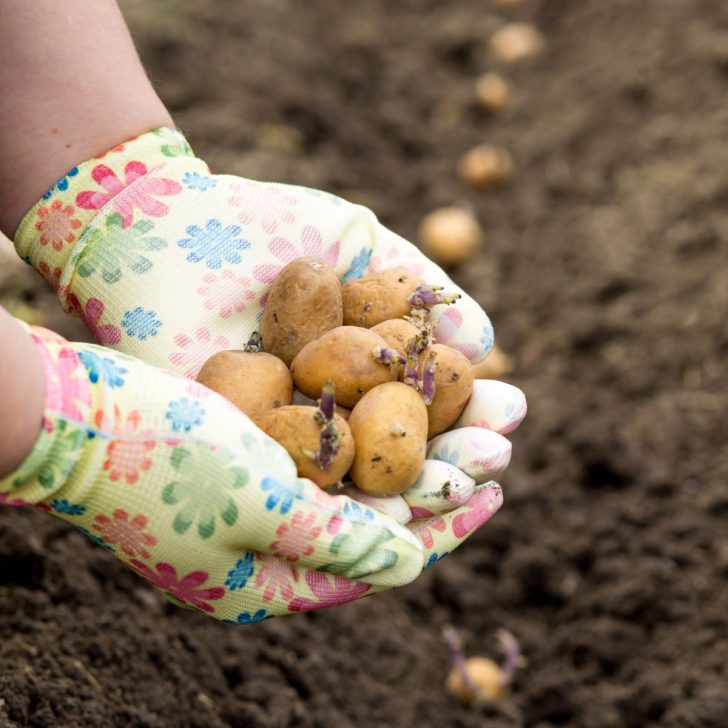
If you’re wonder how to plant potatoes with sprouts, chances are you have some sprouting in your pantry! The good new is that they’re easy to grow, so if they’re too old to eat, they may be just right for planting.
Let’s run through the steps on how to plant potatoes with sprouts.
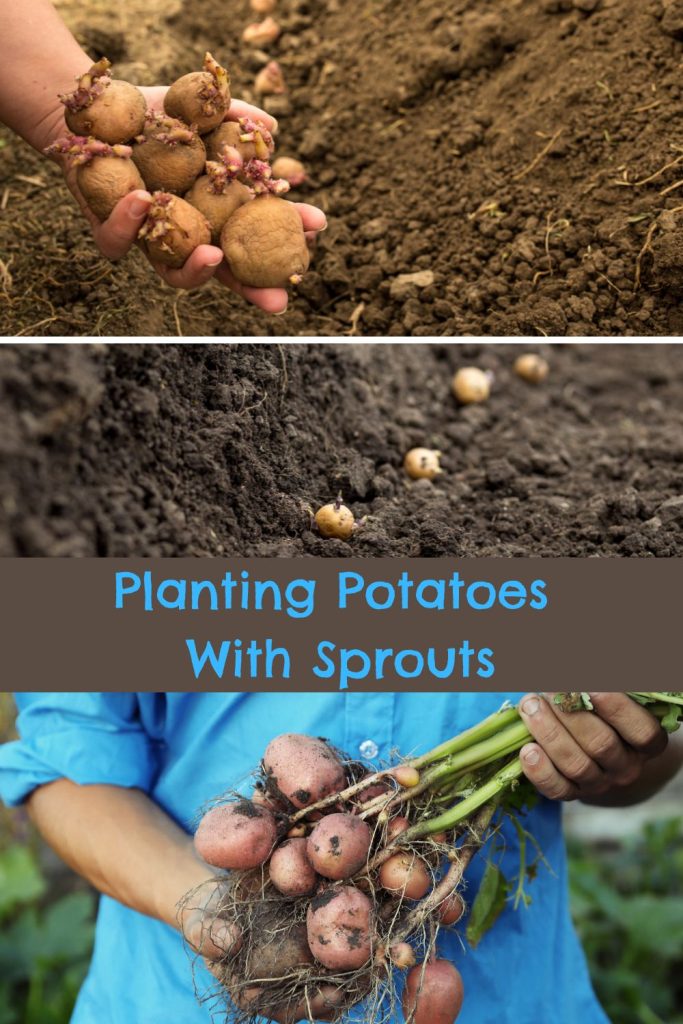
Planting Potatoes With Sprouts
When potato tubers start to sprout, it’s a clear indication that they are ready to grow. So here we go!
1. Selecting and Preparing Your Potatoes
- Choose High-Quality Tubers: Begin with healthy, sprouting potatoes. Preferably, use organic potatoes or certified seed potatoes from a reputable nursery. These are typically the best, healthiest plants and tubers.
- Chitting (or Pre-Sprouting): If your potatoes haven’t started sprouting yet, you can encourage this by placing them in a cool, well-lit area for a few weeks. Indoors, a north facing window can be good for this. The potato eyes will sprout.
- Cutting (optional): Large potatoes can be cut into smaller pieces, ensuring each piece has at least two healthy sprouts. Allow cut pieces to air-dry for 24-48 hours before planting to reduce the risk of rotting.
2. Prepare the Soil
- Soil Type: Potatoes thrive in well-draining, loose soil. Avoid areas where water pools.
- pH Level: Aim for a slightly acidic pH of 5.5 to 6.5. Test your soil and amend as necessary.
- Tilling: Loosen the soil at least 10-12 inches deep. Incorporate compost or aged manure to enrich the soil.
3. Planting Process
- Trench Method: Dig a trench about 4-6 inches deep. Space each potato or potato piece about 12 inches apart in rows. Cover them with 3-4 inches of soil.
- Hilling: As the potato plants grow, mound soil around the base of the plant. This protects developing tubers from the sun, which can turn them green and toxic.
4. Watering and Care
- Watering: Keep the soil consistently moist but not waterlogged. Overwatering can cause tubers to rot.
- Mulching: Mulch around the base of the plants to maintain moisture, control weeds, and prevent tubers from being exposed to sunlight.
5. Pests and Diseases
- Common Pests: Watch out for Colorado potato beetles and aphids. Handpick beetles or use organic deterrents for both.
- Diseases: Potatoes can be susceptible to blight and other fungal diseases. Ensure good air circulation and avoid overhead watering. Rotate crops annually.
6. Harvesting
- Early Potatoes: For small, ‘new’ potatoes, you can start harvesting 2-3 weeks after the plants have finished flowering.
- Main Crop: For fully matured potatoes, wait until the plant’s foliage dies back. Then dig around each plant with a spade or fork, being careful not to puncture the tubers.
7. Storing:
- Curing: Allow harvested potatoes to dry for a few hours in a shaded area.
- Storage: Store in a cool, dark, and humid environment, like a root cellar. Properly stored potatoes can last several months.
Planting potatoes with sprouts is a rewarding experience that makes good use of old potatoes that might otherwise end up tossed out or in the compost. Whether you’re a seasoned gardener or just getting started, potatoes are a wonderful crop to cultivate.
You may also enjoy these article on potatoes:
- Growing Potatoes in Bags and Containers
- When to Plant Potatoes by Hardiness Zones & States
- Planting Potatoes in Fall
- How to Grow Purple Majesty Potatoes
Happy Planting!

I’m LeAura Alderson, a garden, herb and plant enthusiast with a passion for discovering the many edible and medicinal benefits of the plants all around us, including the weeds, while transforming the land through regenerative permaculture practice. I am also a writer, editor and media publisher (now mostly retired due to replacement by AI), but which now allows more time to build our regenerative permaculture homestead farm.