
AKA – Mahonia aquifolium – a Beneficial Edible Medicinal Shrub to Know
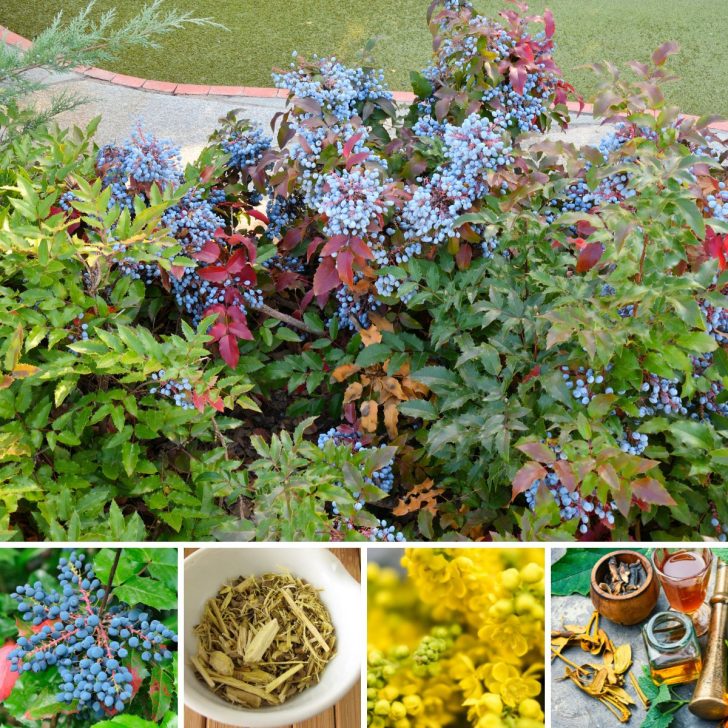
We have a number of large, expansive, and prolific Oregon grape (Mahonia aquifolium) shrubs in our wooded yard. So we naturally wanted to know more about some the Oregon grape benefits we could put to use.
Oregon Grape is a Beneficial Beauty
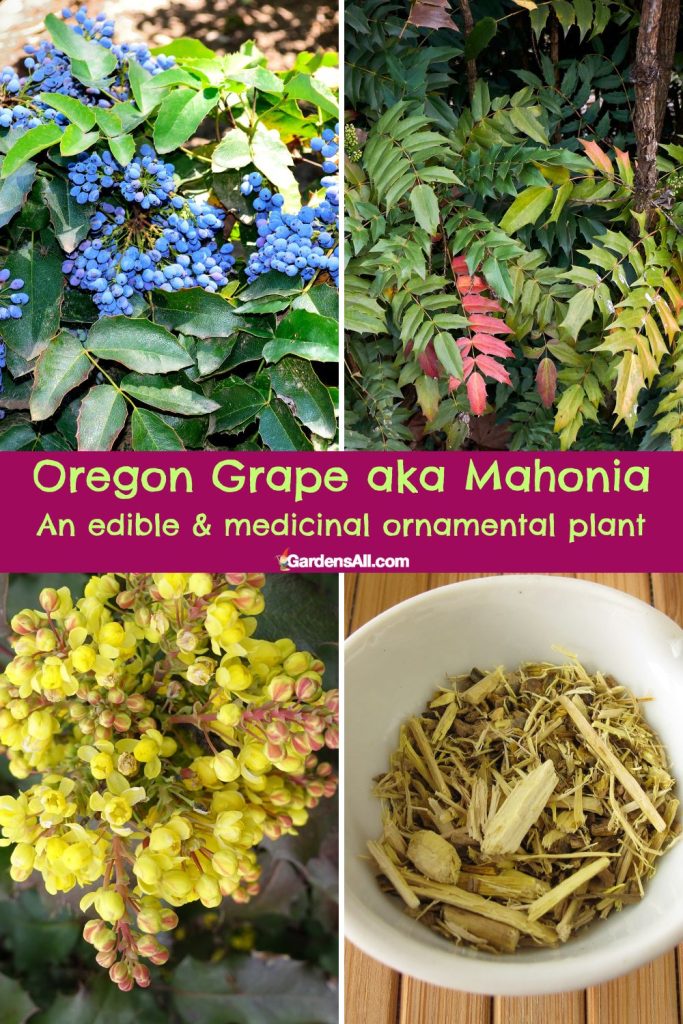
Ornamentally, the Oregon grape bush is an attractive evergreen shrub with shiny, pokey, holly-like leaves, but with more of a lighter spring green color rather than the dark green. Easy to grow with no care required, Mahonia is a reliable workhorse of beneficial food and medicine.
Instead of popping vitamin C pills, when the mahonia is in fruit, we pluck a small handful of the Mahonia berries and nibble those instead. Before harvest season is over, (and hopefully before the migrating birds swarm them!), we freeze the excess in order to have them year round. You can also dry them for adding to tea or smoothies, but we prefer them frozen.
Oregon Berries Taste Tart
To some, M. aquifolium berries taste unpleasantly tart. In our family most of us find them pleasant enough. The berries are actually reasonably stout and very firm, looking a lot like a slightly elongated blueberry.
And, as with blueberries, the riper you can grow them (to a deep dark blue-ish purple) the more the tart will be softened with sweetness.
It’s eye-opening to realize that there are hundreds—likely thousands—more fruits, vegetables and weeds to eat than most of us have ever heard of! There are reasons for that, with a primary one being that if it doesn’t travel well or last long, or have mass popularity, it doesn’t get sold in most grocery stores.
So the Mahonia berry is not as sweet as blueberries and while they hold up fairly well to travel and storing, they have as much — or more — seeds as fruit. So these factors make them less desirable as a mass market item for the modern western palate, especially when there are so many other easier option.
But for gardeners and growers, there are definitely Oregon grape benefits as an edible hedge / living fence, and for foodscaping your yard with an edible ornamental.

Berberine in Mahonia
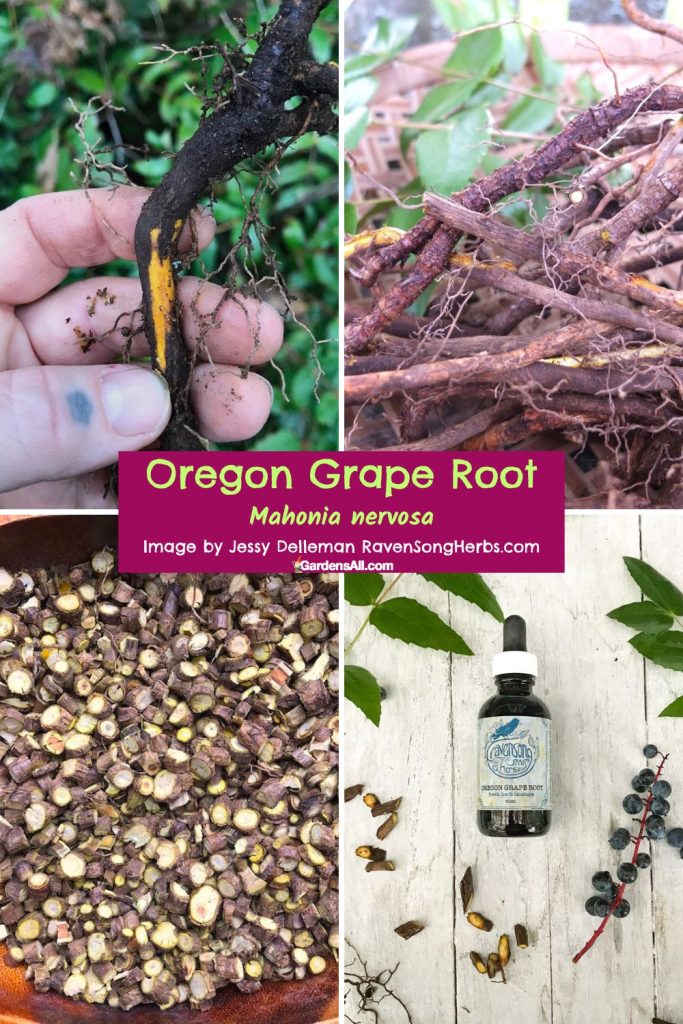
Berberine is generally harvested from the root and bark, and while these percentages are small, medicinal compounds typically are, as the potency is concentrated.
- 3-10% berberine in Mahonia aquifolium root bark
- 1-3% berberine in Mahonia aquifolium stem bark
- 0.23% berberine alkaloid in the seeds of M. aquifolium
- 0.1% or less of the total weight of the M. aquifolium berries
Mahonia fruit and especially the bark and roots (that with the most yellow coloration) contains berberine, which is available in supplements.
The roots and stems of the Oregon grape plant are known to contain the highest concentrations of berberine. According to one study, the root bark of Mahonia aquifolium contains about 3-10% berberine, while the stem bark contains about 1-3% berberine.
The amount of berberine in a particular Mahonia aquifolium product can vary depending on factors such as the quality of the plant material, the extraction method used, and the concentration of the final product.
REFERENCE: Study on the Quantification of Berberine Alkaloids in Oregon Grape (Mahonia aquifolium) Root and Rhizome by C. T. Chandra Sekaran et al. Journal of Agricultural and Food Chemistry, vol. 60, no. 13, pp. 3290-3296, 2012
EDITOR’S NOTE: We found the referenced information but were unable to locate the direct link to this actual study with the percentages of berberine content.
Some Berberine Benefits
- Blood Sugar – Increases insulin sensitivity
- Cholesterol – Reduces in cholesterol/triglyceride
- Diabetes – Treatment for type 2 diabetes
- Reduces fatty acids [1]https://www.ncbi.nlm.nih.gov/pubmed/20298851
- Lowers blood glucose[2]https://www.ncbi.nlm.nih.gov/pubmed/19800084[3]https://www.ncbi.nlm.nih.gov/pmc/articles/PMC2410097/
- Inflammation – Suppresses chronic inflammation
- Metabolic syndrome
- Obesity – Reduces fat storage
- Osteoporosis
- PCOS – Polycystic ovary syndrome
REFERENCE: ThePracticalHerbalist.com[4]https://thepracticalherbalist.com/
DOSAGE: Standard dose of berberine HCL supplements is typically between 900-2,000 mg a day, divided into three to four doses, taken with a meal. However, always follow the recommendations of your health care practitioner or the supplement company’s instructions first and foremost; these are just sample guidelines.[5]https://bengreenfieldfitness.com/article/supplements-articles/dark-side-metformin/
It’s worth noting that while berberine is one of the most well-known and studied compounds in Mahonia aquifolium, the plant contains many other potentially beneficial compounds as well, including alkaloids, flavonoids, and tannins. These compounds may work synergistically with berberine to produce the plant’s therapeutic effects.
Mahonia nervosa Root
Thanks to Jessy Delleman of RavenSongHerbals.com for letting us use her Mahonia nervosa root images. While we have lots of mahonia bushes in our yard, we’re using the berries and leaves for tea but not making any root tinctures this year and didn’t want to dig up a shrub just to take a photo!
Nutritional Content of Mahonia aquifolium Berries
Approximate Nutrients in 1/2 cup (100 grams) of M. aquifolium Berries
- Vitamin C – 90 mg per (which is 100% of the RDA for males and 120% RDA for women)
- Sugars/carbs – 12 grams
- Anthocyanins – 177 mg
Trace Elements in Oregon Grape, M. aquifolium
- calcium
- copper
- iron
- lead
- manganese
- phosphorus
- potassium
- zinc
Amounts of nutrients naturally vary depending on growing conditions, age and time of harvest.[6]https://www.nature-and-garden.com/gardening/mahonia-berry.html
Proven Oregon Grape Medicinal Benefits, (Mahonia aquifolium)
Mahonia aquifolium, also known as Oregon grape, is a plant that is native to western North America. It has been used for centuries by Native Americans for its medicinal properties, and modern research has confirmed many of its health benefits.
Here are some of the proven medicinal benefits of Mahonia aquifolium plant, including root, stems, flowers and fruit:
- Antifungal: Study results suggest that the jatrorrhizine compound in M. aquifolium reveal the capacity to be a highly potent natural antifungal agent with low probability of side effects.[7]https://pubmed.ncbi.nlm.nih.gov/12916091/
- Anti-inflammatory properties: Mahonia aquifolium contains berberine, a compound well known for its anti-inflammatory properties. Studies have shown that berberine can reduce inflammation in the body, which can help to alleviate a variety of health conditions, including arthritis, inflammatory bowel disease, and skin conditions like psoriasis.[8]https://www.ncbi.nlm.nih.gov/pmc/articles/PMC6040276/
- Antimicrobial activity: Mahonia aquifolium has been shown to have antimicrobial activity, which means it can help to fight off bacterial and fungal infections.[9]https://www.unboundmedicine.com/medline/citation/15476315/Antimicrobial_activity_of_Mahonia_aquifolium_crude_extract_and_its_major_isolated_alkaloids_
- Anticarcinogenic: Berberine possesses promising antimutagenic/anticarcinogenic potential.[10]https://pubmed.ncbi.nlm.nih.gov/11943071/
- Candida: One study found that a cream containing Mahonia aquifolium extract was effective in treating skin infections caused by the fungus Candida albicans.[11]https://www.unboundmedicine.com/medline/citation/15476315/Antimicrobial_activity_of_Mahonia_aquifolium_crude_extract_and_its_major_isolated_alkaloids_
- Cardiovascular health: Studies have shown that Mahonia aquifolium can help to lower inflammation and oxidative stress amongst other stressors that can lead to heart disease. [12]https://www.ncbi.nlm.nih.gov/pmc/articles/PMC6040276/
- Digestive health: Mahonia aquifolium has traditionally been used to treat digestive problems like diarrhea and dysentery. It is believed that the plant’s berberine content helps to reduce inflammation in the digestive tract, which can help to alleviate these symptoms. Additionally, the compound Jatrorrhizine in Oregon grape has been found to balance the gut microbiome beneficial for overall health and disease prevention.[13]https://www.ncbi.nlm.nih.gov/pmc/articles/PMC6925119/
- Immune system support: Mahonia aquifolium has been shown to stimulate the immune system, which can help to fight off infections and other illnesses. Research found that Mahonia aquifolium extract increased the production of white blood cells, which are an important part of the immune system. In addition, the study showed that Oregon grape extracts exert fine-tuned control on the immune response.[14]https://www.ncbi.nlm.nih.gov/pmc/articles/PMC6948282/
- Skin health: Mahonia aquifolium is commonly used to treat skin conditions like eczema, psoriasis, and acne. Its anti-inflammatory and antimicrobial properties make it an effective natural treatment for these conditions. Mahonia aquifolium has been shown to reduce inflammation, relieve itching, and promote skin healing.[15]https://www.ncbi.nlm.nih.gov/pmc/articles/PMC6334833/
Ethnobotanical Oregon Grape Uses
The Oregon grape (Mahonia aquifolium), has a long history of use by indigenous people of North America and in Chinese traditional medicine. Ethnobotanical uses include:
- Arthritis: Oregon grape has been used by several indigenous tribes for the treatment of arthritis. The anti-inflammatory properties in Oregon grape roots and stems, that may help to reduce pain and swelling associated with arthritis.
- Dental health: An Oregon grape benefit includes use in the treatment of gum disease and other oral health issues. Mahonia compounds may help to reduce inflammation and fight off oral bacteria, which can help to improve oral health.
- Hemorrhages: Oregon grape has been used by some indigenous tribes as a natural remedy for hemorrhages. The plant contains berberine, which has been shown to have vasoconstrictive effects and may help to reduce bleeding. Mahonia root has been used as a poultice or salve to stop bleeding from wounds.
- Tuberculosis (TB): Some indigenous tribes have used Oregon grape as a treatment for tuberculosis. It is likely the microbial properties of the berberine content, that help fight off the bacteria that cause TB. The root and stems are used internally via tea or tincture, as well as topically as a poultice or salve.
- Women’s health: Oregon grape has been used to treat menstrual cramps and other women’s health issues. The plant contains compounds that may help to regulate hormone levels and reduce inflammation, which may help to alleviate these symptoms.
Berberis species have long been used by indigenous cultures to treat a variety of problems, including tuberculosis, dysentery, eczema, and wounds. In addition to the lists above, berberine has been shown to kill amoebae and can be used to treat giardia infections.[16]https://www.peacehealth.org/medical-topics/id/hn-2141009#hn-2141009-how-it-works[17]https://www.nps.gov/articles/000/oregon-grape.htm
These are just a few examples of the ethnobotanical uses of Oregon grape. You can find more on the mahonia plant here
Oregon Grape Benefits from the Entire Mahonia Plant
We love that the entire Oregon grape (Mahonia aquifolium) plant has medicinal purposes. From top to bottom, the root, stem bark, leaves, berries and flowers all have benefits with traditional and proven uses:
- Berries: The berries of the Oregon grape plant are edible and have a sour, tangy flavor with a hint of sweetness when fully ripe. They’re often used to make jams, jellies, or syrups, and are a good source of vitamin C and other antioxidants. While the berries do not contain significant amounts of berberine, they have other medicinal properties with health benefits.[18]https://www.ncbi.nlm.nih.gov/pmc/articles/PMC6040276/
- Flowers: The flowers of the Oregon grape plant (Mahonia aquifolium), contain compounds that have anti-inflammatory and antioxidant properties. Mahonia flowers were traditionally used to treat arthritis, digestive disorders, respiratory infections, and skin conditions. Treatment forms include teas, tinctures, or capsules for internal use, and poultices or salves for topical use. [19]https://www.ncbi.nlm.nih.gov/pmc/articles/PMC6040276/
- Leaves: The leaves of the Oregon grape plant contain compounds with proven anti-inflammatory, antimicrobial, and antioxidant properties. Mahonia leaves are used to make teas, tinctures, or capsules for internal use. Poultices or salves for used for topical applications. They are commonly used to treat conditions such as arthritis, urinary tract infections, and respiratory infections.
- Root and stem bark: The root and stem bark of the Oregon grape plant contain the highest concentrations of berberine. As indicated, this compound is known to have antimicrobial, anti-inflammatory, and antioxidant properties. Mahonia roots and stems are used to make extracts, tinctures, teas, or capsules for internal use. These infusions are used to make salves, ointments, or creams for topical use. These salves are used to treat skin conditions such as eczema, psoriasis, and acne. Teas, tinctures and capsules are used to improve digestive issues and infections.

How to Make Use Oregon Grape Benefits
There are several ways to make use of the benefits of Oregon grape (Mahonia aquifolium). Here are some examples:
- Herbal tea – How to make Oregon grape tea:
- steep 1-2 teaspoons of dried Oregon grape root or leaves in 8-10 ounces of boiling water for 10-15 minutes.
- Strain the tea and drink it up to three times per day.
- Tincture: Oregon grape tincture can be made by steeping the root or leaves in alcohol for several weeks. The resulting liquid can be taken internally by adding a few drops to water or juice.
- Salve or ointment: How to Make Oregon grape salve or ointment:
- Combine the powdered root or stem bark with a carrier oil, such as olive oil or coconut oil. Add beeswax as a firming agent with its own beneficial properties.
- Alternately, you can make salves using Mahonia aquifolium tincture.
- The mixture can be heated gently and strained, then applied topically to the affected area.
- Capsules: Oregon grape capsules are available in health food stores and online. They typically contain a standardized extract or powder of the root or leaves and can be taken orally.
You may also enjoy learning about honeysuckle benefits and how to make honeysuckle tea.
The plant should not be used by pregnant women or individuals with liver disease, and may interact with certain medications.
Please remember that with any medicinals, it’s important to do your own research and consult with a knowledgeable practitioner.
In conclusion, the (Mahonia aquifolium) is an attractive shrub for an edible landscape. The Oregon grape benefits include a long history of use as a natural remedy, much of which has been proven through scientific studies.

I’m LeAura Alderson, a garden, herb and plant enthusiast with a passion for discovering the many edible and medicinal benefits of the plants all around us, including the weeds, while transforming the land through regenerative permaculture practice. I am also a writer, editor and media publisher (now mostly retired due to replacement by AI), but which now allows more time to build our regenerative permaculture homestead farm.
References