

Passiflora Incarnata, a Useful, Medicinal, Edible Vining Plant
Easy to grow and beautiful, there are many passion flower benefits derived from the nutritious leaves, flowers and fruit of the passion flower plant. More than medicinal, passion flowers, leaves and fruit are all beneficial for health and food which we touch on in this article.
A perennial in the south and an annual in the north, this beauty is a plant worth growing, especially if you enjoy stress-reducing herbal concoction and teas.
Knowledgeable horticulturist, George Stewart of Edible Landscaping Nursery shares helpful information on the passion flower benefits in the video below as well. George has been gardening and tending plants forever, and was formerly a master gardener for the Smithsonian Institute.
This article is — in part — a summary of George’s presentation to a group tour at Edible Landscaping in Virginia, as captured in the video below.
Common Names for Passion Flower, Passiflora incarnata
- Maypop
- Passion Flower
- Purple Passionflower
- Purple Passion flower
- Apricot Vine
- Wild Passion Flower
Are All Passionflower Leaves Edible?
No! AVOID CONSUMING The Passiflora caerulea, it is said to be toxic. Beyond that, there are nearly 600 known species of passionflower plants, so be safe and research the botanical name of any variety you are considering before consuming. [1]https://www.gardenersworld.com/plants/passiflora-caerulea/[2]https://gardenerspath.com/plants/vines/best-passionflower-varieties/#Purple
Vining Passion Flower Maypop Vs. Passion Fruit
The Maypop variety of passion flower — Passiflora incarnata — has a more beautiful flower, but less spectacular fruit. Smaller and more tart, the mature yellow fruit of the passion flower plant is popular for jams.
The Passiflora edulis, AKA lilikoi in Hawaiian, is the passion plant with the most delicious fruit. While the flower isn’t as purple as the Passiflora incarnata, it’s still a lovely blossom to behold.

Passion Fruit Uses
Raw or Cooked Passion Fruit
- High in niacin
- Good for jams and jellies
- Add to smoothies
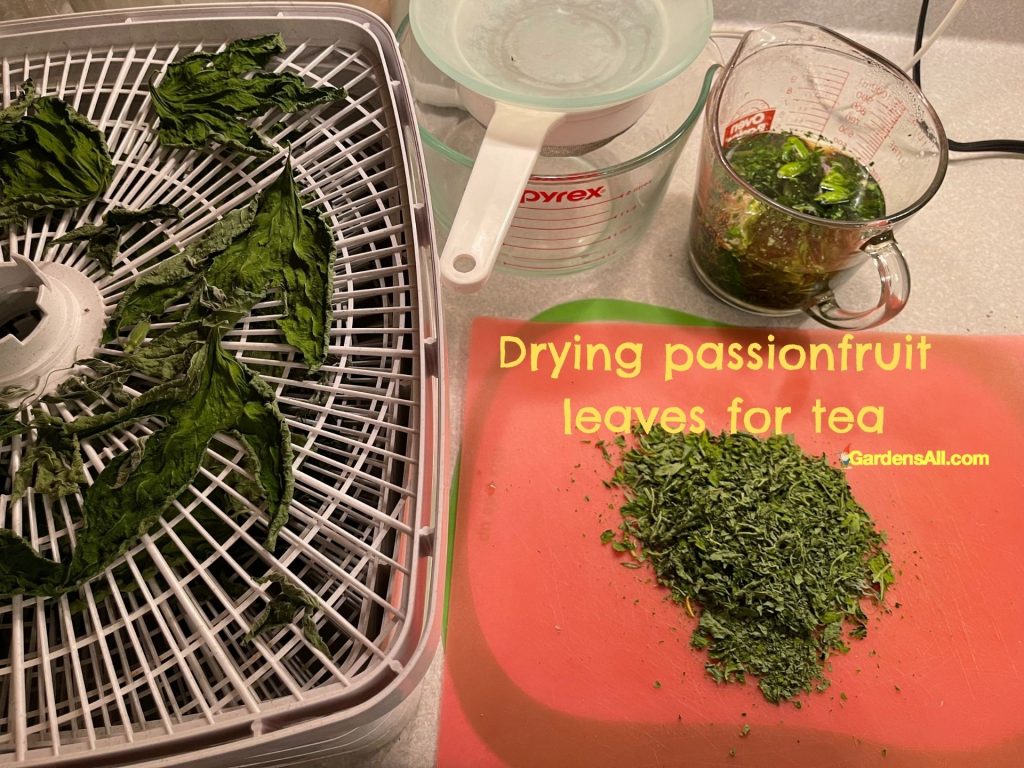
Passion Flower Leaves – Raw or Cooked as you would spinach
- Salads
- Steamed
- Stir fry
- Sautéed
- Added to soups
Passion Flowers – Cooked
- Cook passion flowers as a vegetable
- Make into a syrup
Passion Fruit Medicinal Benefits
- Antidepressant
- Antispasmodic
- Astringent
- Calming
- Diaphoretic
- Female reproductive issues
- Homeopathy
- Hypnotic
- Narcotic
- Sedative
- Vasodilator
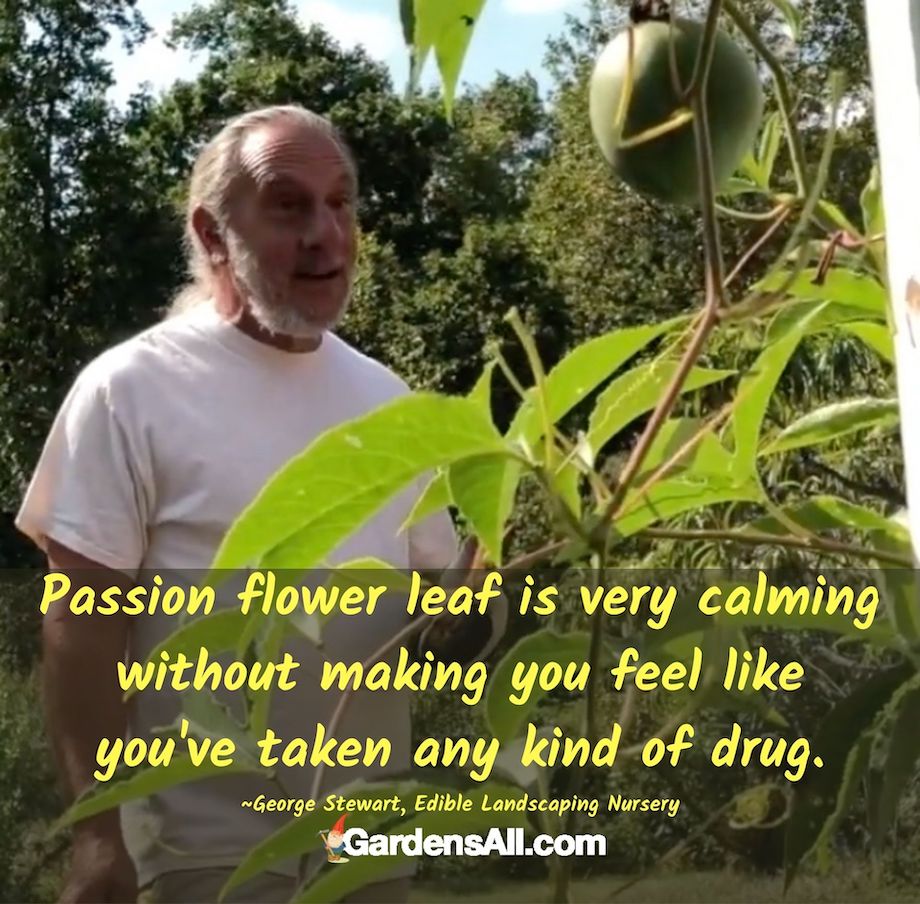
Passion flower leaf is very calming without making you feel like you’ve taken any kind of drug.
~George Stewart, Edible Landscaping Nursery
A dropper full of passion flower tincture is usually equal to a couple hands full of tea, so you’re just concentrating it.
~George Stewart, Edible Landscaping Nursery

A dropper full of passion flower tincture may give you really great lucid dreams.
~George Stewart, Edible Landscaping Nursery
Passion Flower Benefits – Passiflora Incarnata
We really enjoyed our visit at the Edible Landscaping farm and tour by the extraordinarily knowledgeable horticulturist, George Stewart.
Find more here on the best herbs for stress relief.
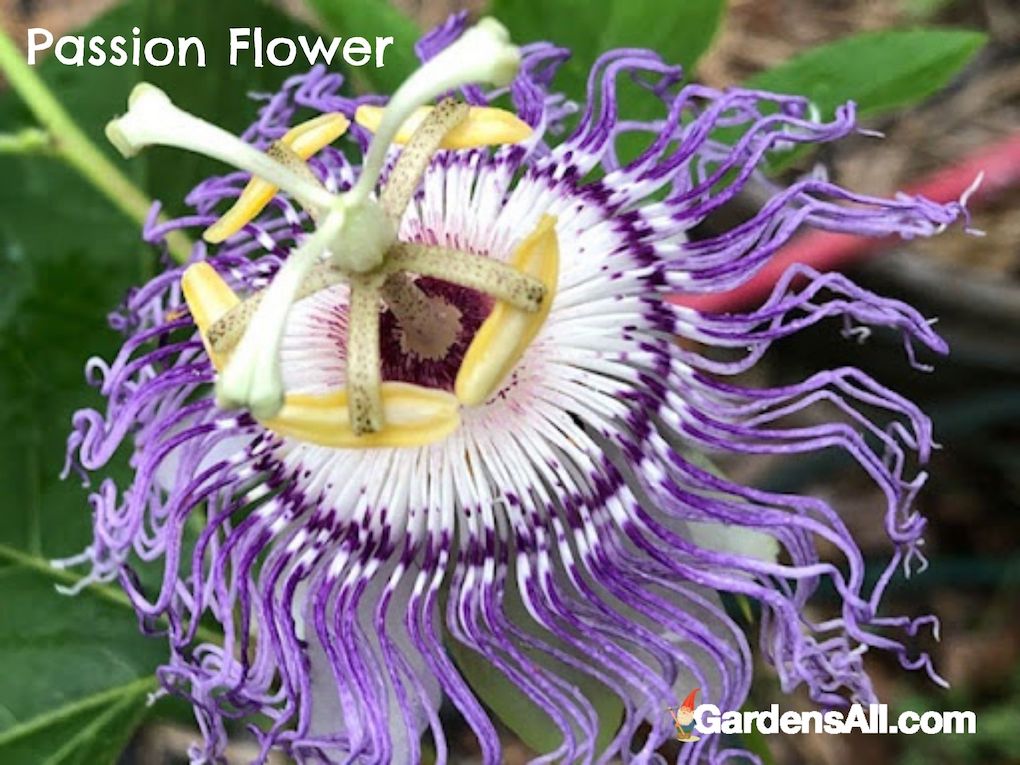
Hummingbirds adore the nectar of passion flowers, and humans enjoy the beauty and medicinal benefits in relief of stress, anxiety and insomnia.
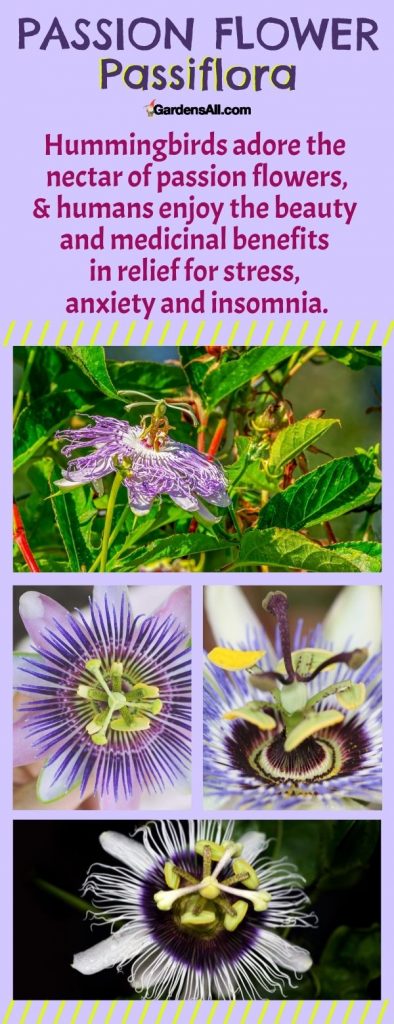
Find more delightful purple flowers here.

I’m LeAura Alderson, a garden, herb and plant enthusiast with a passion for discovering the many edible and medicinal benefits of the plants all around us, including the weeds! I’m a writer, editor and media publisher for our family of websites.
While I was certified in fitness and life coaching, I am NOT a health practitioner. However, I’m a lifelong health enthusiast, with a keen interest in healthy, organic foods and making home remedies and the content we share is from our own experience and usage as well as that extracted from scientific research so that you can explore further on your own.
Always seek the advice and guidance of your health practitioners first and foremost.
As a family we’re steadily expanding our gardening, experimentation and knowledge around all things gardening, edible landscaping, fresh organic foods and self sustainability with farming in our future. I also own and manage iCreateDaily.com, a site all about transformation through creation, and the power of positivity, optimism and mindset.
References