
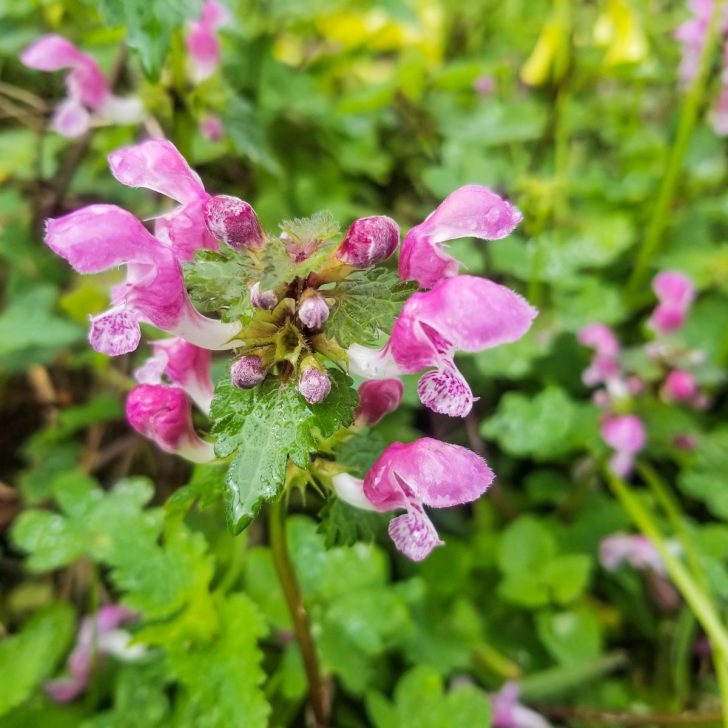
Lamium purpureum, commonly known as purple dead nettle, is a common weed that many might overlook (or even consider a nuisance) when tending to yard and garden. However, as with most of the members of the lamiaceae (mint family), purple dead nettle uses are worth knowing.[1]https://www.ncbi.nlm.nih.gov/pmc/articles/PMC6571824/
This article explores edible purple dead nettle uses as well as traditional and proven medicinal benefits to enjoy.
Traditional Uses of Purple Dead Nettle
Historically, purple dead nettle has been a staple in folk medicine across various cultures. Herbalists have long praised its properties, utilizing it to address a plethora of conditions. Here are some of the traditional uses of purple dead nettle:
- Anti-inflammatory: Traditionally, the plant has been used to soothe inflammation, whether internal or external. When applied as a poultice, it has been reported to alleviate joint pain and skin irritations.
- Antimicrobial & Antioxidant: Studies revealed potent antioxidant and antimicrobial activities.[2]https://www.sciencedirect.com/science/article/abs/pii/S037887410800189X[3]https://pubmed.ncbi.nlm.nih.gov/16713687/
- Hemostatic Properties: It has been employed to stop bleeding. The leaves, when crushed and applied to wounds, can facilitate clotting and reduce blood loss.
- Digestive Aid: Purple dead nettle has been consumed as a tea or in soups to aid digestion and relieve gastrointestinal discomfort, including diarrhea and constipation.
- Respiratory Relief: The plant has been used in the treatment of respiratory conditions. Herbal tea made from purple dead nettle has been utilized to ease symptoms of colds, flu, and allergies.
Purple Dead Nettle Uses Backed by Science
In recent years, scientific research has begun to validate some of the traditional uses of purple dead nettle, while also unveiling new potential benefits:
- Anti-inflammatory & Pain Relief:[4]https://pubmed.ncbi.nlm.nih.gov/18486371/[5]https://dergi.fabad.org.tr/pdf/volum31/issue1/43-52.pdf
- Antioxidant Activity: Studies have confirmed that purple dead nettle possesses antioxidant properties, which can combat oxidative stress and may contribute to reducing the risk of chronic diseases.[6]https://www.sciencedirect.com/science/article/abs/pii/S0367326X06000815[7]https://dergi.fabad.org.tr/pdf/volum31/issue1/43-52.pdf
- Antimicrobial Effects: Research has demonstrated the plant’s ability to inhibit the growth of certain bacteria and fungi, suggesting its potential as a natural antimicrobial agent.
- Nutritional Value: Purple dead nettle is rich in vitamins, minerals, and other bioactive compounds. It contains vitamins A and C, iron, and fiber, making it a nutritious addition to salads or teas.[8]https://theherbalacademy.com/blog/purple-dead-nettle/
- Anti-allergenic Properties: Some studies suggest that purple dead nettle may help alleviate allergy symptoms. Its anti-inflammatory and histamine-blocking effects can provide relief for those suffering from seasonal allergies.
Culinary Uses
Beyond its medicinal and nutritional properties, purple dead nettle can also be a unique and healthful culinary ingredient. Its leaves have a mild, slightly sweet flavor, making them a great addition to salads, pesto, or as a garnish. When cooked, it can be used similarly to spinach, adding both color and nutrients to various dishes.

Purple Dead Nettle Scientific Names and Taxonomy
Here is the taxonomic classification for purple dead nettle (Lamium purpureum):
- Kingdom: Plantae
- Clade: Tracheophytes
- Clade: Angiosperms
- Clade: Eudicots
- Clade: Asterids
- Order: Lamiales
- Family: Lamiaceae
- Genus: Lamium
- Species: Lamium purpureum
- Genus: Lamium
- Family: Lamiaceae
- Order: Lamiales
- Clade: Asterids
- Clade: Eudicots
- Clade: Angiosperms
- Clade: Tracheophytes
Lamium Purpureum Common Names
Below is a bullet list of common names for Lamium purpureum along with their most likely regional usage:
- Purple Dead Nettle (widely used in English-speaking countries)
- Red Dead Nettle (alternative common name in English-speaking regions)
- Purple Archangel (possibly used in the UK)
- Red Henbit (less common, but might be used in various English-speaking locales)
- Dead Nettle (a more general term, but can refer specifically to Lamium purpureum in some contexts)
Common Names for Lamium purpureum Globally
Here are some common names for Lamium purpureum in various languages and the countries where these names are likely used:
- German: Purpurrote Taubnessel (used in Germany, Austria, and parts of Switzerland)
- French: Lamier pourpre (used in France and parts of Belgium and Switzerland)
- Spanish: Ortiga muerta roja (used in Spain and possibly in various Spanish-speaking Latin American countries)
- Italian: Falsa ortica rossa (used in Italy)
- Dutch: Paarse dovenetel (used in the Netherlands and Belgium)
- Swedish: Rödplister (used in Sweden)
- Polish: Jasnota purpurowa (used in Poland)
- Russian: Яснотка пурпурная (Yasnotka purpurnaya) (used in Russia and possibly in other Russian-speaking areas)
- Japanese: ムラサキオドリコソウ (Murasakiodorikosou) (used in Japan)
- Chinese: 紫花地丁 (Zǐhuā dì dīng) (used in China)
These names reflect the plant’s appearance and characteristics as interpreted within different cultures and languages.
Purple Dead Nettle Uses
In the usage of purple dead nettle (Lamium purpureum), typically the aerial parts—leaves, stems, and flowers—are the ones most commonly utilized for their medicinal and nutritional properties. These parts are harvested when the plant is in bloom and can be used fresh or dried for various purposes.
While it is less common, the whole plant, including the roots, can be used in some traditional practices or herbal medicine, though this is not as widespread or documented as the use of the above-ground parts. The roots are generally not as popular or well-studied for their benefits compared to the leaves and flowers.
Lamium purpureum Forms Used
- Fresh: Leaves and flowers are most commonly consumed fresh in culinary applications.
- Dried: Leaves and flowers can be dried for long-term storage, often used to make teas or herbal seasonings.
- Infused: Various parts of the plant can be infused into oils, vinegars, or alcohol to create flavorful or medicinal preparations.
- Topical Applications: Crushed leaves or extracts are applied topically as poultices or infused into lotions and salves for skin care and minor wound treatment.
Purple Dead Nettle Applications
- Nutritional: The plant provides vitamins and minerals when consumed, adding nutritional value to meals.
- Medicinal: Traditionally used to treat various ailments, from inflammation and allergies to digestive issues, and is also a nutritious addition to foods, especially freshly raw, such as in salads.
- Culinary: Adds unique flavors and colors to a variety of dishes.
- Decorative: Flowers and leaves add aesthetic value to dishes and decorations.
In most contemporary herbal practices, nutritional uses, or research, you will find that the focus is predominantly on the leaves, flowers, and sometimes stems, which are known for their various applications:
How to Use Purple Dead Nettle
- Teas and Infusions: Leaves and flowers are steeped in hot water to prepare herbal teas known for their soothing and medicinal properties.
- Salads and Edibles: Young, tender leaves and flowers can be used raw in salads or as garnishes, offering a mild, slightly peppery flavor.
- Topical Applications: Crushed leaves or poultices made from the plant can be applied to the skin to soothe irritations or inflammations.
- Tinctures and Extracts: The active constituents of purple dead nettle can be extracted into alcohols or vinegars, creating concentrated tinctures for various herbal remedies.
You may also enjoy this article on weeds with purple flower for more beneficial plants.
Breakdown of Purple Dead Nettle Uses by Plant Parts
Leaves
- Culinary Uses: The young, tender leaves of purple dead nettle can be eaten raw in salads or added to sandwiches for a mild, slightly peppery flavor. They can also be cooked and used similarly to spinach or other leafy greens in soups, stews, and stir-fries.
- Medicinal Uses: The leaves have been traditionally used to make teas or infusions that are believed to have anti-inflammatory, diuretic, and antiseptic properties. They are also used in poultices for external wounds or skin irritations.
- Tea: Dried leaves are steeped in hot water to make a herbal tea known to support immune system function and alleviate respiratory conditions.
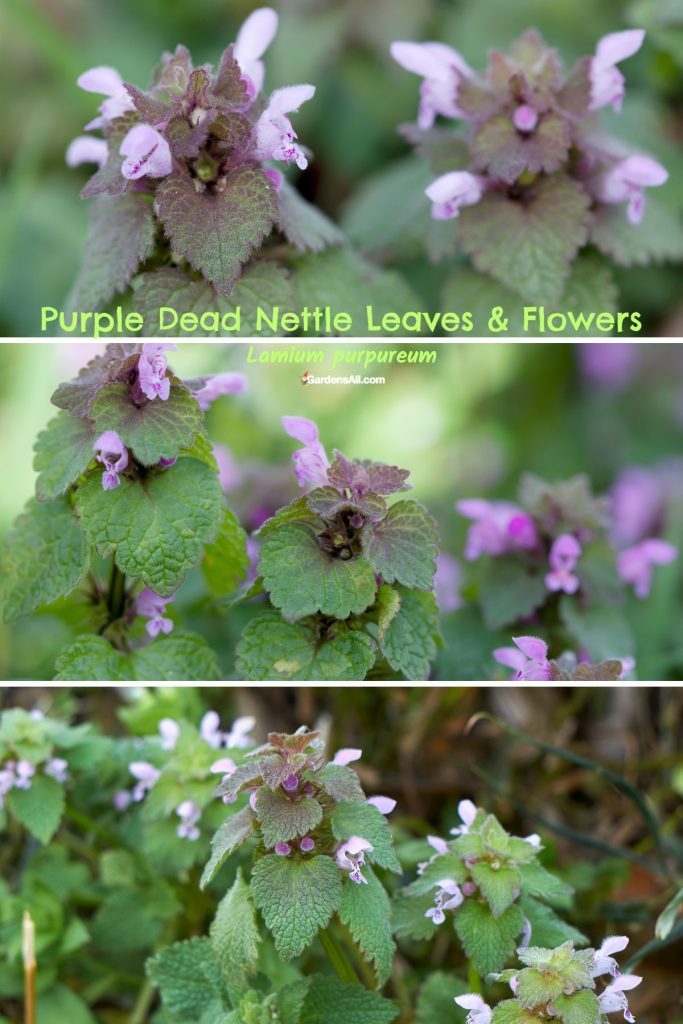
Flowers
- Culinary Uses: The purple flowers can be used as an edible garnish for salads, desserts, and drinks, adding a splash of color and a mild flavor.
- Decorative Uses: If you have extra, you can stick a few into tiny vases for clusters of cut flowers, alone or in wildflower arrangements.
You can find many more edible flowers here.
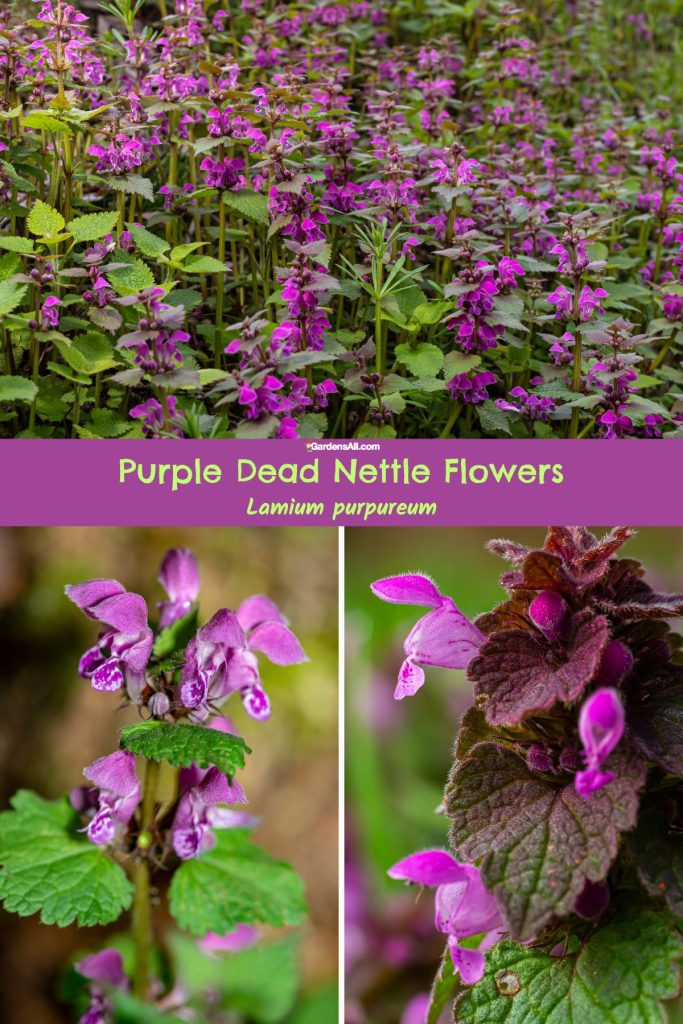
Stems
- Culinary Uses: The stems, like the leaves, can be cooked and consumed, particularly when they are young and tender.
- Medicinal Uses: Although less common than the leaves, stems may also be used in herbal remedies and teas.
Seeds
- Agricultural Uses: While not commonly used for culinary or medicinal purposes, the seeds are vital for propagation and the continued growth of the plant in its natural habitat.
Whole Plant
- Medicinal Uses: Sometimes, the entire plant is harvested and used to create tinctures, salves, or extracts that harness the full range of its purported medicinal properties.
You may also enjoy this article on another wild plant with purple flowers and lots of benefits: wild violets.
As with any herb, remedy or pharmaceutical, it’s best to consult with an appropriate health professional.

I’m LeAura Alderson, a garden, herb and plant enthusiast with a passion for discovering the many edible and medicinal benefits of the plants all around us, including the weeds, while transforming the land through regenerative permaculture practice. I am also a writer, editor and media publisher (now mostly retired due to replacement by AI), but which now allows more time to build our regenerative permaculture homestead farm.
References