
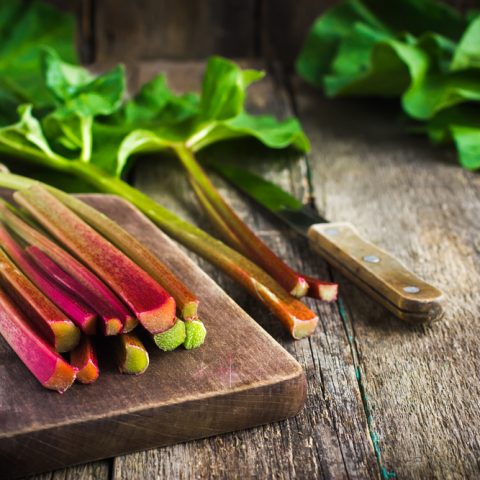
An Early Spring Vegetable With Benefits
Have you tried growing rhubarb. For most people, the word most likely brings to mind rhubarb pie, right? The next most familiar term is probably rhubarb jam.
The problem with traditional rhubarb recipes is that they have so much sugar. Of course, they’re tasty, but since it’s widely known that sugar is one of the leading causes of so many of the diseases of today, we’re always on the lookout for healthier substitutes for these old favorites.
So we’ve included a few recipes healthier recipes first, for those new to rhubarb, here is what it is and how you grow it!
Rhubarb: Fruit or Vegetable, and Which Parts are Edible?
Thought to originate in Siberia, Rhubarb is officially a vegetable, though it tends to be thought of as a fruit because of it’s use in pies and marmalade. Only the stalks, which can be green, red, spotted or in between, are edible.
DO NOT EAT RHUBARB LEAVES as they are considered to have a toxic and poisonous level of oxalic acid.[1]https://en.wikipedia.org/wiki/Rhubarb
Medicinally, rhubarb has been used for centuries as a laxative, but it also makes an effective poultice for relieving fevers and swelling.[2]https://www.webmd.com/vitamins-supplements/ingredientmono-214-rhubarb.aspx?activeingredientid=214&activeingredientname=rhubarb
Harvesting Rhubarb
Harvest rhubarb throughout the growing season, tapering off as the plant production diminishes, anywhere from mid-summer to fall. Rhubarb is a perennial that gains strength over the first two to three years as it establishes itself, so trim the longest stalks for use but leave enough to give the plant energy reserves for winter.
Benefits of Rhubarb
Alzheimer’s foe, infection fighter, antioxidant friend to skin, sinuses and membranes, and fierce cancer opponent.[3]https://pubmed.ncbi.nlm.nih.gov/26196691/ After all that, rhubarb also contains more calcium than a glass of milk, and rivals spinach and salmon in calcium content.
As with many fruits and vegetables, the darker the color, the more the beneficial nutrients, so with rhubarb, the red stems provide more nutrition than the green.
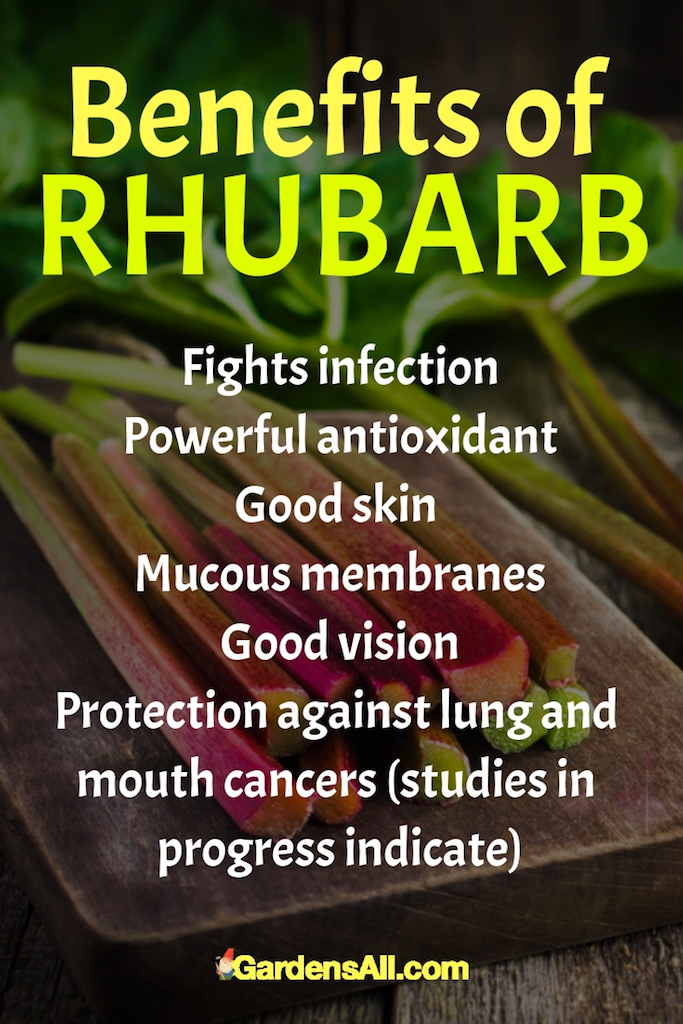
- Fights infection
- Powerful antioxidant
- Good skin
- Mucous membranes
- Good vision
- Protection against lung and mouth cancers (studies in progress indicate)[4]
Every serving of rhubarb provides 45% of the daily value in vitamin K, which supports healthy bone growth and can limit neuronal damage in the brain, even to the point of Alzheimer’s prevention.[4]https://foodfacts.mercola.com/rhubarb.html
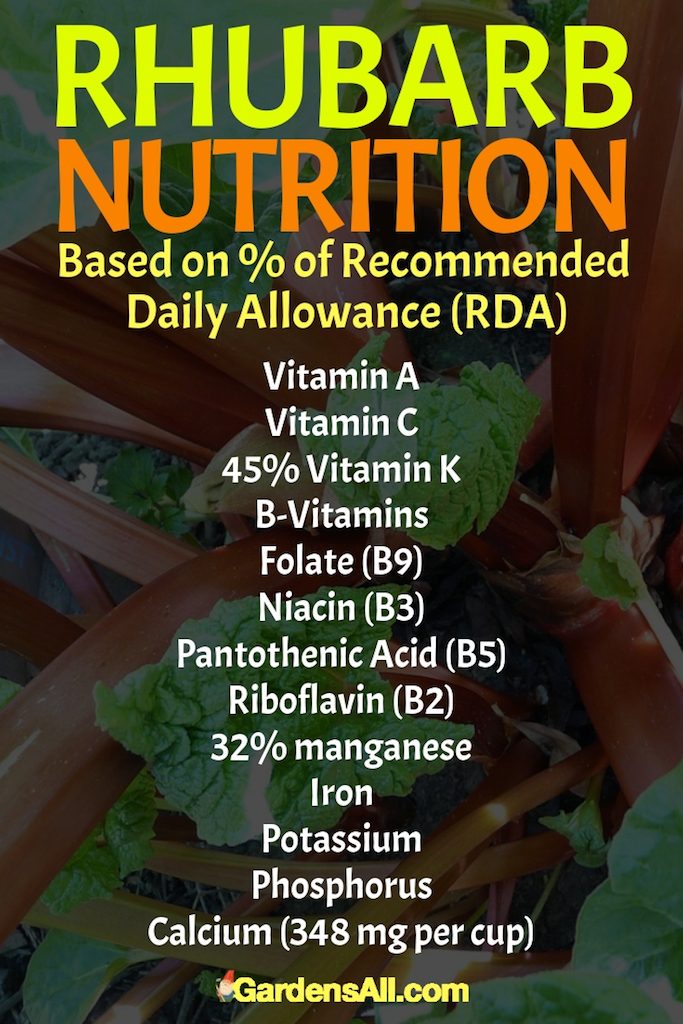
Rhubarb Nutrition
Based on % of Recommended Daily Allowance (RDA)
- Vitamin A
- Vitamin C
- 45% Vitamin K
- B-Vitamins
- 32% manganese
- Iron
- Potassium
- Phosphorus
- Calcium (348 mg per cup, while milk contains 300 mg per [5][5]https://foodfacts.mercola.com/rhubarb.html
Healthy Rhubarb Recipes
Okay… we’re going to get to the rhubarb dessert, but first, rhubarb salad as a dinner side dish!
Rhubarb Salad with Goat Cheese
Recipe from MarthaStewart.com[6]https://www.marthastewart.com/336137/rhubarb-salad-with-goat-cheese?center=276955&gallery=275393&slide=336137s
INGREDIENTS
- 3/4 pound rhubarb, cut into 3/4-inch pieces
- 1/4 cup honey
- 1/2 cup walnut halves
- 3 tablespoons olive oil + drizzle (1 Tbsp. is for drizzling over rhubarb for roasting)
- 2 tablespoons balsamic vinegar (preferably white)
- Coarse salt and ground pepper
- 4 bunches arugula (about 1 pound total), tough ends removed
- 1 fennel bulb, cored and thinly sliced crosswise
- 1/2 cup fresh goat cheese, crumbled (We use feta. Even though it’s also a goat cheese, we prefer the taste and texture over regular goat cheese).
EDITOR’S NOTE: The original recipe said to roast the rhubarb with the honey. However, honey is said to be toxic when cooked at high temperatures, so instead, we toss the rhubarb lightly in olive oil, roast it, then toss it with the honey as soon as we take it from the oven. Alternately, you can use maple syrup or other sweetener of choice.
DIRECTIONS
- Preheat oven to 450 degrees, with racks in upper and lower thirds, (or else convection setting).
- Toss On a rimmed baking sheet, toss rhubarb lightly with olive oil.
- Roast on upper rack (or convection setting) until beginning to soften, (around 5-10 minutes), remove from oven.
- Toss with honey and leave to cool on baking sheet.
- On another rimmed baking sheet, toast walnuts on lower rack (or convection) until fragrant, 5-10 minutes, depending on whether you like them mildly toasted or more.
- Cool, then chop walnuts by hand or in miniature food processor.
- In a large bowl, whisk together oil and vinegar and season with salt and pepper. Add arugula and fennel and toss to combine. Top with rhubarb, walnuts, and goat cheese or feta.
The original recipe is from MarthaStewart.com[7]https://www.marthastewart.com/336137/rhubarb-salad-with-goat-cheese?center=276955&gallery=275393&slide=336137
Next up is a Rhubarb Crisp that’s also low carb and gluten free.
Rhubarb Crisp – Low Carb and Gluten-Free
Recipe by Carolyn at AllDayIDreamAboutFood.com[8]https://alldayidreamaboutfood.com/2014/05/low-carb-sugar-free-rhubarb-crisp.html Yield: Serves 12

Crisp Topping:
INGREDIENTS
- 1¼ cup almond flour
- ½ cup shredded coconut, unsweetened
- ⅓ cup golden flax seed meal
- ⅓ cup pecan or walnut pieces
- ¼ cup Swerve Erythritol Sweetener, Stevia, or other sweetener*
- ½ teaspoon cinnamon
- ¼ tsp salt
- 6 tablespoons butter, melted
- ½ teaspoon vanilla extract
- ¼ teaspoon liquid stevia extract (or 1/2 teaspoon maple syrup)
RHUBARB FILLING
- 2 pounds rhubarb, sliced into ½-inch pieces
- ⅓ cup Swerve Erythritol Sweetener or other erythritol sweetener
- ¼ cup ground chia seeds (you can grind whole chia seeds in a coffee grinder)
- ¼ tsp liquid stevia extract
*Other sweeteners we use: coconut, date, or beet sugar,