
We’ve never met a gardener who didn’t grow tomatoes. But tomato plant diseases can not only leave scars on tomatoes… it can leave scars on the fond memories and efforts of even the most diligent gardeners.
There is nothing like picking your own vine-ripened tomatoes to give you a sense of accomplishment as a gardener. Bursting with flavor and available in hundreds of hybrid and heirloom tomato varieties, this extremely versatile fruit is the most favorite “vegetable” to grow, even on balconies and in pots.
Catch it Early
It’s easy to get disheartened, when spots start appearing on your tomatoes, or the leaves start yellowing. It’s like a sick child… you want to help but feel helpless to know what to do. But don’t worry. There are things you can do to help, and things you can learn to prevent future damage.
There are several diseases and fungal attacks that can cause a set back in the ripening of those beloved tomatoes. It’s best to catch these early, so that you can maximize your harvest and enjoy these vitamin-packed globes right through the season.
First up, we will take a look at three common tomato plant diseases that are easily preventable from day one, simply through careful preparation and planning.
You know the saying… “An ounce of prevention is worth a pound of cure.”
TOMATO PLANT DISEASE PREVENTION
#1 – Phosphorus Deficiency Symptoms
- Veins of leaves turning purple
Tomatoes need a good supply of phosphorous to grow, and while most healthy soils should have plenty, it isn’t bio-available to the plants at low temperatures. Too little phosphorous can kill your plants and leave you without that bumper crop.
How to Avoid Phosphorous Deficiency
Don’t plant your tomatoes too early. What that means exactly, will depend on your climate. The soil needs to be warm when you plant your tomatoes. Cold soil reduces your plant’s absorption of phosphorous. You can also use mulch to warm the soil around your plants.
We also use a laser thermometer to keep a close watch on the temps in our straw bale garden.

#2 – Catfacing
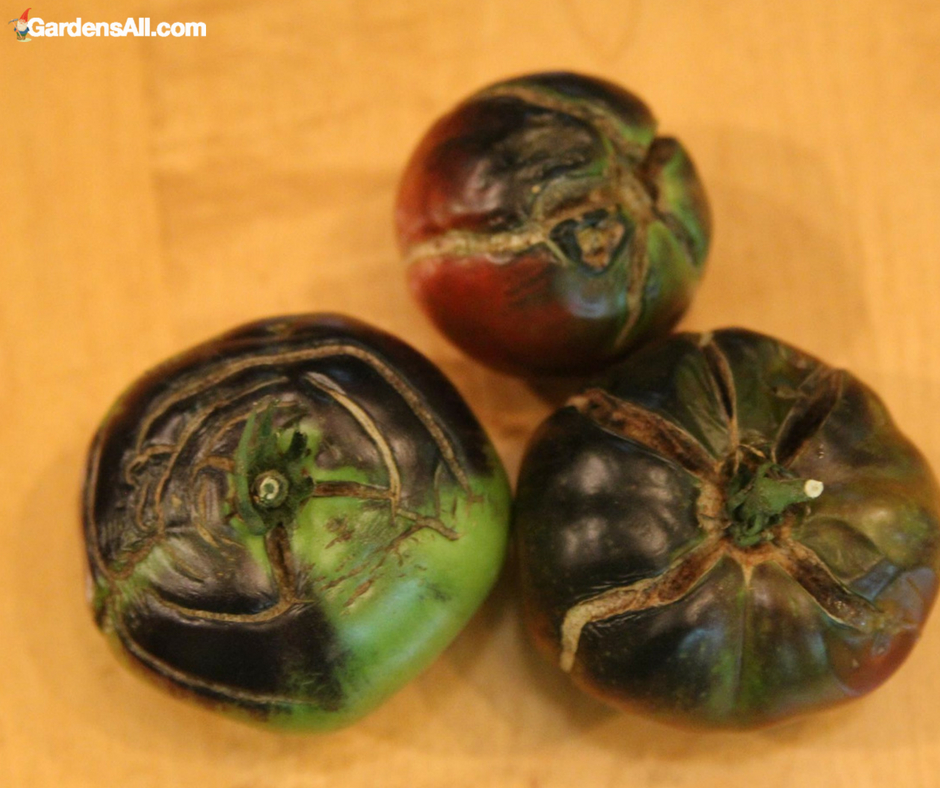
Catfacing, is an odd term that refers to holes and scars at the blossom end of the fruit that basically make for an ugly tomato. In some instances, the puckering and indentations can look a bit like the shape of a cat’s face, thus the term.
Catfacing Symptoms in Tomatoes
- Puckering
- Cracks
- Indentation
What Causes Catfacing on Tomatoes?
- Cold weather
- Too fast growth and rain
- Dry period followed by heavy rain
- Wide ranging temperatures
- High levels of nitrogen
- Herbicides
The various causes of catfacing are thought to include disturbances to the flowers or flower buds during their development. Cold weather during blossoming, too-high nitrogen levels and contact with certain herbicides can all affect tomato blossoms and thus the tomato formation.
Larger tomato varieties are more susceptible to ‘catfacing’ than smaller ones.
~GardensAll.com

How to Avoid Catfacing
Don’t plant your tomatoes too early in the season or expose them to cold weather. If you live in an area with a short planting season, consider germinating seedlings and primary growth in a mini-greenhouse to help keep them warm.
Also, certain varieties of tomato are more prone to catfacing than others, so if you keep seeing this, try different varieties.
Tomatoes Resistant to Catfacing
- Duke
- CountII
- Floradade
- Walter[1]https://vric.ucdavis.edu/veg_info/catface.htm
A similar problem that afflicts even more tomatoes, are growth cracks which we cover next.
#3 – Tomato Cracks and Splits
This is just what it sounds like – cracks on tomatoes that run from the stem end and that can encircle the whole fruit.
Beyond being unsightly, tomato cracks can get invaded by bacteria, fungi or ants once they appear, all of which can ruin the fruit.
Growth cracks are the result of very rapid growth of the fruit, brought on by environmental conditions like abundant rain following a drought.
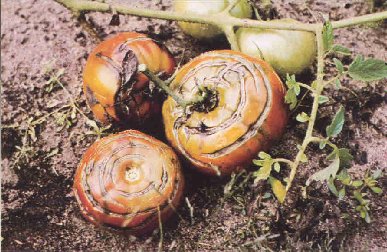
SOURCE: Image from Vegetable Research and Information Center VRIC, University of California Cooperative Extension: [2]https://vric.ucdavis.edu/veg_info/catface.htm
How to Avoid Growth Cracks on Tomatoes
- Even and consistent watering
- Mulch for moisture retention
Some tomato varieties, such as beefsteak, are more prone to growth cracks. Some varieties are less likely to crack because they have more elastic and resilient skin. (Ha!… I could use some of that!)
Crack Resistant Tomato Varieties Include
- Daybreak
- Early Girl
- Earl of Edgecombe
- Heinz 1350
- Jet Star
- Juliet tomatoes (cherry tomatoes)
- Mountain Delight
- Mountain Pride
- Valley Girl
See more here on what causes split tomatoes in this article.
#4: Blossom Drop
With this issue, flowers appear on your tomato plants, but they fall off without tomatoes developing.
This can be caused by excessive temperature fluctuations. Tomatoes need night-time temperatures between 55 and 75 degrees Fahrenheit to keep their blossoms. Too high or too low, and the flowers drop off. It can also be caused by insect damage, lack of water, too much or too little nitrogen, and lack of pollination.
How to Avoid Blossom Drop
While you can’t change the weather, you can try to plant tomatoes in a protected area, such as a greenhouse when temperatures drop. Make sure the plant is strong by using organic fertilizer, drawing pollinators by planting milkweed and cosmos, and using neem oil insecticides.
- Protect tomato seedlings from the cold
- Include pollinator plants such as milkweed and cosmos
- Fertilize with a quality organic fertilizer or compost
- Neem oil insecticides help

#5 – Poor Fruit Set
Symptoms of Poor Tomato Fruit Setting
- Fewer flowers, even less tomatoes
- Tomatoes small and tasteless
- Nice green leaves
Causes of Poor Tomato Fruit Production
- Too much nit