
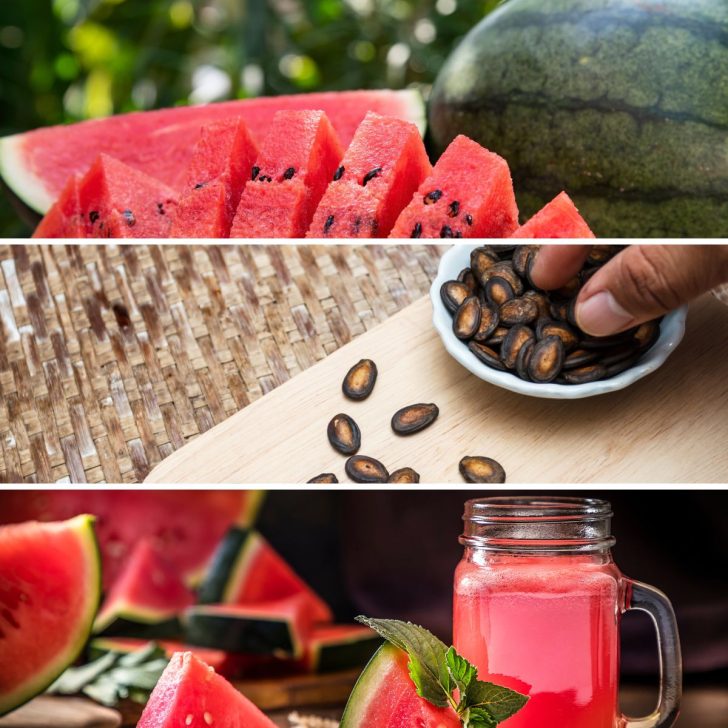
Are Watermelon Seeds Edible?
Yes! Watermelon seeds are edible and no you won’t grow watermelons in your stomach like your grandma may have told you! Not only are they edible, watermelon seeds nutrition facts are impressive and worth getting to know and putting to good use.
It boggles my mind to think of all the wonderful nutrients we tossed out for oh-so-many years!
Do Watermelon Seeds Taste Good?
Watermelon seeds are often overshadowed by the delicious sweet fruit they’re found in, but they’re actually a hidden nutritional gem. While many might remove and toss the seeds or opt for seedless melons, discovering the watermelon seeds nutrition may have us all yearning for a return to fully seeded melons.
When dried, the seeds are not only edible but watermelon seeds nutrients are definitely worth putting to good use. Some cultures even roast them as snacks or grind them into flour for cooking. Let’s delve into the nutrition of watermelon seeds, highlighting their primary nutrients and the benefits these bring.

Watermelon Seeds Nutrition
A concentrated source of energy, watermelon seeds are especially high in healthy fats, protein, magnesium, zinc, phosphorous, copper, manganese, iron and more!
These nutrient-packed melon seeds are not just an energy source, but also a valuable contributor to overall health.
Nutrition Chart for Dried Watermelon Seed Kernels (short version, per 1 cup)
| Nutrient | Amount | % Daily Value |
|---|---|---|
| Protein | 30.6 g | 61.2% |
| Total lipid (fat) | 51.16 g | 78.7% |
| Carbohydrate, by difference | 16.53 g | 5.5% |
| Energy | 601.56 kcal | ~24% (assuming 2500 kcal) |
| Magnesium, Mg | 556.2 mg | 139% |
| Iron, Fe | 7.86 mg | 43.7% |
| B Vitamins (e.g., Niacin, Thiamin) | Various | Various |
Nutrition Chart for Dried Watermelon Seed Kernels (expanded version per 1 cup)
If you want more in depth watermelon seed nutrition information, here’s an expanded chart followed by more details on some of the prominent nutrients.
| Nutrient | Amount | % Daily Value (DV) |
|---|---|---|
| Protein | 30.6 g | 61.2% |
| Total lipid (fat) | 51.16 g | 78.7% |
| – Saturated | 10.56 g | 52.8% |
| – Monounsaturated | 8 g | N/A |
| – Polyunsaturated | 30.34 g | N/A |
| Carbohydrate, by difference | 16.53 g | 5.5% |
| Energy | 601.56 kcal | ~24% (based on 2,500 kcal) |
| Calcium, Ca | 58.32 mg | 5.8% |
| Iron, Fe | 7.86 mg | 43.7% |
| Magnesium, Mg | 556.2 mg | 139% |
| Phosphorus, P | 815.4 mg | 81.5% |
| Potassium, K | 699.84 mg | 14.9% (based on 4,700 mg) |
| Sodium, Na | 106.92 mg | 4.5% |
| Zinc, Zn | 11.06 mg | 100.5% |
| Copper, Cu | 0.74 mg | 82.2% |
| Manganese, Mn | 1.74 mg | 75.7% |
| Thiamin | 0.21 mg | 17.5% |
| Riboflavin | 0.16 mg | 12.3% |
| Niacin | 3.83 mg | 19.2% |
| Pantothenic acid | 0.37 mg | 7.4% |
| Vitamin B-6 | 0.1 mg | 5.9% |
| Folate, total | 62.64 mcg | 15.7% |
Reference: UhHospitals.org[1]https://www.uhhospitals.org/health-information/health-and-wellness-library/article/nutritionfacts-v1/seeds-watermelon-seed-kernels-dried-1-cups

Breakdown of Watermelon Seeds Nutrients
Protein in Watermelon Seeds
Amount: 30.6 grams per 1 cup.
Watermelon seeds are an outstanding source of protein. A single cup provides a substantial 30.6 grams which is 61.2% of the Recommended Daily Value (RDA) for a 2000 calorie diet. Proteins are essential building blocks for muscles, enzymes, and various hormonal and functional molecules in the body. For vegetarians and those on plant-based diets, seeds like these can be a vital protein source.
Fats in Watermelon Seeds
Amount: Total: 51.16 grams per 1 cup (Saturated: 10.56 grams, Monounsaturated: 8 grams, Polyunsaturated: 30.34 grams).
Dried watermelon seeds are rich in fats, especially the healthy unsaturated varieties. Fats are crucial for various bodily functions, including hormone production, organ protection, and as a source of energy. Unsaturated fats, abundant in these seeds, can support heart health and lower bad cholesterol levels.
Why Are Watermelon Seeds so High in Fat & Calories?
Fat is the most calorie-dense macronutrient.
While proteins and carbohydrates both contain 4 calories per gram, fats contain 9 calories per gram, more than double the amount. Given that 1 cup of dried watermelon seeds contains a substantial 51.16 grams of fat, this means just the fat content contributes approximately 460.44 calories (51.16g x 9 kcal/g).
The high fat content of watermelon seeds make them an energy-dense food, and easily consumable in dried form.
Magnesium in Watermelon Seeds
Amount: 556.2 mg per 1 cup.
Magnesium plays a role in over 300 enzymatic reactions in the body, from protein synthesis to muscle and nerve function. With 556.2 mg per cup, watermelon seeds are an excellent magnesium source, potentially aiding in bone health, energy production, and blood pressure regulation.
Iron in Watermelon Seeds
Amount: 7.86 mg per 1 cup.
Iron is vital for oxygen transport in our blood. The impressive iron content in watermelon seeds can help prevent anemia, ensuring our body’s cells receive the oxygen they need to function optimally.
Carbohydrates in Watermelon Seeds
Amount: 16.53 grams per 1 cup.
Though they are not a primary source of carbohydrates, watermelon seeds do provide a decent amount. Carbohydrates are the body’s primary energy source, making them essential in any diet.
Consider making watermelon seed smoothie using both the fruit and the seeds for a well blended nutritional power drink. The fat content in the seeds will slow the absorption of the sugary carbs of the fruit, for a longer slower release of energy and absorptive capacity for both the watermelon fruit and seed nutrients.
B Vitamins in Watermelon Seeds
Amount: Various, including Niacin (3.83 mg), Thiamin (0.21 mg), Riboflavin (0.16 mg), and others per 1 cup.
Watermelon seeds contain a good variety of B vitamins, crucial for energy production and metabolism. These vitamins help convert food into energy and maintain skin, eye, and liver health.
How to Eat Watermelon Seeds
Given their high caloric density, watermelon seeds are often used sparingly in culinary applications, much like other seeds and nuts.
They’re great for adding a crunchy texture to dishes, providing a protein and fat boost to salads, or simply enjoying as a roasted snack. However, due to their high calorie and fat content, it’s beneficial to be mindful of portion sizes.
Energy Packed Seeds
From a biological perspective, seeds are intended to be a source of energy and nutrients for the developing plant before it can make its own food through photosynthesis. This is why many seeds are packed with calories – they need to provide sufficient energy to support the growth of a new plant.
So try growing and/or buying watermelon with seeds for a whole other major benefit to this wonderful melon!

I’m LeAura Alderson, a garden, herb and plant enthusiast with a passion for discovering the many edible and medicinal benefits of the plants all around us, including the weeds, while transforming the land through regenerative permaculture practice. I am also a writer, editor and media publisher (now mostly retired due to replacement by AI), but which now allows more time to build our regenerative permaculture homestead farm.
References