
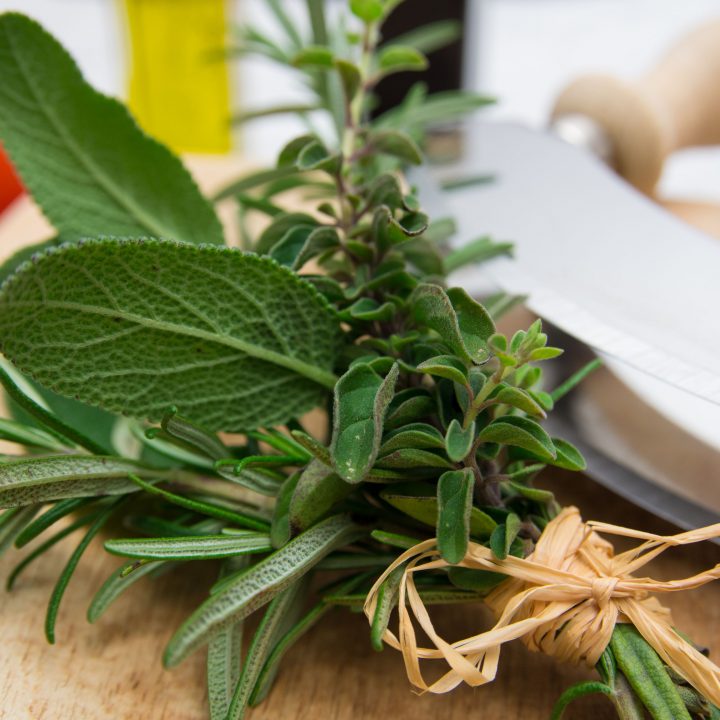
Fresh Herbs Enhance Food and Health
Growing culinary herbs is immensely rewarding and doesn’t require an especially green thumb. Home cooks, gardeners, and world-class chefs all prize a culinary herb garden as essential ingredients for the best food in the world.
Most kitchen herbs are simple to grow and can immediately transform simple foods into gourmet meals. Whether you’re growing them to flavor your food or ornament your garden, once you start growing herbs, you’ll want to keep on growing them year round!
There’s nothing like snipping fresh sprigs of fragrant and nourishing culinary herbs to transform a meal from plain to gourmet.
Growing ‘kitchen gardens’ or ‘edible herb gardens’, is a hot trend among gardeners year after year. Culinary herbs are undemanding yet highly productive plants, and some even thrive on neglect.
Just give them the basics of adequate water and sunlight and they’ll thrive almost anywhere. Last summer, I inadvertently let my rosemary plant go to seed. I later found a little baby rosemary shrub growing nearby, peeking out from under a rock at the edge of the woods behind my house.
The thriving herb volunteered there, and I transplanted it to a pot in the fall. I placed it in my “She Shed” for a little protection here in NC zone 7b, and enjoyed clippings from it all winter long.
Most culinary herbs are resilient plants.
With a little cover from frost, rosemary can grow all winter long in zones 7-9.
Deborah Tayloe’s She-Shed
Notice Deborah’s tiered “Nancy Jane” tiered planters such as we’ve written about here on garden planters.

What are the Benefits of Growing Culinary Herbs?
Culinary herbs are more than aromatic. Most edible herbs have nutritional and medicinal benefits to boot. We’re all so used to thinking of food relative to ‘likes’ and ‘dislikes’, that it’s easy to forget… the actual purpose of food is nutrients that sustain life.
Herbs are little nutrient-dense leaves, rich in vitamins, minerals, and medicine.
During the growing season, you can pick herbs and use them fresh, as needed. Before season’s end, you can dehydrate herbs and store away to preserve the flavor and potency all winter long.
Not only will you be able to cook with these dried herbs, but you will also find that many make excellent herbal teas that will help fight your winter colds, help ease stress, and amp up your immune system.
Fresh herbs can be dried for cooking, teas and nutritional powders for supplements, foods, green juices and smoothies.
Outdoor vs. Indoor Herb Gardens
There are naturally pros and cons to each growing environment. Here we list the benefits and disadvantages of growing herbs indoors and outside.
Outdoor herb gardens
PROS:
- Herbs are hardy and thrive outdoors.
- They require less care when in their natural environment.
- Outdoor herb gardens get you out into the fresh air.
- Plants produce more abundantly when grown outdoors.
- Can serve as ornamental and aromatic landscape plants.
- Natural predators to plant pests live outside and help take care of your plants.
- Include herbs that are naturally insect and deer repellent plants such as:

CONS:
- Some outdoor plants are more vulnerable to destruction critters and creatures, however herbs are less prone.
- A weather emergency (like a flash flood or a hailstorm) can wipe out your herb garden in an instant.
Indoor herb gardens
PROS:
- Access to fresh herbs throughout the entire year.
- No need to take time dehydrating herbs… and fresh is always best when possible.
- Fresh herbs always taste fresher and stronger.
- You don’t need to make room on your overly crowded dried spice rack—just clip as needed.
- Plants can improve the air quality of your home.

CONS:
- Herbs require lots of sunlight.
- If you don’t have adequate sunshine, indoor lighting and grow systems can be costly.
- Look out for aphids, mites, and other pests that set up their winter home on your plants with no predators to keep them under control.
- It’s easy to over-water indoor plants, causing rot.*
*If plants are ailing indoors, it’s usually either too little sun, or a plant parasite. When a plant is struggling, the first inclination is to give it water. However, this may not be what it needs, and could add to the problem by causing rot.
Can You Grow Herbs Indoors?
Yes, you can grow culinary herbs indoors, however, most herbs fair best grown outside.
So, everyone has their own take on whether an indoor herb garden or outdoor herb garden reigns supreme. Judging by these lists, outdoor growing is best overall.
My take? While I’m an enthusiastic gardener, I don’t have a green thumb when it comes to indoor gardening. I experience more victories with outdoor planting.
Because I live in North Carolina in zone 8a, I am in a fairly temperate climate. I can grow herbs in my garden from March through early December.
What’s Your Growing Zone?

Growing and Caring for Herbs
Like most plant, most culinary herbs are eager to grow and thrive without much help from you. Of course, there are exceptions to every rule, so check your seed packet or plant care instructions. Meanwhile, to get you started, here are some general care guidelines.
5 Step Herb Survival Guide
- Sun
- Water
- Feed
- Weed
- Prune
That’s it! Do these basic things and your herbs should thrive, but we’ve expanded on each of these briefly below.
SUN: Plenty
Virtually all herbs require sunny conditions–at least 6 hours per day. If you are planting herbs indoors, give this careful consideration.
For outdoor planting, select a sunny spot for your herb garden.
Remember that most herbs flourish in container gardens, so you can move them easily as the days shorten at the end of the summer.
SUN: Most herbs thrive in full sun.
WATER: Not too Much or too Little
Of course, herbs require water like all plants. However, most cannot tolerate boggy conditions. Water them only when needed, depending on your weather conditions.
When watering, be sure to apply the water around the base of the plants gently. Avoid dousing the leaves and stems as this can cause rust spots, which happens when the sun scorches the leaves through the magnification of water drops.
WATER: Keeps herbs moist but not wet. Water base but not leaves.
FOOD: 2x / Season or as Needed
Before your herbs can nourish you, you must nourish them! Herbs don’t require continual fertilization. A couple of doses of organic liquid—or other—fertilizer, one in the spring and one in midsummer, will help keep your herbs healthy and thriving.
One exception to this is for those who grow herbs year-round. Keep an eye on your culinary herbs and fertilize as needed the rest of the year.
FOOD: Nourish your herbs with organic fertilizer during growing season for optimal growth.
WEEDS? Maybe…
First, when it comes to weeds, pay attention to them. Are they edible? What are they telling about your soil? We have chickweed, dandelion and plantain and we harvest and eat as many as we can (that are outside the parameters of our electronic dog fence).
So if you have edible and/or medicinal weeds growing around your yard and garden, you may choose to enjoy them rather than get rid of them. Take advantage of your built in yard gardener, and count those as bonus plants with benefits.
Non-beneficial weeds can steel life from your garden plants.
If however, you have weeds that aren’t beneficial to you, get rid of them. Pull weeds manually, then use an organic weed inhibitor to prevent regrowth of weeds. Weed preventers will prohibit the return of weeds but leave your herbs unharmed.
WEEDS: Non-beneficial weeds are native competitors for essential nutrients and moisture which can weaken your plants. Weak plants are less able to resist pest invasions, molds, or disease.
PRUNING: Regularly
For your herbs to remain productive all season long, they must be harvested or pruned regularly.
If you aren’t utilizing the plants for culinary herbs because you’re growing them as ornamental flowers, be sure to give them a thorough pruning as soon as the blooms are spent.
PRUNE: Harvest the largest oldest growth first for culinary uses. Trim away dead stems and leaves to encourage new growth while keeping your plant healthy, happy and fresh.