Skip to Content
This post may contain affiliate links. Read our Affiliate Disclosure here.

Bee Balm Uses and Benefits – It’s for More Than the Bees!

Bee Balm Uses and Benefits – It’s for More Than the Bees!

Meet the Monardas… the crowning glory of the mint plant family (Lamiaceae)! The bee balm uses and benefits are many, both for you and your garden. When it comes to beebalm, there are numerous colors available for adding visual delight as well as edible and medicinal benefit.

Bee balm (Monarda species) is an herbaceous perennial native to North America. It grows wild in drifts along roadsides, in meadows, and along woodland edges. Last count, there were twenty-one different species and all Monarda are endemic to North America. [1]https://www.wildflower.org/plants/result.php?id_plant=mofi

Bee Balm Plant Information

Bee Balm Scientific Name

  • Scientific name: Monarda
  • Family: Lamiaceae (mint family)

Bee Balm Common Names

  • Bear Mint
  • Bee balm
  • Beebalm
  • Bergamot
  • Golden Melissa
  • Horsemint
  • Indian Nettle
  • Oswego tea
  • Wild Bergamot

Growing Bee Balm

  • Type: Herbaceous perennial
  • Family: Lamiaceae
  • Native Range: North America
  • Zones: 3 to 9
  • Height: 2.00 to 4.00 feet
  • Spread: 2.00 to 3.00 feet
  • Bloom Time: June to September
  • Bloom Description: Pink/lavender/scarlet/purple
  • Sun: Full sun to partial shade
  • Water: Dry to medium
  • Maintenance: Medium
  • Suggested Use: Herb, naturalize, rain garden, butterfly garden, pollinator garden, perennial border/garden
  • Flower: Showy, mild fragrance, good as edible flowers, cut flowers, good dried flowers
  • Leaf: Fragrant
  • Attracts: Hummingbirds, butterflies, bees
  • Tolerates: Drought, deer, clay soil, rocky soil, dry soil, shallow-rocky soil, black walnut [2]https://www.almanac.com/plant/bee-balm

Reference: OutsidePride.com[3]https://www.outsidepride.com/resources/ebooks/butterfly-gardening.html
Native of North America

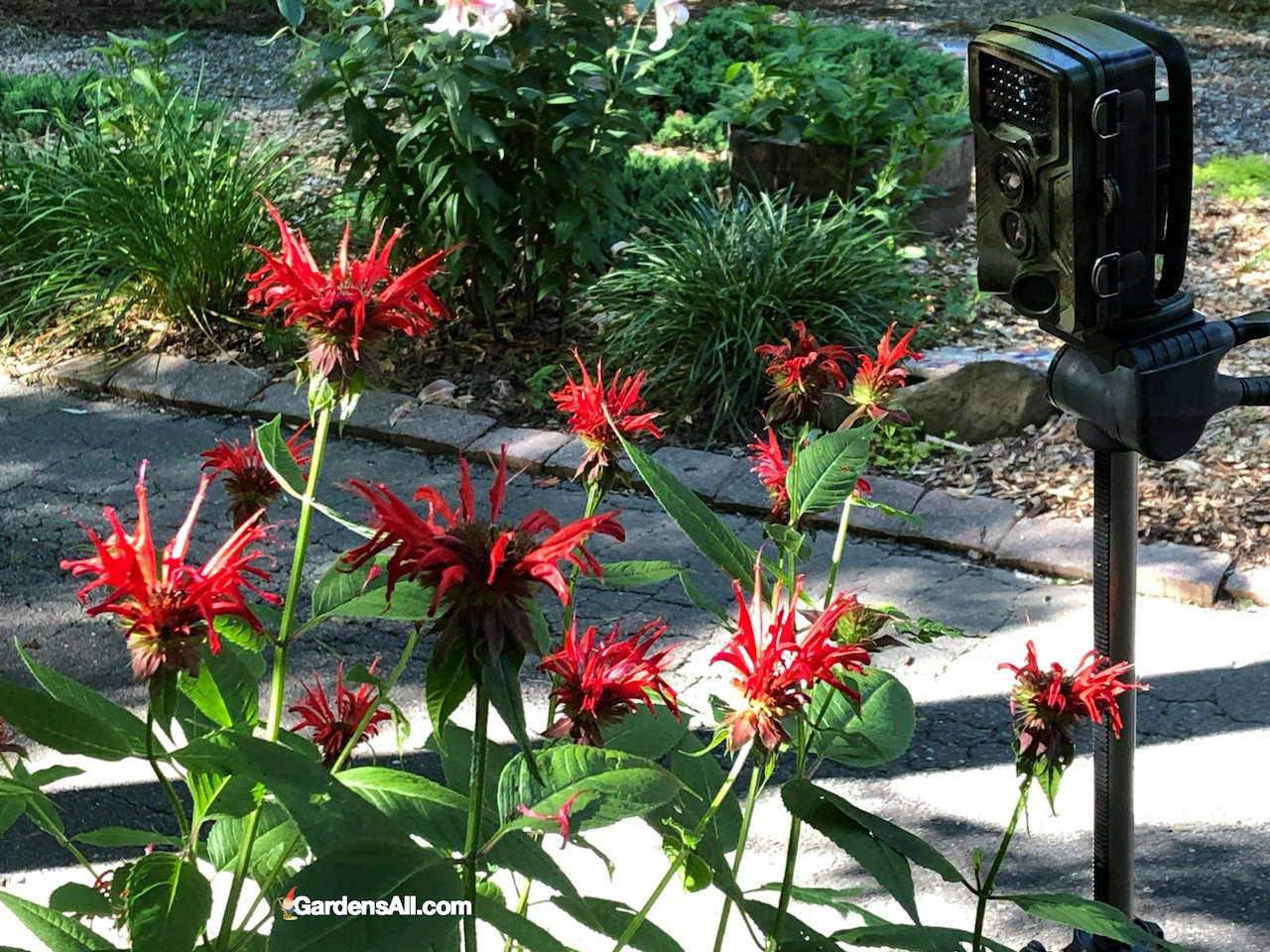
A true American, Bee balm is an herbaceous perennial native to North America growing wild in drifts along roadsides, in meadows, and along woodland edges. Last count, there were twenty-one different species of these plants in the Monarda Lamiaceae family.

This lovely plant, loved by bees and butterflies alike, is named after the Spanish botanist Nicolás Monarda, who wrote a book in 1574 describing plants of the New World.[4]https://en.wikipedia.org/wiki/Monarda

Bee Balm History

Common names indicate a long and colorful history. Though called “wild bergamot”, bee balm is NOT an ingredient for Earl Grey tea. Earl Grey tea is flavored with the rind of citrus bergamia, the bergamot orange. [5]https://www.almanac.com/plant/bee-balm

Early pilgrims, such as the east coast Shakers and native American Indians, such as the Oneida Indians used is as an herbal remedies for colds and flu, as well as sore throats and cold sores. The Monarda plants are often used in the same way today.

The Oswego Native Americans from what is now the Oswego County area of upstate New York, would brew a tea out of the leaves of the bee balm plant.  The Oswego Indians used the “wild bergamot” for medicine, sweat lodge ceremonies, and hair pomade. [6]https://plants.usda.gov/core/profile?symbol=MODI

The Oswegos taught New England colonists how to use bee balm for tea, which they dubbed “Oswego Tea”. This American-grown “tea” substituted for English tea after the destruction of tea shipments at the Boston Tea Party. [7]https://blog.gardeningknowhow.com/tbt/history-bee-balm/

The Perennial Bee Balm 

For the landscape gardener, bee balm is one of the best perennial yard and garden plants for Zones 3-9 for its beauty and benefit to the garden ecosystem.[8]https://www.bhg.com/gardening/plant-dictionary/perennial/bee-balm/ It deserves placement in butterfly gardens, perennial borders, rain gardens, pollinator gardens, and wild (native) landscapes.

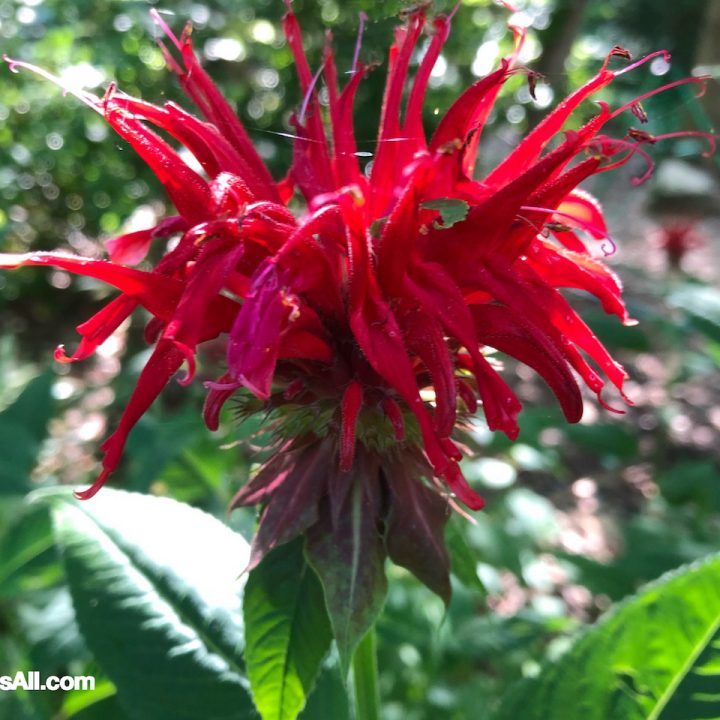
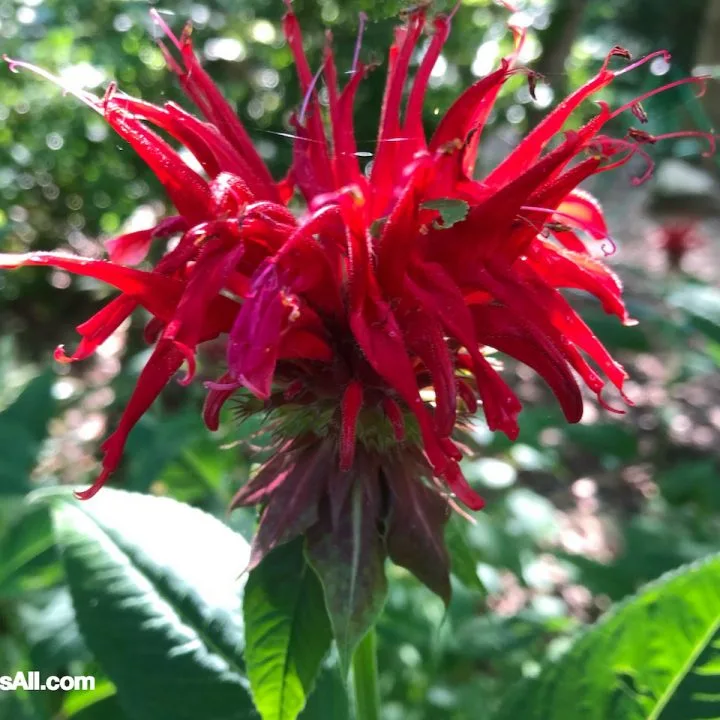
Bee balm flowers are eye candy for the garden.

Monarda Plants Attracts Pollinators

From late spring to late summer, pollinators are attracted to varieties of bee balm bloom in a range of colors–red, pink, lavender, purple and white. We’re growing the scarlet bee balm, Monarda didyma and the purple Monarda fistulosa here in our Zone 7a landscape. They’re growing quite well planted under partial shade in rich, well-drained soil.

When crowned with brilliant flowers, bee balm attracts bees, butterflies, and hummingbirds for weeks into the summer.

The blossoms of bee balm are a pollinator magnet for bees, butterflies and hummingbirds.

Ruby Throated Hummingbird at Bee Balm – Scarlet Monarda didyma

Bee Balm Uses

Bee balm delights the senses in many ways. Some species of bee balm emit a light minty fragrance. The tea, made from petals and leaves, is refreshing and aromatic. The petals have a subtle, layered flavor and make an excellent salad garnish.

Bee Balm Name

Some say it’s called bee balm because the bees love the flowers. Others, because the leaves make a good poultice for bee stings. Likely there’s truth to both. While we haven’t yet tried it for bee stings, it is a powerful anti-inflammatory, and we can definitely attest to how much the butterflies, bees and hummingbirds love bee balm.

Plant Uses

  • Companion plant for tomatoes
  • Attracts pollinators
  • Beekeepers plant it for beehives
  • Flowers and leaves for food and medicine
    • Of the species examined in one study, M. didyma contained the highest concentration of oil.[9]https://en.wikipedia.org/wiki/Monarda[10]https://en.wikipedia.org/wiki/Monarda#cite_note-7[11]https://books.google.com/books?id=qyNfpK1GJ08C&pg=PA218&dq=Monarda#v=onepage&q=Monarda&f=false

Bee Balm Flowers

Bee balm blossoms are edible flowers with many uses.

Community members report preferring the flavor of some colors of blossoms (red) more than others (purple). However they’re all lovely in the garden and all with similar medicinal benefits. From tea to salads, tinctures and bee balm salve, the used are many.

So when it comes to edible uses, try tasting the different blossoms and see which you prefer.

  • Lightly fragrant
  • Mildly sweet
  • Edible – fresh
    • in salads
    • lemonade
    • tea
  • Dried for:
    • tea
    • tinctures
    • balm / salve
  • Medicinal
  • Flower arrangements
    • fresh cut flowers
    • dried flowers
    • potpourri

Bee Balm Leaves

  • Citrus mint scent and taste
  • Edible
  • Crushed leaves exude a spicy essential oil
  • Repels mosquitos and gnats
  • Medicinal tea remedies
    • fever
    • insomnia
    • heart trouble
    • colic
    • measles
    • inducing sweat
    • parasites
  • External poultice or rinse for
    • headaches
    • seborrhea[12]https://www.ncbi.nlm.nih.gov/pubmed/20396753

Monarda fistulosa—bee balm—essential oil, is a more powerful anti-inflammatory than hydrocortisone for skin conditions such as seborrhea. 
~Oct.2009 Study of Monarda fistulosa (the purple bee balm) essential oil for seborrheic [13]https://www.ncbi.nlm.nih.gov/pubmed/20396753

Bee Balm Medicinal Benefits

Traditional medicinal uses abound.  As you might imagine, “bee balm” refers to use as a treatment for bee stings as well as to the attractiveness of the plant to bees. Studies have shown effective treatment of skin conditions such as seborrhea.

Bee Balm Plant – Medicinal Properties

Note: We’ve listed some of these above under leaves and flowers, however, this section is so that you’ll be able to see all of the medicinal benefits of the bee balm plant in one place.

  • Anti-inflammatory – superior to hydrocortisone in combination with vitamin B6
  • Antibacterial
  • Antiseptic
  • Antimycotic which act to inhibit the growth of microorganisms. [14]https://www.ncbi.nlm.nih.gov/pubmed/20396753
  • Carminative – reduce flatulence and bloating
  • Rubefacient – may relieve pain where applied to skin through increased blood flow, such as for arthritis or joint inflammation
  • Thymol content beneficial for
    • upper respiratory 
    • Whooping cough
  • Topically for:
    • skin problems
    • wounds
  • Stimulant 
  • Fever
  • Insomnia
  • Heart trouble
  • Colic
  • Measles
  • Inducing sweat
  • Parasites
  • External poultice or rinse for headaches
  • Seborrhea[15]https://www.ncbi.nlm.nih.gov/pubmed/20396753

Learn also, about growing lemon balm (Melissa officinalis) and the effects of lemon balm, which also has antiviral activity, antibacterial activity and antioxidant activities… all the good “aunties”! 😎

You can find info on how to make your own bee balm oil and tinctures, and growing other mint plants, here.

Until you can make your own, you may want to keep some of this amazing bee balm essential oil on hand.

REFERENCES: NCBI.nlm.gov[16]https://www.ncbi.nlm.nih.gov/pubmed/20396753

Growing Bee Balm

  • Plant in spring or fall
  • Grows best in full sun
  • Allow 18-24 inches spacing in well-drained, rich soil
  • Bee balm needs good air circulation, otherwise it can develop mildew on its leaves and diminish blossoms
  • Water completely just after planting

When Bee Balm Flowers Don’t Blossom

Some issues with bee balm not blooming can include:

  • Not enough sun; 6-8 hours full sun is best for most
  • Too dry – drought can diminish blossoms
  • Too wet – too much rain or humidity can hinder flower development
  • Crowding – older plants may have become crowded causing fewer to no flowers
  • Deadheading old blossoms can help rejuvenate new ones

Bee Balm Pests and Diseases

Insects aren’t a major problem with bee balm. However, powdery mildew can be very destructive. Powdery mildew often occurs on the foliage with high level humidity.

What to do About Powdery Mildew

  • Cut back on watering [17]https://www.almanac.com/plant/bee-balm
  • Plant 18-24 inches apart
  • Plant in sunniest locations
  • Divide bee balm every 2-3 years
  • Water during dry spells
  • Remove fungus-coated leaves and debris in the fall and destroy; (powdery mildew overwinters on debris)
  • Select mildew resistant varieties: (‘Gardenview Scarlet‘ (red), Marshall’s Delight (pink), ‘Violet Queen‘ (blue-violet), “Colrain Red (purple/red), and Raspberry Wine‘ (deep wine red). [18]https://hortnews.extension.iastate.edu/2006/4-5/beebalm.html

See this article for more on how to treat and get rid of powdery mildew.

Comments From the Community

How to Use Dried and Fresh Bee Balm Leaves and Flowers

Includes Contributions by Dusti Lockey, gardener & artist

“I use both fresh flower and leaves in the Spring. Dried in the summer and fall.

HOW TO MAKE BEE BALM TEA FROM FRESH LEAVES AND FLOWERS:

Increase or decrease quantities for a stronger or milder brew.

  • Add 5 leaves and 5 flower petals to a tea diffuser cup or tea diffuser and place in a cup or mug
  • Fill cup with boiling water
  • Steep for 5 minutes
  • Remove diffuser, discard herbs to compost bin
  • Sweeten – optional, consider omitting or add a leaf or two of stevia, or spoon of local honey

EDITOR’S NOTE: We’ve adjusted Dusti’s ratios a little to make it easy to remember, e.g., 5 leaves + 5 petals for 5 minutes, and added a note on sweeteners.

HOW TO MAKE BEE BALM TEA FROM DRIED LEAVES AND FLOWERS:

  • Add 1 Tbsp. dried leaves and flower petals to a tea diffuser and place diffuser in a cup
  • Fill cup with boiling water
  • Steep for 5 minutes
  • Remove diffuser, discard herbs to compost bin
  • Sweeten – optional consider omitting or add a leaf or two of stevia, or spoon of honey

For Stronger or Milder Bee Balm Tea:

Increase or decrease quantities for a stronger or milder brew.

For Larger Quantities of Bee Balm Tea

We like to make pitchers of bee balm tea or water (same for other herbal teas) using a diffuser teapot or diffuser dispensing pitcher. We place all herbs directly into the pitcher and use the strainer side of the lid when pouring to serve.

If using a pitcher, go with a heat resistant pitcher with a strainer lid. We have this two quart pitcher by Pykart.

We use approximate quantities, and it’s easiest to start with a strong brew and add more water if needed.

Sweetener is Optional

Most herbal teas are mild enough and with a hint of sweetness. For healthier brews, consider omitting sweeteners, or choosing healthier fare, such as a leaf or two of stevia (or natural stevia powder), or spoon of local or manuka honey

Dusti says, “I like to add a small spoon of raw local honey – I confess to a sweet tooth!

how to make bee balm tea using fresh flowers and leaves

HOW TO DRY BEE BALM LEAVES AND FLOWERS:

  • Prune healthy branches
  • Dry leaves and flowers until completely dry. To dry you can:
  • Store the leaves and flowers in Mason jars, mixed or separately

I make sun tea with the dried leaves for iced tea and added some flowers for color. It comes out very nice!
~Dusti Lockey, gardener, artist

If you’re loving getting into herbal teas, you may enjoy this book on growing your own tea garden.

Dusti Lockey’s Bee Balm Garden

More Contributions from the Community

Red Bee Balm Flowers Are Often Favored for Teas and Edibles

Planting for Retirement community member, Anne Horner, said, “I put the petals in salad. The red is so vibrant. I also like to graze in my garden and the petals taste sort of sweet, like honeysuckle. They get powdery mildew every year and I spray with neem oil to control it.”

Lavender Flowers for Tea

GardensAll community member, Yvonne Da Torre, said that she’s growings Monarda didyma, Oswego tea, bee balm. “Mine is pale lilac. I collect flowers for tea.”

Wishing you great gardens and happy harvests!

723Shares

FDA Compliance

The information on this website has not been evaluated by the Food & Drug Administration or any other medical body. We do not aim to diagnose, treat, cure or prevent any illness or disease. Information is shared for educational purposes only. You must consult your doctor before acting on any content on this website, especially if you are pregnant, nursing, taking medication, or have a medical condition.

Affiliate Disclosure

GardensAll.com is a participant in the Amazon Services LLC Associates Program, an affiliate advertising program designed to provide a means for sites to earn advertising fees by advertising and linking to Amazon.com. Pages on this site may include affiliate links to Amazon and its affiliate sites on which the owner of this website will make a referral commission.

Want to submit your photos, videos and/or article content for publication? We love to share! growers@gardensall.com