
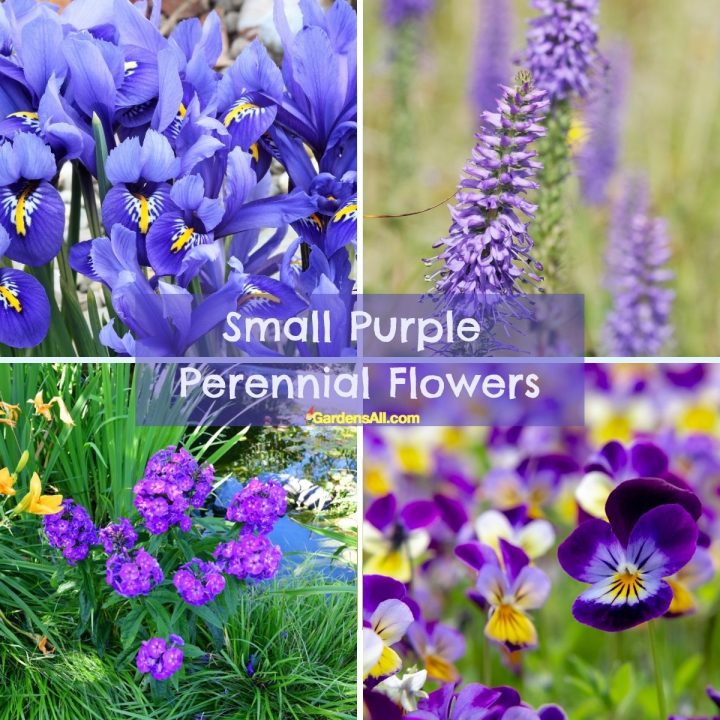
If you’re looking for a small, low-maintenance flower that will add vibrant pops of purple to your flower bed, cottage garden, or landscaping, here are a few ideas to choose from. All of these are tough, beautiful, and, of course, small perennial purple flowers.
10 Favorite Small Purple Perennial Flowers
- Dwarf Purple Iris
- Spike Speedwell
- Hyacinth
- Creeping Phlox
- Periwinkle
- Horned Violet
- Geranium
- Crocus
- Freesia
- Sweet Alyssum
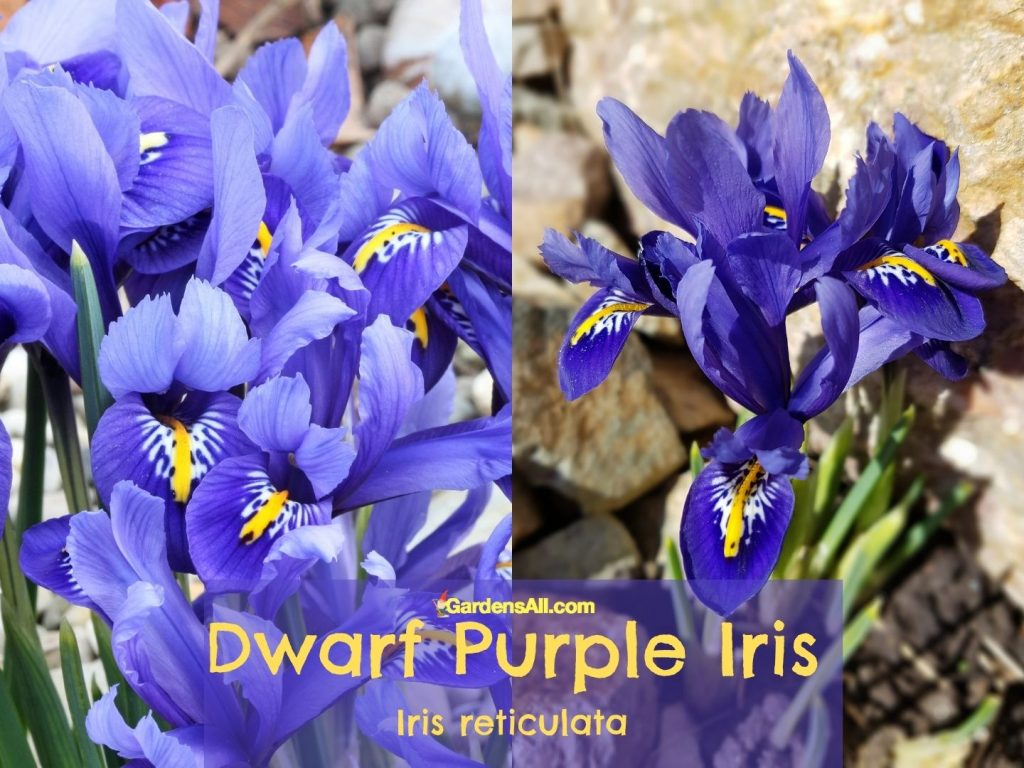
Dwarf Purple Iris, Iris reticulata, Zones 5-8
Blossoms
Iris reticulata is a sweet and dainty little four-inch tall bulb-perennial that blooms in late winter or early spring. Each bud only lasts for four to seven days, but they bloom in succession for a total of three to four weeks.
These tiny beauties do best in USDA hardiness zones five through eight. If you live in a zone outside of this range, your irises will likely be annuals.
Sun and Soil
Dwarf Irises do not need much water, they are drought resistant, and prefer alkaline to neutral soil. Full to partial sun is preferred.
Pests
Deer do not ingest purple iris. In fact it is rare for these short lived flowers to face any issues with pests, fungi, or diseases.
See also, perennial deer resistant flowers.
Traditional Uses
Most people simply use them as decorative flowers, though native Americans used their roots as emetics and laxatives. They can be toxic to people in large quantities, or to pets in smaller quantities.
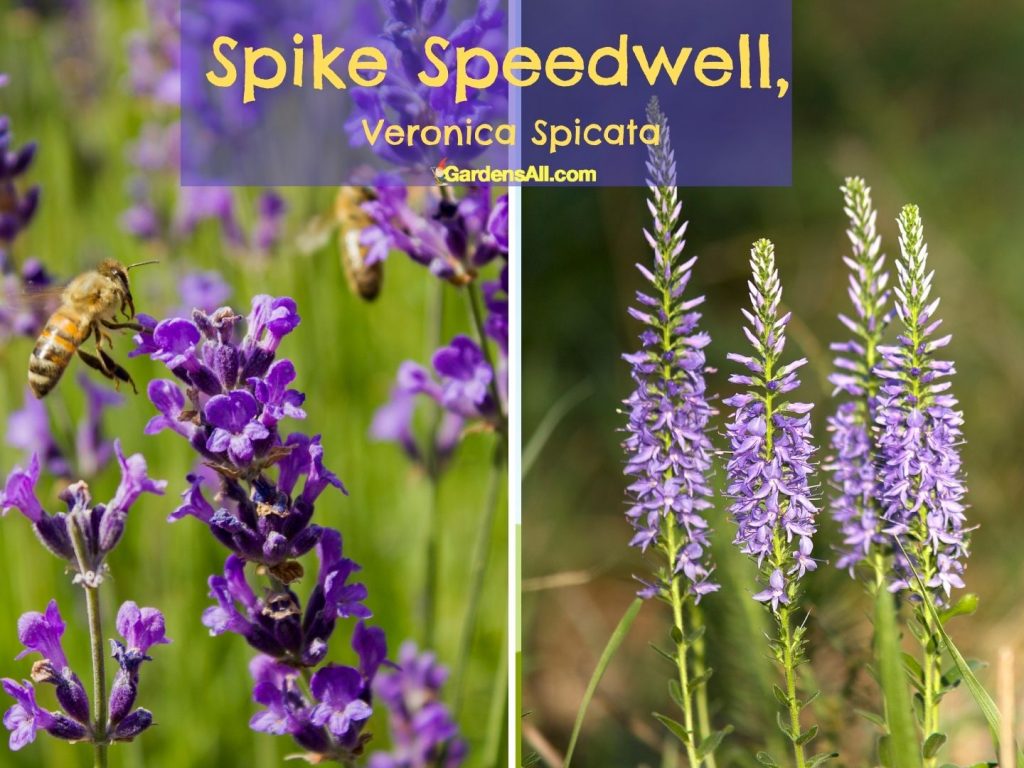
Spike Speedwell, Veronica Spicata, Zones 3-8
Spike Speedwell is commonly referred to as Royal Candles and is scientifically named Veronica Spicata.
Long Lasting Blossoms – Spring to Fall
These violet star-shaped, clustered spike flowers last from late spring well into the early fall, and stand six inches tall at maturity.
Grow them in USDA hardiness zones three to eight as perennials in full sunshine. They like well-drained neutral soil that is regularly watered. However, they can tolerate droughts.
Pests
While deer generally leave Veronica Spicata alone, aphids, slugs, and snails will not. These flowers are not known to be toxic to people or pets.
Pollinators
Spike speedwell are commonly used to attract pollinators such as butterflies, bees, and hummingbirds.
Traditional Uses
These Royal Candle flowers have also been used to naturally treat hemorrhages, ulcers, diseases, and various infections throughout history. They are ingested as tea most of the time. Some believe that it increases metabolism rates while also purifying blood.
Hyacinth, Hyacinthus Orientalis, Zones 4-8
These wonderfully sweet aromatic flowers bloom in the middle of spring. They are perennial bulbs that stand at six to eight inches tall, and produce lovely purple blooms that are made up of dozens of tiny delicate flowers.
Sun and Soil
Hyacinthus orientalis, does well in USDA hardiness zones four through eight, and like moist but well-drained soil in full sunshine or partially shady locations. They also like acidic to neutral soil pH and tolerate most types of nutritional soil qualities.
Pests & Disease
Hyacinth bulbs are toxic for people and pets, so use caution. Rodents love to eat the bulbs as they burrow. You can prevent this from being an issue by planting within containers, or by dropping gravel into the hole with the hyacinth bulb. They are prone to mosaic virus as well.
Traditional Uses
Hyacinth is used to adorn spring gardens and to heal as an herbal remedy.

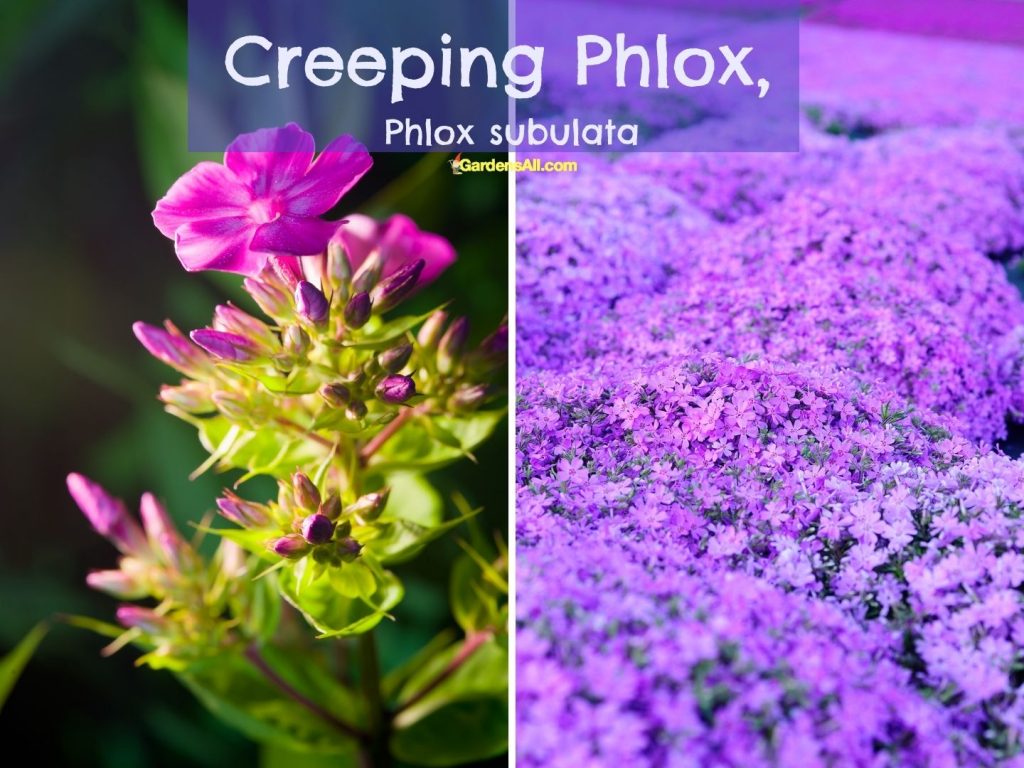
Creeping Phlox, Phlox subulata, Zones 3-9
Phlox subulata is a perennial and semi-evergreen that produce small, starry, five-petaled ground cover flowers. They are also used as cascading decorative plants in landscapes. Creeping phlox only grows to be four to six inches tall, but with a two-foot wide spread of generously abundant blossoms.
Sun and Soil
It is important that you plant it in well-draining soil, or even directly into small rocks, where it will receive full sunshine throughout the day. They do best in USDA zones three through nine.
Creeping phlox spreads quickly, but luckily has attractive blooms, and is an effective soil-erosion prevention.
Pests and Disease
Since these plants don’t give much space between booms, black rot can be an issue. Deer and other pests generally leave it alone.
Traditional Uses
It can be used ornamentally, or herbally as a tea. Many use it to treat intestinal and stomach disorders. Others steep the roots to create an eyewash.
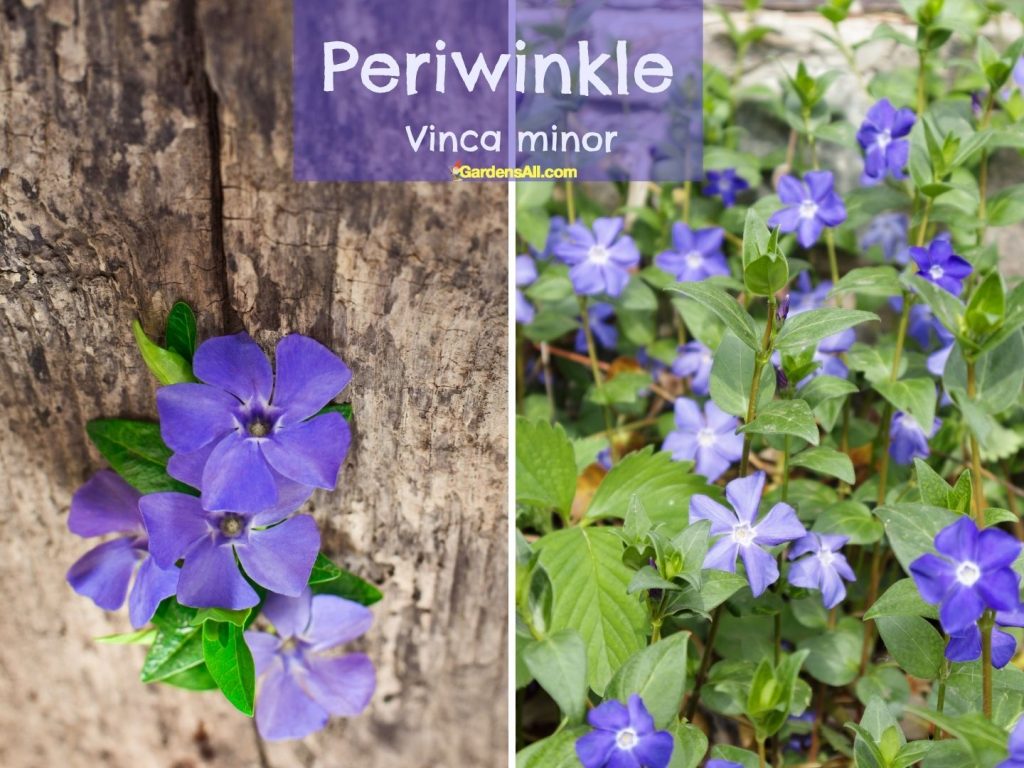
Periwinkle, Vinca Minor, Zones 4-9
Periwinkle, Vinca Minor, is another groundcover evergreen-perennial that is low-maintenance, pest-resistant, and perfectly purple in color. it grows to be three to six inches tall, and makes horizontally growing vines that can stretch to be a foot and a half long.
Sun and Soil
This plant does best in USDA zones four through nine. You can place this adaptable plant wherever you want, as it does great in full sun or full shade, in acidic to alkaline soil, and tolerates nearly any type of soil quality.
Pets & Disease
Vinca minor is toxic to dogs, but not cats. Unfortunately, it is susceptible to fungal leaf spots and canker lesions on the leaves, so experts advise to water the soil while doing your best not to water the foliage.
RELATED: See other plants poisonous to dogs.
However, we have tons of periwinkle in our yard for over 30 years now, and though we’re in a humid area that gets ample rain, we’ve never had issues with fungus or canker lesions on our finca leaves.
But if yours suffer from fungal leaf spots, you might try drip irrigation to minimize water on the leaves.
Pests and Wildlife
Deer, rodents, pests, and other wildlife usually don’t disturb periwinkle plants.
Traditional Uses
Periwinkle is used as a ground cover for gardens and landscapes, as well as a health item. People use it to treat high blood pressure, high water retention, excessive vaginal discharge, diarrhea, high blood pressure, and sore throats.
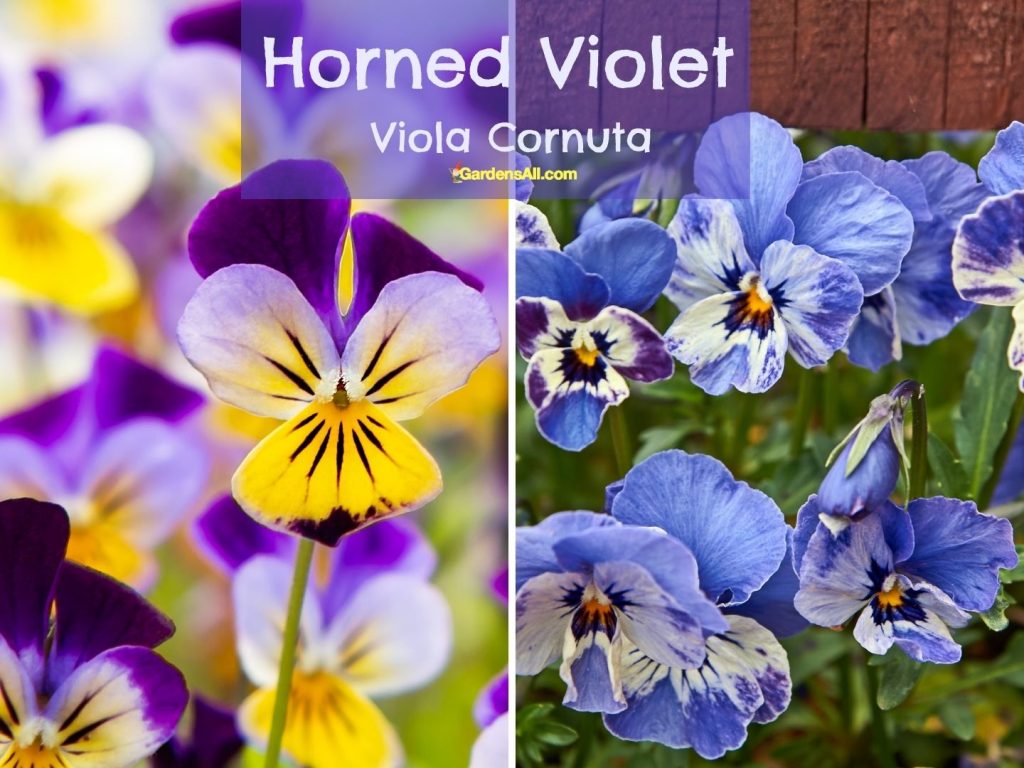
Horned Violet, Viola Cornuta, Zone 3-9 or 5-9
Horned Violet, Horned Pansy, or Viola cornuta, is a deeply rich purple flower with a vibrant yellow center. Some varieties of it have lighter purple tones, while others have splashes of light lavender or even white mixed in with the purple. They grow to be eight inches tall and ten to twelve inches wide.
Long Blooming, Spring to Fall
They bloom all through the summer, sometimes starting in the spring and ending in the fall, depending on the variety.
Sun and Soil
These plants do best in rich, moist, well-drained soils where it is partially shaded. Horned Violets in cold regions can tolerate full sunshine. They grow in zones three to nine or five to nine (depending on the cultivar) as perennials. However, most people and greenhouses treat them as annuals.
Pests and Disease
Violets are deer, rodent, and wildlife resistant; violet gall midges, snails, slugs, and spider mites can target them. Powdery mildew can also become an issue if the environment is too damp with not enough airflow.
People and Pets
Violet roots are toxic to people if ingested. They are not toxic to pets.
Traditional Uses
Some people drink violet tea for better sleep, while others crush the petals to create a salve for inflammation, irritation, or swelling on the skin.
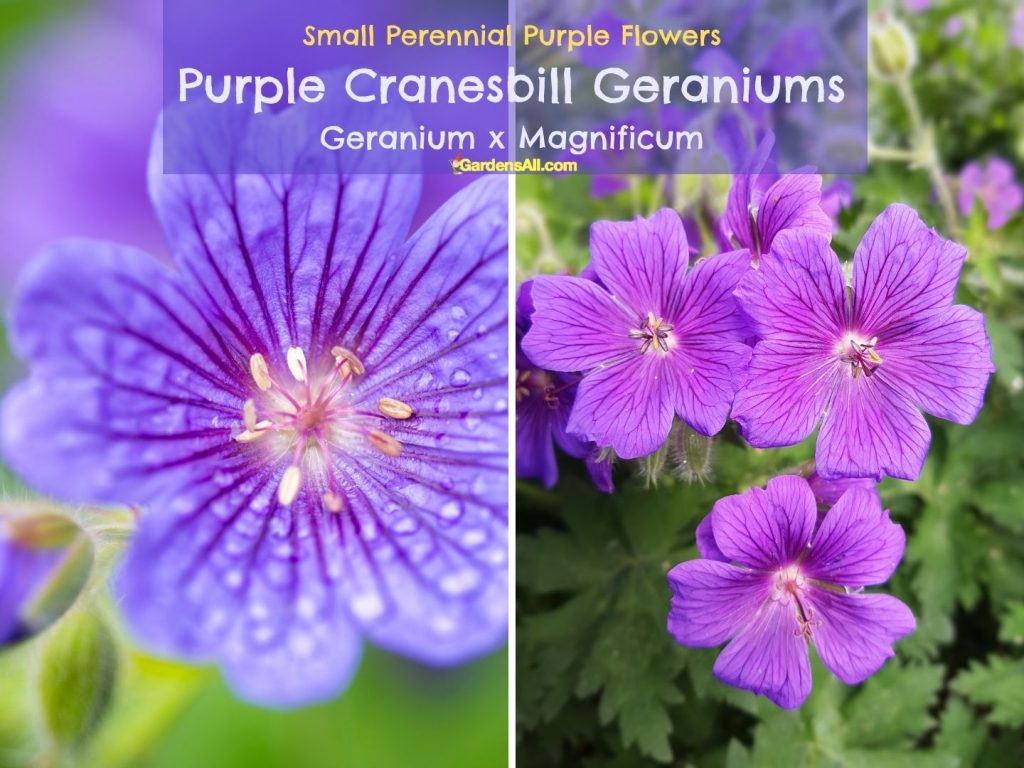
Purple Geranium, Geranium x Magnificum, Zones 5-8
Purple geraniums, commonly known as Purple Cranesbill Geraniums, or scientifically named Geranium x magnificum, is a two-foot tall purple flowering perennial. It is the tallest plant on our list here.
Blooms, Soil and Sun
Blooming from early to mid-summer, purple Geranium prefers USDA hardiness zones five through eight and likes full to partial sun exposure. Soil pH is not important, it tolerates acidic to alkaline soil well but prefers moist but well-draining soil types.
Drought, Pests and Disease
Geraniums are drought-resistant, as well as deer and rabbit resistant too and they attract several kinds of beneficial butterflies and bees.
Disease
The only real issues that geraniums face are pythium root rot, crown rot, flower blight, Geranium disease, and Rhizoctonia rot.
Traditional Uses
It is common practice to use geranium essential oil for many health benefits, including depression, anxiety, infection, and even pain management. This wonder flower offers antioxidants as well as antibacterial and anti-inflammatory properties. It is completely non-toxic to people and pets.
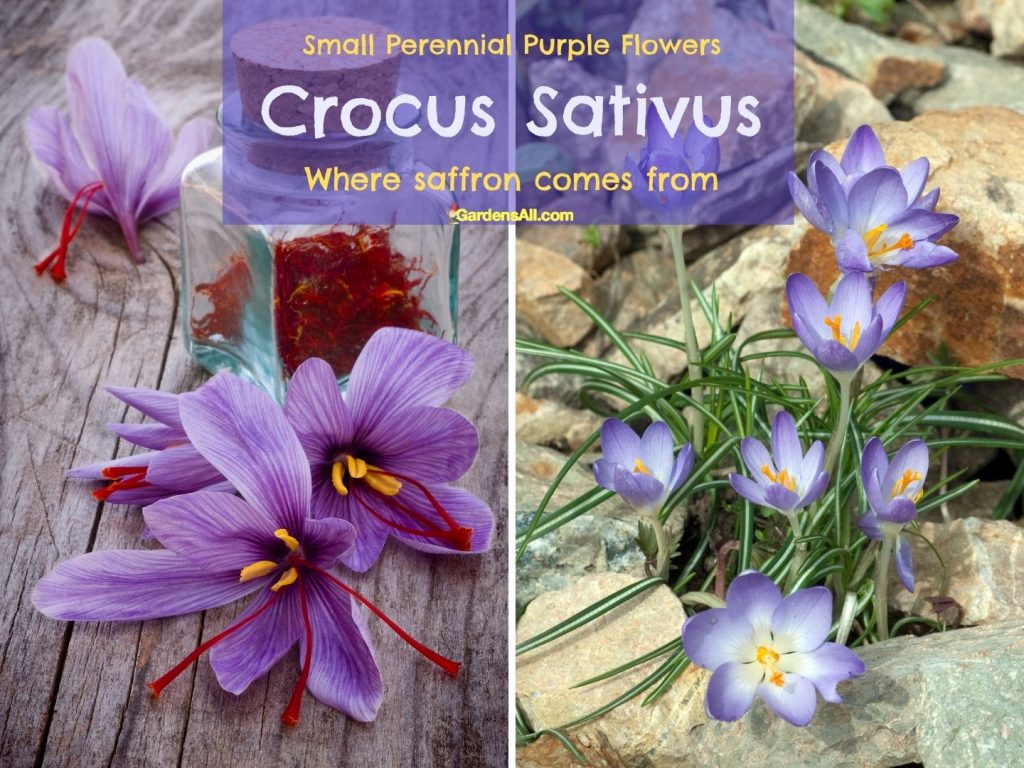
Crocus, Crocus sativus, Zones 3-8
Blooms in Late Winter to Early Spring
Crocus are corm perennials that bloom in the late winter or early spring. They are part of the iris family, and produce tiny blooms that are only three to six inches tall. You can find them in hues of blue, yellow, pink, orange, white, and even red, but purple is the most common color.
Sun and Soil
Crocus grow as perennials in zones three to eight, and like full sun to partial shade conditions. They will take any well-draining soil, but prefer regular waterings, especially when they are in bloom.
Pets, Pests and Disease
Crocus are toxic to pets. While many distributors call crocus deer-resistant, many deer will nibble on the plants to sample their taste. Squirrels, rabbits, chipmunks, and rodents love to eat the corm bulbs. You can interplant crocus plants with daffodils to prevent harm. Some viral diseases occur in crocuses too.
Traditional Uses – Considered Toxic and Poisonous… Except for the Saffron
Even though many medical professionals advise against it, some people use autumn crocus plants to treat Familial Mediterranean fever, gout, and arthritis. Autumn crocus plant seeds contain colchicine, the same ingredient used in many mainstream medications.
This plant is considered poisonous to humans, and eating parts of the plant can cause diarrhea, vomiting, shock, organ failure, and even death.
However, the fine strands of red stigmas are the source for the highly prized saffron spice, and definitely edible.
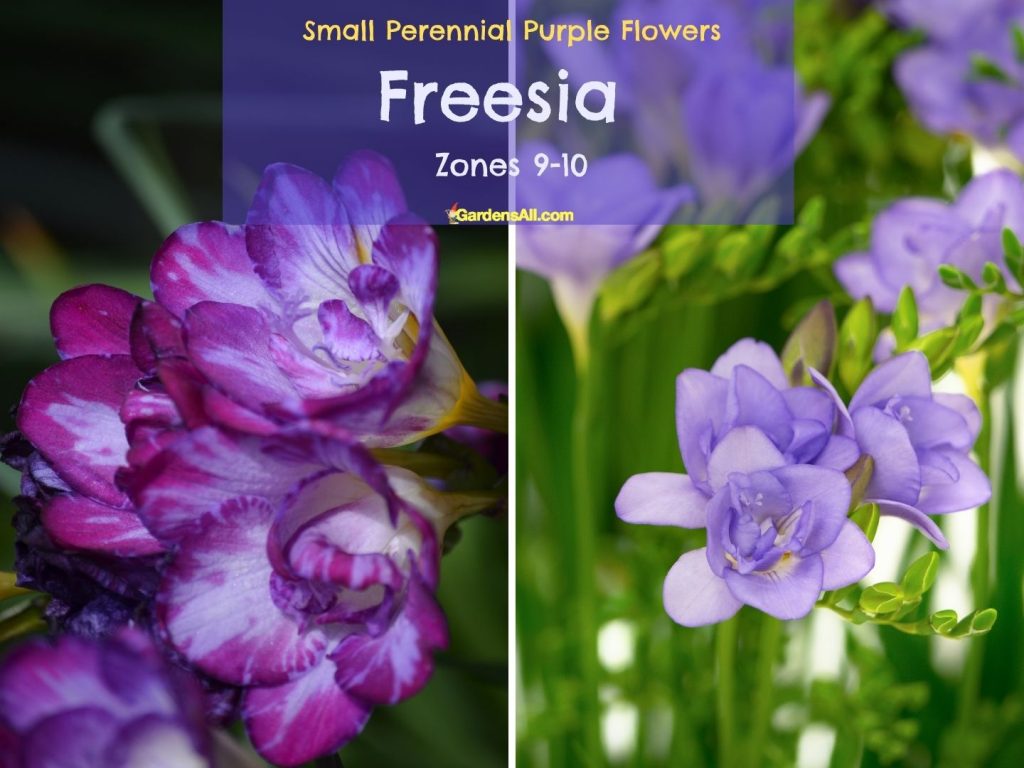
Freesia, Freesia, Zones 9-10
Freesia plants are sweetly aromatic herbaceous perennials that grow to be up to one foot tall. They bloom in the spring and summer, and come in many shades of purple, pink, yellow, white, red, orange, and blue. They have a narrow USDA hardiness zone range of nine to ten.
Sun and Soil
These flowers prefer rich, neutral, well-drained, yet moist soil. They like full sunshine, but can tolerate some shade.
Pests, Pets and People
Freesia is pretty hardy, but can attract snails, slugs, and aphids.
These small purple flowers are non-toxic to people and pets.
Traditional Uses
Freesias are often farmed to produce the wonderful freesia scent. This scent is used in many perfumes, lotions, hair, and skincare products. Some people use freesia for aromatherapy too, citing that it relieves stress.
See also: Medicinal Uses of Lemon Balm, which includes stress relief.
Freesia is also used to top or garnish salads or other dishes. Sometimes they are infused into sugar syrups.
You may also enjoy this article on Edible Flowers.
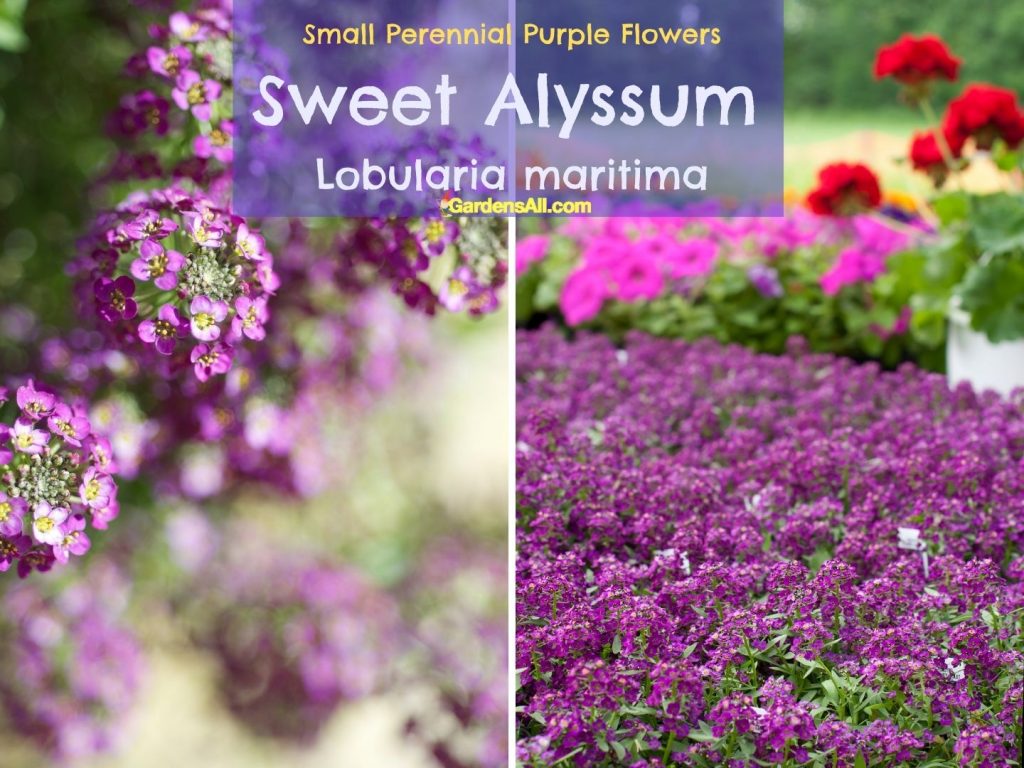
Sweet Alyssum, Lobularia Maritima, Zones 5-9
Long Blooming and Fragrant
Sweet Alyssum, Lobularia maritima, is a spring, summer, and fall blooming plant that produces tiny delicate flowers that range from purple, to pink, to white. It is most commonly three inches tall, but some varieties are ten inches tall. ‘Easter Bonnet’ and ‘Pastel Carpet’ are some of the better purple cultivars.
Sun and Soil
This plant has a sweet aroma, and grows as a perennial in USDA zones five through nine. It likes full to partial sunshine, neutral to acidic soil, and moist but well-drained soil.
Pest and Disease
Sweet Alyssum is resistant to most deer, pests, and fungus; though droughts, excessive watering, and cyclamen mites may pose a threat.
Traditional Uses
This plant is non-toxic to people and pets, and it can be used to top salads with a fun peppery flavor.
Purple Flower Guide
If you’re loving this purple theme, you can find lots more in this purple flowers guide article. You may also be intrigued by these wonderful wildflower weeds with purple flowers.

We are an online gardening publication sharing all things garden related! Including urban farming, family gardening, homesteading, gardening for profits, and more. We’re all about growth!