
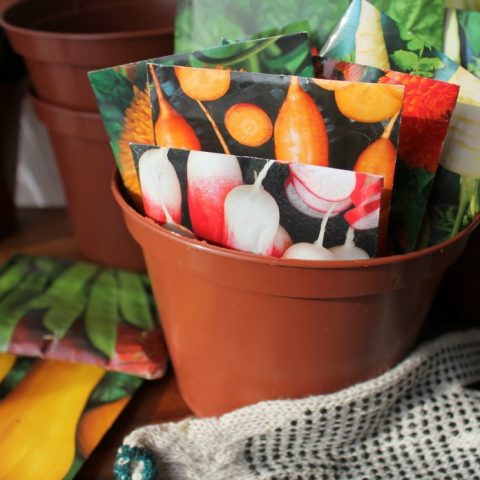
Gardeners are often looking for seed storage ideas for storing those precious garden gems!
Our plants give us so much. They bring joy in the starting, growing and tending of them. The birds, bees and pollinators love and need them, (and vice versa). The fruit and vegetable plants give us food, and then they give us their seeds so that we may grow more… into perpetuity!
Seed saving and storing is an annual ritual for many gardeners. Many gardening families have a tradition of passing down heirloom seeds through the generations, and also gifting some to others. There’s something really special about planting seeds that came from generations before us.
Seed saving is another form of family legacy to pass down with each generation growing good crops from proven winner seeds.
Have you ever received heirloom seeds from a friend or family member who’s into seed saving from the best of their garden? Those seeds packets are often carefully opened and handled reverently. The gardener has taken special care in harvesting seeds from the best produce of the best plants, then storing them to remain dry and protected.
Saving and storing seeds is an art and tradition.
Seeds are like gems in the hands of a gardener.
~LeAura Alderson, GardensAll.com

Seed Saving Tradition
In times past, it was common for every gardener to save seeds. In fact, it wasn’t just tradition, it was survival.
Easier to Buy Seeds?
Over this past few decades, many had found that it’s easier to buy seeds than to save and store them. It does take time to patiently harvest, label, and properly store seeds. So with the ready availability of inexpensive seeds, plus lots of interesting new hybrids to try, more often than not people haven’t been saving seeds.
The result is that a lot of seed preservation knowledge has been lost to many people. However many today are getting back into the tradition of harvesting, storing and saving seeds and the sales of heirloom seeds are steadily climbing. Especially now.
“Heirloom seeds” averaged 27,100 monthly internet searches in September of 2020 and, and also in March of 2022, as we’re updating this article. But in September of 2019 there were just 8,100 monthly searches.
That’s a 235% increase in interest in heirloom seed searches in just one year’s time, and it has stayed strong for the past two years now into March 2022 as this article is being updated. That’s good news because it means that more new people are adding to that search volume as they also coming on board with gardening.
Internet searches for the term “heirloom seeds” increased +235% between 9/2019 and 9/2020, and continuing that new high rate into March, 2022.
~GardensAll.com

Another Reason to Harvest and Save Your Seeds
With the 2020 Covid-19 pandemic, garden seed companies experienced a sudden onslaught of orders. The largest companies were mostly able to carry on. Many smaller seed companies had to close temporarily, and some, altogether. The seed companies that remained open experienced extended delays in order fulfillment, and LOTS of out of stock inventory.
So while it’s takes extra time and space to harvest and store seeds, it’s an important hedge against dire times, and we’ve all heard that warning bell.
Vegetable garden seed storing is preparedness survival insurance.
~GardensAll.com

The Best of the Old, Plus Some New Seeds
You don’t have to be a breeder or own a plant nursery to save your own seeds. Seed savers keep on saving seeds from their best plants year to year, though most gardeners also delight in ordering new seeds to plant something new they’ve not tried before.
Cucamelon, for instance. We tried these “Mexican Gherkins”. Have you heard of it? And if you have, have you tried it yet? We really like them. They’re like a pleasing tangy and juicier cucumber, they look cool in salads and on your plate and they make great healthy travel snacks in their sturdy self-contained, miniature watermelon speckled skin.
Seeds are to gardeners what words are to writers.
They hold within an entire story waiting to unfold.
~LeAura Alderson, GardensAll.com
Survival of the Fittest Seed Saving Tips
Seed saving is the science of common sense. When it comes to seed saving, you want to save seeds only from the strongest plants. But more than that, you don’t even want to leave the smallest producing plants in the garden else they will compromise future generations through cross pollination
Before we get into sharing more seed storage ideas, let’s review seed saving tips.
Golden Rules for Seed Saving Success
- Save seeds from healthy plants, non-hybrid plants.
- Dry seeds before storing them
- Store in a a glass jar in a cool, dry place.
Seed saving is the science of common sense.
~GardensAll.com
Save the best seeds from the best producing plants.

The complete guide, vegetable seed saving
For more, you’ll enjoy this informative tour of lovely gardens and learn the secrets to saving vegetable seeds.
Saving seeds is another important layer of gardening. Of course you can always buy seeds from good seed companies, but it’s wonderful to save your own for a family heritage of heirloom seeds that can be passed down for generations.
Are You Storing Seeds?
Around here, we hardly plant all the seeds that come in the packets, except maybe corn and peas. We’d end up taking those partly-empty seed packets and storing seeds stuffed in a Mason jar, in the fridge where it often remained until next season because we ended up buying six packs of plants at the local garden store, impatient to get growing things in the ground.
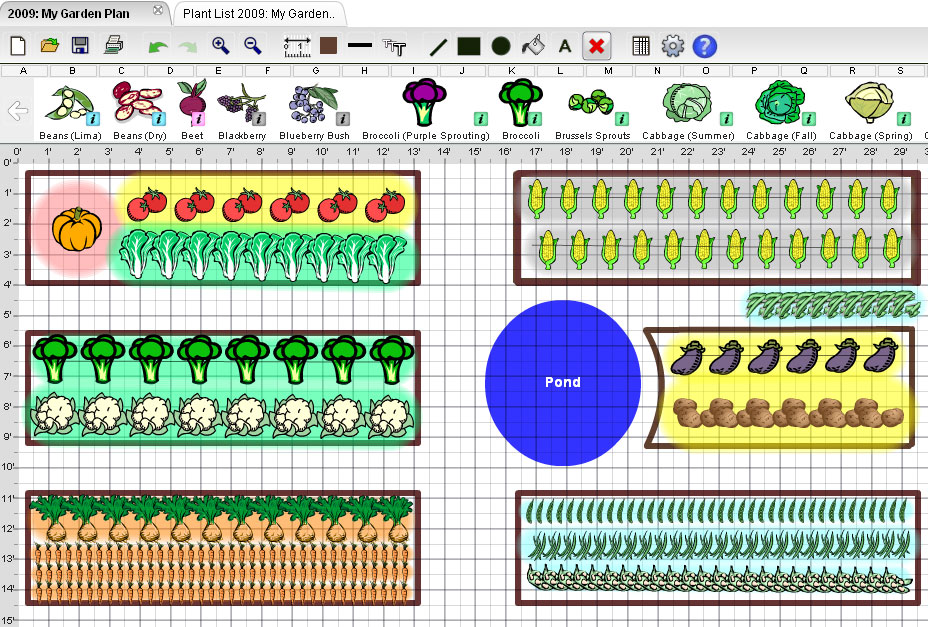
Now, we use the Garden Planner Pro app for garden planning and love it! It helps us better plan and update our garden and to easily change things as needed. You can also quickly create your second and third plantings, while keeping track of what you’ll need, how much space they’ll take and when you need to plant them.
The Garden Planner Pro app even has a list of suppliers included in the app so that you can click directly through to order seeds as needed! Very cool! So after years of creating garden plans by hand, we’re loving nifty this tool!
Now, we grow almost everything from seed! Well… maybe buying a few six packs of marigolds and some extra tomato plants here and there. Chances are you know how that goes! 😉
For a gardener to come back from the garden store without a plant is like a kid coming back from a candy store without candy!
~LeAura Alderson, GardensAll.com
How to Properly Store Seeds at Home
The largest seed packets are typically 3.5″x 5.5″, so a 4 inch by 6 inch jar or seed storage boxes should work fine for all seed packets to fit into.
Seed Storage Ideas Include Many Options
From glass jars to acrylic containers, a plastic shoe box or simple envelopes, find the seed storage ideas that best suit you.
- GLASS CONTAINERS:
- Regular or hinged mason jars
- Spice bottles and rack
- ENVELOPES – Taking cues from seed companies, they use envelopes of various kinds that you can keep and reuse
- ZIPPER BAGS – Plastic zipper locking bags
- PLASTIC CONTAINERS:
- Ammo box
- Photo storage box
- Recipe box
- Shoe box
- ACRYLIC CONTAINERS:
- Bead storage – best to use the containers with separate inner compartments
- Photo storage – these are great because they often come with labels
- METAL BOXES:
- Ammo boxes come in plastic or metal – We have a lot of old metal ammo boxes, some that Coleman inherited from his father, (yep… they last a very long time), so that’s we’re using.
- Decorative tins or old-fashioned tins, (but avoid direct access of seed to potentially toxic metal contaminants).
- Recipe boxes
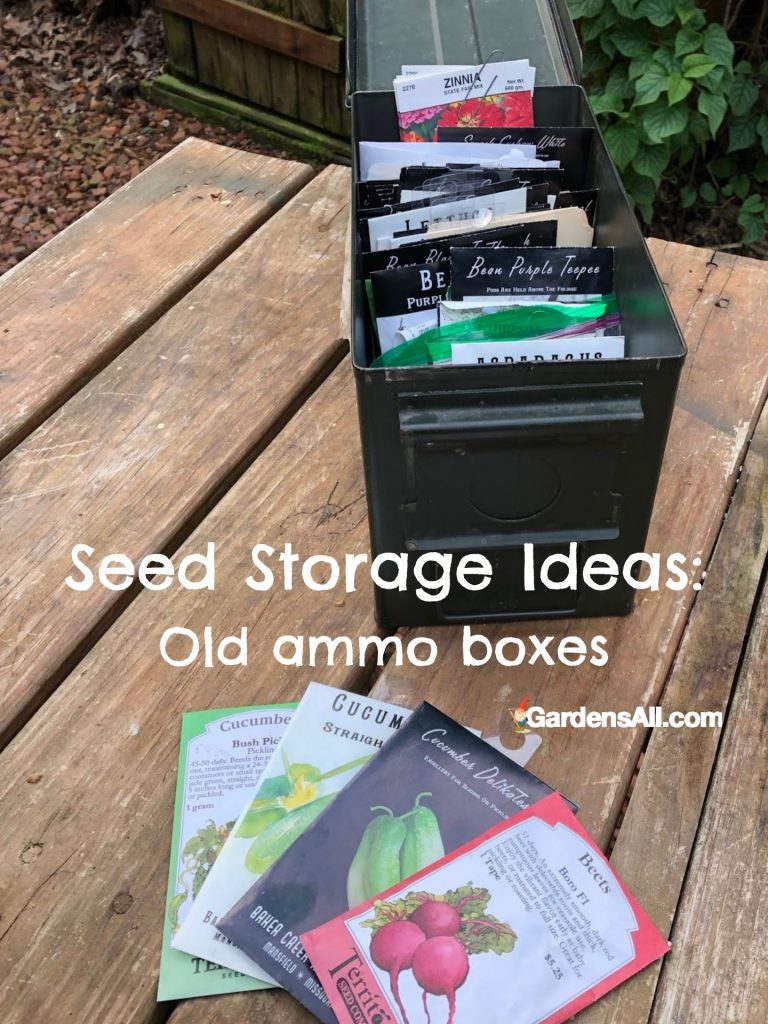
Metal ammo box for seed storage ideas. Image by GardensAll.com 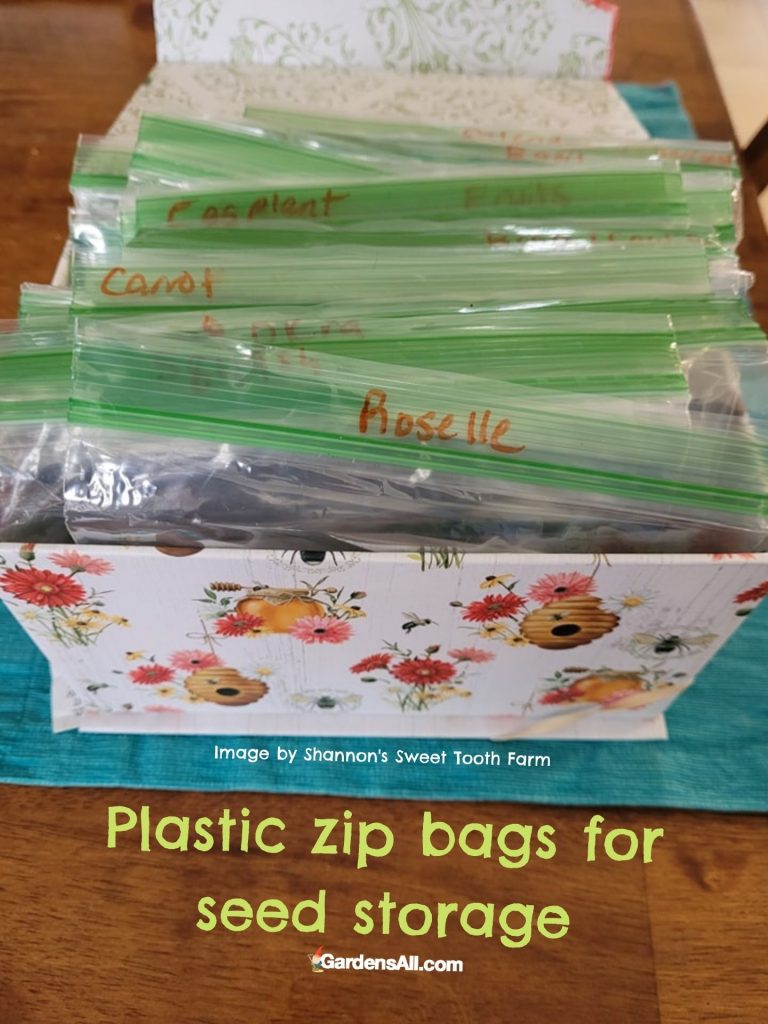
Plastic zip bags make seed storage easy. Image by Shannon’s Sweet Tooth Farm 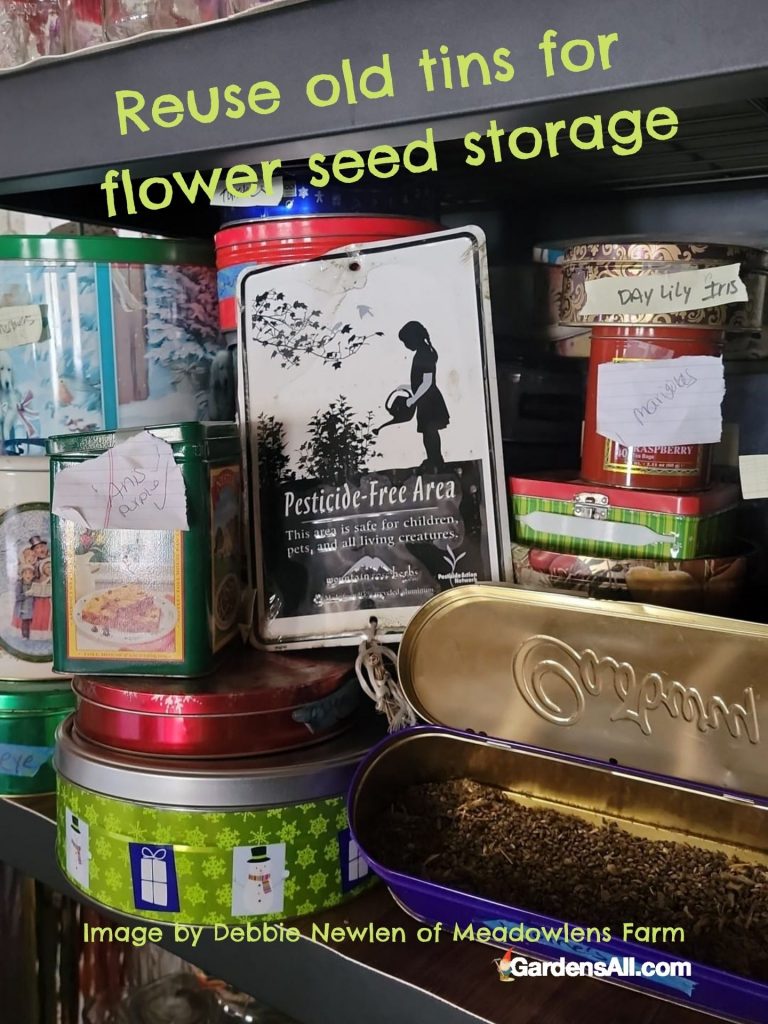
Old tins for flower Seed Storage. Image by Debbie Newlen of Meadowlens Farm 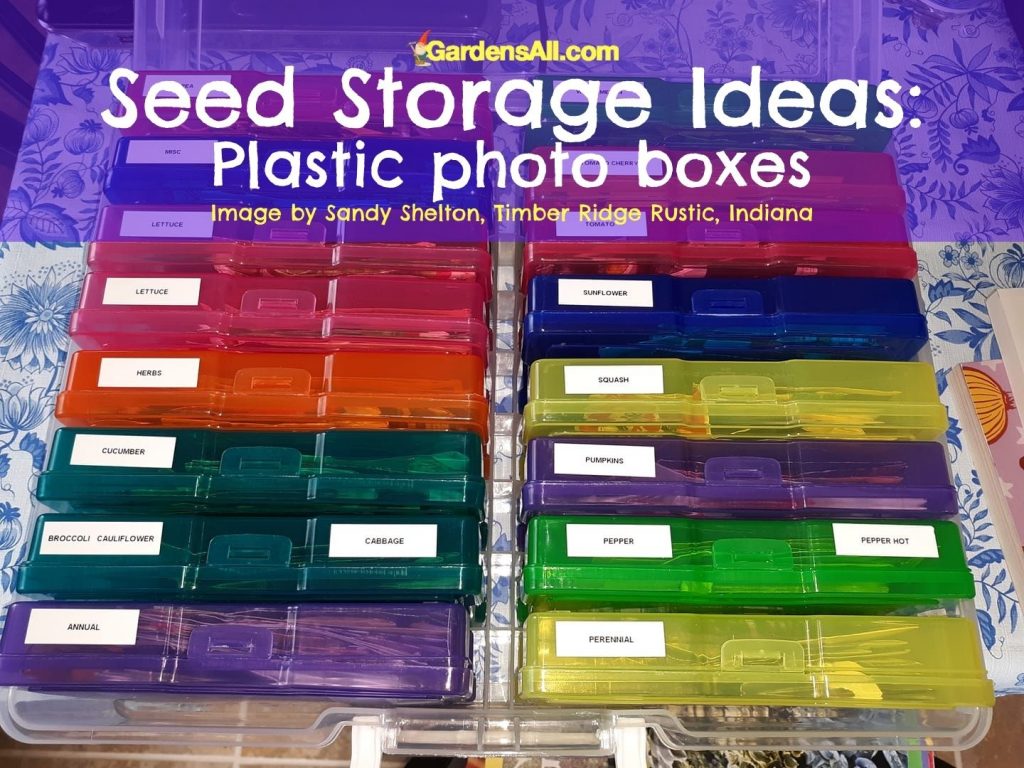
Plastic photo boxes make great seed storage containers! 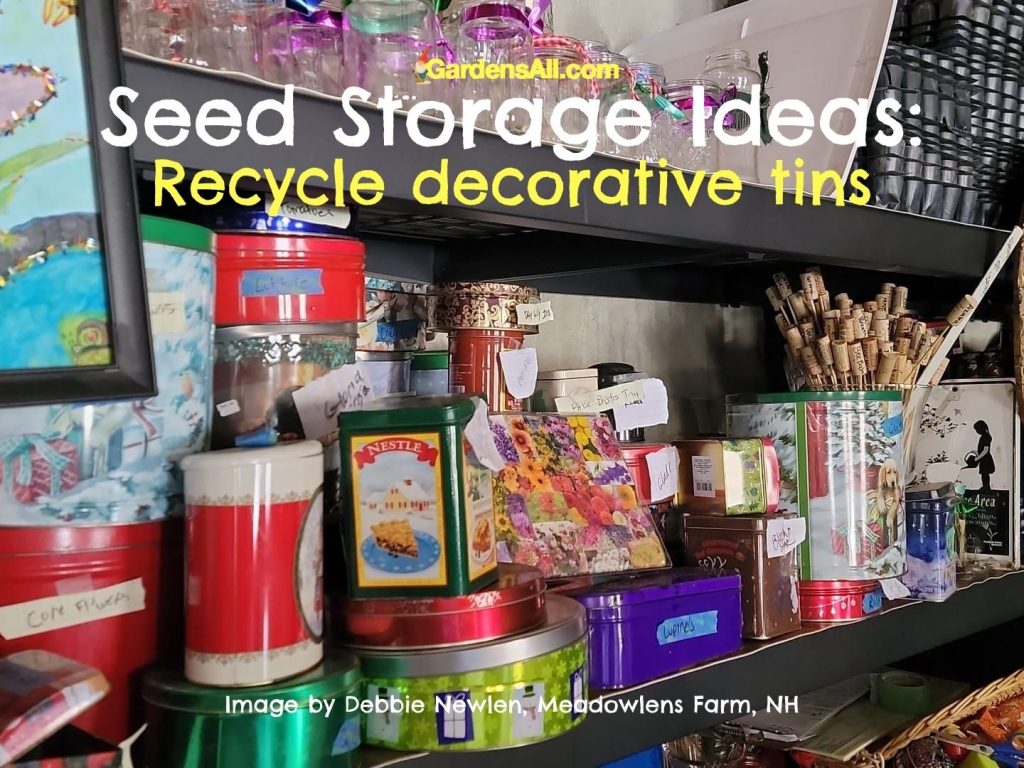
For fun and whimsy, recycle old tins for seed storage.
3 Rules of Seed Storage – Always Keep Seeds:
- cool
- dry
- dark
The most important part in seed storage, no matter what kind of containers you prefer, is to keep seeds dry, out of direct sunlight, and cool. The big three rules to remember in proper seed storage: cool, dry and dark.
If you’re in a humid area like we are in North Carolina, silica gel packets really help to lower humidity levels. You can add them to your container of seeds as well as any outer container for double protection.
We save the silicon packets that come in with other things, such as supplements and food items, including doggie biscuits and other packaged foods. Or, you can buy them online and place them in your seed storage container or seed storage area to help absorb dampness.

Seeds Need a Good Environment
Seeds are embryos encased in a womb shell, or, as someone eloquently said, “A seed is a plant in a box with its lunch.” Because seeds are alive, they’ll inevitably lose viability if exposed to the wrong environment. Leaving seeds in the sun on your car dash, lying around the kitchen sink, or left outside exposed to the elements are all liable to negatively impact your seeds.
By keeping seeds in a steady-state environment, they’ll continue to remain viable and well-adjusted. While it’s important to properly store your treasured seeds, it’s worth noting that seeds in general have evolved to be quite resilient.
Some seeds prefer to self-seed, meaning the parent plant is allowed to grow seeds and shed them in-place, like cilantro, but others can be harvested and live in storage longer than expected. A farmer we met in California claims he had forgotten a large grain sack filled with Swiss chard in the back corner of his barn dated from 1995 – he planted the seeds last year, and wouldn’t you know? Near every seed germinated. Wow… impressive!
One of the best places for short-term (<5 years) seed storage—a practice tried and true—is on a shelf in your bedroom closet or root cellar (cool, dry, dark).[1]https://blog.seedsavers.org/blog/seed-storage
Remember to label your seeds properly with name and date!
“A seed is a plant in a box with its lunch.”
~Unknown author
Freezing Seeds
Excerpted from Suzanne Ashworth’s book, Seed to Seed
If you really want to hedge your bets, properly storing seeds in the freezer may keep them dormant and waiting for years. All species of seeds can be stored for many years with almost no loss of germination. Just be sure they’re dried to minimal moisture and sealed into an airtight container.
8% Seed Moisture Level
Seeds must be dried to 8% or less before freezing to prevent the excess moisture from expanding and rupturing cell walls.
But how can you tell how much moisture is in a seed? I mean… homeowner gadget that we know of that can determine if the moisture levels of a seed is 8% or less!
If the seeds are not thoroughly dry, the excess moisture expands when frozen and will rupture the cell walls. A quick and easy way to test moisture in seeds is to bend them. If they’re 8% or less moisture, the seed will break. If they contain too much moisture for freezing, the seed will bend instead of break.
To test moisture in hard shell seeds, such as beans or corn, these latter will shatter instead of mashing if dry enough when placed on concrete and struck with a hammer.[2]https://faq.gardenweb.com/discussions/2766754/organizing-seeds-for-storage
How to Dry Out Seeds for Seed Storage
Teca Thomson of Farm to Table, walks you through freezing seeds in this video.
How Long Are Seeds Viable?
While there are average ranges of seed viability, bottom line is that if seeds are stored well and kept dry and cool at under 50°F, there are stories of viability after five, ten and twenty years or more.
Fruit and vegetable seeds stored cool and dry, can remain viable from 1-5 years.
A GREAT resource for all things to do with seed storage ideas is the book, Seed to Seed, aka, “the bible on seeds”.

Email or visit us on Facebook. We’d love to hear your favorite seed storage methods, and will be glad to add them here!
Let’s keep on Growing!

We are an online gardening publication sharing all things garden related! Including urban farming, family gardening, homesteading, gardening for profits, and more. We’re all about growth!
References