

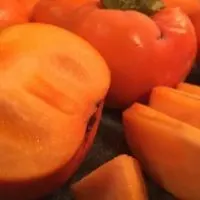
But wait… persimmons taste awful, right..? Yes and no. We’ll sort that out here. Bottom line? Fuyu persimmons are favored as the best tasting persimmons to grow, and the most resilient!
Also known as Fuyugaki, Diospyros kaki, Fuyu persimmons account for approximately 80% of the persimmon market.
Not only is the fuyu persimmon tree a strong growing tree, but the fuyu persimmon fruit is much larger than American wild persimmons you may have grown up with. They’re also long lasting, hardy and incredibly delicious with no seeds, whereas the American persimmons are small with several large seeds and minimal fruit.
We’d love to plant an entire orchard of Fuyus, so we’ll definitely be adding more to our landscape over time. In fact, we had eight fuyu trees and just planted two more, so now we have nine. However, only one is old enough to bear fruit, but each year to come, more will be coming of age to fruit.
The fuyu persimmon fruit is large, very sturdy, long lasting and incredibly delicious.
AUDIO ARTICLE – Fuyu Persimmons:
What Do Fuyu Persimmons Taste Like?
The taste of Fuyu persimmons is a luscious, delicious, seedless fruit reminiscent in taste of a cross between a mango and a peach, or a mango and papaya. Lush, juicy, and delectably sweet, Fuyu persimmons are a luxurious fruit experience that taste equally heavenly, when almost mushy ripe to not fully ripe and still firm.
The fuyu persimmons are one of our most favorite fall fruits!
Aren’t Persimmons Bitterly Astringent?
Well, that depends on what kind of persimmon and when you eat it. Wild persimmons are the highly astringent ones that will cause involuntary puckering and feel somewhat like you’ve got cotton in your mouth. However, if allowed to ripen fully, wild persimmon are sweeter than sweet plums, and more like a pudding or applesauce in texture.
Wild American Persimmons – Let ripen fully and drop from the tree naturally. You can read more about how to harvest wild American persimmons here, which we’ve linked again at the end of this article in the footnotes.[1]https://www.gardensall.com/harvest-wild-persimmons/
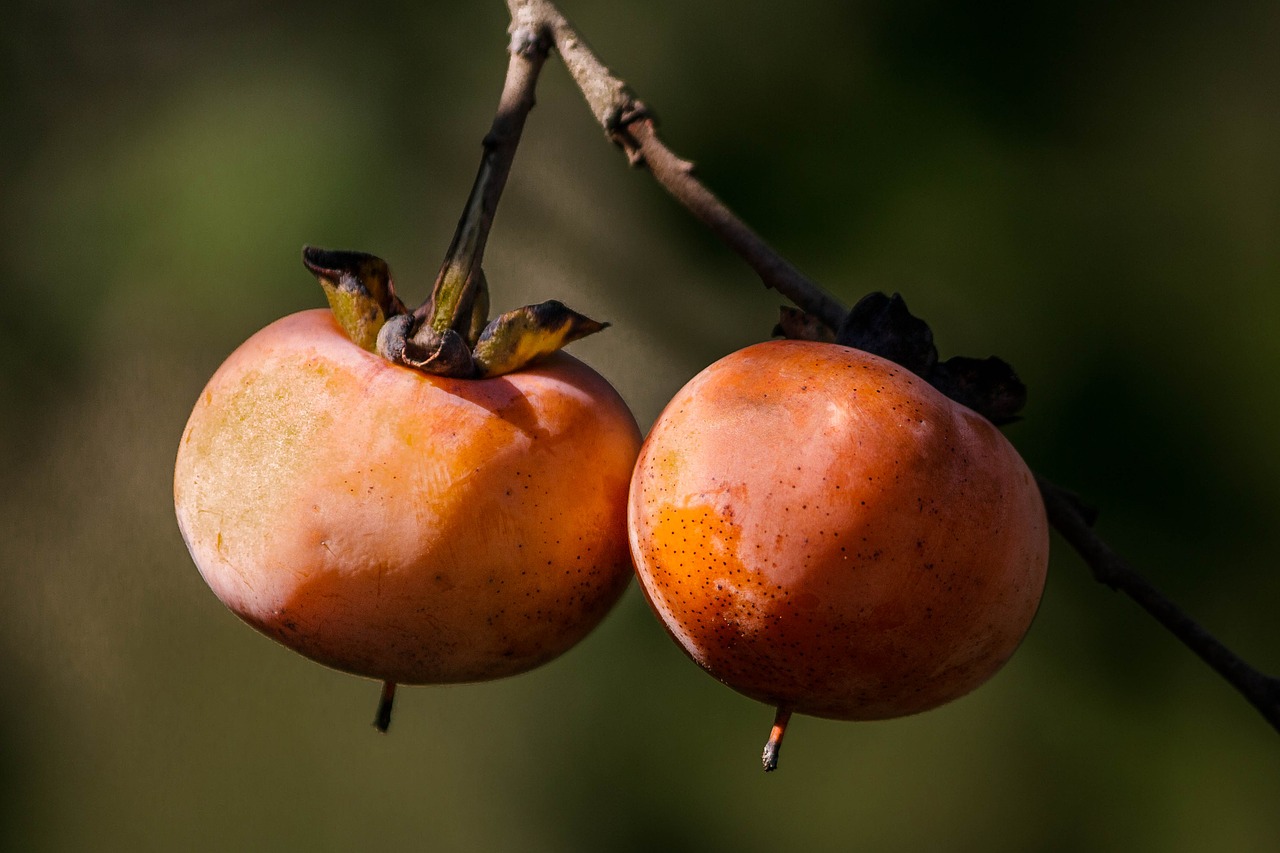
FUYU PERSIMMONS
One of the more popular persimmons are Fuyu Persimmons, also called Fuyugaki. With a unique, like no-other kind of taste the closest correlation we’ve come up with for texture and taste is a cross between a mango, peach and plum with an infusion of honey. These are sweet, rich, mellow and delicious even when firm.
Fuyus are ready to eat when bright orange, and can be enjoyed equally when firm, or when soft.
Persimmon Origin and History
Japanese or oriental persimmons (Diospyros kaki), originated in Asia and have been grown in China for centuries. In the 1800s, a United States Commander brought a Japanese persimmon back to the states and the rest is delectable history.
Fuyus were introduced into California during the mid-1800s and is now the largest seller of Fuyu persimmons in the US.
It’s interesting to consider that although this amazing little fruit has been growing in the US for well over a century, many folks have never heard of it, let alone tried it.[2]https://www.webmd.com/food-recipes/fruit-month-persimmons#1
Origin of the Persimmon Name
Persimmon” is an early colonial word that comes from the Powhatan Native American Indian name for the fruit, pichamin, with variants.
Root Name Origins of Persimmon
- Pichamin
- Putchamin
- Pessemmin
- Pushemin
- Parsemen
Persimmons were a favorite fruit of many Native American Indian tribes, eaten plain or cooked into sweet puddings.
SOURCE: Native-Languages.org
Growing Fuyu Persimmons
We’re currently growing ten Fuyu persimmon trees of varying ages, with one at maturity for fruiting thus far. We’ve added a few trees each year so they will be coming into fruit increasingly over time.
Our 10 year old Japanese Fuyu persimmon tree is loaded with large apple-sized fruit each year. Last year, we planted nine more fuyu trees that are coming along quite well though it will be several years before they attain sizable production. Any fruit that comes on during 3-4 years after planting, will be picked off so the branches don’t get broken by the weight.
Pick off fruit on young Fuyu persimmon trees up to 4 years old to prevent branches from breaking under the weight.
Planting Fuyu Persimmon Trees
DIGGING and SOIL PREP
Planting Fuyu is just like any other task of planting a tree. Dig a $25 dollar hole for a 5 dollar tree. The dirt is shoveled into a wheelbarrow or other large container. Add in organic matter, bone meal, and mix well with the existing soil while busting up clumps as you mix.
SETTING and MULCHING
Set the tree in the hole so the base of the tree is at ground level. We like to fill in around the rootball about halfway, give it a good watering and then fill in the rest of the way and water again. Do not compress the soil around the root ball. Place the fill soil so it forms a shallow depression around the perimeter of the hold. Then add 2-3 inches of organic mulch. We use wood chip mulch or shredded bark.
See the videos at the end of this article for more explanation and visuals.
STAKING and WATERING
Staking depends on the size of the tree with smaller saplings having just one stake and larger trees getting a stake on either side. We’ve used plastic baling twine and paracord as weather resistant ties. Avoid damage to the plant stem by using pieces of garden hose or similar material where the tie makes contact.Be sure to leave some wiggle room for the plant to bend and thus strengthen its trunk.
Water as needed, especially in dry periods.
Planting Fuyus is just like any other task of planting a tree. Dig a $25 dollar hole for a 5 dollar tree, and stake young trees for support.

The Fuyu Persimmon Tree
- GROW ZONE: 7-10
- SIZE:
- Mature Height: 10-12 feet
- Mature Width: 10-12 feet
- APPEARANCE: Full foliage, attractive landscape plant with fall colors of gold and red
- POLLINATION: Self pollinating
- SUN: Full sun or partial shade
- TYPE: Deciduous
- TOLERANT/RESISTANT TO:
- Drought
- Disease
- Pests
Persimmon Tree Wood
