
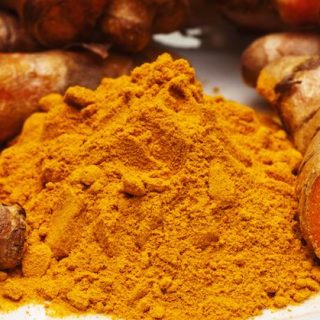
Getting to the Root of the Truth About Turmeric
If you’ve been hearing a lot about turmeric lately, there’s good reason for that, even beyond the nutritional benefits. But have you heard of turmeric golden paste? There’s good reason to make use of that form of turmeric too, but first, some foundational background.
Turmeric is one of the most ancient of the documented spices, in use for possibly as much as 4,000 years. Its value as a medicine was known across Asia since ancient times.
The Indian medical system called Ayurveda, made detailed descriptions of the use of hundreds of plants, and turmeric is one of the most frequently mentioned remedies.
Turmeric was recommended for all kinds of gastric upsets, to reduce flatulence (gas), for menstrual problems, for abdominal pain and bloating, and various diseases. It was used topically for wound healing and skin cancer as well, and as a poultice for bruises, sprains, insect bites and rashes.
Other popular turmeric uses include homemade turmeric face masks. There are many variations touted as beneficial for various types of skin and conditions.
In India, turmeric was applied to the body of both bride and bridegroom as a decoration and a cleanser, and, as one might imagine, this golden amber root has been used as a dye for eons.

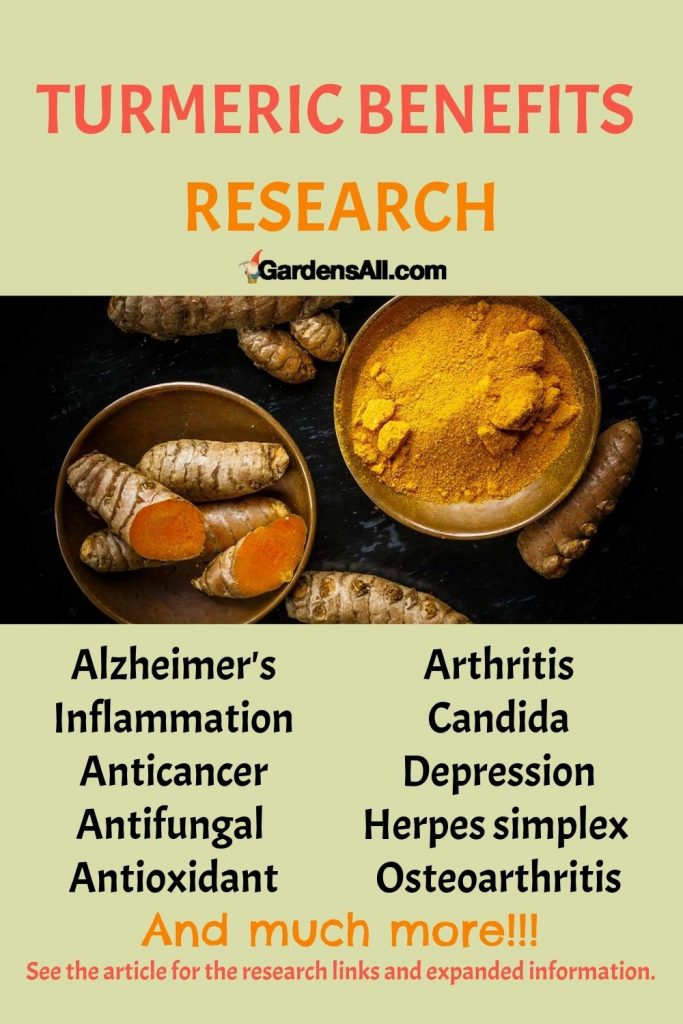
Research on the Health Benefits of Turmeric
- Alzheimer’s[1]https://www.ncbi.nlm.nih.gov/pubmed/26652155
- Antifungal[2]https://www.ncbi.nlm.nih.gov/pmc/articles/PMC6714268/
- Anti-inflammatory[3]https://pubmed.ncbi.nlm.nih.gov/18662800/
- Antioxidant[4]https://lpi.oregonstate.edu/mic/dietary-factors/phytochemicals/curcumin#introduction
- Anticancer[5]https://pubmed.ncbi.nlm.nih.gov/23909733/
- Arthritis / Osteoarthritis reduction in joint pain and inflammation[6]https://www.assh.org/handcare/blog/turmeric-and-osteoarthritis[7]https://pubmed.ncbi.nlm.nih.gov/17291458/
- Blood Pressure[8]https://www.livescience.com/41760-turmeric-supplement-facts.html
- Blood Sugar[9]https://www.livescience.com/41760-turmeric-supplement-facts.html
- Cancer[10]https://www.mayoclinic.org/diseases-conditions/cancer/expert-answers/curcumin/faq-20057858 / cancer cell apoptosis[11]https://www.ncbi.nlm.nih.gov/pubmed/27580989[12]https://www.ncbi.nlm.nih.gov/pubmed/27644631[13]https://pubmed.ncbi.nlm.nih.gov/11346483/
- Candida[14]https://www.thecandidadiet.com/turmeric-natural-antifungal/#:~:text=As%20an%20antifungal%20agent%2C%20turmeric,to%20an%20anti%2DCandida%20program.
- Cognition – moderate improvements, but more studies needed[15]https://pubmed.ncbi.nlm.nih.gov/21499987/
- Depression, (Major Depressive Disorder (MDD) – studies show extended use (4-8 wks) may reduce depression comparable to some antidepressants[16]https://pubmed.ncbi.nlm.nih.gov/26610378/[17]https://pubmed.ncbi.nlm.nih.gov/25046624/[18]https://lpi.oregonstate.edu/mic/dietary-factors/phytochemicals/curcumin#reference100
- Diabetes / Pre-diabetes[19]https://care.diabetesjournals.org/content/35/11/2121[20]https://care.diabetesjournals.org/content/35/11/2121
- Edema (swelling and fluid retention)[21]https://lpi.oregonstate.edu/mic/dietary-factors/phytochemicals/curcumin
- Focus[22]https://lpi.oregonstate.edu/mic/dietary-factors/phytochemicals/curcumin#reference22
- Herpes simplex[23]https://www.ncbi.nlm.nih.gov/pmc/articles/PMC2668156/[24]https://www.ncbi.nlm.nih.gov/pmc/articles/PMC7912164/
- Kidney health[25]https://diabetesjournals.org/care/article/35/11/2121/30921/Curcumin-Extract-for-Prevention-of-Type-2-Diabetes
- Memory[26]https://lpi.oregonstate.edu/mic/dietary-factors/phytochemicals/curcumin#reference22
- MRSA[27]https://www.ncbi.nlm.nih.gov/pubmed/25389660
- Parkinsons[28]https://www.ncbi.nlm.nih.gov/pubmed/23844695
- Premenstrual Syndrome (PMS)[29]https://lpi.oregonstate.edu/mic/dietary-factors/phytochemicals/curcumin#reference22[30]https://pubmed.ncbi.nlm.nih.gov/26608718/
WOW!!! With all of that and more, it’s safe to say that the benefits of turmeric are many!
Turmeric is Anti-disease
Though its mechanism isn’t well understood in every case studied, turmeric benefits are many and varied. There are so many “anti” benefits associated with turmeric that you could almost say that turmeric is anti-disease!
Here are brief summaries of some of the best know turmeric benefits.
ANTIFUNGAL, ANTIBACTERIAL, ANTIMICROBIAL
Turmeric is a powerful ally in wellness.
ANTICANCER – Turmeric Helps Fight and Prevent Cancer
When it comes to cancer, turmeric restores normal cell apoptosis (programmed cell death) in cancer cells, and helps to reduce the amyloid plaques found in the brains of Alzheimer patients.
IMMUNITY – Turmeric is a Top Immunity Boosting Herb
Turmeric is amongst the top immune boosting herbs, and is one we like to include in our Fire Cider recipe.
ANTI-INFLAMMATORY – Turmeric is a Proven Anti-inflammatory Properties
Turmeric is well known as an anti-inflammatory, including hundreds of research trials to prove its worth against inflammatory disease like osteo and rheumatoid arthritis.[31]https://www.ncbi.nlm.nih.gov/pubmed/27761693
ANTIVIRAL – Turmeric is a Powerful Antiviral Herb
Found to be effective against the virus that causes shingles, and the staph organism that causes MRSA, chances are we have only scratched the surface of potential of this wonderful root.[32]https://www.ncbi.nlm.nih.gov/pubmed/25389660
BLOOD PRESSURE – Turmeric Reduces Blood Pressure
As a modest vasodilator, it may help with high blood pressure. And the list goes on.
KIDNEY DAMAGE – Reverse Diabetically Induced Kidney Damage
Turmeric has been shown to help reverse kidney damage caused by diabetes, and to slow the rate at which pre-diabetic people go into full-blown diabetes.[33]https://care.diabetesjournals.org/content/35/11/2121
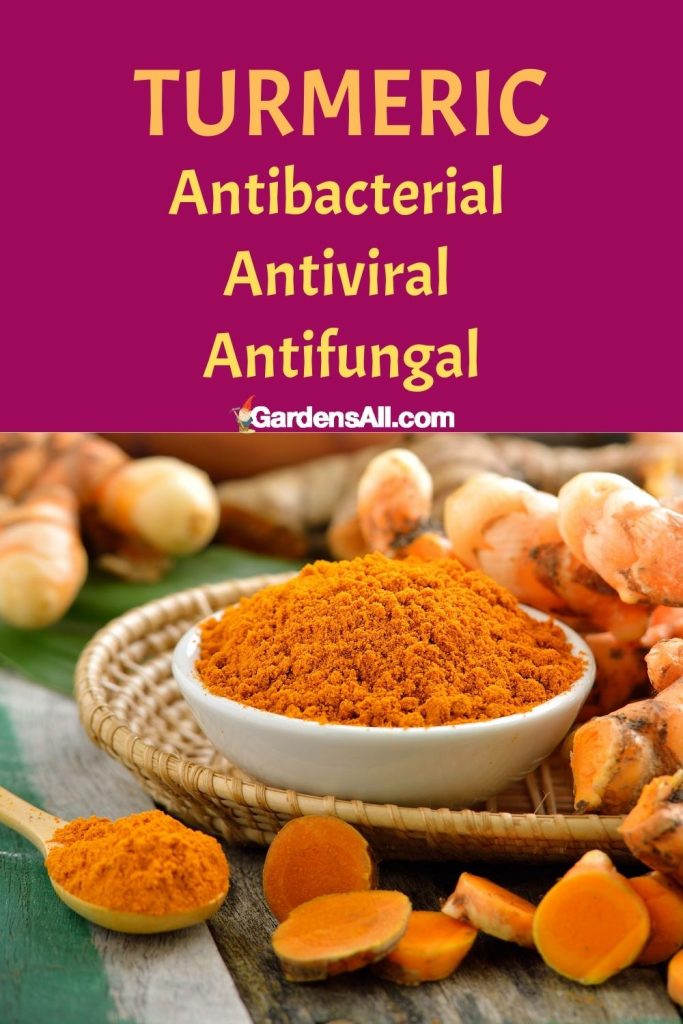
Turmeric is an antibacterial, antiviral and antifungal.
Are Turmeric Supplements Good for You?
With so many benefits, is turmeric good for everyone?
That depends. When turmeric came to the attention of western medicine, its use underwent a sudden and mostly undesirable change. Indian medical trials had used whole turmeric for the most part. There, researchers were familiar with the different varieties grown in India and how the subtle differences between them might affect trial outcomes.
Western researchers working with botanicals have always isolated one or more of the primary active constituents and tested those as single components. There are good reasons for this, as the researchers can then say with greater precision how the outcome depended on the trial’s procedures and components. In the case of turmeric, however, there was the added factor of unfamiliarity with the original plant.
The most researched compound in turmeric in the West has been curcumin, which is one of the three curcuminoids in turmeric.
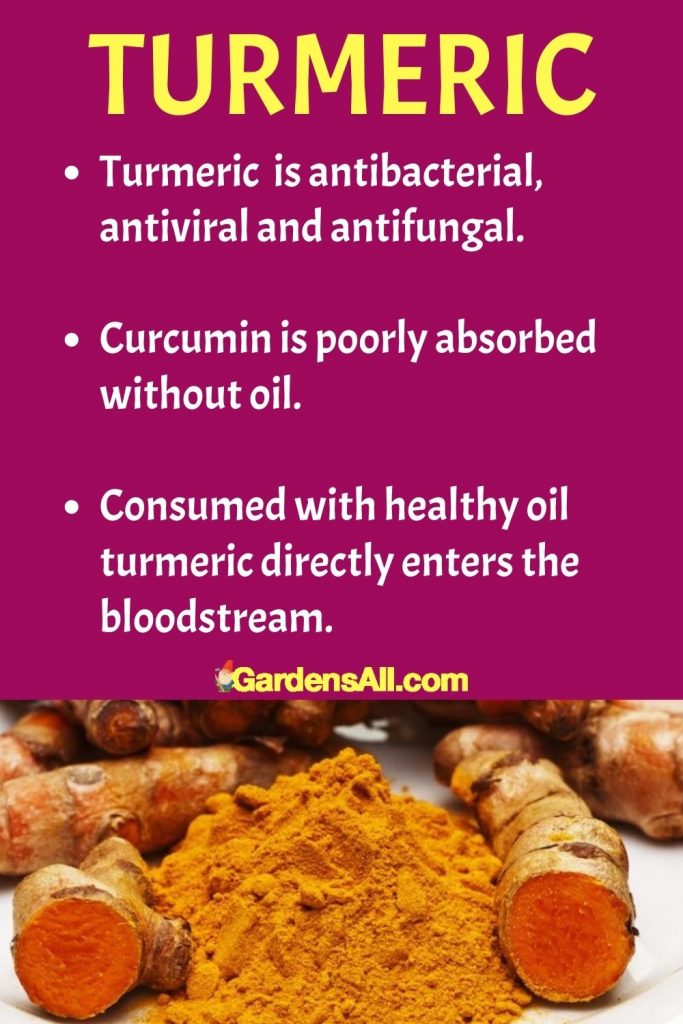
When consumed orally, curcumin is poorly absorbed, and is rapidly metabolized and eliminated from the body.
Curcumin is Poorly Absorbed and Rapidly Metabolized
That phrase, “poorly absorbed and rapidly metabolized”, has become almost a mantra for the description of curcumin in research articles. Much of the research into curcumin in turmeric has been devoted to finding methods to improve absorption and inhibit excretion. This is a little ironic, since the traditional manner of consuming turmeric avoids both problems, but we get into that in just a bit.
Turmeric – A Natural Supplement Available to Everyone
Supplement manufacturers keep a sharp eye on plant-based medical research, in the hopes of finding new botanical preparations of commercial value. So their attention was soon caught by the work with turmeric.
Turmeric itself, however, was not particularly attractive as a supplement. To begin with, it’s a food, recognized as such by the FDA and other regulatory bodies around the world. Therefore, in its whole form, it cannot be patented, though some attempts have been made.
Supplement manufacturers are not in the business of selling foods. In addition, it’s a very inexpensive food. There is little profit in putting turmeric in capsules and selling them as a supplement when bulk ground turmeric powder can be purchased at a fraction of the cost.
Curcumin, though, was a different story. As an extract, it can be modified in various unique ways that make a patented product not just possible, but profitable.
Curcumin as a Supplement
Companies working with curcumin extracts for medical research patented two curcumin extracts early on. BCM-95, produced by Arjuna Natural Extracts of India, and Meriva, produced by Indena of Italy, are used by medical researchers around the world.
Meriva attempts to make curcumin more readily absorbed by combining it with soy lecithin, for a final curcumin percentage (per capsule) of about 20%. BCM-95 combines curcumin with one of turmeric’s essential oils (ar-turmerone), which is extracted separately from turmeric and then added to the curcumin extract, for a final curcumin percentage of about 45%.
EDITOR’S NOTE: Actually, soy is not a readily digestible protein and as such, has become increasingly allergenic. (See The Whole Soy Story for a virtual textbook of abundantly cited research, or read this article on soy and male testosterone). So while that soy lecithin oil may make it more absorptive, supplement claims should be carefully examined to get to the truth. Our preference would be a different oil, such as sunflower lecithin.
The Patenting of Curcumin Blends
We are all for entrepreneurs seizing opportunities to grow businesses through creating products and services that others want. But it’s also important to be aware of the industries and products we partake, especially if we can obtain the same thing for so much less by growing it and/or buying in bulk versus as supplements.
These two patented products have been heavily marketed to the companies producing consumer turmeric supplements, with competing claims of best absorption and bioavailability. The marketing has been so successful, in fact, that lay articles on turmeric have focused almost exclusively on which brand of curcumin extract was better, rather than on turmeric itself.
The supplement manufacturers have in turn added other ingredients (such as BioPerine, an extract of piperine from black pepper) and sometimes additional herbs or spices. They present these products with ever more sensational headlines and pop-medicine endorsements.
The resultant impression is often that turmeric by itself is a poor source of curcumin, and that it’s necessary to purchase someone’s unique (and expensive) product in order to gain any of the widely advertised benefits.
But is that true?
The Truth About Turmeric Supplements
Nothing could be farther from the truth.
What a consumer is paying for in these products is primarily the processing cost to make the curcumin extract in the first place. With that comes the costs of fancy packaging, the cost of shelf space in the big box pharmacies and supermarket chains, and payouts to medical experts online and in the media.
Additional costs to jack up the supplement costs include the overhead of running a large company with buildings and employees and well-compensated executives. I the end, the turmeric itself represents only pennies of the price of the finished and packaged product.
But there’s a better way to enjoy the wonderful benefits of turmeric.
The Best Way to Consume Turmeric
So is there an economical and effective way of consuming turmeric? Certainly!
The traditional way.
There you have the oil used in cooking and the turmeric along with pepper that’s a ubiquitous part of Indian cuisine. You know… cooked in food… food as medicine.
Turmeric is a prominent ingredient in all the regional cuisines of India (not just curries). A typical dish begins by “sputtering” whole spices in hot oil. Then the meat and/or vegetables and the ground spices, including turmeric, are added. After sufficient simmering to cook the raw portions of the dish, other herbs and spices may be sprinkled on top of the finished presentation, and diners may add freshly ground black pepper to their own portions.
Cooked Turmeric is Best
Fresh raw turmeric is very poorly digested.
That doesn’t mean it causes digestive upsets, but that it passes through the GI tract before it breaks down enough for its active compounds to be more than minimally available. So if you want to consume turmeric for its health benefits and not just its taste, it needs to be cooked.
Turmeric is rich in water-soluble starches, which need to break down in the stomach and small intestine in order for the curcuminoids and other active compounds to be available. But those starches don’t dissolve in water until it reaches the boiling point. That’s why it has always been cooked before being dehydrated.
The other things that were mentioned in connection with that—being easier to polish and being sterilized—are extra benefits, but not the primary purpose. When dehydration takes place, the starches’ crystalline structure is partially restored, but it breaks down again quickly with only about 7-10 minutes of simmering.
Not so coincidentally, Indian dishes are typically simmered for about that long after the turmeric and other powdered spices are added.
It’s Not Turmeric Root
And by the way, turmeric is also a rhizome, not a root. Ginger and turmeric are closely related.

The Best Oil for Turmeric Absorption
Turmeric is not soluble in water, or in water-based fluids (even stomach acids). Thus it was traditionally consumed with an oil or a fat such as ghee.[34]https://wellnessmama.com/24267/make-ghee/
The oil or melted fat dissolves the curcumin and allows it to be absorbed into the intestinal lumen (walls). From there it goes into the lymph system and eventually ends up in the bloodstream. If consumed with coconut oil, turmeric goes directly to the bloodstream via the portal vein in the small intestine.
Consumed with coconut oil, turmeric directly enters the bloodstream.
Freshly Ground Black Pepper Benefits Turmeric and Curcumin
Freshly ground black pepper contains an alkaloid called piperine. Among its many behaviors in the body, it inhibits the particular enzymatic pathway for the metabolism of curcumin. Thus it extends the time during which curcumin is active in the bloodstream. However, Piperine is oxidized rapidly on exposure to light and air. So that pepper shaker on the dining table is unlikely to contain more than a small fraction of the original percentage of piperine.
Turmeric Golden Paste Discovery
If you’re not into cooking Indian food regularly, there is a way to add turmeric to any diet. You can easily make an effective and convenient turmeric paste, called Turmeric Golden Paste.
India has had many versions of cooked turmeric paste over the centuries. Some were regional favorites; others were passed down from one family member to another.
Veterinarian Experiments With Turmeric Golden Paste
Doug English, an Australian veterinarian, heard of someone using turmeric for a type of skin tumor on horses called a sarcoid. He became intrigued with it and began to investigate the traditional use of turmeric.
Over Five Years of Research
Over a period of five years of research, he adapted different versions of the cooked turmeric paste into one that seemed to provide the most benefit. He tested it on himself, on his family and staff and friends, and on any patients of his veterinary clinic that might benefit from it.
The turmeric golden paste concoction repeatedly demonstrated efficacy against a wide variety of inflammatory conditions, as well as the sarcoids that had prompted his original interest.
Several members of the clinic staff suggested that he start a group on Facebook to promote the use of the paste and to gather additional data on its use. One of the early admins in the group dubbed the mixture ‘Golden Paste,’ and the name stuck. Now it’s possible to find references to Golden Paste all over the internet, but Doug English’s Turmeric User Group on Facebook is where it originated.[35]https://www.facebook.com/groups/415313751866609/[36]https://turmericlife.com.au/getting-started/
Many other people have picked it up from there and reposted it as their own, often with changes or additions. To his credit, Doug has never claimed ownership of the paste, since he did not invent it himself, only adapted traditional recipes.
Basic Golden Paste Recipe
To make the turmeric Golden Paste, you need three things. Ground turmeric powder, available from any Indian/Asian market and from many supermarkets and health food stores (or online); black peppercorns; and either coconut oil, olive oil or flaxseed (linseed) oil.
Basic Turmeric Golden Paste Recipe
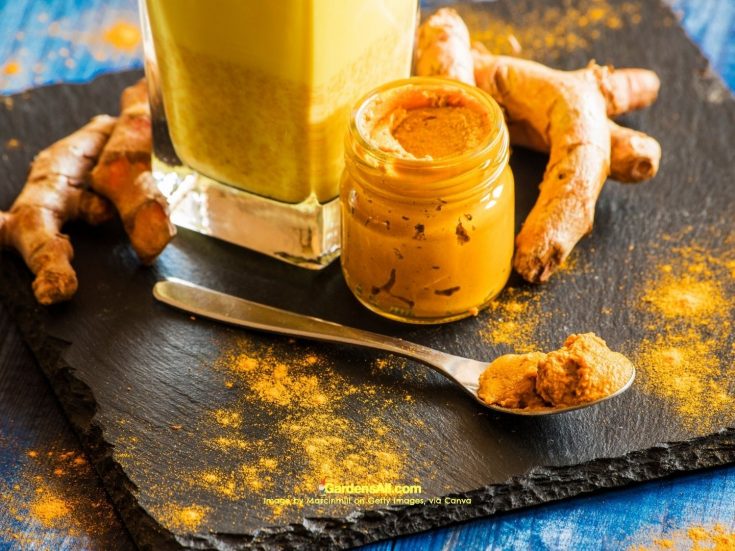
For this turmeric Golden Paste, you need three things:
- Turmeric powder
- Black peppercorns
- Healthy oil, such as coconut, olive or flaxseed oil
Turmeric powder is available from any Indian or Asian market and from most grocers as well. You can buy it in bulk from your local health food stores or online, such as these options for bulk turmeric on Amazon.
Ingredients
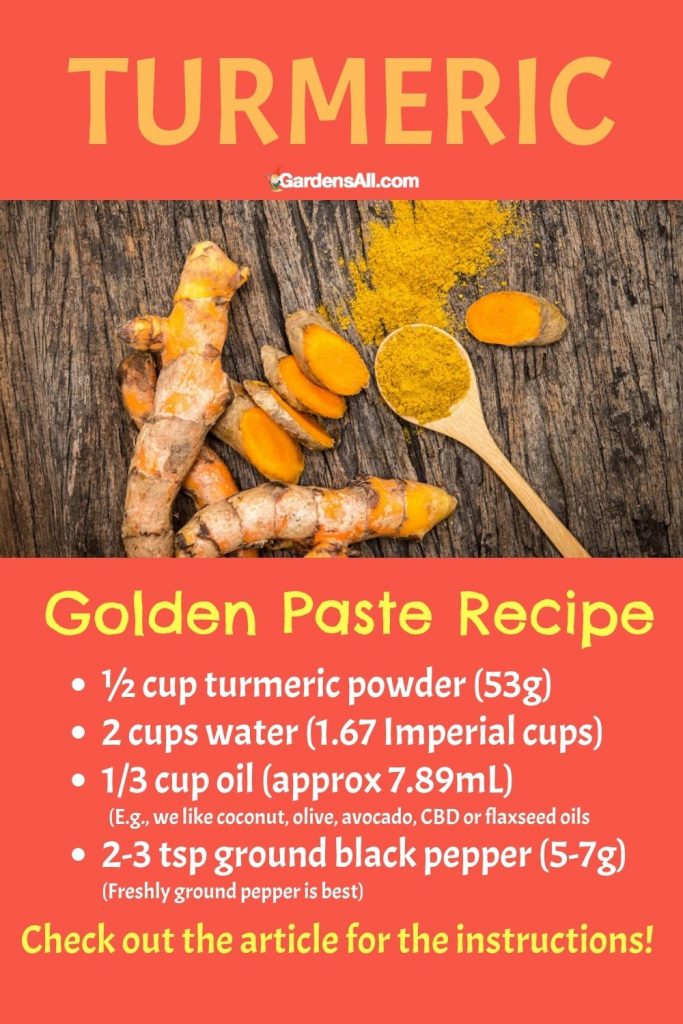
- ½ cup turmeric powder (53g)
- 2 cups water, divided in half (1.67 Imperial cups)
- 1/3 cup coconut oil (78.9mL), (or other healthy oils such as olive or flaxseed oil)
- 2 tsp freshly ground black pepper (8.4g), (or more to taste)
Instructions
- COMBINE the turmeric powder and one cup of the water in a small saucepan.
- BOIL - Bring water turmeric to boil, then simmer on low the heat.
- STIR often enough to keep the turmeric from sticking and burning.
- ADD additional water as needed to maintain a soft paste
- SIMMER for around 7 minutes.
- REMOVE from heat and allow to cool partly.
- GRIND peppercorns while waiting for the turmeric mixture to cool.
- ADD the oil and pepper to the partially cooled turmeric-water andmix thoroughly.
Some suggest using a whisk or even hand mixer to blend into a smooth paste. However neither is necessary if you wait until the turmeric/water mixture has cooled to where it is just warm to the touch. At that point, the oil and pepper can be stirred in easily with a spoon.
When spices and oil are well blended into a smooth paste, transfer to a container. It will keep for about two weeks stored in the refrigerator.
Notes
Turmeric paste can be used for recipes like our turmeric mac and cheese, or golden milk recipe, in addition to soups, salad dressings, smoothies and just about any food where you might add seasonings.
Use a rounded measure of turmeric paste to any level measurement of turmeric called for in your recipe.
Nutrition Information:
Yield:
18Serving Size:
1Amount Per Serving: Calories: 49Total Fat: 4gSaturated Fat: 3gTrans Fat: 0gUnsaturated Fat: 0gCholesterol: 0mgSodium: 2mgCarbohydrates: 3gFiber: 1gSugar: 0gProtein: 0g
How to Use Turmeric Golden Paste
Most adults and older children, can start with ¼ teaspoon of turmeric golden paste twice a day in food. Please note that turmeric increases gut motility.
Golden Paste Doses for Adults and Children
- 1/4 tsp 2x/day
Turmeric Increases Gut Motility
Please note that turmeric increases gut motility. Starting off with too much can result in a better acquaintance with the toilet than most people would like. This may apply to your pet as well.
Better to start out with a minimal amount and increase that amount after a few days without issue, but don’t exceed the recommended starting amount at the beginning.
Some websites advise “dosing” by weight, suggesting a certain amount for every ten pounds of weight. This is not a good idea, for several reasons. First, that will be far too much to start with for almost any person or animal, and second, golden paste is not a drug that is arbitrarily “dosed.”
Turmeric and golden paste is a food, a combination of two spices and a healthy oil, that can be added to almost anyone’s diet. The final amount that’s used will depend on multiple factors—the symptoms that the person wants to address, other aspects of their diet, their own personal metabolism, and others.
Beware Claims on Sales of Turmeric Products
One final point: the number of companies selling and making claims about turmeric has skyrocketed just in the past year. In the Turmeric User Group, we’ve seen a major shift in the kinds of questions being asked. In the beginning, the most common question was “Turmeric? What’s that?” Now a more typical question is “I read that turmeric …. “ followed by a statement that is often erroneous, or at best a half-truth.
Many of the mis-statements online are simply a matter of poor research or misunderstanding. Others come from a desire to make sales, regardless of whether accurate information is presented. Read thoughtfully and ask yourself whether the writer is actually trying to help the reader with information, or is just selling a product.
As with most other marketing, if it sounds too good to be true, it probably is.
Turmeric Golden Paste for Dogs and Cats
[CAUTION: Always check with your healthcare professional before administering any remedy for yourself or your pets. This is anecdotal information and cannot be construed at medical advice.]
Golden Paste Doses Considered Safe for Pets
- Cats – 1/8 tsp 2x/day
- Dogs, puppies, toy breeds, 1/8 tsp 2x/day
- Dogs, medium to large – start with 1/4 tsp 2x/day
Most medium to large dogs, can start with ¼ teaspoon of golden paste twice a day in food. Smaller dogs, such as puppies or toy breeds, should start with no more than 1/8 tsp.
This 1/8 teaspoon of golden paste twice a day is a good amount for cats.
See some of the many turmeric products for pets on Amazon.
We wish you and your pets well. We love that beautiful simplicity of natural homegrown remedies, and putting the “farmacy” of plants in our yards and gardens to work for us in healing herbs.
Here’s hoping you’ll join the millions of people around the world who have added turmeric to their daily diets, and benefited from its use. Also, remember to visit the Turmeric User Group Facebook group for lots of great information and community sharing.
For pet owners, this article on poisonous plants for dogs may be of interest.
For much more information, and experienced people to answer questions, join the Turmeric User Group on Facebook. At this writing, it has over 283,000 members worldwide.
We’ve added a delicious mac and cheese recipe from a Gardens All Facebook community member at the end of this article, but first:
When NOT to Use Golden Paste
Are there any reasons not to add Golden Paste to your diet? Yes, a few.
Avoid Turmeric or Consult With Your Medical Professional in the Following Circumstances
- PREGNANCY: If you (or your pet) are pregnant and have not had turmeric before conceiving, wait until after giving birth.
- STONES: If you have gallstones or kidney stones, don’t use the Golden Paste without first consulting your doctor.
- ANTIBIOTICS: Turmeric can interfere with the fluoroquinolones class of antibiotics –
- Cipro is probably the best known of these for human use.
- Baytril the most common in veterinary use. If you or a pet is on either of these antibiotics, wait until you finish before starting Golden Paste.
- MEDICATIONS: Turmeric can also interfere with some cancer medications, though it has been found in trials to enhance some others. Speak with your doctor if you’re on a chemo protocol before adding Golden Paste to your diet.
- DRUGS:
- Psychotropic drugs such as antidepressants and antipsychotics may interact in unpredictable ways with both turmeric and pepper. Again, speak with your doctor before combining these drugs with Golden Paste.
- There may be minor interactions with some other commonly prescribed drugs, but these can usually be managed by having the Golden Paste and the drug at different times.
- ANTICOAGULANTS: If you are taking an anticoagulant, sometimes mistakenly called a ‘blood thinner’, you will probably not be able to have Golden Paste –
- Warfarin, maybe okay. The older anticoagulant, can sometimes be combined with Golden Paste with the assistance of one’s doctor or INR nurse, since clotting times are regularly tested and dosages can be adjusted.
- To Avoid – the newer so-called “novel” anticoagulants should not be combined with Golden Paste, such as:
- Plavix
- Xarelto
- Eliquis
- Pradaxa should not be combined with Golden Paste.
- DISEASE – various diseased conditions also make the use of Golden Paste inadvisable. If you have any kind of platelet dysfunction, Addison’s Disease or are anemic, consult your doctor before using Golden Paste.
- HYPERTENSION – Turmeric can interfere with hypertension drugs.
The bottom line, if you have any chronic illness and/or are on prescription medications, consult with your healthcare professional before using turmeric.

Turmeric Mac and Cheese Recipe
By Frances Lindblad
Turmeric Macaroni and Cheese Recipe
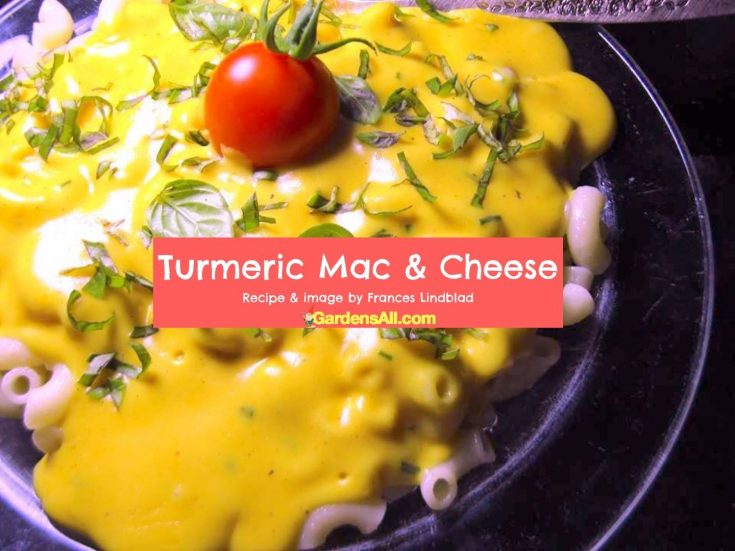
Mac and cheese with Turmeric is one way to add rich flavor and health benefits for the family to enjoy. In fact turmeric needs to be consumed with fat to be made bioavailable to the body.
So add it to your next macaroni and cheese dish, as a great way to work in extra nutrients for you and your family.
Ingredients
- 2 Tablespoons Butter
- 2 Tablespoons Flour
- 1/2 teaspoon Onion powder
- 1/2 teaspoon garlic powder
- 1/2 teaspoon mustard powder
- 1/4 teaspoon black pepper, freshly ground
- 1/8 teaspoon paprika
- 1 1/2 cups milk
- 1/2 vegetable bouillon cube
- 1 Cup Gruyere Cheese, grated (or your favorite cheese)
- 1 box elbow pasta, (regular or gluten free)
Garnish (optional)
- 1 Tablespoon chives, freshly snipped (optional garnish)
Instructions
White Sauce:
- MELT butter on low to medium heat.
- ADD the flour, stirring to combine
- COOK for a few minutes, stirring frequently.
- WHISK in spices:
- turmeric
- garlic powder
- mustard powder
- black pepper
- paprika - ADD milk, continuing to whisk as sauce thickens.
- WHISK in veggie bouillon.
- REDUCE heat to second lowest temperature.
- COVER and SIMMER for around 5-10 minutes, until sauce has thickened further, stirring occasionally.
- GRATE cheese while sauce is simmering
STIR grated cheese into sauce until blended and smooth.
Pasta
- COOK pasta of choice according to pasta package directions, then drain..
- BLEND sauce with cooked and drained pasta, (OR, serve in a bowl with sauce ladled over the top of pasta as Frances prefers to do).
Garnis if Desired
- GARNISH if desired, with fresh herbs such as:
- basil
- chives
- other favorite herbs
"The chives, basil and cherry tomatoes pictured were grown in my garden."😊
~Frances Lindblad, gardener, recipe contributor
Notes
If there's any leftover sauce, Frances said it makes a really good cracker spread when cold and if reduced when cooked so as to not be too watery.
Nutrition Information:
Yield:
4Serving Size:
1Amount Per Serving: Calories: 344Total Fat: 18gSaturated Fat: 11gTrans Fat: 0gUnsaturated Fat: 6gCholesterol: 56mgSodium: 427mgCarbohydrates: 29gFiber: 2gSugar: 6gProtein: 17g
And one more turmeric recipe from the GardensAll community.
Turmeric Golden Milk
By Diana Curtis
The Golden Milk recipe I use makes up the spice mixture ahead of time so it’s easy to drop the amount you like into the warmed milk. Honey is its base, turmeric, ginger, ground black pepper, and coconut oil.. I suppose any warming spice you like could go in, too. Im considering cardamom next time.
Healthy Turmeric Golden Milk Recipe
Serves 2
In a blender, blend:
- 2 teaspoons Golden Paste
If using the basic golden paste recipe, you may want to add one or all of these additional ingredients according to your preferences:
- 1/4 teaspoon cinnamon powder
- 1/4 teaspoon ginger powder
- 1 Tablespoon honey or maple syrup
- 1/2 cup oat milk heated, (or unsweetened almond milk or coconut milk, or your favorite dairy or non-dairy)
- 16 oz. hot beverage of choice, such as:
- coffee
- green tea
- Teeccino (one of our favorite root based coffee substitutes that can be steeped in a French press like coffee)
- maté
- Dandy blend (or other dandelion root beverage
Serve in 2 large mugs.
Diana also shared that she’s growing turmeric and ginger. She said that to overwinter indoors, it’s best at no less than 60°F. Turmeric plants may be suited for wintering in a cool basement with a southern exposure window or grow lights.
If you enjoy making homemade golden milk, you may also enjoy homemade ginger ale.

Growing Turmeric
You can grow turmeric in containers in hardiness zones 5-11, or in the ground in grow zones 8-11. Turmeric, like ginger, grows well in pots, with larger pots producing more than double the harvest yield of smaller pots.
Turmeric & Gingers should be planted in shaded areas of the garden for natural growth, higher nutrient density and to avoid burnt leaf tips. To establish the plant, initial watering schedule can include 2-3 time
Where to Buy Turmeric to Grow
NOTE: We at GardensAll are NOT affiliated with any growers directly, so these links are provided as a courtesy to you. We do however, receive a small affiliate commission for purchases from Amazon, (which includes Whole Foods) through our links, at no charge to you.
All prices cited are approximate averages as of January, 2022.
Buy Retail Turmeric Rhizomes
As of January, 2022, the current average retail price for organic turmeric is $14 per pound for and $12 per pound for non-organic.
- Amazon
- Asian markets
- Indian markets
- Grocers
- Wholefoods
Buy Wholesale Turmeric Root (Rhizomes)
As of January, 2022, the current average wholesale price for organic turmeric is $12 per pound, and $12 per pound for non-organic.
- White Rabbit Organic Florida Produce
- 1.5 pound box: $25 ($16.67/lb)
- 5 pound box: $55 ($11.00/lb)
- 10 pound box: $95 ($9.50/lb)
- 30 pounds: $260 ($8/67/lb)
- Fiji Fresh / HABP Global on Amazon
- 5 pounds for $37 ($7.40/lb)
- Hawaiian Organic Ginger
- 5 pounds for $64 ($12.80/lb)
Buy Turmeric Plants
Prices cited are approximate averages as of January, 2022.
- Amazon (2 plants for $32; no plant size cited)
- A Natural Farm (2 plants for $50; 6″ pots)
- Fast Growing Plants (1 plant for $42; 1 gallon pot)
- The Growers Exchange (1 plant for $14; 3.25″ pot)
[Look for coupon; when we visited they had a 20% off coupon featured at the top of the page] - Spring Hill Nursery, (1 plant for $24; 4″ pot)
Growing Turmeric for Profit
For market gardeners or those looking to get into growing plants for profit, the demand and uses for turmeric are many and varied. Turmeric can be grown in a greenhouse environment with good results
EDITOR’S NOTE:
For turmeric related products, including your own kit for making golden paste, you may want to visit this site of Dr. Doug English, the veterinarian who brought golden paste to the world: NewNaturalsOnline.co, or on Amazon
About Contributing Writer, Liz Wallis
Contributing writer, Liz Wallis, an autodidactic turmeric researcher and longtime user and maker of turmeric golden paste. Liz has a background in medicine, serving as an EMT both in rescue squads and in the ER. Organic chemistry was her second interest in college, and she’s stayed current in that field as much as possible, while living and working on her farm near Darwin Hills. is also an admin in the Turmeric User Group on Facebook, with

Writer, science nerd, gardener
References