
Meet Helianthus Tuberosus
We’re in our 8th year of growing sunchokes, the Helianthus tuberosus plant, and are glad that our plantings are slowly expanding. Common names include Jerusalem artichoke, sunchoke or sun choke, sun root, and lambchokes.
Some people can’t imagine growing Sunchokes any more than they can imagine growing dandelions on purpose. That’s because this native North American edible weed, is considered invasive in some areas.
Others, view it as a gift of a plant.
If you enjoy natural remedies and healing plants, or have issues with blood sugar and diabetes, sunchokes can be a powerful natural homegrown remedy ally in your pursuit of better health.
Delicious, Nutritious, Healthy Gourmet Food
However, we’ve planted both and value them for their incredible food versatility as well as the powerful health benefits of each. And both, dandelion and sunchokes are not only highly a nutritious health food, they’re also a popular gourmet food for many restaurants.
This powerful and homely little sun choke root has a wide array of uses. Jerusalem artichokes are beneficial in stabilizing blood sugar as well good for gut health, due to the prebiotic properties of inulin.
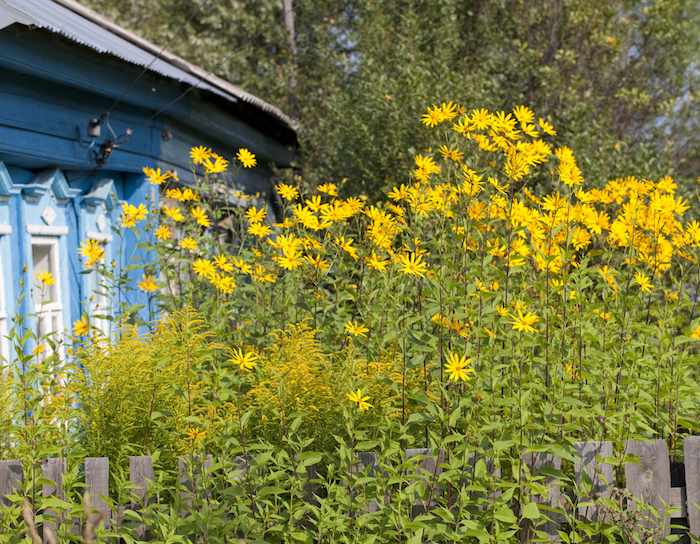
Long lasting with many uses, both edible and medicinal, growing sunchokes may be an important addition to your garden and beneficial to pollinators. Sun chokes are also attractive as a tall flowering backdrop flower for landscapes, reminiscent of sunflowers, very tall daisies and Maximilian sunflowers.
What is a Sunchoke?
Sunchokes, Helianthus tuberosus, are a native North American perennial root vegetable in the sunflower family.
Sunchoke Common Names
- Sunchokes
- Jerusalem artichokes
- Sunroot
- Earth apples
- Topinambour*
*Topinambour is the French name for Jerusalem artichoke, and is pronounced: toe-pee nahm-BORE.
Growing Sunchokes
If you want to grow a lot of sunchokes, that’s fine, just be forewarned: sunchokes are known to be invasive. If you’re not sure, start by growing your sunchokes in large pots, such as barrel pots, or a long trough style planter against a blank wall with good sun exposure looks lovely.
Whenever we share about sunchokes on the GardensAll Facebook page we have mixed comments of appreciation or aversion, depending on the person’s exposure to growing sunchokes. Because of the invasive nature, many consider them a nuisance of a weed.
Those who get into the annual habit of harvesting sunchokes fall in love with this amazing plant and its sturdy, long lasting tuber with lots of health benefits. So if you’re in an area where sunchokes grow rampantly wild, or if they’re overtaking your yard, consider that nature is providing them for you.
How to Get Rid of Sunchokes? (Are You Sure You Want to)?
A few people have shared that Jerusalem artichokes grow like weeds in their area and are invasive and hard to get rid of.
So if you’re overrun by sunchokes, you might actually want to invite the deer in (maybe lead them in with a trail of apple cores and scraps..?)
They may just be able to destroy the entire crop of what can be an incredibly hardy weed that’s virtually impossible to get rid of. Of course you’d have to take care of your other plants, so this would only work if your sunchokes are in a separate field from your yard and garden.
Jerusalem artichokes grow so prolifically via underground runners and shoots that it’s very hard to get rid of them. But if you have an abundance, rather than fighting them, you may decide to harvest and eat them, dry them, make tea with them, and/or sell them!
Selling Sunchokes
If you’re a market gardener, or planning on gardening or farming for profit, you might consider selling sunchokes as a viable specialty crop.
Sunchokes are currently retailing for an average price of $10.00/lb. Depending on the seller and whether it’s organic, food quality and/or based on buying larger or smaller quantities, the price may be more or less.
The Sunchoke Market – for Wholesalers and Market Gardeners
Typical tuber yields are approximately 15 ton/acre, with a range of 5 to 25 ton/acre. The variety and time of harvest determine the yields for both the tops and tubers. Total per plant yield ranges between 4 to 8 lb for tops, 3 to 6 lb for tubers, and 1 to 2 lb for roots.
~Purdue University[1]https://hort.purdue.edu/newcrop/afcm/jerusart.html#:~:text=Typical%20tuber%20yields%20are%20approximately,to%202%20lb%20for%20roots
How to Keep Sunchokes From Spreading
So if you do plant sunchokes, aka, Jerusalem artichokes, you may want to plant them in barrels or raised beds. Another option is a deep underground barrier fence at approximately 2 feet deep, since sunchokes tubers can sprout from as deep at 18″.[2]https://commonsensehome.com/before-you-plant-sunchokes/
Sunchoke Height
The herbaceous Jerusalem artichoke plant grows on tall stalks between 5′-10′ tall, with yellow daisy or sunflower like flowers at top.
Leaves for Tea
Native American Indians used the leaves for tea to relieve rheumatic pains. They reportedly also ate the heads (blossoms) of the plants as well. We suspect that both blossoms and leaves can be made into tea but have yet to find a definitive answer on that or the medicinal benefit. If you have reliable information on this, please let us know.
If you have knowledge as to this, please let us know.
Sunchoke Flowers
The sun part of the name sun choke, is derived from its lovely yellow blossoms. A cousin of the sunflower, sunchoke blossoms are attractive to pollinators with long lasting blooms from around June through September in growing zone 7a.
How do Sunchokes Taste?
The edible sunchoke tubers resemble ginger root in appearance, with a texture reminiscent of a water and chestnut. The sunchoke has a slightly sweet, earthy, nutty flavor such as you might get if you crossed a raw potato with a carrot.
Other Sunchoke Uses
The plant can be grown for human consumption, alcohol production, fructose production and livestock feed.
The edible sunchoke root (Jerusalem artichoke), goes great in salads, soups and stir fry, and is also delicious roasted, sautéed, pickled and dried for chips and tea.
Heritage and History of Jerusalem Artichokes
The Jerusalem artichoke, is a member of the sunflower family, due to the aforementioned sunny yellow blooms. However, Jerusalem artichoke has no known relation to Jerusalem.
The Jerusalem artichoke name is thought to have descended from the Italian word for sunflower, girasole. Over time and across borders, the pronunciation evolved into “Jerusalem”. And while sunchokes shares a distant kinship with the actual artichoke via the daisy clan, it is not, per se, an artichoke.
In North America, the native sunchoke was a significant staple for the Paleo-Indians as well as latter age Native Americans. Noting the value of such a high yield perennial, the European colonists took to cultivating it and sending tubers back to Europe where it took hold as a food source and a livestock fodder crop.
Growing Sun Chokes – AKA -Jerusalem Artichokes
Sunchokes are easy to grow—too easy according to some—with a USDA Hardiness range of Zone 4-9. This perennial plant is well suited for a wide variety of habitats. In cultivation, they prefer a neutral (7ish) pH, a fair degree of sun and ample space to attain their full measure of up to 10 feet tall and 3 feet wide.
They like a rich, well drained soil and can survive drought, but they thrive better when watered. It takes an average of 130 days from planting to harvest. A 5′ x 5′ foot patch can yield 100 pounds plus. One sunchoke plant can produce up to 200 tubers, though the average is 75.[3]https://www.motherearthnews.com/organic-gardening/vegetables/growing-jerusalem-artichokes-zmaz10onzraw
There are several varieties to choose from based on color, shape, flavor, and sizes.
Sunchoke Varieties
- Red Fuseau – mentioned above
- Stampede – highly productive yielding large white knobby tubers
- Mammoth French White – a late variety that puts on large white, knobby tubers.
Jerusalem Artichokes yield approximately 1 pound per square foot of garden space.
About Growing Perennial Sunchokes –
- PERENNIAL
- SUN: Full sun to mostly sunny
- SIZE:
- Height – grows to around 10 feet
- Circumference – to 3 feet
- SOIL: rich, well-drained 7 pH
- DIFFICULTY: Easy to grow in zones 4-9 (invasive)
- DROUGHT RESISTANT: Yes but not extensively; prefers regular watering.
- HARVEST: 130 days from planting to harvest.
- PEST RESISTANT: Not deer resistant

Sunchoke Invasion
And yes, these particular plants can indeed be invasive. The origin of the term “choke” is uncertain but some say it’s from their astounding ability to take over, particularly in successive growing seasons.
Avoid growing sunchokes in your hugelkultur bed, your perennial border, or anywhere you have the intention of growing other crops. We recommend an isolated spot in the sun and clipping the flowers as they bloom to avoid seeds spreading.
Another way to handle the prospect of this typically invasive plant would be to grow your sunchokes in containers.
Growing Sunchokes in Containers
Growing Jerusalem artichokes in pots will negate the issue of the tubers expanding their hold down below, but to keep the seed from spreading, be sure to harvest the flowers as they appear.
Depending on your setting, you can grow sunchokes in attractive large pots or grow bags, such as potato grow bags. If you wish these to be an ornamental patio plant, you may choose large attractive pots. We like these half barrels pots.
Growing the Attractive Red Fuseau Sunchoke
We’re growing an organic “Red Fuseau”. It has a purplish red skin reminiscent of red cabbage, but the characteristic white on the inside. We set the tubers in the ground in early June and by the late July, we were seeing blooms right through early September.
Where to Buy Sunchokes
Jerusalem Artichoke Health Benefits
In July of this year, the Physicians Committee for Responsible Medicine released Seven Guidelines for a Healthy Microbiota. Guideline Number 3 recommends we “consume at least 5 to 8 grams of plant-based prebiotics each day. This is easy to accomplish with two cups of leafy greens or a half-cup serving of beans.”
Sunchokes are good for your inner flora.
Jerusalem artichokes were specifically recommended along with raw dandelion greens, leeks, garlic, asparagus, onions, whole wheat, oats, beans, and bananas.[4]https://www.pcrm.org/media/news/microbiota-guidelines
Are Sunchokes good for diabetes?
Much has been said and claimed about the low sugar aspect of sunchokes, and the fact that they contain no starch but instead a type of sugar known as inulin.
The inulin type of fructose is readily metabolized and thus has been recommended by some health practitioners as a suitable food source for Type II diabetics and pre-diabetics. Some have also touted it as a folk remedy for diabetes. [5]https://en.wikipedia.org/wiki/Jerusalem_artichoke
It’s not like we just discovered inulin-rich crops as a health enhancing substance. Indigenous peoples, including the Native Americans, have been reaping its benefits for millennia.
Sunchoke Health Benefits
- acne prevention
- antidiabetic – regulates blood sugar
- anticarcinogenic (cancer prevention)
- anti-fungistatic
- antioxidants
- autoimmune disease – contains immunostimulating properties beneficial to immune system disorders
- cardiovascular diseases
- chronic fatigue syndrome
- chronic infectious diseases
- constipation prevention
- detoxes the body, including alcohol, heavy metals, radionuclides[6]https://www.epa.gov/radiation/radionuclides
- gastric mucosa protection / gut flora disorders;
- lowers –
- cholesterol
- glucose levels
- uric acid levels
- obesity –
- facilitates weight loss
- lowers triglycerides
- improves metabolism in lipid disorders
- reduces body mass
Jerusalem artichoke has multiple applications thanks to its rich chemical composition, resistance to biotic and abiotic factors, as: functional food, bioactive ingredient, raw material for the production of ethanol and butanol, succinic, citric and lactic acid.[7]https://pubmed.ncbi.nlm.nih.gov/32583794/
Research Summary: Study on Jerusalem artichoke (Helianthus tuberosus L.) as a medicinal plant and its natural products.

Cultivation of Jerusalem Artichokes
Cultivation of Jerusalem artichokes is straightforward. Being accustomed to hardiness zones 5 through 10 provides a wide range of latitudes. Sunchokes prefer a rich, friable organic-laden soil that’s slightly alkaline.
However, note the term “preferred”. They will grow just about anywhere, are drought tolerant, and forgiving of many abuses except too dry and too wet.
WARNING: Deer Love Sun Chokes!
We lost two entire patches of chokes back in 2014 due to rapacious deer raids on the flowers, leaves and stems. I mean the deer ate our sunchokes to the ground!
The chokes tried to come back but the deer kept coming back as well. Eventually the pasture grass and thistles took over. This is on land we have but aren’t yet living on, so we aren’t always there to monitor and replenish the deer repellent after rain.
Otherwise, these natural deer repellents usually work just fine.
Planting Sunchokes Tubers
- SPACING:
- 8-10″ deep
- 16″ apart
- MULCH – Thick layer of straw mulch at 2 feet tall
This year, we found a protected spot right next to a shed wall where we could cordon off the perimeter with tall netting. For planting, we laid a thick weed barrier cloth and then topped it with a combination of composted leaf material and garden soil.
We planted about sixteen tubers, sixteen inches apart. When the plants were about two feet tall, we covered them with a thick layer of straw mulch to retain moisture and minimize weeds.
The bed was only about eight to ten inches deep, and yet, we had a very successful harvest. We’ll add more soil on top of the little tubers we left behind, with the expectation that a deeper bed will improve next year’s crop.
The deer ate our sunchokes to the ground, and kept coming back to graze on new growth.

When to Plant Sunchokes
Plant in the spring after your last frost. Add deer resistant plants or protective fencing if you have deer in your area.
When to Harvest Sunchokes
Best to harvest sunchokes after the first killing frost or when the tops are dead. This yields more mature tubers, less likely to cause gas, a common problem with sunchoke consumption.
How to Harvest Sunchokes
We pull up the old canes — roots and all — which often reveals the larger tubers, then we delve into the dirt by hand (so as not to do injury with a rake or fork).
Tubers smaller than a pecan nut in the shell are left behind and covered up with soil to produce next year’s crop. We then cover the bed with a 6 inch layer of straw to allow a more even freezing and thawing cycle over our Zone 7A winters.
Harvesting Sunchokes in Pots
When it’s time to harvest your Jerusalem artichokes, it’s easy to lay a tarp on your patio or deck surface and turn the pot over and sort through the tubers. Or, you can harvest by pulling up the entire plant and keep the nicest tubers, which we cover more in the next section.
Storing Sunchokes
Storing Sunchokes in the Ground
Depending on how cold your winters, you may also choose to store your chokes in the ground, harvesting as needed as the winter comes on and the unfrozen ground allows it, taking just a few tubers as needed. But if you live in colder regions where the ground remains frozen most of the winter, go ahead and harvest and store them.
Storing Jerusalem Artichokes in the Fridge
Sunchokes can be kept in your refrigerator’s crisper bin bagged in plastic for extended periods. We’ve literally kept ours in the fridge for as much as six months and they’re still good and crisp with no signs of deterioration, drying of mold.
Eating Jerusalem Artichokes
Recipes for Jerusalem artichokes abound. For starters, you don’t need a special recipe, you can simple add these to or substitute for existing ones.
So far we’ve only enjoyed ours in the raw, in salads, or sautéed in butter with garlic and stir fried, and also in root soups such as potato soup, vegetable soup and borscht. We enjoy eating one a day just straight and raw, great for supporting blood sugar health.
Here’s a sautéed Jerusalem artichoke recipe by Jamie Oliver that’s super simple and super delicious!
For other healthy roots to grow, consider growing ginger or turmeric root,

Cautions in Consuming Jerusalem Artichokes
So having covered what these knobby tubers can do for you, we need to also share what they can do to you. As always, we are neither prescribing nor recommending any sort of medicinal application or treatment. That’s the province of your own due diligence and that of your health care provider.
There are many ways to consume sunchokes. Cooking actually brings out more of their nutty flavor. As mentioned in our video, ingesting too many can bring about gastro discomfort, cramps, and gas.
Our friends in the UK have dubbed them (aptly or not) “fartichokes”. Apparently, the effects vary from person to person. Some remain thankfully unaffected to being tethered to the loo for a day. [8]https://www.bonappetit.com/columns/the-foodist/article/do-jerusalem-artichokes-cause-diarrhea
One of our readers mentioned that removal of the sunchoke skin may alleviate these symptoms. Could be. Worth a try. Nevertheless, be forewarned, and when you’re trying these for the first time, try no more than one and ease your way upward, while consuming from the comfort and safety of your home.
We’ve already consumed our crop for this year, so will have to try peeling the skin off the root in our next year of growing sunchokes. We were using them as toppings in fresh salads, for added fiber and prebiotic benefit each day. However, next year we hope to do more pickling, fermenting and cooking of our Jerusalem artichokes.
SUNCHOKES – a.k.a. Jerusalem Artichokes – reduce gaseous effect by harvesting after first freeze. and consuming a little at a time.
Harvesting Sunchokes
Coleman and Nikolai harvested our sun chokes during the first week of October. You can see more about that in this video.
Contributions from the Community
Here we share comments, tips and recipes from the GardensAll community.
Grilled Sunchokes
Grow them every year love to eat them cook on grill wrap in foil delicious
~Georgia Bass Netherland, Olathe, KS

Please Share!
As always, we’d love to hear your questions or experience of growing sunchokes.
Find more on food as medicine, here.
Maximilian Sunflower – Helianthus Maximiliani – a Close Relative

Wishing you great gardens and happy harvests!


G. Coleman Alderson is an entrepreneur, land manager, investor, gardener, and author of the novel, Mountain Whispers: Days Without Sun. Coleman holds an MS from Penn State where his thesis centered on horticulture, park planning, design, and maintenance. He’s a member of the Phi Kappa Phi Honor Society and a licensed building contractor for 27 years. “But nothing surpasses my 40 years of lessons from the field and garden. And in the garden, as in life, it’s always interesting because those lessons never end!” Coleman Alderson
References